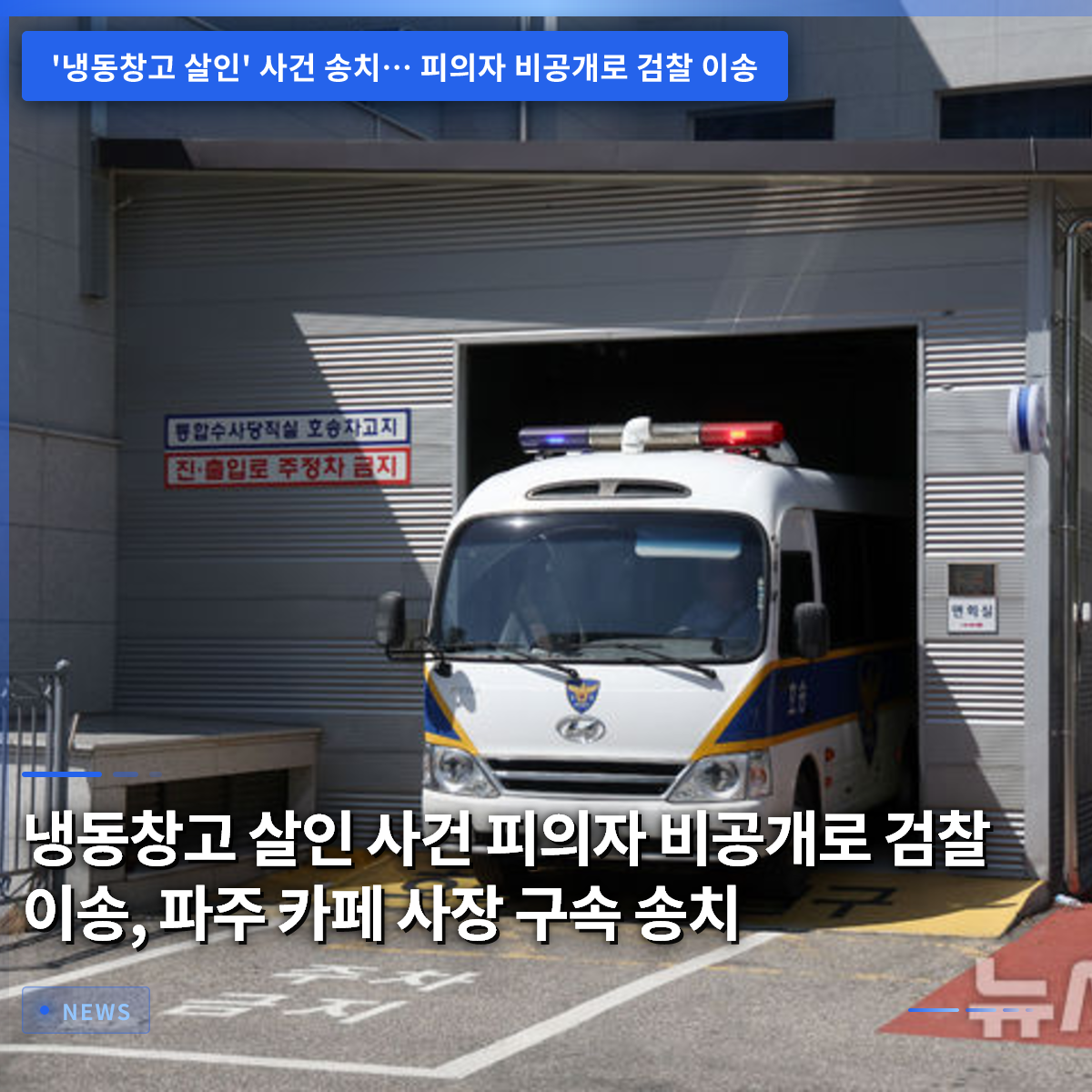
The suspect in the horrific freezer murder case that occurred at a cafe in Paju, Gyeonggi Province, a man in his 30s who owned the cafe, has been transferred to the prosecution under strict non-public conditions. This incident, in which a woman in her 60s, whom the suspect did not know at all, was locked in a sub-zero freezer and left to die, has sent shockwaves through the public. The suspect boarded a police transport vehicle with complete media blackout and was moved to the Goyang District Office of the Uijeongbu District Prosecutors’ Office. Investigative authorities are currently focusing on uncovering the suspect’s involvement in a gift certificate fraud scheme related to debts exceeding 1 billion won, as well as determining whether any accomplices were involved. In this article, we will examine the full details of the incident, the progress of the police investigation, and the remaining legal procedures. We will look closely at how this case, which has caused significant social upheaval, is unfolding.
=
Suspect in Freezer Murder Case Transferred to Prosecution Non-Publicly; Paju Cafe Owner Indicted
1. The Origin of the Case and the Suspect’s Transfer to Prosecution
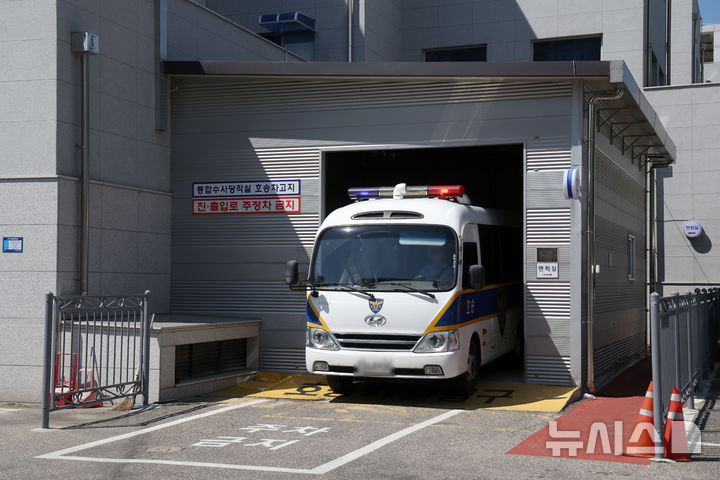
Mr. Ga, a man in his 30s who operated a cafe in Paju, Gyeonggi Province, was moved from detention to face prosecution. According to legal sources, the Paju Police Station concluded its investigation into the freezer murder committed by Mr. Ga and referred the case to the prosecution. Consequently, Mr. Ga, who had been held at the Ilsandongbu Police Station detention center, was immediately transferred to the prosecutors’ office. This transfer was conducted under strict non-public protocols, drawing significant public attention.
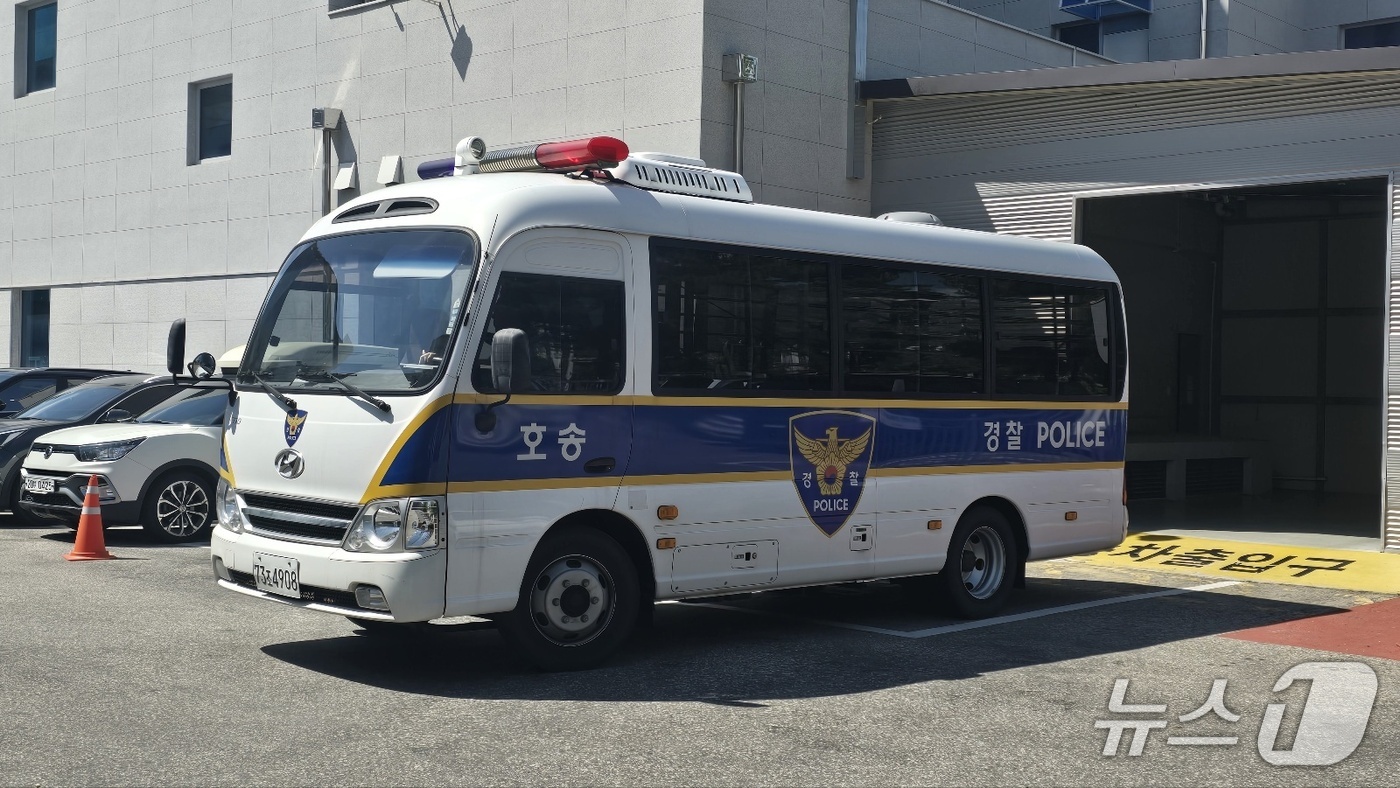
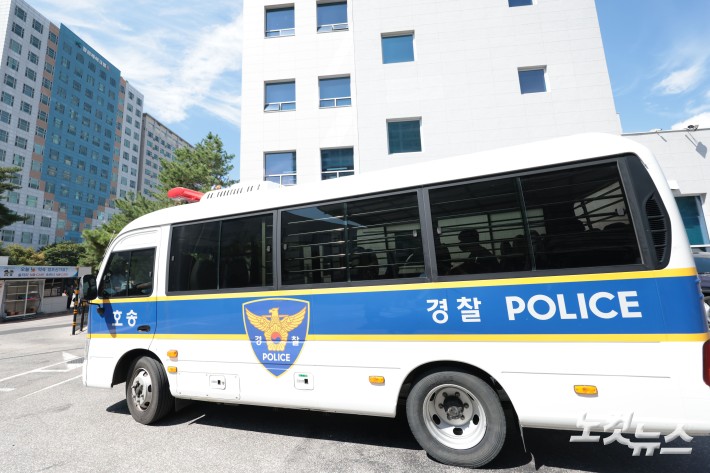
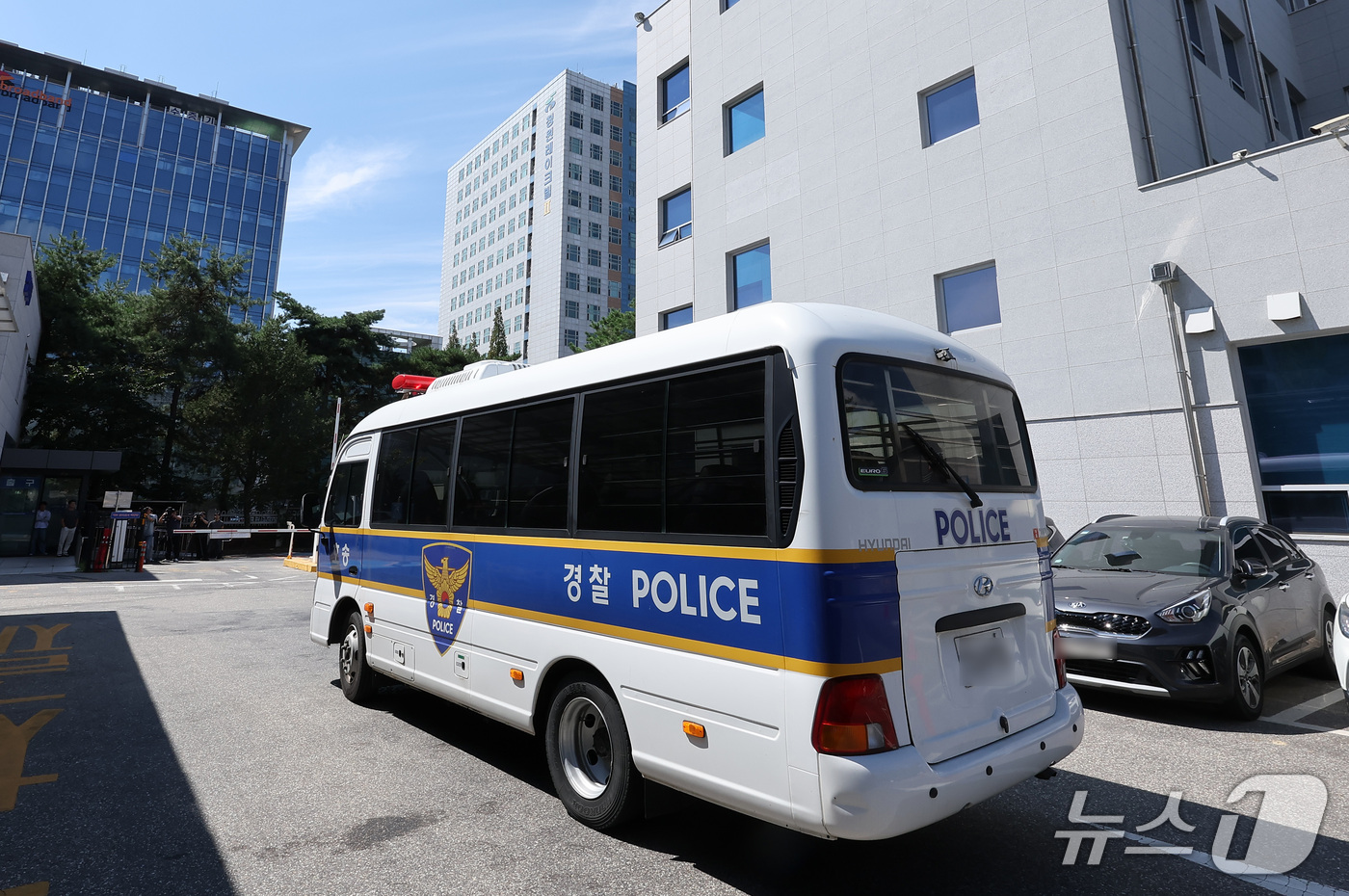
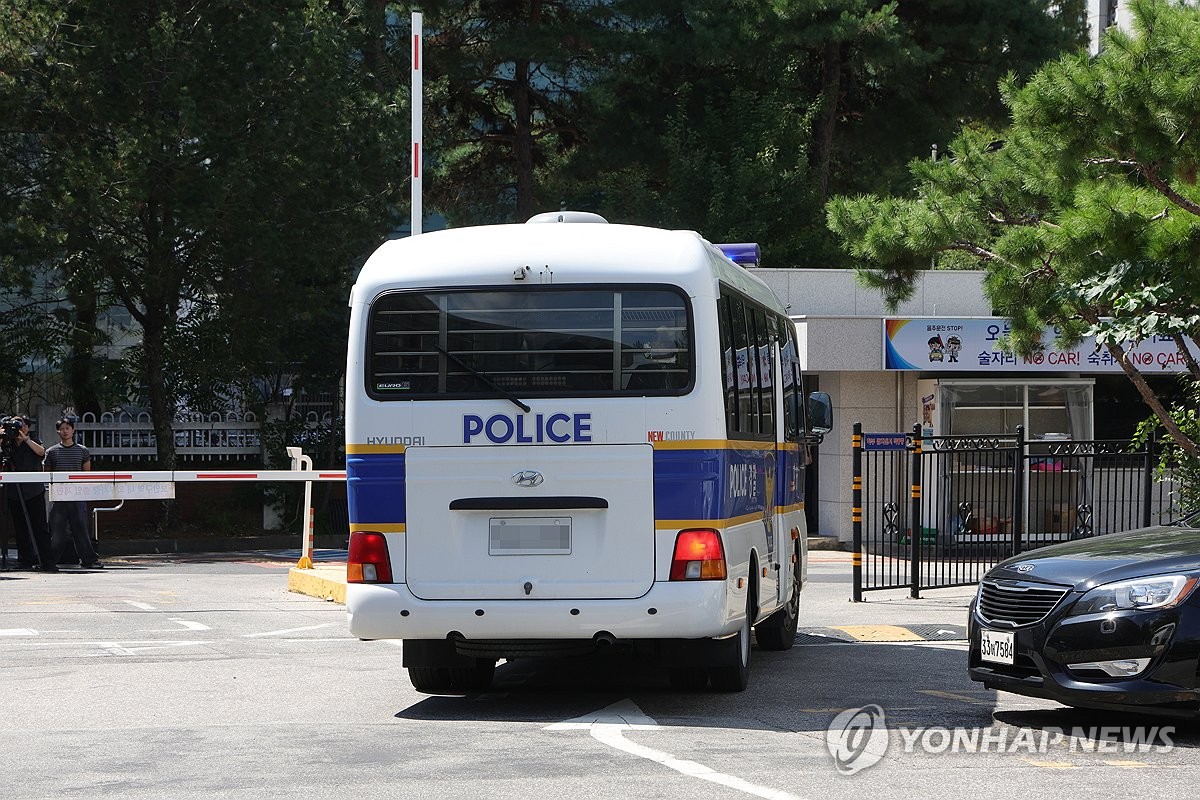
In the afternoon, Mr. Ga boarded a police transport bus from the integrated investigation duty room parking area with the shutters fully lowered. This measure was taken to completely block questions from reporters and the barrage of cameras on site. He sat in the very back seat, hunching over to desperately avoid having his face exposed. The transport bus immediately exited the police station’s main gate and sped toward the prosecutors’ office. Previously, during the pre-arrest interrogation process, Mr. Ga had also been moved while avoiding media attention.
A police official explained that Mr. Ga’s personal information has not been disclosed separately because additional investigations into the case are still ongoing. The strict non-public transport protocol was adhered to in accordance with suspect rights protection and investigative guidelines. Despite the suspect facing serious criminal charges, the transfer was carried out under tight security, prompting simultaneous outbursts of public frustration and outrage. These non-public measures are the result of strict compliance with relevant investigative public relations rules and suspect transport safety guidelines.
In the upcoming prosecution phase, Mr. Ga will undergo thorough investigation and will await a severe legal judgment during the trial. This is precisely why we are forced to deeply consider the balance between a suspect’s human rights and the public’s right to know every time we encounter such news. Given that this incident appears to be not a spur-of-the-moment act but one potentially involving a meticulous background, significant attention is focused on the prosecution’s additional indictment details.
The suspect in his 30s in the Paju freezer murder case was transferred to the prosecution under strict non-public security.
2. The Grim Details of the Crime and the Luring of the Victim
In the early morning of last month, Mr. Ga lured Ms. Na, a woman in her 60s whom he had never met, to his cafe in Paju. Despite having no prior acquaintance, it was revealed that Mr. Ga summoned Ms. Na for a specific purpose. The primary reason he brought her in was to execute a large-scale gift certificate transaction to convert them into cash, a practice known as “gift certificate scalping.” Police investigation revealed that a gift certificate broker, Mr. Da, played an intermediary role in this process.
Once Ms. Na entered the cafe, Mr. Ga began his horrific crime. He set the temperature of the freezer located inside the cafe to sub-zero levels and forcibly locked Ms. Na inside. The victim, Ms. Na, was trapped in the freezing cold for a staggering 27 hours before tragically losing her life. Considering that it is extremely difficult for a person to survive for more than a day in a sub-zero enclosed space, this was clearly a crime committed with the intent to kill.
The cafe where the incident occurred had an ordinary appearance, so nearby neighbors had no idea such a horrific event was taking place. Experts are shocked by the brutality of the criminal method, which defies common sense. The act of driving an innocent citizen, whom the suspect did not know, to their death for economic gain is an unforgivable major crime. The victim’s family is expressing their profound grief and strongly demanding severe punishment for Mr. Ga.
The police have intensively investigated why Mr. Ga specifically targeted Ms. Na and the concrete motive behind his decision to commit the crime. It is highly likely that financial conflicts or disputes over interests arising from the process of cashing in gift certificates served as the trigger for the crime. The fact that a space that should have been peaceful transformed into a scene of crime has delivered a huge shock to society as a whole.
The suspect locked a woman in her 60s, whom he did not know, in a cafe freezer for 27 hours, causing her death.
3. The Suspect’s Massive Debt and Economic Background
Behind this murder case lies the suspect Mr. Ga’s severe financial ruin. Police investigation revealed that Mr. Ga was already burdened with massive debts exceeding 1 billion won. It is estimated that he was under pressure from creditors on all sides due to a lack of business capital or failed reckless investments. This case presents a bitter glimpse into how a person driven to the brink economically can commit such a vicious crime.
Mr. Ga appears to have spared no effort to resolve his massive debts. As part of this, he planned to secure large amounts of gift certificates and convert them into cash to cover at least a portion of his liabilities. Unable to raise funds through legitimate means, he resorted to an extreme method combining fraud and crime. While 1 billion won is an enormous sum for an ordinary small business owner or self-employed person to bear, it cannot be a reason to take another person’s life.
According to testimonies from nearby business owners, Mr. Ga had shown signs of economic hardship and instability while operating his shop. Burdened by debt, he ultimately crossed a point of no return, resulting in the sacrifice of an innocent life. This incident reminds us once again of the tragic end that awaits criminals who prioritize financial greed over the human rights and lives of others. Judicial authorities must apply a stricter standard to violent crimes linked to economic offenses in light of this incident.
Mr. Ga’s actions, committing murder to pay off debts, also serve as an indicator of the extent of moral decay in our society. There is no excuse for choosing crime instead of pursuing legal debt adjustment systems or bankruptcy proceedings when faced with economic crisis. During the prosecution’s investigation, it is necessary to thoroughly clarify Mr. Ga’s cash flow and whether he has any hidden assets.
The suspect was investigated as having committed the crime to pay off massive debts exceeding 1 billion won.
4. Police’s Large-Scale Investigation Team and Additional Suspicion Investigations
Considering the gravity of this case, the Gyeonggi Paju Police Station deployed three violent crime teams from the Criminal Investigation Division. A total of 17 elite investigators were assigned to make every effort to uncover the factual truth of the case. The police are thoroughly tracking whether there were other accomplices involved, going beyond the question of whether Mr. Ga acted alone. If anyone helped in planning or executing the crime, they should also be subject to severe punishment.
In particular, investigative efforts have been concentrated on proving the exact role of the individual identified as a gift certificate broker and their conspiracy with Mr. Ga. A key issue is whether the broker was aware of Mr. Ga’s intentions when luring the victim, Ms. Na, to Paju. If the broker aided or actively participated in the crime, they will likely face punishment as a co-principal. The police are analyzing forensic results from mobile phones and financial transaction records seized through search warrants to fully expose their connections.
The police are also investigating other offenses related to the gift certificate fraud charges committed by Mr. Ga. The investigation is expanding to determine whether he committed similar frauds against other victims. This is because it is highly likely that the “robbing Peter to pay Paul” scheme commonly used by economic criminals led to this murder case. The investigation team is continuing high-intensity interrogations of relevant parties to leave no room for doubt.
Thanks to the police’s swift and thorough investigation, the substance of the case is gradually coming to light. With multiple violent crime teams deployed, a perfect evidence system has been established to ensure no obstacles to maintaining the prosecution after the case was transferred. It is expected that the evidence collected by the police will play a decisive role in the upcoming prosecution investigation and trial. We must watch closely to ensure that all participants in this case, which has sparked social outrage, face the judgment of the law.
The police deployed 17 investigators to focus on investigating the possibility of accomplices and gift certificate fraud charges.
5. The Importance of Crime Prevention and Social Safety Nets
This Paju freezer murder case once again highlights the urgent need for a strong crime prevention system in our society. Crimes where a stranger is lured for a specific purpose and murdered are extremely difficult to predict in daily life. In situations where personal safety is threatened, law enforcement agencies and local governments must cooperate to reduce blind spots. In particular, psychological and economic support systems are needed to prevent self-employed individuals from falling into extreme choices or the temptation of crime amidst management difficulties.
We must pay attention to the fact that rampant economic crimes and fraudulent activities ultimately led to the extreme outcome of murder. What methods can be used to preemptively block the process of planning a crime due to an inability to bear a 1 billion won debt? Systems for proactively identifying and relieving households in crisis through financial institutions or counseling centers must become more comprehensive. We must widely raise awareness of the vigilance needed to recognize that a momentary wrong judgment can take not only one’s own life but also the precious life of an innocent other.
Citizens must also remain vigilant regarding financial transactions with strangers or suspicious meetings. Special caution is required when receiving abnormal proposals such as large-scale gift certificate transactions or cashing them out. Since criminals always look for vulnerabilities, we must cultivate the basic defensive ability to protect ourselves. Police and judicial authorities must also establish strict and strong precedents of punishment to prevent similar violent crimes from recurring.
We should use this incident as an opportunity to re-examine and reinforce our society’s safety net. We must comfort the pain of the victim’s bereaved family and keep a close watch to ensure such a tragedy never happens again. It is a critical time for institutional improvements and the growth of civic awareness to create a safe society free from crime.
Strengthening social safety nets and thorough preventive measures are needed to break the vicious cycle where economic crisis leads to crime.
6. Future Trial Prospects and the Need for Severe Punishment
The prosecution, having received the case from the police, will now begin full supplementary investigations and proceed with the indictment process. The suspect Mr. Ga’s charges of locking the victim in a freezer causing her death, as well as the intent and cruelty of the murder, will be clearly proven. Regardless of what arguments Mr. Ga presents in court, the act of leaving the victim in a sub-zero space for 27 hours makes it difficult to avoid a heavy sentence. Experts predict that the court will impose a severe sentence, given that social outrage has reached its peak.
The prosecution will thoroughly investigate the detained Mr. Ga, from the planning of the crime to its execution, and the full details of the fraud charges. The decision on whether to additionally indict the broker suspected of being an accomplice lies with the prosecution. Through thorough investigation, all those who participated in the crime must be brought before the judgment of the law and pay the appropriate price. The only way to somewhat comfort the shattered hearts of the bereaved family is the clarification of the truth and certain punishment.
Our society must not dismiss this incident as a mere individual deviation. We must confront the structural problems hidden under the tragic title of murder caused by financial ruin. The media and citizens must keep a close eye on the ongoing trial process to demonstrate that justice is alive. We pray for the rest of the soul of the victim who was sacrificed innocently and earnestly hope that such a cruel crime will never take root on the land of South Korea again.
Justice must be established through the prosecution’s severe indictment and the court’s strong punishment.
Frequently Asked Questions
=