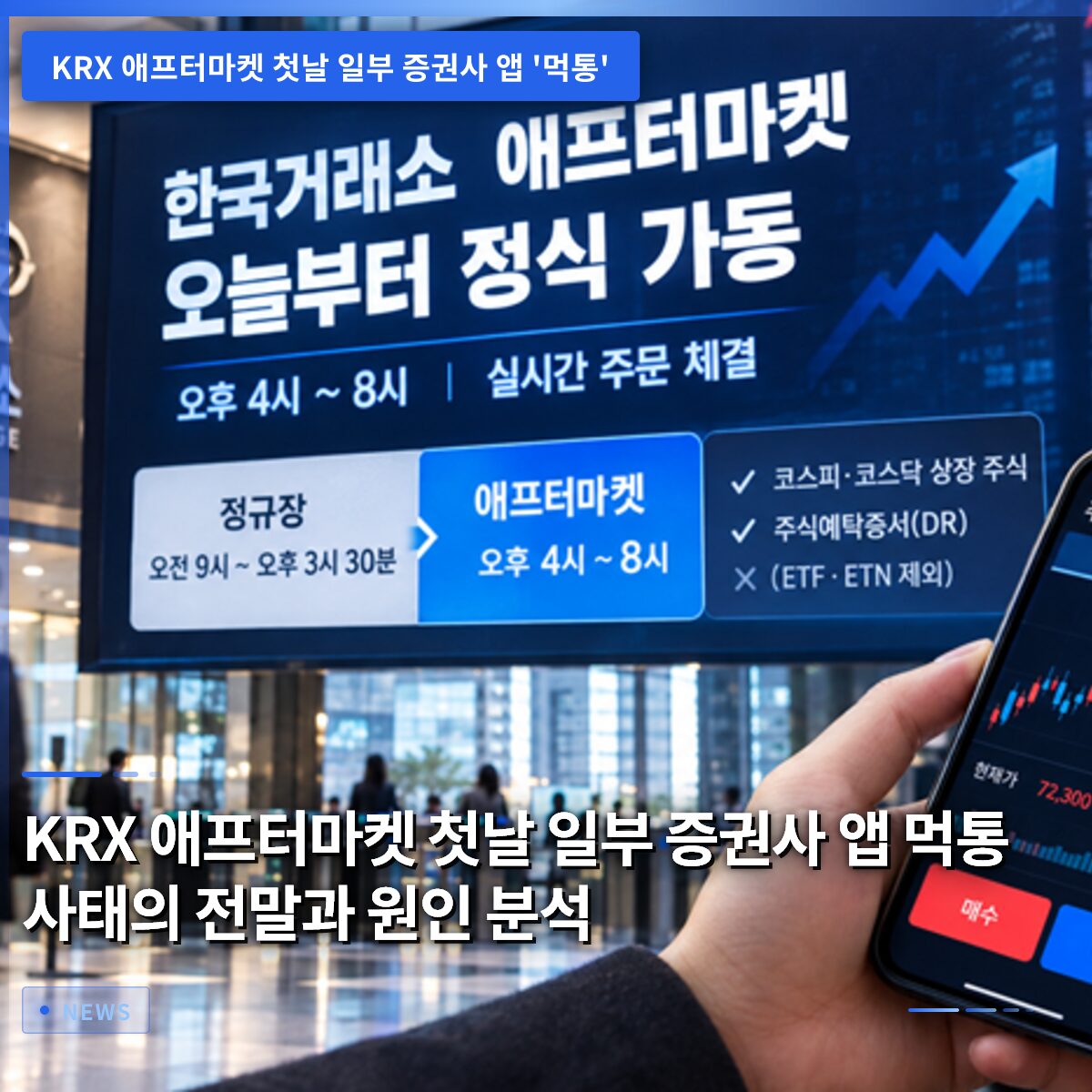
On the 14th, the first day the Korea Exchange (KRX) After-Market made its debut, a severe outage occurred in the trading apps of several securities firms, where order cancellations were not processed and balances could not be retrieved, sparking fierce backlash from investors. Amid the urgent situation of the domestic stock market experiencing repeated sharp declines, trading was completely blocked before the start of the regular session, leaving countless investors stranded and missing opportunities to defend against losses. This outage is attributed not just to simple connection issues, but to structural confusion that arose directly during the overhaul of the Best Order Execution System (BOES). While the introduction of the new trading system has broadened investors’ trading options, the computational stability of the exchange and securities firms supporting it has yet to meet the mark. In this article, we will examine in detail the exact causes of the brokerage app outages on the first day of the After-Market and the specific damages investors suffered.
=
The Full Story and Cause Analysis of the App Outage at Some Brokerages on the First Day of the KRX After-Market
1. The App Outage That Erupted on Day One
Critical errors occurred simultaneously in the mobile trading apps of major securities firms, including Mirae Asset Securities and Samsung Securities, immediately after the opening of NextTrade on the morning of the 14th. A harrowing situation unfolded where investors attempted to cancel or amend already submitted trading orders, but the system failed to reflect these changes, resulting in the orders being executed as is. To make matters worse, a computational error occurred where the available order balance was displayed as zero despite sufficient deposit funds remaining in customer accounts. As a result, investors who tried to act quickly in response to falling stock prices early in the morning were left helpless, pacing in front of their screens. One investor expressed frustration, stating that they tried to sell their holdings early in the morning but could not even place an order because the balance quantity would not input. Voices of grievance continued, with investors lamenting that they had to bear massive losses that could have been sufficiently prevented had they simply been able to press the sell button.
Even when investors refreshed the screen to protect their valuable assets, the app remained unresponsive, and delays in connecting to customer service centers further exacerbated the scale of the damage.
On the first day of the After-Market, order cancellation failures and balance errors occurred in major brokerage apps, causing significant losses for investors.
2. Why the Best Order Execution System Was Blamed

The epicenter of this computational outage has been identified as the Best Order Execution System (BOES), also known as NextSOR, drawing intense industry attention. This system plays a crucial role in precisely comparing prices, fees, and execution possibilities between the Korea Exchange and the new alternative trading markets, automatically routing customer orders to the more favorable venue. Currently, domestic securities firms choose between this system and a similar system by KOSCOM based on their respective strategies; notably, all the firms that experienced the outage had opted for the former. Industry experts unanimously analyze that undue strain was placed on the system during the massive computational overhaul coinciding with the launch of the KRX After-Market. In fact, as the application time for sending orders to the optimal exchange was significantly extended until 8:00 PM, expanding and modifying the related systems became unavoidable. Experts commonly diagnose that fatal confusion arose precisely during this urgent computational change process, serving as the spark for the current incident.
It is also difficult to avoid the criticism that despite thorough pre-testing by the exchange and securities firms, the systems failed to withstand the massive traffic surge that occurred simultaneously with the actual market opening.
The computational overhaul of the Best Order Execution System, which compares prices between the exchange and alternative trading markets to route orders, is the primary cause of this outage.
3. Emergency Responses and Limitations of Securities Firms
When the unexpected app outage occurred, each securities firm blocked additional errors by routing new orders directly to the Korea Exchange, bypassing the Best Order Execution System, as soon as the regular session opened. Although the immediate crisis was averted, records of trades already executed in the pre-market or results of amended orders were not properly reflected in customer account ledgers until late in the afternoon. Consequently, affected investors had to continue trading all day in a state of anxiety, unable to accurately grasp their balances and profit/loss status. Securities firm employees also worked under immense pressure, dealing with customer complaint calls while manually checking account statuses in real-time or taking individual measures. This incident serves as a stark example of how easily trust in the entire financial market can be shaken when a single computational system fails.
Despite rapid recovery measures, the financial losses and psychological damage already inflicted on investors are unlikely to heal easily.
While securities firms prevented further incidents using alternative order routing methods, confusion persisted all day due to issues with already tangled execution records and balance reflections.
4. The Pros and Cons of the Expanded After-Market
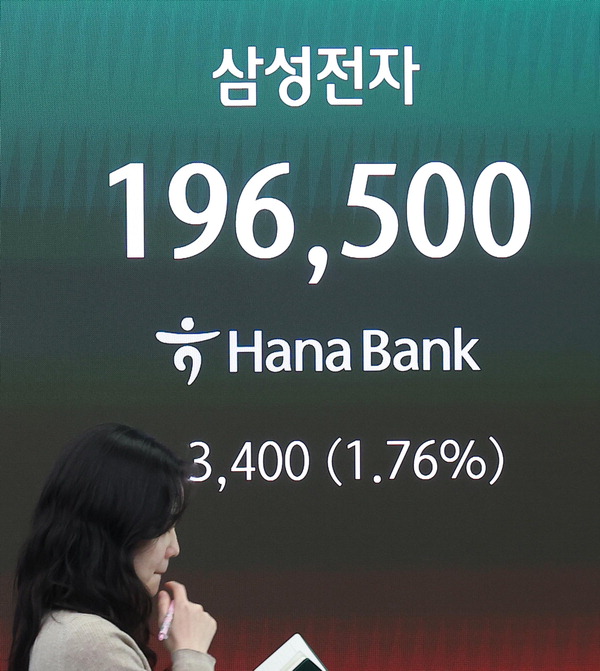
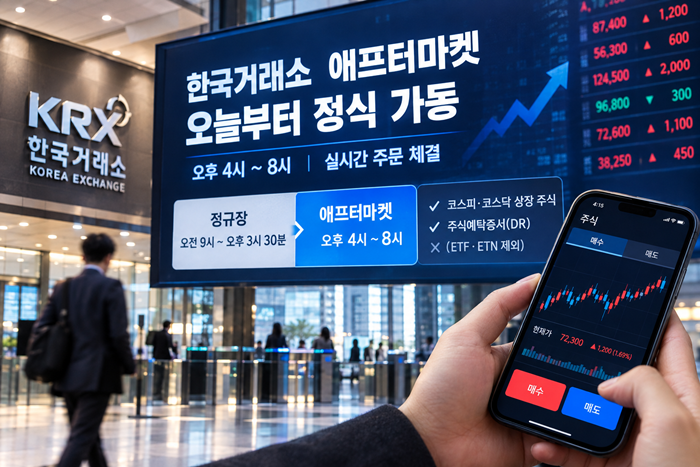
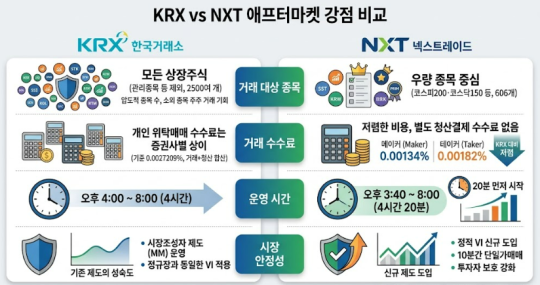
The Korea Exchange announced the immediate introduction of an After-Market allowing real-time stock trading from 4:00 PM to 8:00 PM to enhance trading convenience for investors. Previously, only alternative trading markets operated an After-Market during the afternoon hours, but with the exchange joining in, the range of options available to investors has undoubtedly widened, which is a positive development. However, as revealed by this incident, it leaves a bitter lesson that a new trading system is useless if it is not supported by a stable and robust order infrastructure. While the intention to induce competition between exchanges and expand investment opportunities is good, if basic computational stability is not guaranteed, the damage will fall squarely on individual investors. Doubts regarding the exchange’s computational capabilities are growing within the securities industry, and pressure to improve service quality is expected to intensify in the future.
As stock trading becomes possible for longer hours, securities firms and exchanges must build more thorough monitoring systems and make every effort to prevent recurrence.
While the introduction of the exchange After-Market has increased trading hours, it is pointed out that the effectiveness of the system is significantly reduced if it is not supported by stable computational infrastructure.
5. Rising Demands for Investor Protection and Compensation
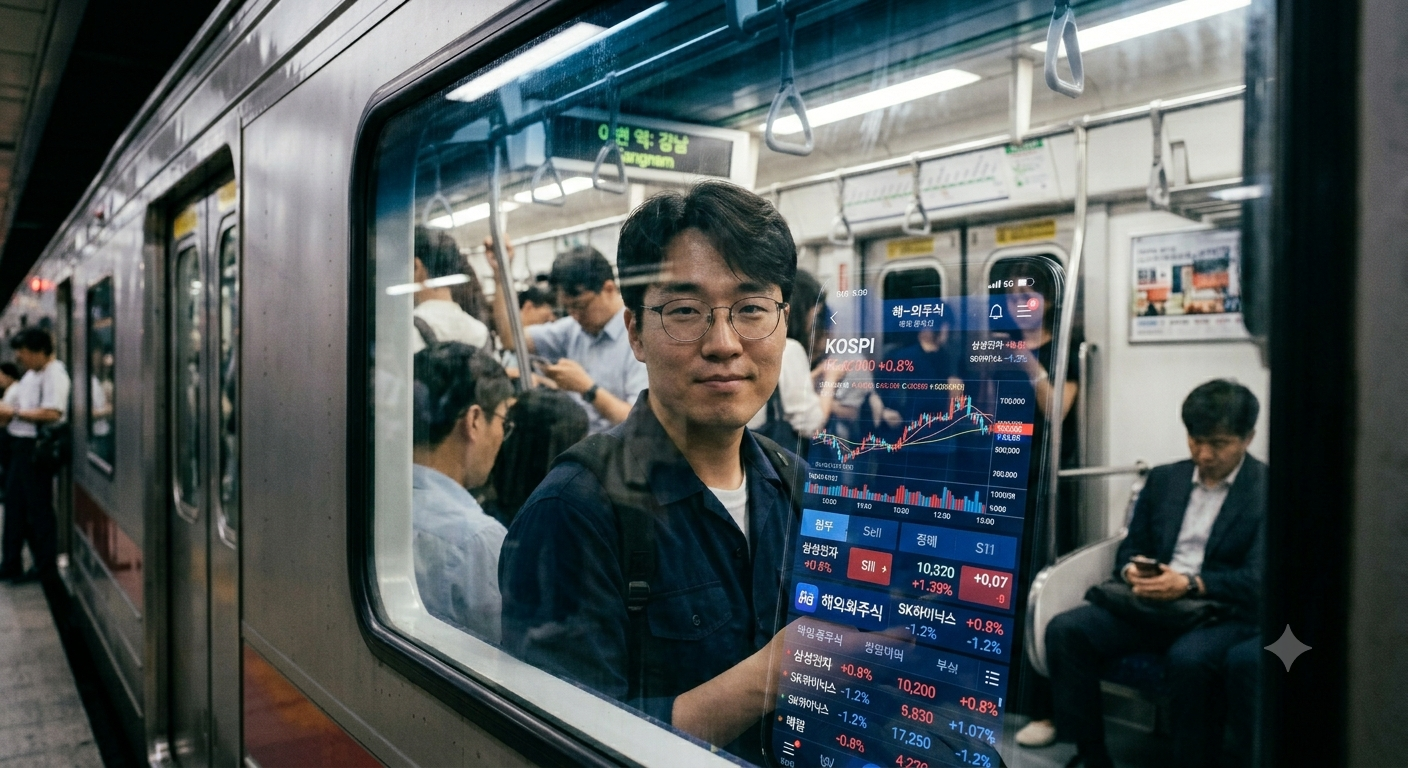
As voices demanding compensation for direct financial damages caused by this app outage grow louder, attention is focused on the future response direction of securities firms. Investors who missed the selling timing and suffered losses from falling stock prices are strongly demanding clear fact-finding and substantial compensation from securities firms. It is also the prevailing public opinion that financial authorities must thoroughly investigate the circumstances of this computational outage to clearly determine the responsibility for the system defects. Since the accident was caused by an internal computational overhaul error rather than an act of God, securities firms bear the responsibility to prepare a rapid and reasonable compensation plan based on evidence of damage. Since stock trading apps are not just tools but core means of handling investors’ livelihoods and assets, rapid relief procedures are essential when outages occur.
This incident is sparking growing voices of self-reflection that the rights of financial consumers must be protected and compensation standards for computational accidents must be refined more strictly.
Demands for compensation from investors who missed selling opportunities due to computational errors are intensifying, making clear responsibility attribution and countermeasures urgent.
6. Future Challenges for Securities Industry Computational Systems
The massive outage on the first day of the After-Market is a painful incident that has exposed the raw reality of computational management faced by domestic securities firms and exchanges. As night trading and linkage services with alternative trading markets are expected to expand further, strengthening the robustness of computational systems has become a top-priority task that can no longer be postponed. Securities firms must significantly reinforce safety measures, such as conducting multiple virtual simulations assuming various market conditions and massive traffic surges, rather than limiting themselves to one-time computational overhauls. Investors also need the wisdom to carefully scrutinize system stability and approach cautiously during the initial period of new trading system introductions. Both exchanges and securities firms must make transformative efforts to restore trust and provide perfect services, using this incident as a lesson.
All financial institutions must keep in mind that a leap into a truly advanced financial market is only possible when a stable trading environment is supported.
To prevent recurring computational outages, thorough system checks and infrastructure upgrades across the entire securities industry are more urgent than ever.
Frequently Asked Questions
=