The government’s concrete support measures to alleviate the severe funding crunch in the residential real estate project finance (PF) market have officially begun. As a follow-up to the housing supply activation measures announced last month, the Financial Supervisory Service (FSS) held a large-scale briefing that consolidated stage-specific tailored funding support and sale information for stalled projects. This initiative is generating significant expectations as it moves beyond simply injecting capital to providing meticulous support across the entire process, from the early stages of a project to its completion. In fact, the event held at the FSS headquarters in Yeouido, Seoul, saw the full participation of the Korea Land & Housing Corporation (LH), the Housing & Urban Guarantee Corporation (HUG), major commercial banks, and the Korea Asset Management Corporation (KAMCO) to listen to voices from the field. This is truly welcome news in a situation where numerous construction sites are facing halted work or have not even broken ground due to funding failures. Let’s take a close look at whether the various financial support programs and sale consultation channels announced this time can revive the warmth in the frozen real estate market. If you are currently interested in a specific housing project, this article will help you clearly understand what benefits you might receive.
=
Will Real Estate PF Liquidity Improve? FSS’s Phased Financial Support Measures
1. Development Anchor REITs: Breathing Room for the Bridge Loan Stage

A new support measure has been introduced for sites struggling with funding difficulties during the bridge stage, which is considered the first hurdle and the biggest challenge in housing development projects. The star of this measure is the 610 billion won Project Finance Development Anchor REIT managed by Coreco Asset Trust, which provides funds at significantly lower interest rates than general loans. For developers who were considering abandoning projects due to high interest burdens in the early stages, this REIT funding is playing a savior-like role.
In fact, an officetel development site near Seoul was on the verge of being auctioned off because it could not afford the high interest rates, but it has now been able to catch its breath through this Anchor REIT system. This early-stage funding support serves as a solid foundation that helps projects with sufficient viability safely move to the next stage, going beyond merely extending loans. The financial authorities plan to continue multi-faceted monitoring to help bridge loan stage projects overcome the wave of prolonged high interest rates.
A 610 billion won Development Anchor REIT is being deployed to reduce the high interest rate burden at the bridge stage.
2. HUG’s Expanded Guarantees to Facilitate Transition to Main PF

Even if a bridge loan is successfully completed, countless sites fail to cross the threshold when transitioning to main project finance (PF). To resolve this issue, the Housing & Urban Guarantee Corporation (HUG) has decided to significantly expand the scale and scope of its guarantees to greatly reduce the burden on construction companies and developers. Specifically, HUG will provide guarantees of up to 70% of construction costs until 2028, and in the Seoul area, it will offer exceptionally generous guarantee support of up to 80%.
Going further, HUG has included land acquisition costs (excluding equity) in the guarantee scope and introduced a new exclusive guarantee product for small and medium-sized construction companies. A representative from a mid-sized construction company building apartments in a regional area expressed welcome, stating that they had been losing sleep over the guarantee agency’s strict reviews, but this measure feels like having overcome a major hurdle. Such a strengthened guarantee system creates an environment where financial institutions can provide funds with confidence, which will noticeably accelerate the overall pace of housing supply.
Guarantees for construction and land costs are significantly expanded to lower the threshold for transitioning to main PF.
3. Utilizing Syndicated Loans to Overcome Liquidity Crises
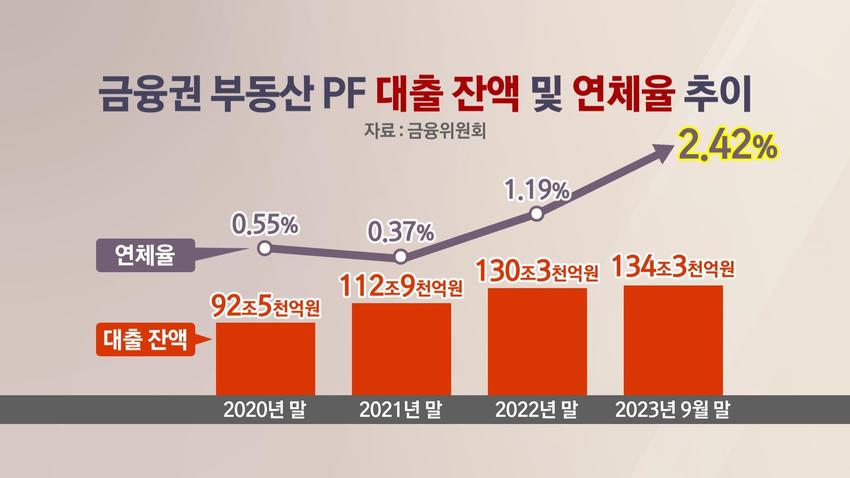
Sites experiencing temporary liquidity shortages due to unexpected funding tightness during project execution can tap into a special funding line created by the alliance of commercial banks and the insurance industry. The limit for the Project Finance Syndicated Loan, originally established at 1 trillion won, has recently been significantly increased to a massive 5 trillion won, amply supporting field demand.
An apartment site in the metropolitan area that had faced difficulties in paying construction costs due to sudden raw material price hikes and low sales rates was able to extinguish the immediate fire through this syndicated loan. In addition to this funding, the financial sector also supports auction balance loans for projects already in auction or public sale procedures, as well as acquisition loans needed when developers voluntarily push for sales. This is akin to supplying fresh blood to stalled sites, and it is expected that the speed of capital circulation in the market will accelerate further.
The syndicated loan limit has been significantly increased to 5 trillion won to support sites facing temporary funding difficulties.
4. The Public Sector’s Role: Alleviating Risks from Land Acquisition to Unsold Units
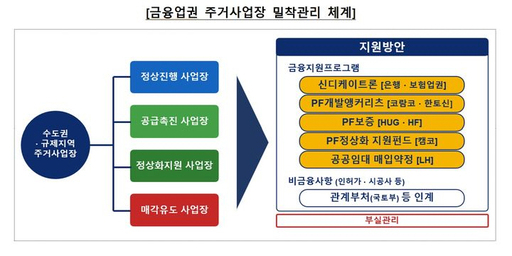
The Korea Land & Housing Corporation (LH) has stepped in to directly conduct purchase-and-rental projects, positioning itself as a sturdy prop throughout the entire housing development process. Because the public sector signs purchase agreements in advance, developers and construction companies can greatly reduce the fear of unsold units after completion and focus on construction with stability.
In fact, a mid-sized construction company in a regional area had not dared to start new projects due to the stigma of being an “unsold unit graveyard,” but by utilizing the public purchase agreement system, it has secured a stable revenue structure. Furthermore, linked with this, acquiring real estate comes with acquisition tax reduction benefits, resulting in significant cost savings. The acquisition tax reduction, which was at a basic level of 15%, will be exceptionally expanded to 70% in 2027 and 50% in 2028, maximizing the economic viability of project execution.
LH’s purchase agreements and acquisition tax reduction benefits dramatically lower the risk of unsold units.
5. Ensuring Market Soundness Through the Cleanup of Distressed Projects
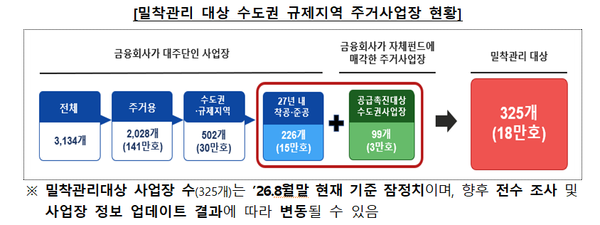
Since saving every project unconditionally is not the best solution, financial authorities have drawn their swords for the decisive restructuring and cleanup of distressed projects with extremely low viability. At the recently held briefing, a whopping 12 dedicated consultation booths were set up to accurately diagnose projects seeking to resume work and those requiring cleanup.
A commercial building in the metropolitan area that had been left neglected and ugly due to halted construction has decided to boldly proceed with the sale process through this consultation, preparing to welcome new investors. FSS officials are designated as one-on-one dedicated managers for each project site, receiving field difficulties in real-time and presenting tailored solutions. This is a process of improving the overall constitution of the real estate market by firmly pushing forward sites that can revive themselves and cleanly clearing out those that are impossible to recover.
Tailored diagnoses through 12 consultation booths help clean up distressed projects while saving high-quality ones.
6. Future Outlook for the Real Estate Market and Constructive Response Strategies

The FSS’s multi-faceted support measures and the holding of the sale briefing will be a significant turning point that blows a warm spring breeze into the housing supply market, which has been frozen for a long time. As numerous sites struggling with funding difficulties begin to move again through stage-specific tailored solutions, concerns about a general shortage of housing supply are expected to gradually be resolved.
However, for true market normalization to be possible, developers of individual projects and commercial banks must not rely solely on unconditional support but must simultaneously conduct thorough viability verification and make self-reliance efforts. If you are planning to purchase housing or make related investments, you should exercise the wisdom to carefully examine government support policies and the financial soundness of individual projects. By maintaining continuous interest in how the market changes, you will be able to make wise decisions even in an economic environment with high uncertainty.
The combination of phased financial support and thorough project classification will lead to stability in the housing supply market.
Frequently Asked Questions
=