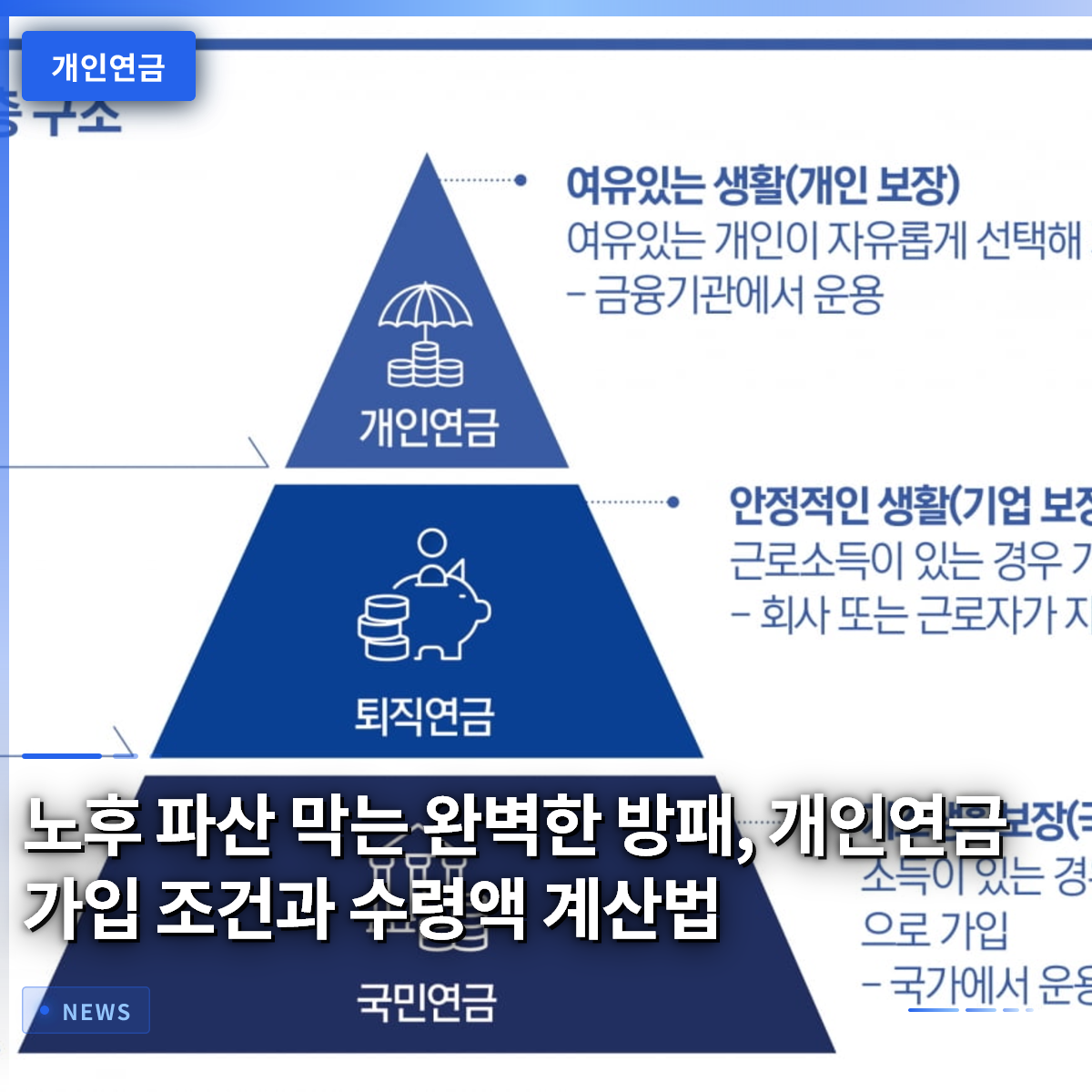
Relying solely on the National Pension for your post-retirement life is a recipe for disaster; you must prepare a personal pension now to avoid financial ruin in old age. Recent statistics show a sharp increase in personal bankruptcy filings among those aged 70 and older, with many unable to cover medical bills and debts due to insufficient monthly pension income. To safely bridge the income gap after retirement, you must solidify the triple-layer pension structure consisting of the National Pension, the Retirement Pension, and the Personal Pension. This article will detail how to wisely utilize personal pensions and create a stable monthly cash flow in the current financial environment. We will explain the core concepts of the complex pension system with specific examples so that you can understand them accurately and take immediate action.
=
The Perfect Shield Against Retirement Bankruptcy: Personal Pension Eligibility and Payout Calculation
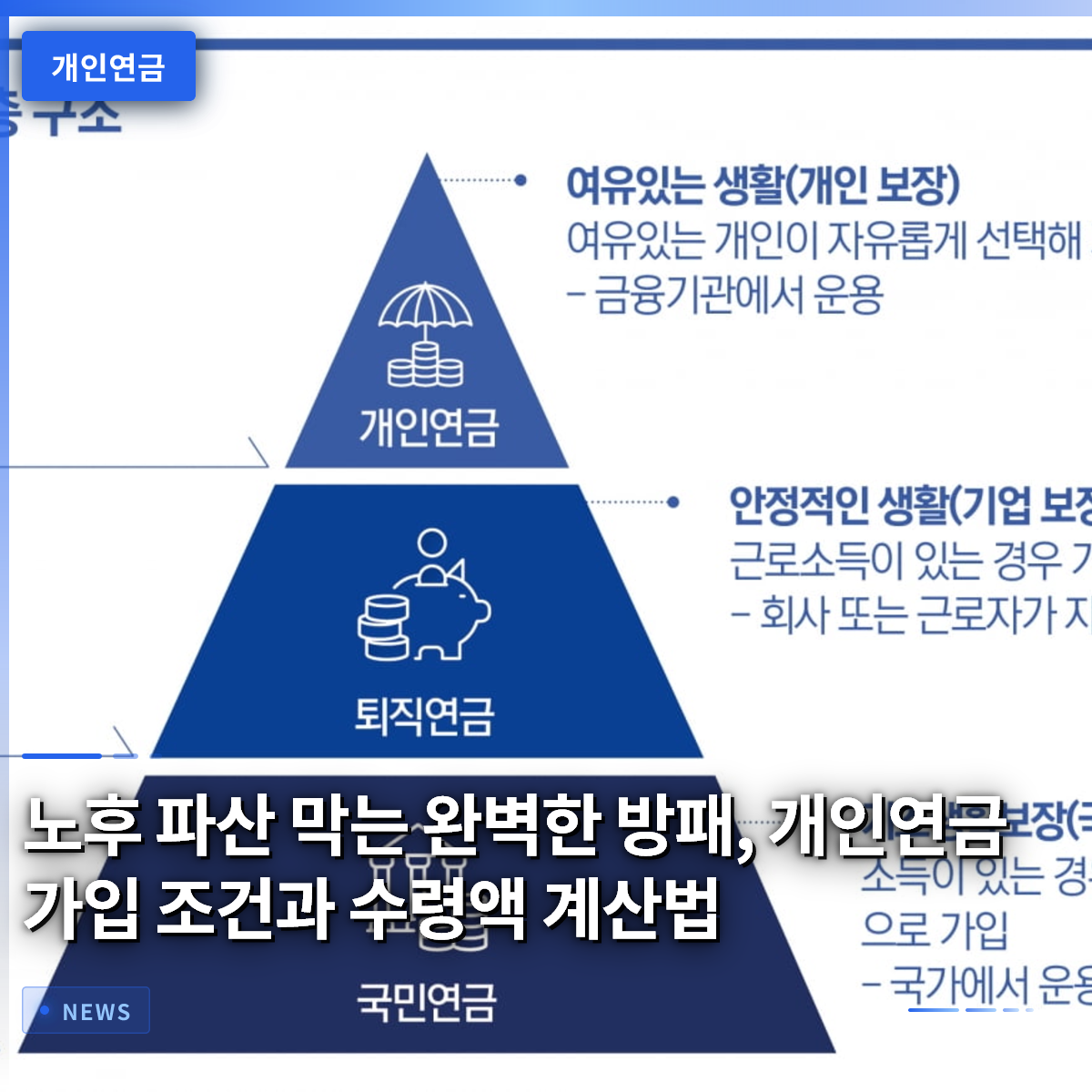
1. The Warning of Elderly Bankruptcy: Why Personal Pensions Now?
In recent years, while bankruptcy filings among young people have decreased, those among the elderly (ages 60 and 70) have surged significantly. Many seniors, who worked diligently in businesses or jobs for a lifetime, find themselves buried in debt after retirement due to sudden business failures or high medical costs from illness. For instance, Mr. Park, in his 70s, faced the unfortunate situation of filing for personal bankruptcy after being unable to handle fraud victimization and massive debts following his retirement. The combined monthly basic pension and National Pension they receive barely exceeds the minimum living cost, making it difficult to maintain even basic living standards. The moment they resort to high-interest card loans or credit loans to cover the shortfall, their debt snowballs, leading to an unrecoverable state.
To prevent such tragedies, you must thoroughly prepare private pensions from a young age to build your own safety net for after retirement. It is clear that the basic pension or National Pension provided by the state alone cannot fully cope with inflation and rapidly increasing medical costs. Witnessing acquaintances who have retired feeling anxious due to a lack of fixed income will make you acutely realize the value of pensions. While monthly deductions may feel like a waste while you are working, the pension you have accumulated becomes your only lifeline as retirement approaches. Therefore, with the mindset that “the time you think is too late is the earliest time,” you should open your pension account now and start filling in the gaps.
With the surge in elderly bankruptcy, survival is difficult on the basic pension alone; you must prepare private pensions yourself to prevent financial ruin in old age.
2. The Final Layer of the 3-Tier Pension Structure: The Identity of Personal Pensions
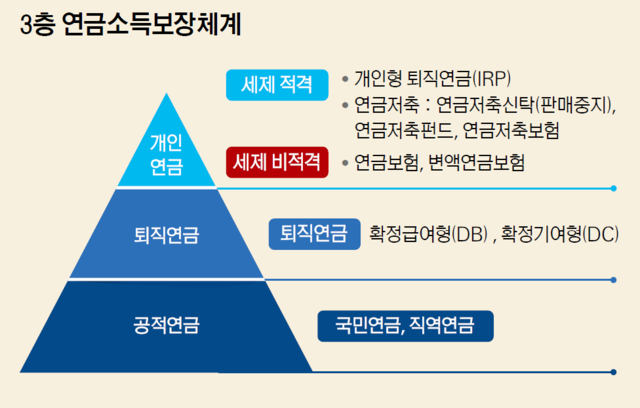
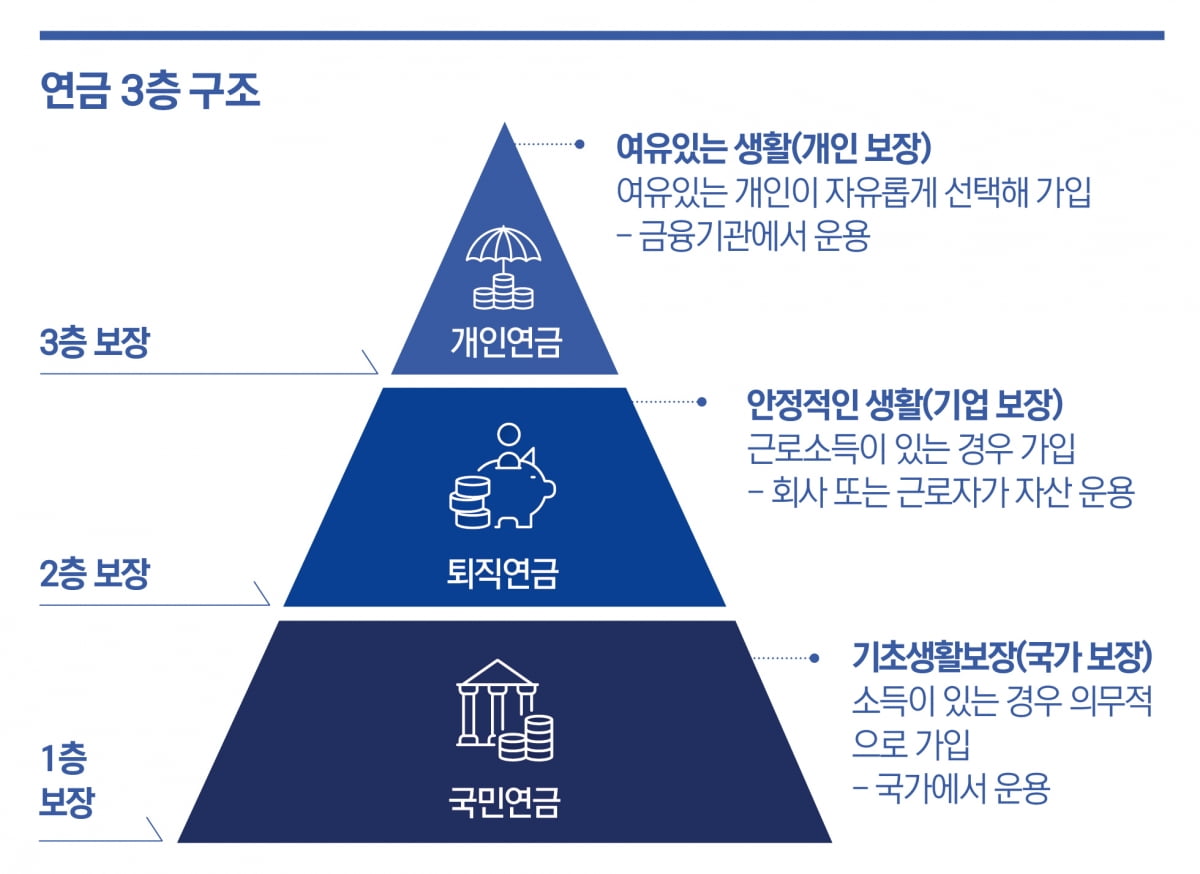
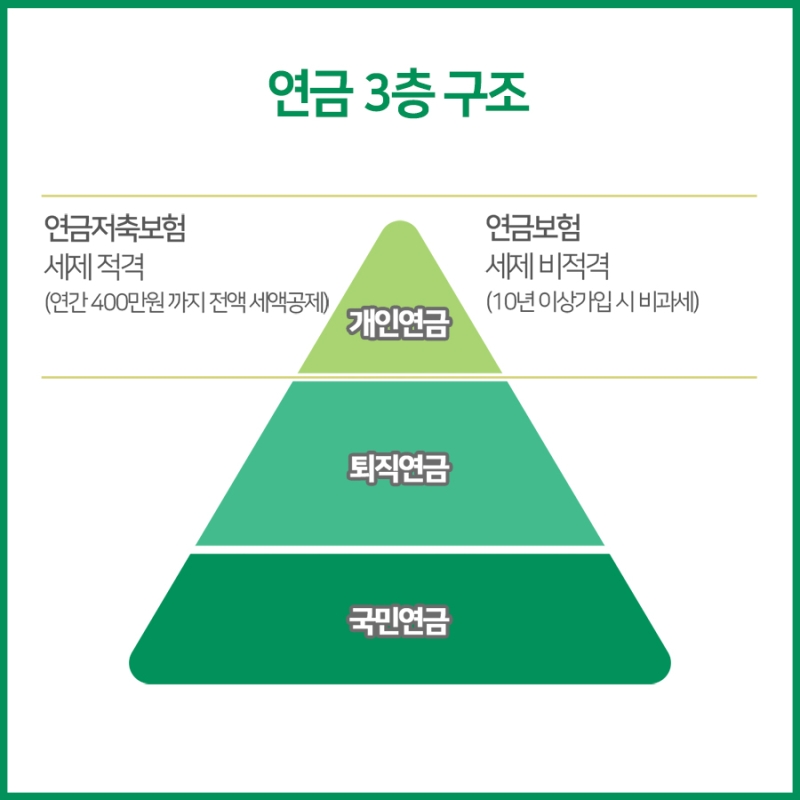
South Korea’s old-age security system is often compared to building a sturdy three-story house, with personal pensions completing the final third floor. If the first floor is the National Pension guaranteed by the state and the second floor is the Retirement Pension managed by the company, the third floor consists of Pension Savings and Individual Retirement Pensions (IRP) that individuals voluntarily join and fill. Many people are confused about the differences between these three systems, but there are clear distinctions in their purposes and operational methods. For example, if a Comprehensive Asset Management Account (ISA) is a basket that gathers various financial products in one place, Pension Savings is a special account designed to maximize tax benefits specifically for securing retirement funds. Mr. Kim, an office worker, consistently deposits money into his Pension Savings account to receive tax deduction benefits during his annual tax settlement, resulting in a significant refund every year.
These personal pensions act as a very flexible and powerful tool to bridge the gap until the National Pension begins. This is because you can create a steady monthly cash flow through personal pensions during the period when income stops before receiving the National Pension. Additionally, you can transfer your severance pay received upon changing jobs or retiring directly into an Individual Retirement Pension (IRP) account and grow it safely until retirement. It is also possible to allocate assets to various investment products such as funds and Exchange-Traded Funds (ETFs) to pursue returns exceeding the inflation rate, rather than just saving. Most people who enjoy a comfortable life receiving millions of won in monthly pensions after retirement have perfectly designed this 3-tier pension structure.
Personal pensions, the final stage of the 3-tier pension structure that supplements the National and Retirement Pensions, are a key means to prevent income gaps after retirement.
3. The Magic of 9 Million Won Annual Contributions: Maximizing Tax Deduction Strategies
The most crucial aspect to watch when joining a personal pension is undoubtedly the powerful tax deduction benefit, and how well you utilize it determines the success of your wealth management. To encourage retirement preparation in an aging society, the government provides tax deductions on contributions to Pension Savings and Individual Retirement Pensions (IRP) combined up to a maximum of 9 million won annually. Employees with a total salary of 55 million won or less can receive 16.5% of their contributions back, enjoying a massive tax refund of up to 1.485 million won. Even for those with higher salaries, a 13.2% deduction rate applies, making it a staple item for year-end tax settlement for office workers for a long time. Mr. Park, a junior staff member who used to sigh over tax burdens, diligently filled his pension account to the limit starting last year, allowing him to enjoy the joy of receiving a refund of several hundred thousand won in this year’s year-end settlement.
The important point here is not to deposit money indiscriminately, but to consistently transfer an appropriate amount each month tailored to your income bracket and financial situation. If you do not have a large lump sum available, splitting the payment into 750,000 won monthly to reach the 9 million won annual limit is a wise method that does not burden your household economy. If you feel the limit is slightly insufficient, you should comprehensively review utilizing your spouse’s or family’s accounts to formulate a strategy to reduce the overall tax burden of the household. If you reinvest the saved taxes into your pension account or use them as an emergency fund, you can maximize the compound interest effect and grow your retirement assets much faster. Tax benefits are like a legal bonus provided by the country, so missing out on them is no different from throwing valuable assets to the ground.
By filling the annual contribution limit of up to 9 million won to receive tax deduction benefits, you can reduce your tax burden while simultaneously growing your retirement assets.
4. A Glance at Personal Pension Payout Calculation and the Secrets of Conditions
Calculating in advance how much pension will be deposited into your account monthly after retirement is the first step toward successful old-age planning. Pension Savings payouts vary greatly depending on the joining period, principal contributions, and investment returns, so you should not blindly trust simple tables or estimated figures. For example, an office worker who has consistently deposited a fixed amount monthly since their 30s can receive a stable pension ranging from hundreds of thousands to millions of won monthly after age 65. On the other hand, someone who hastily opens a pension account and starts contributing in their 50s may receive less than expected due to insufficient time to benefit from compound interest. While you can estimate the approximate payout using the government’s simple calculator, you must remember that this is for reference only and not a confirmed amount.
When receiving your pension, the pension income tax rate varies by age, so you must go through the process of designing the receipt period to minimize taxes. You can start receiving the pension after age 55, and the longer the receipt period, the lower the tax rate, starting from 5.5% and decreasing to 3.3% depending on age. If the annual pension receipt exceeds 12 million won, it may be subject to comprehensive income tax when combined with other income, so it is wise to disperse the receipt amount appropriately. Retirement planning experts strongly recommend setting the pension receipt period to at least 10 years or more to avoid tax shocks and secure a fixed monthly cash flow. It is common to see elderly people who, not knowing the tax system well, withdrew a lump sum and lost a large amount in taxes, so you should calculate carefully in advance.
Personal pension payouts vary by contribution period and return rate; you must disperse the receipt period considering the 12 million won limit to save on taxes.
5. The Fantastic Combination of ISA and Pension Savings: Usage Tips
Those interested in asset management must know the advanced wealth management technique of organically linking the Individual Savings Account (ISA) and Pension Savings. When the account maturity date arrives, transferring those funds directly to Pension Savings or an Individual Retirement Pension (IRP) allows you to receive additional tax deduction benefits as a bonus. Mr. Lee, an office worker, transferred the matured funds from his ISA, which he had diligently managed for several years, to his pension account, receiving tax benefits on the lump sum and significantly boosting his retirement assets at once. The government actively encourages this inter-account transfer system to help citizens form long-term assets and continues to refine related policies. The strategy of moving assets over a long-term timeframe, rather than being obsessed only with short-term investment returns, is the common secret of wise asset holders.
By linking accounts and managing funds this way, you achieve the two-fold effect of saving on taxes while solidifying your retirement funds. In particular, it creates a sturdy fence that allows you to manage long-term funds stably without being shaken even in volatile stock markets. When I shared this linked investment method with acquaintances, they initially expressed difficulty saying it was complicated, but after receiving their tax refunds, they unanimously praised it. It is much more important to understand how your accounts connect to create synergy than to memorize the names of complex financial products. Please turn on your financial app right now to check for any neglected accounts and seriously consider the possibility of linking them with your pension account.
Transferring matured ISA funds to a pension account allows you to safely grow your retirement assets along with additional tax deductions.
6. Practical Recommendations and Future Outlook for a Successful Retirement
Retirement preparation is not about starting tomorrow; it is only completed when you open an account and make your first contribution today. In the midst of rising monthly inflation and an unstable economic situation, our post-retirement life is too long and precious to rely solely on the state. The seeds planted in your pension account by saving small amounts from your young age will become a massive financial shield protecting you decades later. Since government pension policies and tax benefits evolve slightly each year, you need to pay attention to related news and adopt an attitude of cleverly utilizing the system. A small action, such as opening a Pension Savings account and setting up automatic transfers for even 100,000 won monthly right now, can completely change your old age.
Retirement is not a story from a distant land but a reality that all of us must inevitably face, and the quality of life depends on how thoroughly you prepare. Never forget the warning that if you neglect your future by being swept up in flashy consumption trends around you, you will face unbearable financial hardship and the risk of bankruptcy later. Let this article be the turning point where you decide to join a pension that you have been putting off, and start by consulting with an expert or designing it yourself through a financial app. I sincerely hope that you, the readers of this article, will be the protagonists who build a sturdy 3-tier pension house and welcome a comfortable old age. I promise to continue being your reliable financial partner based on practical and essential financial information.
Do not delay retirement preparation; act today and complete the 3-tier pension to welcome a stable retirement.
Frequently Asked Questions
=