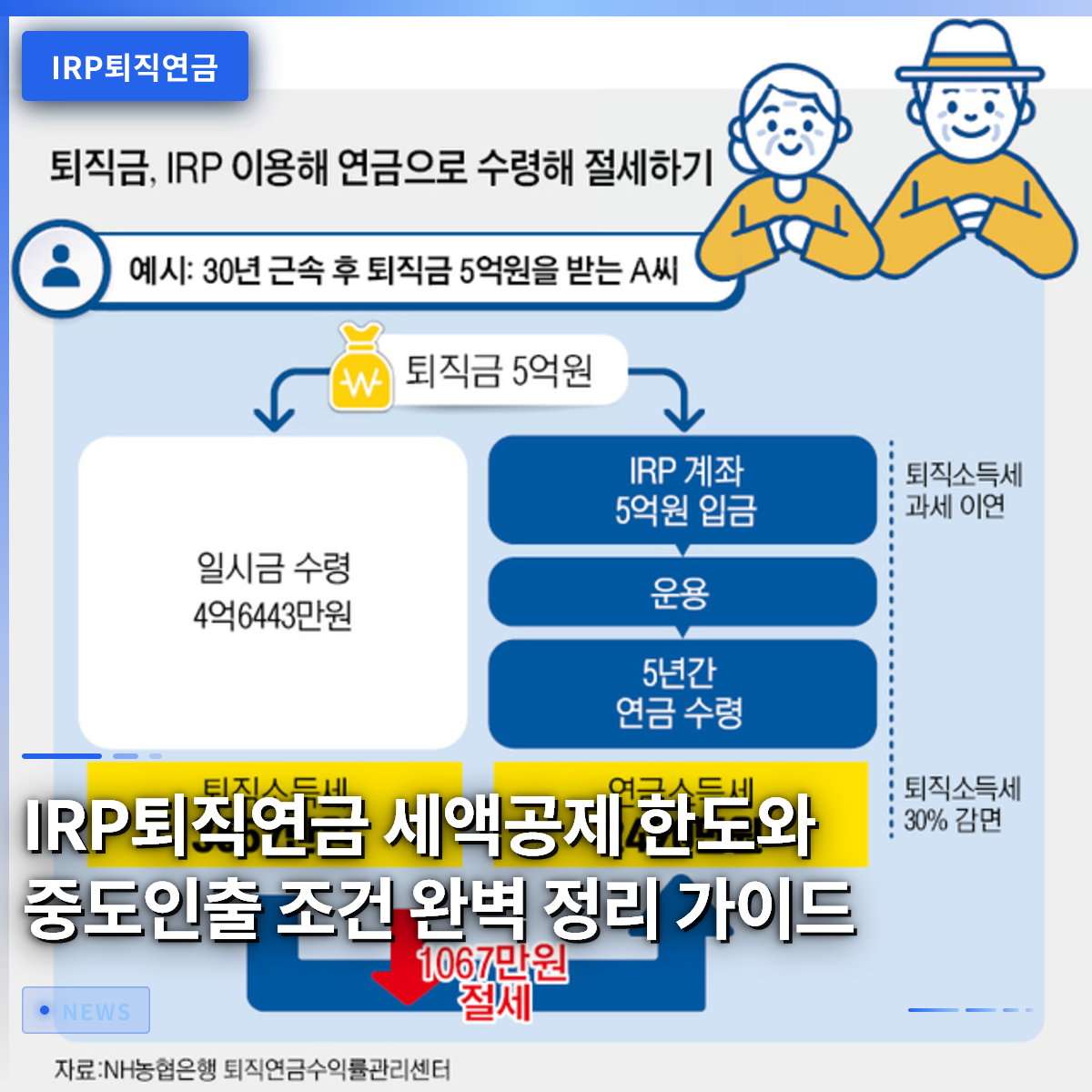
By wisely utilizing the Individual Retirement Pension (IRP), you can secure both year-end tax deductions and a solid retirement fund. Many employees join this scheme to receive their severance pay or save on taxes, but often suffer losses due to a lack of understanding of the specific conditions and benefits. For instance, failing to accurately calculate the annual contribution limit and the tax deduction rate can easily lead to missed opportunities for refunds. This article provides a detailed look at the core concepts of the IRP, including tax deduction limits, early withdrawal conditions, and effective methods for receiving pension benefits. Understanding the structure of the scheme allows you to avoid unnecessary taxes and grow your assets safely. Let’s explore all the information needed for successful retirement fund management, step by step.
=
The Ultimate Guide to IRP Tax Deduction Limits and Early Withdrawal Conditions
1. Understanding the Basic Concepts of the Individual Retirement Pension (IRP)

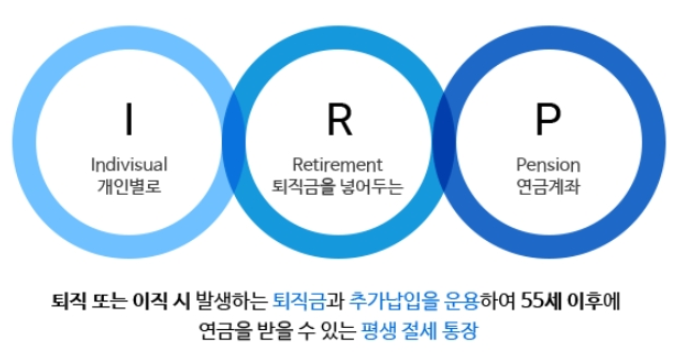
The Individual Retirement Pension (IRP) is a retirement asset management tool that allows employees to voluntarily contribute while employed or to consolidate their severance pay upon changing jobs into a single account, which they can then manage themselves. In the past, people relied solely on company-managed pension schemes, but now it is an era where individuals directly select and manage their own investment products. Accounts can be easily opened at financial institutions such as banks and securities firms, and eligibility extends beyond employees to include self-employed individuals and public officials.
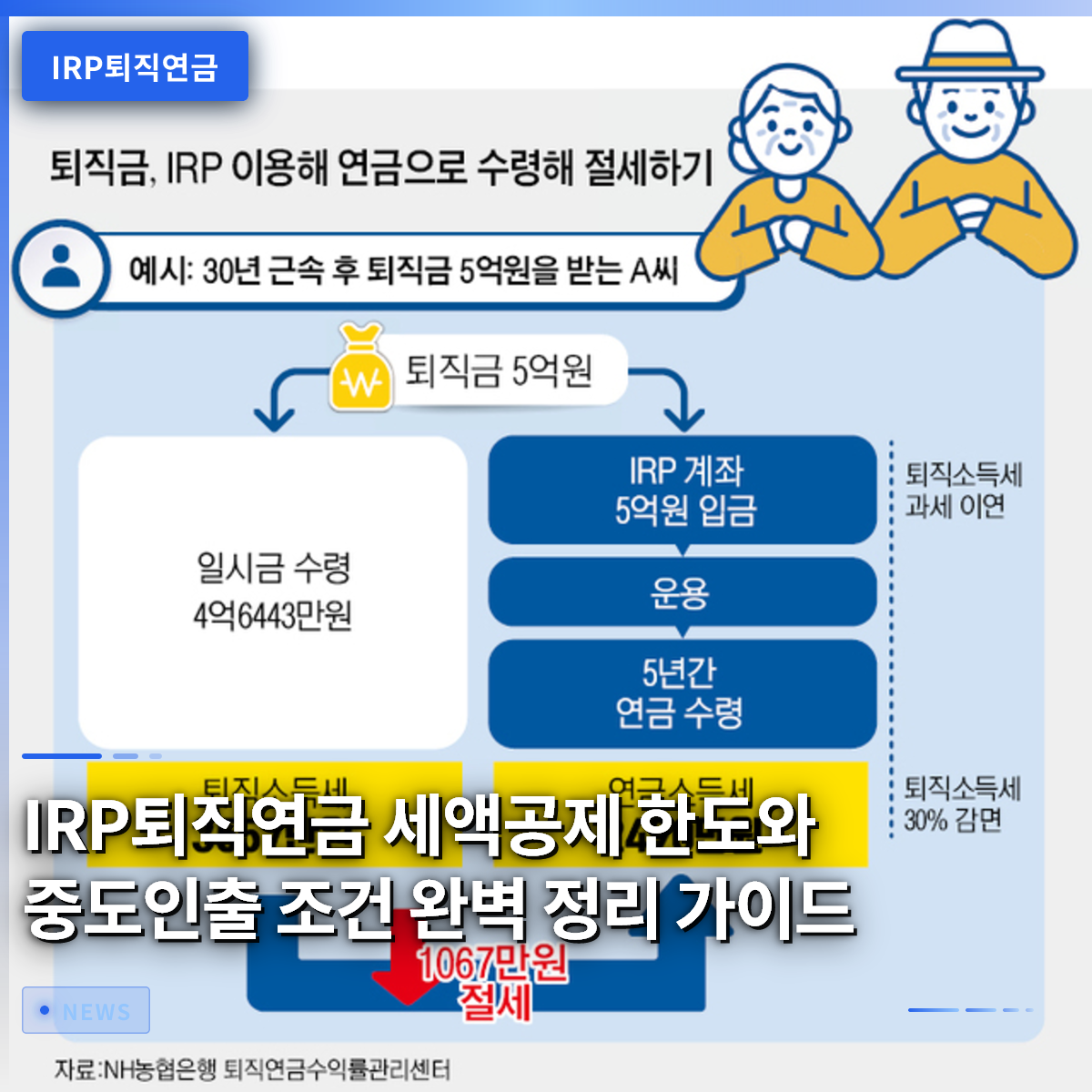
In many cases, it is legally mandatory to receive severance pay into an IRP account, so it is advisable to understand the nature of the account in advance. Within the account, you can invest in various products, including deposits, funds, and exchange-traded funds (ETFs), to enhance returns. A tax deferral benefit is provided, meaning taxes on interest and dividends generated during this period are not paid immediately but are deferred until the pension is received. Consequently, it offers highly favorable conditions for maximizing compound interest effects and growing your valuable retirement assets.
The IRP is an essential retirement preparation account that allows you to manage your assets independently while benefiting from tax deferral.
2. Tax Deduction Limits and Differences from Pension Savings Accounts
During the year-end tax settlement season, many people look for various financial products to reduce their tax burden, and this scheme stands out as a particularly effective tax-saving tool. A combined annual tax deduction limit of up to 9 million KRW applies to the sum of Pension Savings Account and IRP contributions. Specifically, up to 6 million KRW is recognized for the Pension Savings Account alone, and additional contributions to the IRP can be combined to enjoy benefits on a total of up to 9 million KRW. For example, if you contribute 6 million KRW to a Pension Savings Account and an additional 3 million KRW to an IRP, you can receive tax deduction benefits on the full 9 million KRW.
Employees with a total annual income of 55 million KRW or less are subject to a 16.5% deduction rate, allowing them to receive a maximum tax refund of 1.485 million KRW. Even if the total annual income exceeds 55 million KRW, a 13.2% deduction rate applies, enabling a maximum refund of 1.188 million KRW. If the taxes deducted from your monthly salary feel like a burden, it is a smart financial strategy to ensure you meet this limit. However, caution is advised; forcing contributions solely to meet the limit without considering cash flow liquidity may lead to situations where you cannot access funds when urgently needed.
You can enjoy tax deduction benefits on contributions up to a combined annual maximum of 9 million KRW when including Pension Savings Accounts.
3. When Is Early Withdrawal Permitted?
Although these funds are locked away for retirement, life inevitably presents emergency situations where a large sum of money is urgently needed. Early withdrawal is permitted if specific circumstances defined by law are met, so it is helpful to know the conditions in advance. Representative reasons include when a non-homeowner purchases a house in their own name or needs to pay a deposit for a lease. Additionally, withdrawal is possible if the account holder or a dependent requires medical care for more than six months due to illness or injury.
Cases involving a declaration of bankruptcy, a decision to initiate personal rehabilitation proceedings, or significant damage caused by natural disasters are also included in the exception regulations. In practice, there have been cases where an employee, facing a sudden increase in lease deposits, provided proof of meeting the requirements to withdraw part of their funds to resolve the issue. However, it is important to remember that withdrawal is not possible for general reasons such as a change of mind or a lack of living expenses, meaning it differs somewhat from a standard emergency fund.
Early withdrawal is only permitted for legally defined reasons, such as home purchases by non-homeowners or long-term medical care.
4. Cautions Regarding Cancellation and Avoiding a Tax Bomb
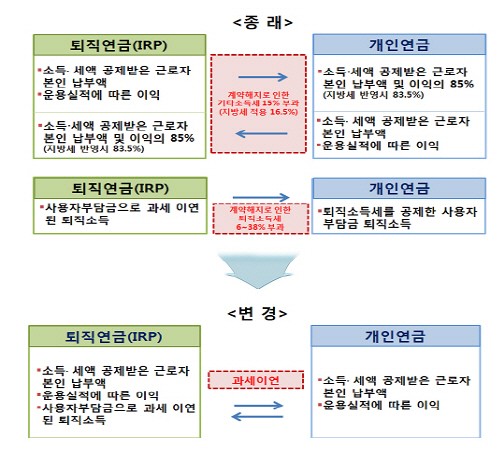
If you find it difficult to maintain the account or urgently need cash, canceling it midway can come at a surprisingly high cost. This is because a 16.5% miscellaneous income tax is immediately levied on the contributed principal and investment returns for which you previously received tax deduction benefits. You will have to pay back the taxes you saved all at once, so cancellation decisions should be made with great caution. If you must withdraw funds, it is more advantageous to first look into early withdrawal options or collateral loan systems rather than canceling the account.
For amounts composed of transferred severance pay, severance income tax is applied upon cancellation, which also increases the tax burden. Therefore, rather than blindly breaking the account just because you need immediate cash, it is better to consult with an expert or seek alternative solutions. To fully enjoy the tax benefits, the most prudent method is to maintain the account consistently until retirement.
You must return the tax deduction benefits received upon early cancellation, so extreme caution is required.
5. How to Receive Benefits as a Pension Later
After the age of 55, you can significantly reduce your tax burden by receiving your accumulated assets in the form of a pension rather than a lump sum. If received as pension income, a low pension income tax rate ranging from 3.3% to 5.5% is applied, depending on the year of receipt. While withdrawing everything at once would require paying high severance income tax or miscellaneous income tax, receiving it in installments has the effect of spreading out the tax liability. For example, by withdrawing a fixed amount each year for living expenses, you can minimize income tax burdens while creating a stable cash flow.
There are also annual limits on the amount that can be received, so you should plan your receipt strategy considering the size of your assets and your expected retirement period. You can easily apply for receipt through bank or securities firm applications, and funds are deposited regularly on a designated date each month. To make your post-retirement life more abundant, it is advisable to simulate these receipt methods in advance.
Receiving benefits in installments as a pension after age 55 can significantly reduce your tax burden due to lower tax rates.
6. Utilizing Latest Financial Company Events and Retirement Preparation Strategies
Recently, the financial sector has been running various events to help customers manage their retirement assets, encouraging new sign-ups. For example, financial institutions like BNK Gyeongnam Bank have held campaigns offering mobile gift certificates to new subscribers and customers managing investment products. Carefully taking advantage of these benefits can provide a small side income while serving as good motivation to start long-term asset management.
In the future, amid trends of low interest rates and an aging society, the attitude of preparing for retirement with one’s own efforts will become even more important. You should actively utilize government tax support policies, build an investment portfolio suitable for yourself, and consistently grow your assets. Check your account status right now, fill up your annual contribution limit, and start designing a secure future.
Actively utilize financial company events and tax benefits to build successful retirement assets.
Frequently Asked Questions
=