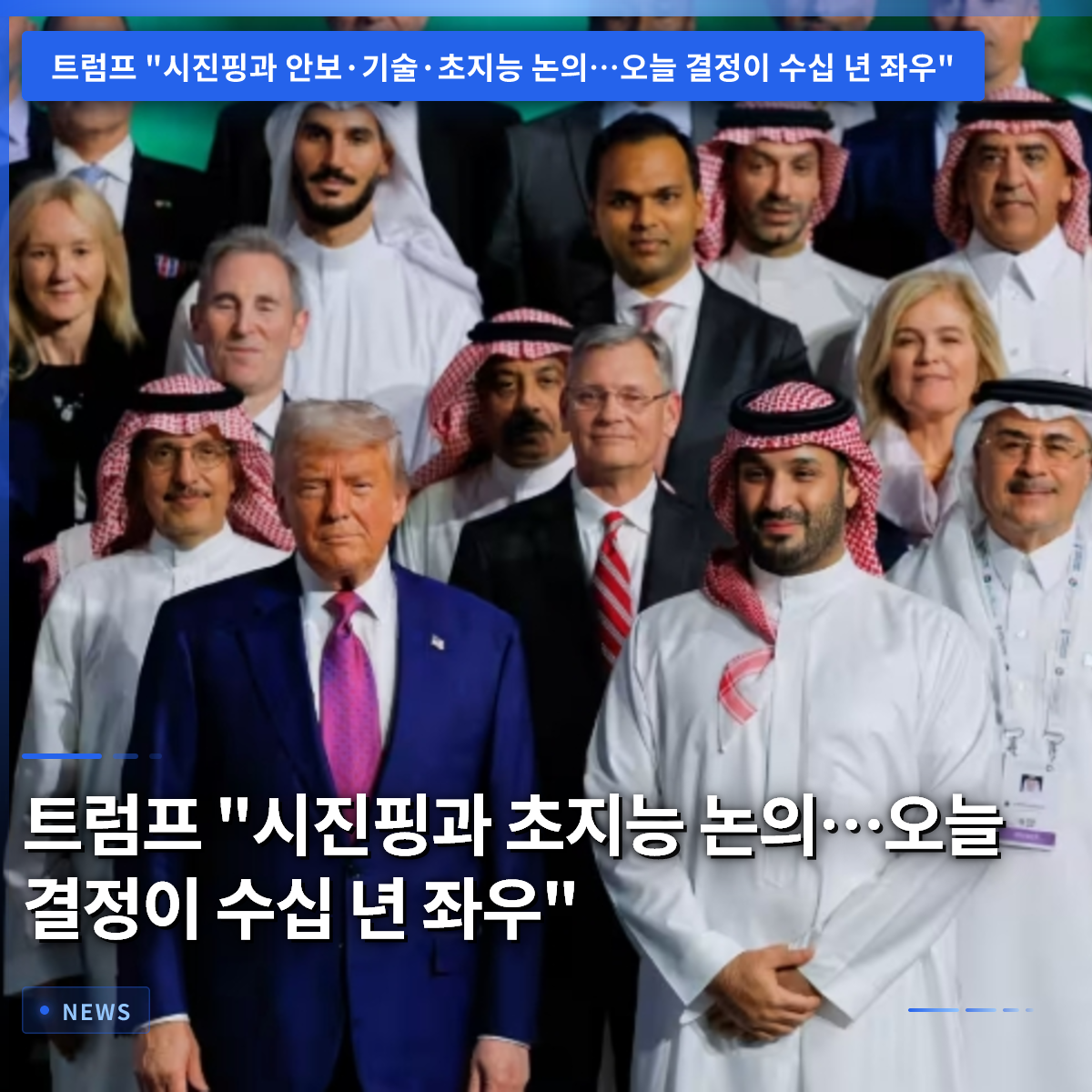
U.S. President Donald Trump declared emphatically that during his summit with Chinese President Xi Jinping, the two leaders focused not only on security and cutting-edge technology but also on the issue of superintelligence, stating that the decisions made today will determine global peace and prosperity for decades to come. This meeting, which goes beyond mere diplomatic rhetoric, has drawn intense global attention as a critical juncture where the two nations face massive technological conflicts and opportunities for cooperation in the rapidly evolving era of artificial intelligence. Attention is focused on how the two leaders, who have previously stood in stark opposition over trade conflicts, will shake hands in the symbolic space of the White House to coordinate leadership in future industries. We must also anticipate and thoroughly prepare for the repercussions these moves by major powers will have on our domestic economy and export markets. From here, we will examine the core agendas and future outlook of this U.S.-China summit in great detail, uncovering the truth behind the behind-the-scenes negotiations over peace and technological hegemony.
=
Trump: “Discussed Superintelligence with Xi… Today’s Decisions Will Shape the Next Decades”
1. A Historic Meeting Realized at the White House
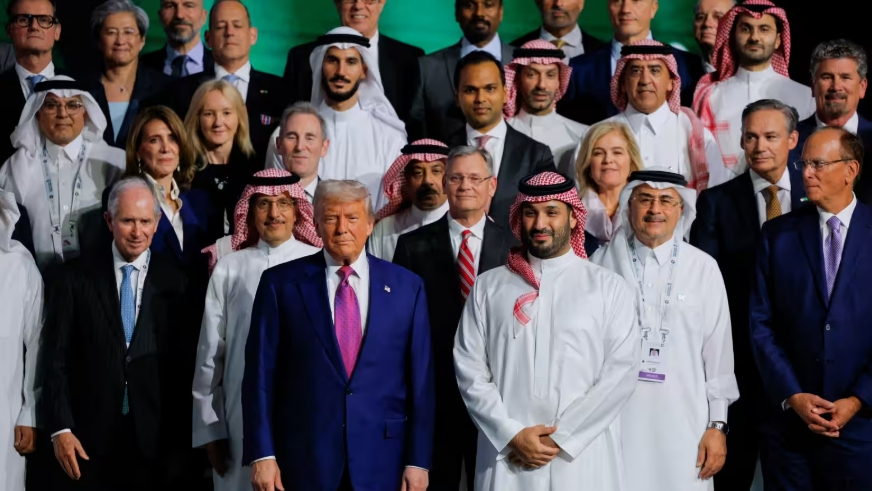
U.S. President Donald Trump and Chinese President Xi Jinping opened a new chapter in bilateral relations by holding a meaningful state visit welcome ceremony at the White House. In his speech, President Trump repeatedly emphasized that this meeting was not merely a ceremonial event but a critical turning point that would determine the future of both nations. Standing side by side and shaking hands under the watchful eyes of the world, the two leaders left a strong impression on the international community. The conduct of the two leaders, who have consistently maintained channels of dialogue despite numerous past trade negotiations and frictions, serves as a prime example of what pragmatic diplomacy looks like. Inviting President Xi and his wife to an official White House event for a grand welcome is also interpreted as a strategic move to gain an upper hand in future negotiations. In today’s harsh reality, even a small gesture by the top leaders of nations can immediately trigger ripples in global financial markets and the stock exchange.
The personal friendship and trust built between the two leaders have also served as a crucial lubricant, helping to steer this summit smoothly. President Trump recalled that since his first election victory, the two have traveled around the world, fostering a genuine friendship based on mutual respect. The bonds formed by meeting heads in various parts of the world, including Germany, Argentina, Japan, South Korea, Beijing, and Palm Beach, Florida, laid the foundation for this White House encounter. The fact that direct dialogue between top leaders remains alive even amid long-standing confrontations acts as a safety net preventing the worst diplomatic clashes. Readers, reflecting on your relationships with those around you, will likely deeply resonate with the idea that human trust allows one to easily overcome rough and difficult hurdles, no matter how complex the interests may be. It is a reminder that diplomacy between massive nations is ultimately a continuous process of people meeting to open their hearts and negotiate.
President Trump and President Xi are forging a diplomatic breakthrough based on their long-standing connection and personal trust, as they hold a grand welcome ceremony at the White House.
2. Core Agendas of Security and Advanced Technology
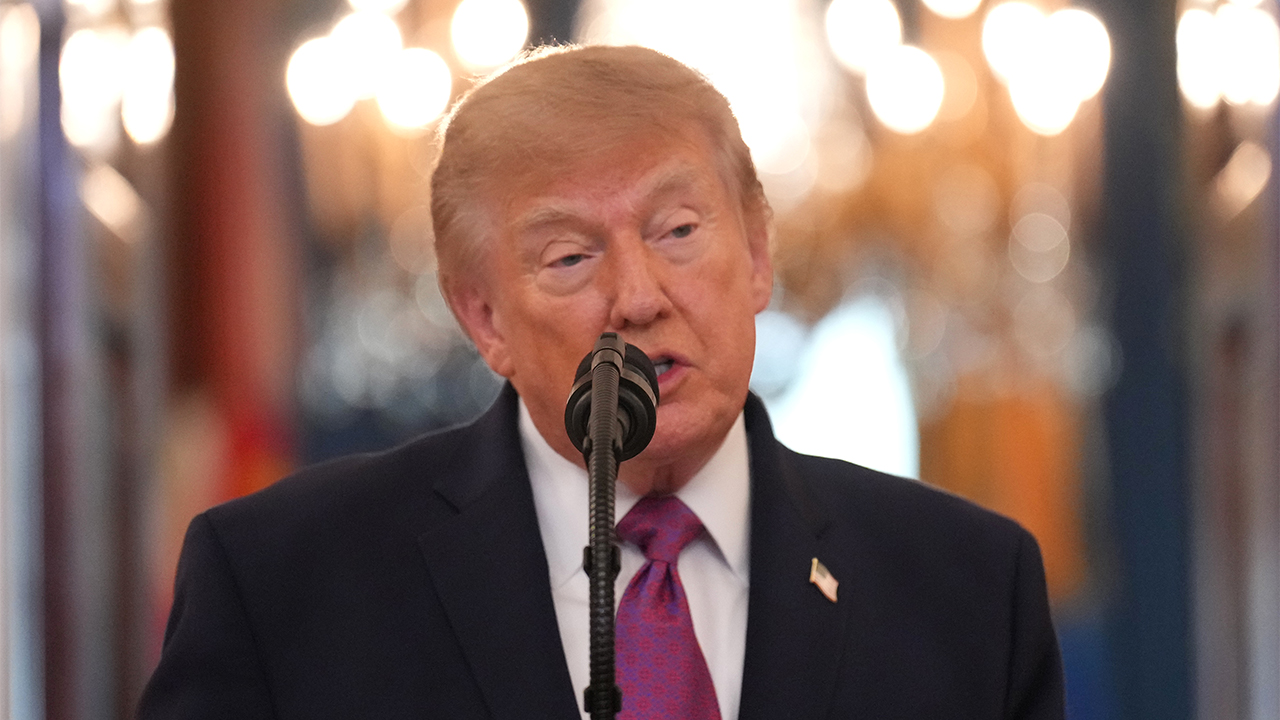
The hottest topic on the table at this summit is undoubtedly the fields of security and advanced technology, which are critical issues that will determine the fate of both nations. President Trump vowed to address the urgent security issues and technological competition problems facing the two countries head-on, without avoidance, during this visit. As long-standing conflicts over advanced semiconductors and supply chains have intensified, the global industrial sector is holding its breath to see what compromise the two leaders will find. Amid the fierce, silent war for technological hegemony, this summit possesses the power to completely shake up the landscape of the global technology ecosystem. The maximum point of interest is how the tense standoff between the U.S., striving to maintain its technological edge, and China, aiming to catch up, will be coordinated within the White House.
Everyone knows that while weapons in the Cold War era were limited to military force, today’s weapons are advanced technologies themselves, such as semiconductors and artificial intelligence. If the two nations join hands in cooperation in this field, the global economy may find stability; conversely, if conflicts intensify, all companies worldwide will take a direct hit. In reality, countless small and medium-sized enterprises and large corporations around us are conducting business daily on thin ice due to issues with raw material supply and conflicts over technology standards. The moment the technological decisions mentioned by President Trump are concretized, immediate changes will inevitably occur in the stock prices and performance of domestic export companies. Therefore, we must keep in mind that the technological hegemony battle between these two giant nations is not just a news story but a critical matter that directly impacts our wallets and jobs.
The fierce struggle for leadership between the U.S. and China over security and advanced technology is entering a new phase through this summit.
3. Warnings and Opportunities Toward the Era of Superintelligence
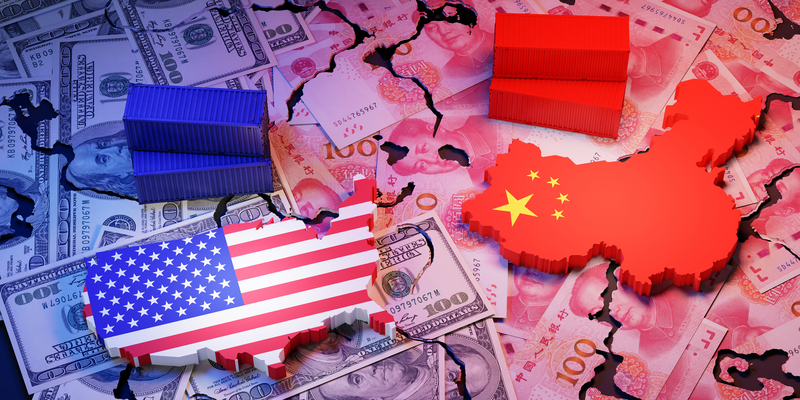
The most noteworthy aspect of this summit is that the two leaders have agreed to pool their resources to address the issue of superintelligence, which will change the future of humanity. President Trump displayed extreme tension, stating that the decisions made in this field today will determine the peace and prosperity of humanity for the next several decades. Because superintelligence technology has the potential to far surpass human intelligence, moving beyond existing AI stages, the two nations must jointly establish regulations and standards. Voices are growing louder that they must stop competing and agree on minimal safety measures to prevent the security disaster that an out-of-control superintelligence could bring. If the U.S. and China join hands in this area, humanity will achieve a leap to a new dimension; however, if they take opposing stances, the world risks falling into uncontrollable chaos.
Imagine this: an era is approaching where overwhelming intelligence that transcends human commands controls the world’s financial networks and security systems. The general public feels extreme anxiety about the pace of development of such ultra-advanced technology, with nine out of ten people sounding the alarm in related surveys. It is a clear fact that technological development brings us convenience, but it is also an undeniable truth that it brings with it a fear that cannot be controlled. The fact that the two leaders have adopted superintelligence as a formal agenda item itself is evidence that they seriously recognize the risks and impact of this technology. We must also look coldly at the hidden risks behind technological progress and exercise wisdom in establishing thorough institutional safeguards.
In response to the emergence of superintelligence technology, which will determine the future of humanity, the two leaders are approaching the summit with the massive homework of control and cooperation.
4. Strategies for Trade Balance and Pragmatism
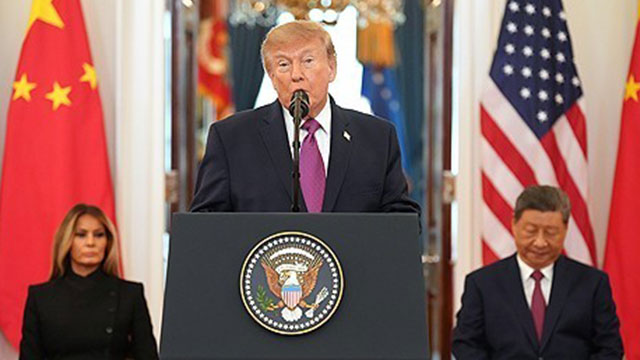
In addition to security and technology, the two nations are continuing a tense tug-of-war to secure practical benefits in the trade sector, producing concrete results. President Trump mentioned the U.S.-China Trade Committee formed during his visit to Beijing in May, evaluating that the two countries have made significant progress in resolving the difficulties they face. He emphasized that working-level teams have been sweating it out to build a more balanced trade relationship by helping U.S. farmers and ranchers access broader markets. This marks a shift from the grim landscape of a trade war involving indiscriminate tariff bombs to a sophisticated, pragmatism-focused negotiation system. This change is breathing life into global supply chain stability and is being interpreted as a positive signal by economists worldwide.
In reality, countless traders and small business owners are refreshing their smartphone screens day and night, keeping a close eye on news of exchange rate fluctuations and the easing of import/export regulations. We know from experience that every time a massive inter-state trade agreement is signed, the prices of imported fruits in local supermarkets or gasoline at gas stations fluctuate wildly. The reason the Trump administration is conscious of the voting intentions of farmers while not giving up dialogue with China is ultimately a high-level strategy to secure economic practicality while maintaining the upper hand. China is also in a desperate position, needing to minimize trade friction with the U.S. to resolve its internal economic slump and youth unemployment issues. The process of the two nations making difficult requests to each other to find a compromise point is surprisingly similar to the scene of adjusting prices with business partners in the commercial world.
Through working-level negotiations via the Trade Committee, the two nations are seeking a balanced trade relationship by increasing market access for farmers and ranchers.
5. Visits to Historic Sites and Diplomatic Symbolism
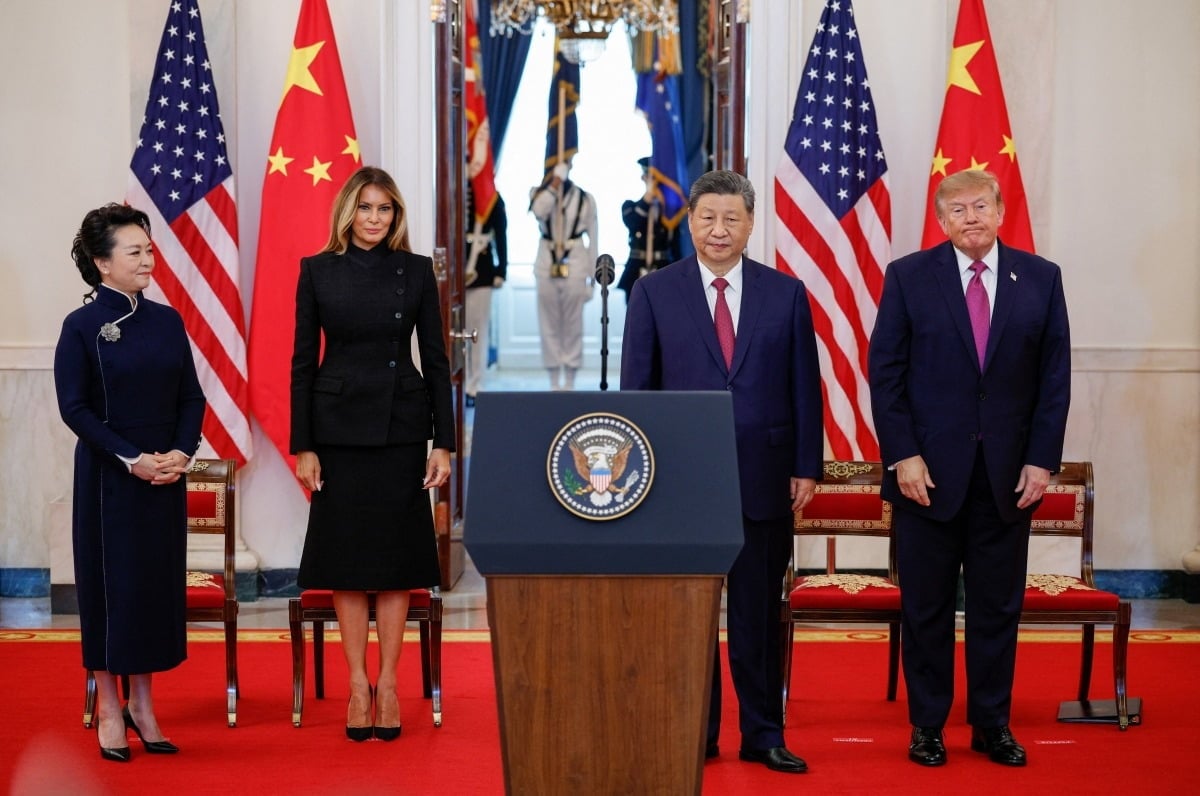
In addition to the major political agendas of the summit, President Trump and President Xi are scheduled to participate in a special itinerary commemorating the 250th anniversary of the founding of the United States. The two leaders plan to make a surprise visit to the National Archives and Records Administration to view historical documents that form the foundation of the nation, such as the Declaration of Independence, the Constitution, and the Bill of Rights. This move is a high-level diplomatic staging intended to directly show the identity of the massive nation that is the United States to China’s top leader, conveying a deep historical message beyond mere tourism. The sight of the two leaders walking together through places containing the roots of America, stepping away from the glamorous banquet halls of the White House, will emit a powerful staging effect under the barrage of cameras from the world’s media. There is no better stage to convey the symbolic meaning that the two nations must move toward the future, transcending past history and ideological conflicts.
History has proven countless times how much destructive power venue selection and symbolic events hold on the diplomatic stage. A single small gesture or a walk in a meaningful place often moves the hearts of the people of both nations more powerfully than thousands of treaty documents. Readers, you will know that when making important contracts or reconciling, having a sincere conversation in a pleasant atmosphere is far more effective than talking only in a fancy office. Analyses from the global diplomatic community are already pouring out about what conversations the two leaders will have while looking at historical documents side by side. Through these symbolic itineraries, the two nations are steadily building the justification for cooperating in the face of massive human tasks while respecting each other’s systems.
Through symbolic itineraries, such as jointly visiting the National Archives and Records Administration to mark the 250th anniversary of the founding, the two nations are further strengthening diplomatic cohesion.
6. Today’s Decisions That Will Change the Future Landscape
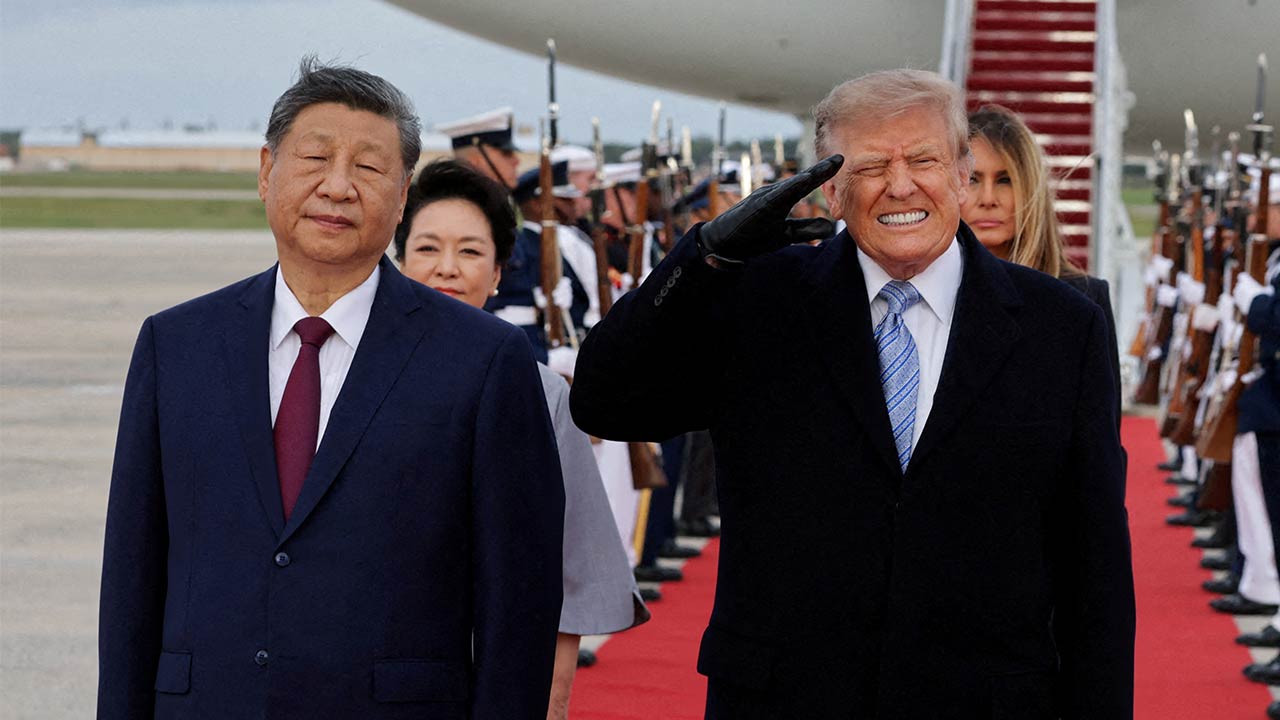
This meeting between President Donald Trump and President Xi Jinping is not simply a gathering of two leaders but a critical watershed that will determine the fate of the globe for the next several decades. From security and technology to the issue of superintelligence, which involves the survival of humanity, every decision made today will deeply penetrate the lives of all citizens worldwide. We must keep our eyes open to see how far the two leaders, who have pooled their resources for common interests despite the scars of conflict and confrontation, will be able to reach an agreement. Readers, please always pay attention to the news emerging from the rapidly changing international situation and build a strong defense to protect your assets and business. In the coming era of new technological hegemony, formulating a wise survival strategy is the only answer to navigating this chaotic time. When the wave of massive change approaches, I hope you will exercise the wisdom to read the flow accurately and prepare one step ahead, rather than feeling fear.
The major decisions to be made by the U.S. and Chinese leaders today will be key variables determining the landscape of the global economy and security for the next several decades.
Frequently Asked Questions
=