U.S. President Donald Trump and Chinese President Xi Jinping held a summit at the White House in Washington, showcasing the personal rapport between the two nations. While this meeting focused on highlighting the personal bond between the two leaders, many remain skeptical about whether it will lead to the resolution of substantive conflicts. During the pre-summit welcome ceremony, President Trump mentioned the great friendship built over a long period and emphasized common interests. In response, President Xi stated that the slogan of the great rejuvenation of the Chinese nation and the slogan of America’s resurgence can move forward together. However, behind the statements of the two leaders lie the complex entanglements of each country’s political situation and specific economic goals. In this article, we will thoroughly examine the key statements from this summit and the diplomatic challenges facing both countries.
=
US-China Summit Held in Washington: Analyzing the Push-and-Pull Diplomacy of Trump and Xi Jinping
1. The Welcome Ceremony in the White House Rose Garden and the First Impressions of the Two Leaders
U.S. President Donald Trump and First Lady Melania personally welcomed Chinese President Xi Jinping and his wife, Peng Liyuan, at the White House residence, extending state-level courtesies. In the Rose Garden of the White House in Washington, a grand honor guard review was held to celebrate the meeting of the two leaders. In his welcome speech, President Trump highlighted that President Xi is the first Chinese leader in history to make an official visit to the United States for the second time. He recalled how he had built connections by traveling around the world since 2016, from Germany and Argentina to Japan, South Korea, Beijing, and Palm Beach. He emphasized that these meetings had laid the foundation for building a truly great friendship, going beyond mere diplomatic events. He repeatedly stressed that the relationship between the two men had been strengthened based on mutual respect and the vital interests of the citizens of both countries.
President Trump mentioned past negotiation processes and assessed that significant progress had been made in resolving the challenges facing both countries. In particular, he cited the establishment of the US-China Trade Committee, agreed upon during his visit to Beijing last May, as a representative achievement. He expressed satisfaction, stating that this trade committee had opened up a huge opportunity for American farmers and ranchers to develop new markets. However, contrary to the President’s self-praise, the atmosphere on the ground in practical terms is quite different. Contrary to President Trump’s claims, the committee is still in the initial negotiation stage of establishing a specific body. Thus, behind the flashy rhetoric, a huge mountain of obstacles remains to be overcome before a substantive agreement can be reached.
While Trump emphasized personal friendship, practical negotiations remain in the initial stages.
2. Xi Jinping’s Response and the Combination of Slogans
Chinese President Xi Jinping also responded by mentioning his long-standing connection with President Trump, stating that they had firmly strengthened their personal rapport and bond. He assessed that today’s occasion was a precious time prepared to further expand the friendship between the two and to broaden cooperation between the two countries. In particular, he argued that the national goal of the great rejuvenation of the Chinese nation and the slogan of America’s resurgence can sufficiently move forward together. These remarks are interpreted as part of a pragmatic diplomatic strategy to pursue national growth while avoiding a full-scale clash with the United States. The image of the two leaders holding hands and smiling in front of the cameras was sufficient to signal to both domestic and international audiences that relations between the two countries are stable.
However, President Xi’s remarks showed a clear distinction from President Trump’s speech, which remained at the level of simple pleasantries. President Xi clearly stated what specific goals China aims to achieve through this summit. He calmly pointed out that the interests of China and the United States are already deeply intertwined to the point where they cannot be separated. Emphasizing that there is still a very wide space for the two countries to cooperate, he urged substantive dialogue. He warned that while the two countries cannot solve all the problems of the world, it would be difficult to resolve global challenges without cooperation.
Xi Jinping went beyond personal rapport to clearly present specific areas of cooperation and economic goals.
3. Differing Perspectives on Trade and Investment
Continuing his speech, President Xi Jinping emphasized that the doors of the Chinese market remain wide open. He stated that all American companies wishing to invest directly in China and operate businesses are always welcome with pleasure. However, as a prerequisite, he voiced the hope that Chinese companies operating in the United States would also receive fair and non-discriminatory treatment. This is interpreted as an indirect expression of dissatisfaction with the stringent sanctions and containment measures taken by the U.S. government in recent years. It effectively made it clear to both domestic and international audiences that economic exchanges between the two countries must proceed in a mutually beneficial direction.
The Trump administration has continued to apply pressure by imposing high tariffs on Chinese products under the pretext of protecting domestic industries. In response, China has maintained tense standoff by countering with controls on the rare earth supply chain and regulations on U.S. companies. At this summit as well, weight was placed on the symbolic meaning of continuing dialogue rather than resolving fundamental conflicts in the economic sector. There is realistic pressure to open up new markets for American farmers and business people. Meanwhile, a subtle tug-of-war continues as China, in a situation where it urgently needs U.S. capital investment to revitalize its own economy, seeks to balance its interests.
Xi Jinping welcomed U.S. companies while demanding fair treatment for Chinese companies.
4. The Thucydides Trap and the Theory of New Competition
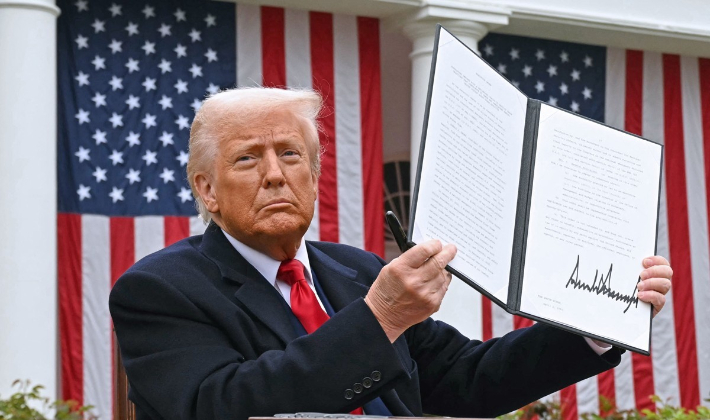
In this speech, President Xi Jinping directly mentioned the concept of the “Thucydides Trap,” frequently discussed in international political science, drawing attention. This theory posits that when an emerging great power rises rapidly, the existing hegemon becomes wary, ultimately leading to war or armed conflict. He warned that two giant powers like the U.S. and China can only gain benefits through cooperation, and that confrontation leads to mutual destruction. He argued that while competition is an unavoidable reality, it must be a good-faith competition to outdo one another. He pointed out that it must absolutely not become like a wrestling match where brinkmanship is employed to determine a winner and a loser.
These remarks appear to be aimed at the fierce struggle for dominance currently taking place over leadership in artificial intelligence and advanced technology. He suggested that indiscriminate pressure from the U.S. in the high-tech sector could potentially cause irreversible damage to both countries. The U.S. is also in the process of weaving a tight web of comprehensive regulations to curb China’s rapid technological pursuit. However, a realistic diagnosis coexists that complete decoupling is impossible given that the economies of both countries are already connected as one giant supply chain. It is fortunate that the two leaders formed a consensus on establishing a minimal safety device to prevent catastrophe through this meeting.
Xi Jinping mentioned the Thucydides Trap, urging good-faith competition instead of exhausting confrontation.
5. The Direction of Artificial Intelligence and Future Technological Hegemony
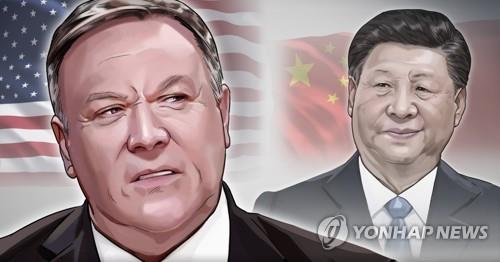
The rapid development of artificial intelligence technology is one of the core issues most intensely discussed behind the scenes of this US-China summit. As advanced semiconductor and supercomputing capabilities are directly linked to national security, the two countries are engaged in a technological war with no room for compromise. The Trump government has maintained a policy of fully controlling the export of advanced semiconductor equipment to China on the grounds of national security. In response, China is rushing to develop independent technology and achieve supply chain self-reliance, striving to break through the U.S. containment net. It is widely analyzed that it will be difficult to establish a groundbreaking breakthrough regarding specific agreements or regulatory relaxation in the field of artificial intelligence at this summit.
Nevertheless, the fact that the two leaders showed their will not to let go of the thread of dialogue in the field of advanced technology is significant. Establishing international standards to prevent the potential risks and misuse of artificial intelligence has emerged as an urgent task. There is a loud voice calling to prevent the competition for technological hegemony from escalating into military conflict or a global economic crisis. Experts predict that the two countries are highly likely to continue limited cooperation in areas such as setting technical standards and safety verification. While full restoration of trust is distant, managed diplomacy to prevent the worst-case scenario is expected to continue for the time being.
Amid the struggle for hegemony in advanced technology and artificial intelligence, the two countries are seeking limited cooperation.
6. Future Global Situation and the Path for South Korea
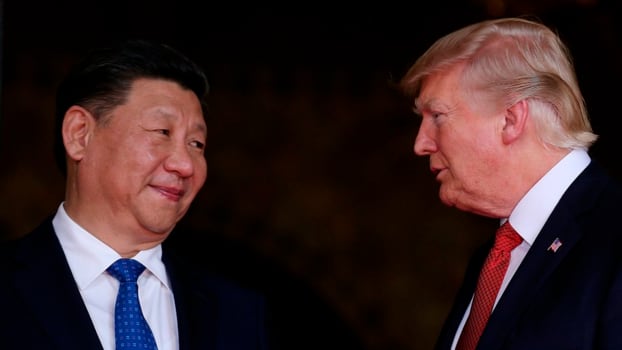
Despite the amiable atmosphere created by the two leaders, this Washington US-China summit was insufficient to resolve structural conflicts. There remains a significant gap in perspective between President Trump’s display of personal rapport and President Xi Jinping’s presentation of specific goals. Trade friction and the competition for technological hegemony between the U.S. and China will continue to act as major variables shaking the global economy for a long time. The diplomatic strategy that South Korea should adopt between these two giant nations must be more cautious and meticulous than ever. It is essential to have a sense of balance that firmly maintains the U.S.-South Korea alliance while wisely coordinating economic relations with China, its largest trading partner.
The greater the uncertainty in the global economy, the more private companies and the government must make every effort to diversify supply chains. Reducing dependence on specific countries and pioneering new overseas markets have become essential conditions for survival. A posture of coldly analyzing the rapidly changing trends in the international situation and responding proactively will determine our future. We hope that readers will carefully examine the behind-the-scenes aspects of this US-China summit and thoroughly prepare for the upcoming economic changes. We will continue to monitor the movements on the global diplomatic stage and seek wise response strategies.
Amid US-China tensions, South Korea must strike a balance through a solid alliance and wise economic diplomacy.
Frequently Asked Questions
=