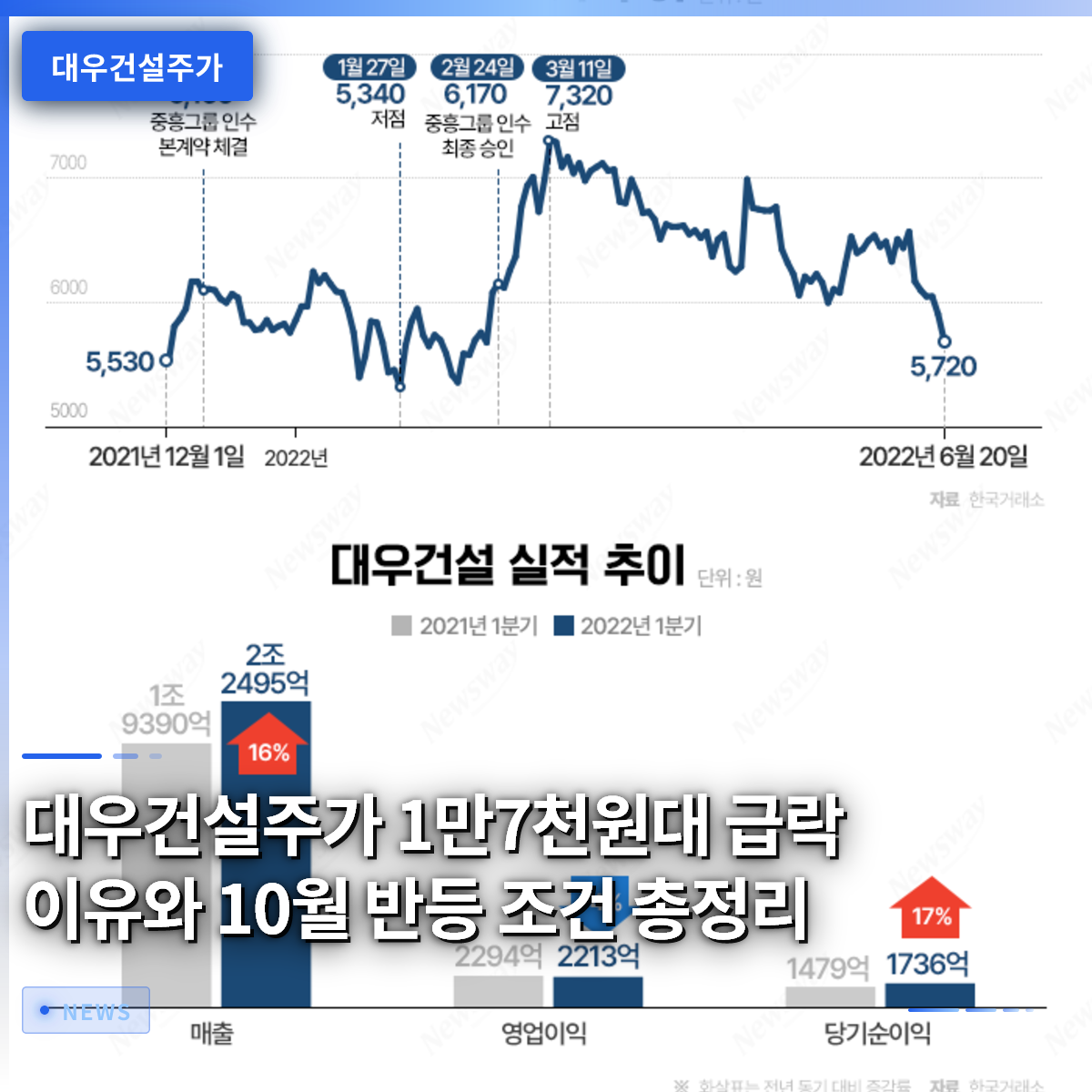
Daewoo E&C stock recently plummeted to the 17,000 won range on the exchange, delivering a major shock to many investors. Despite the KOSPI index showing an upward trend, the construction sector as a whole failed to escape its sluggish performance. In particular, while individual investors rushed to buy, they were unable to absorb the selling pressure from foreign and institutional investors. During the recent trading session, Daewoo E&C attracted significant market attention, ranking among the top stocks by trading value. However, the stock price closed at 17,440 won, recording a drop of over 7 percent. It is crucial to determine whether this sharp decline is merely a temporary correction or a signal of further drops. In this article, we will carefully examine the true reasons behind the plunge in Daewoo E&C stock and the key conditions necessary for a rebound in October.
=
Why Daewoo E&C Stock Plunged to the 17,000 Won Range and Key Conditions for a Rebound in October
1. Background of the 7% Plunge in Daewoo E&C Stock
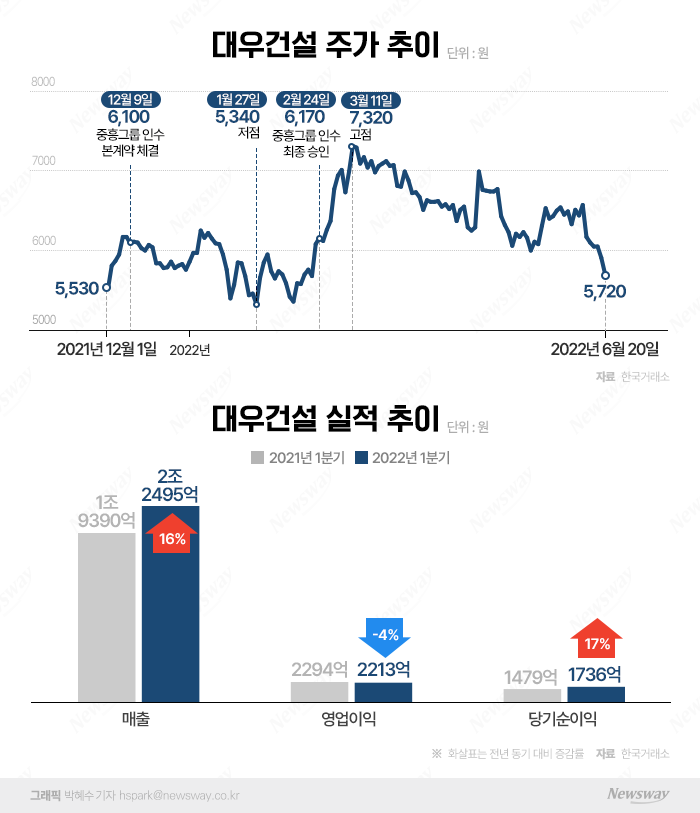
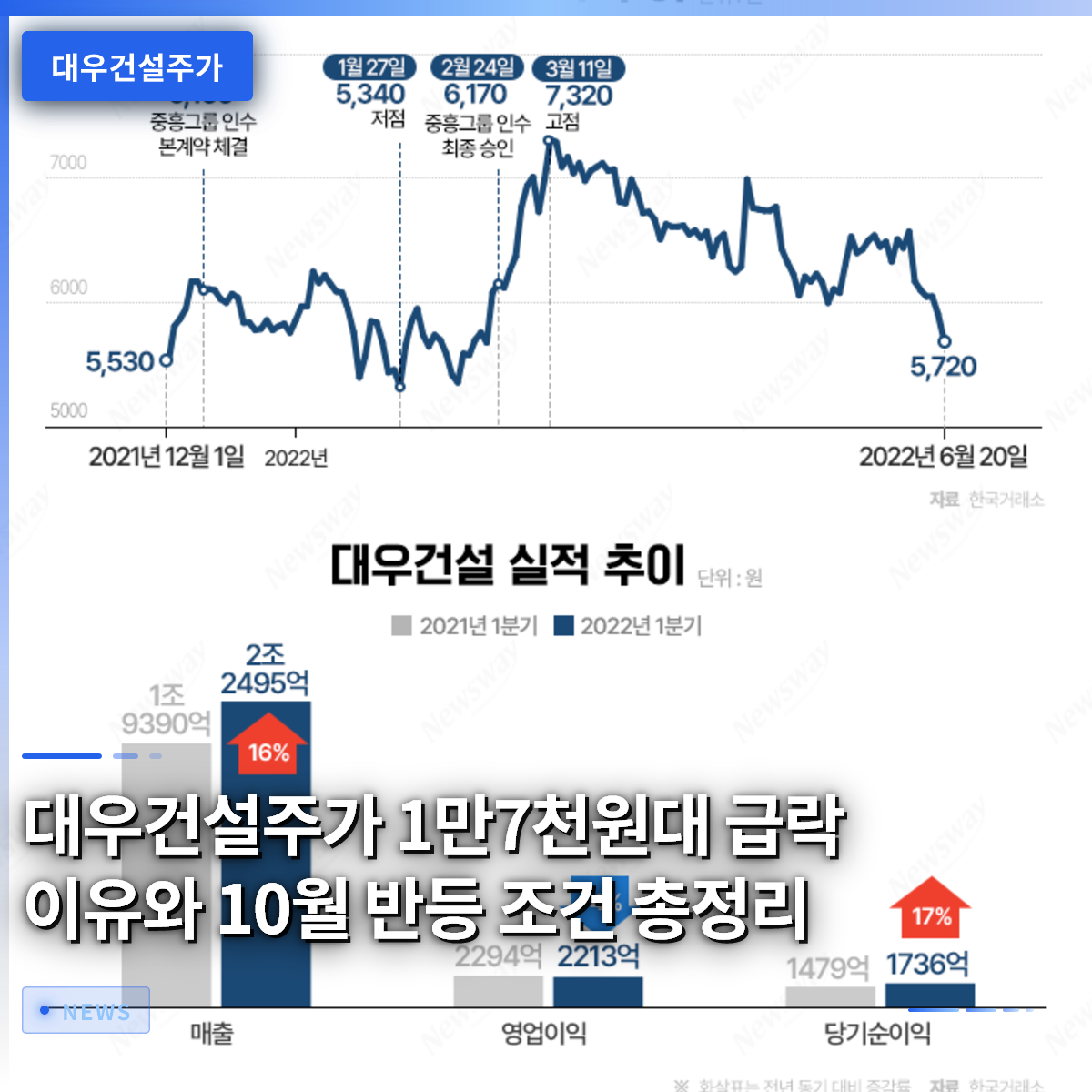
Daewoo E&C stock closed at 17,440 won, plunging by more than 7 percent in recent trading. This was a stark contrast to the overall market sentiment, which was not bad given that the KOSPI index rose slightly. At one point during the session, the stock price was pushed down to 17,300 won, heightening investor anxiety. While the stocks of major construction companies generally showed weakness, the decline in this individual stock was particularly steep. Market participants are debating whether this sharp drop is due to simple profit-taking or concerns about earnings. As the stock price fell rapidly, many investors found themselves in the red.
Ranking among the top stocks by trading value is evidence of the intense market focus on the stock. Daewoo E&C recorded trading volume of approximately 179.6 billion won that day, placing it in the upper ranks among all stocks. A surge in trading volume indicates a fierce battle between buyers and sellers. However, the market ultimately saw a sell-off, and the stock price could not withstand the downward pressure. Mr. Kim, an office worker who closely follows the stock market, confessed that he was stunned to see his account down 7 percent on his way to work. Such extreme volatility acts as a major factor in freezing investor sentiment.
Daewoo E&C stock closed at 17,440 won, plunging by more than 7 percent regardless of the KOSPI’s upward trend, while trading volume surged, drawing significant market attention.
2. Joint Net Selling by Foreign and Institutional Investors
One of the decisive factors behind the sharp drop in Daewoo E&C stock is the withdrawal of major supply and demand players. Recent weekly exchange trends show that foreign and institutional investors have designated Daewoo E&C as a primary target for net selling. Foreign investors shifted their focus to semiconductor and defense-related stocks, reducing their allocation to construction stocks. Institutional investors also heavily sold Daewoo E&C shares while restructuring their portfolios to focus on financial stocks and large-cap blue chips. With “smart money” in the form of foreign and institutional investors simultaneously showing a selling bias, the stock price could not hold its ground.
The dual selling by institutions and foreigners is the main culprit deepening the decline in the stock price. No matter how much capital individuals pour into buying, it is difficult for a stock to establish an upward trend when major supply and demand players are exiting. Experts diagnose this as a typical decline due to a supply and demand gap. In fact, analyzing securities reports and market trends reveals that changes in foreign trading patterns have an absolute impact on stock prices. Investors are closely watching when these major supply and demand players will switch back to buying. For the time being, strong positive news is urgently needed to fill this supply and demand gap.
Foreign and institutional investors drove the stock price decline by intensively net selling Daewoo E&C.
3. Intensive Buying by Individual Investors and Its Limitations
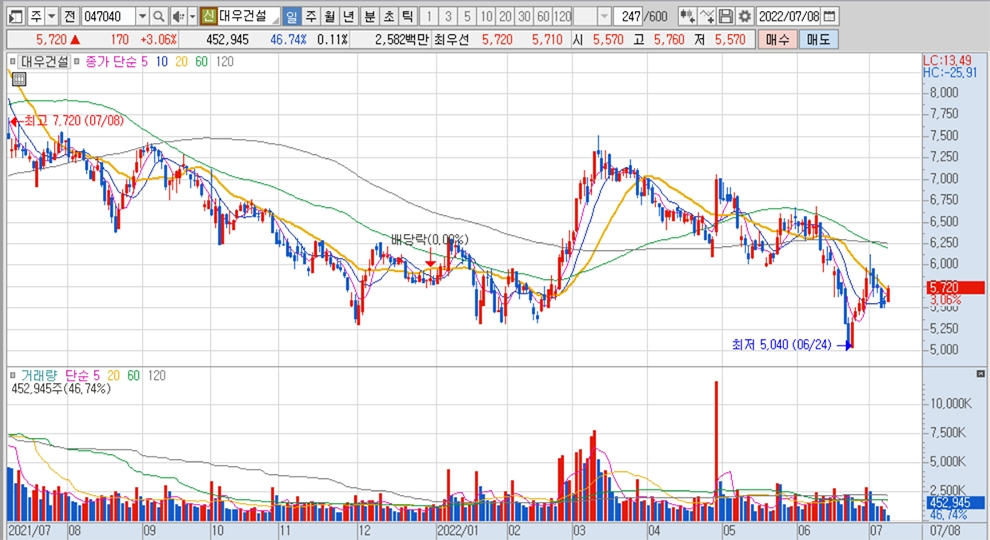
The volume sold by foreigners and institutions was entirely absorbed by individual investors. Daewoo E&C proudly made the list of top net buying stocks by individuals, alongside Doosan Enerbility and Naver. This is the result of individuals actively injecting capital, judging the price drop as a low-price buying opportunity. Stock communities and bulletin boards were flooded with analyses claiming that the 17,000 won range would serve as a strong support line. The “ant army” of individual investors, believing the drop was excessive, proceeded with additional purchases in anticipation of a rebound.
However, the buying pressure from individual investors alone was insufficient to reverse the downward trend. Contrary to individual expectations, the stock price showed no signs of rebounding and instead continued to slide. Mr. Park, an office worker and small shareholder, reported that he took on debt to make additional purchases but is suffering greatly due to the consecutive drops. Stocks with a high concentration of margin trading or unsettled transactions by individual investors tend to experience even greater volatility. This imbalance in supply and demand structure can act as a significant burden if the stock price undergoes further adjustments. It is necessary to coldly judge whether the buying enthusiasm of individual investors is a sign of overheating or a wise bottom-fishing opportunity.
Individual investors aggressively absorbed foreign selling, but there were limits to defending the stock price due to supply and demand imbalances.
4. Deteriorating Investor Sentiment Across the Construction Sector
This is not just a problem for Daewoo E&C; the entire domestic construction sector is experiencing severe investor sentiment deterioration. Recently, construction-related stocks frequently appear in the top rankings by trading value in the securities market. However, most of these stocks have failed to avoid a downward trend, remaining in the shadow of a bearish market. Concerns about a real estate recession and rising raw material prices are negatively impacting the profitability of construction companies. Voices in the market are gaining traction that the recovery of the construction industry may be delayed compared to initial expectations.
These macroeconomic headwinds act as a barrier to stock price increases, even for companies with solid fundamentals. Daewoo E&C, despite having expectations for overseas plant orders and nuclear power-related projects, could not escape the overall weakness of the sector. The securities industry recommends maintaining a conservative investment position in construction stocks. This is because it takes considerable time for flashy order news to translate into actual operating profits. Investors should consider the timing of a sector-wide turnaround rather than relying on short-term thematic supply and demand.
Investor sentiment across the entire construction sector has significantly deteriorated due to the overlap of real estate recession concerns and industry weakness.
5. Key Conditions for a Stock Price Rebound in October
For Daewoo E&C stock, which has recorded a sharp decline, to rebound in the approaching October, several prerequisite conditions must be met. Most urgently, the selling pressure from foreign and institutional investors must subside and shift to a net buying trend. Without inflow from major supply and demand players, the stock price will either continue a boring sideways trend or be exposed to the risk of further declines. Additionally, there must be visible prospects for earnings improvement, along with further news of overseas nuclear power or large-scale plant orders. Only when visible results are achieved to restore market confidence can investor sentiment revive.
Technically, it is important for the 17,000 won line to act as a solid floor, defending against further drops. If this price level breaks, the stock could fall to the 16,000 won range, so risk management must be handled with utmost care. It is necessary to approach target prices and earnings forecasts presented in securities reports from a conservative perspective rather than blindly trusting them. Instead of relying on hearsay from acquaintances, investors should develop the habit of directly checking company disclosures and financial status. Since October is the period ahead of Q3 earnings announcements, the presence or absence of earnings improvement will be a decisive turning point.
For a rebound in October, improved supply and demand from foreign and institutional investors, along with new orders that boost earnings expectations, are essential.
6. Successful Investment Strategies and Future Outlook
Investors currently holding Daewoo E&C stock or considering a new entry must formulate a thorough split-buying strategy. Rushing to go all-in without confirming that the stock price is bottoming out is a very risky action. Wisdom is needed to adjust positions only within a range that one can afford to lose from their investment assets. Rather than reacting emotionally to short-term price fluctuations, patience is required to believe in the company’s intrinsic value from a medium-to-long-term perspective. Since the stock market is always full of unexpected variables, a contingency plan must always be prepared.
In conclusion, Daewoo E&C is undoubtedly a high-quality company with solid construction capabilities and global plant competitiveness. However, it is currently facing the double burden of deteriorating supply and demand and sector weakness. It is wise to refrain from excessive leverage, maintain an appropriate cash ratio, and observe the market situation. Please carefully monitor upcoming major economic indicators and the company’s official earnings announcements. Thorough analysis and cold-blooded response are the only ways to protect your account in a market with extreme volatility.
It is advisable to maintain a medium-to-long-term approach based on thorough split-buying and risk management.
Frequently Asked Questions
=