
As the won-dollar exchange rate recently plunged by over 200 won in just two months, signaling a sharp strengthening of the Korean won, attention from the securities industry and investors has quickly shifted to stocks that benefit from a falling exchange rate. The aviation sector, which has seen a significant reduction in fuel and raw material import costs, and domestic-focused food companies are being highlighted as prime beneficiaries. Indeed, massive capital from foreign investors is concentrating on these stocks. The exchange rate, which exceeded 1,500 won in early July, has recently dropped to the mid-1,300 won range, completely altering the market landscape. The impact of exchange rate fluctuations on individual companies’ performance and stock prices is often more intuitive and powerful than one might think. In this article, we will examine in detail, with specific figures, why stocks that benefit the most from a falling exchange rate are receiving such market favor. We will carefully go through the key information investors should not miss, so please stay with us to the end.
=
Why Foreigners Bought 4 Trillion Won Worth of Stocks That Gain Billions When the Exchange Rate Falls

1. The Background of the Sharp Exchange Rate Drop and Market Changes
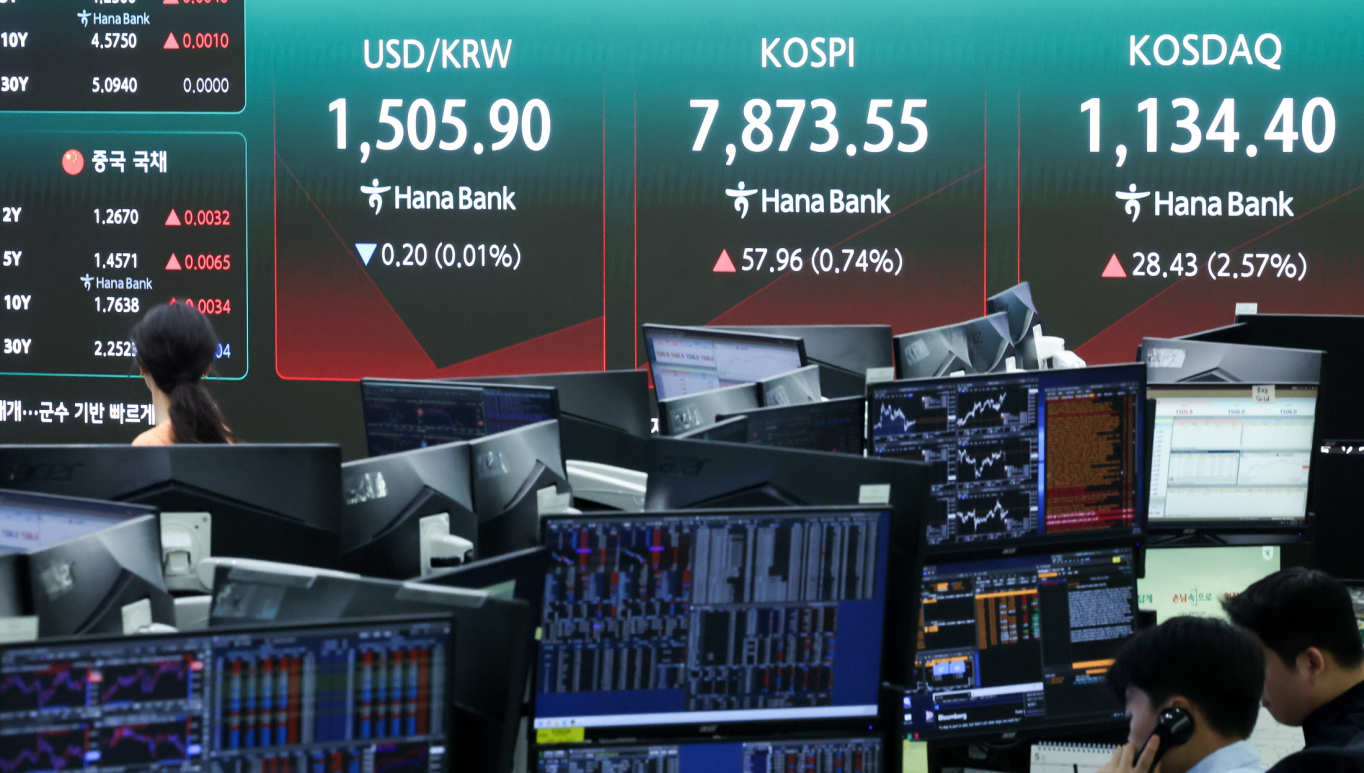
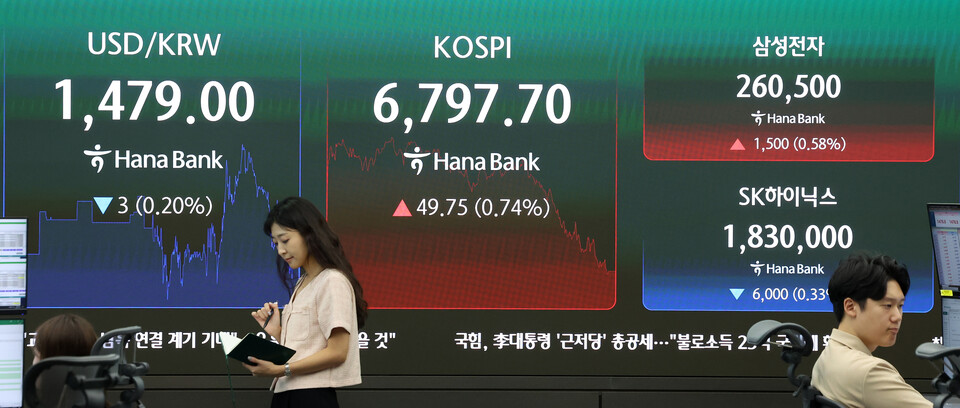
The won-dollar exchange rate, which had surged to 1,555 won in early July, has recently plummeted to the 1,330–1,340 won range. A drop of nearly 13% in just two months is a highly unusual phenomenon that has surprised market participants. This sharp strengthening of the won was driven by major domestic exporters, led by the semiconductor sector, bringing in massive amounts of dollars earned overseas and converting them into won. As the market experienced a surplus of dollar supply, downward pressure on the exchange rate intensified. In fact, the rate of decline recorded over the two months of July and August is the fourth steepest since the introduction of the market average exchange rate system in 1990. Such rapid directional shifts in the exchange rate are not just movements in macroeconomic indicators; they act as a core variable that shakes up individual companies’ performance and stock price trends. Foreign investors are quickly picking up on these macroeconomic changes and aggressively buying up stocks expected to benefit. Looking back at past investment experiences, sectors that benefit from a falling exchange rate have consistently emerged as market leaders.
With the won-dollar exchange rate plunging by over 200 won in two months, investor interest is concentrating on stocks that benefit from the falling rate.
2. A Massive Tailwind for the Aviation Industry and Foreign Buying Pressure
The aviation industry is undoubtedly the sector that benefits most clearly and intuitively from a falling exchange rate. Airlines primarily settle fuel costs, aircraft lease fees, and interest on overseas borrowings in dollars, so their costs drop dramatically as the won strengthens. The reduced burden of currency conversion has led to an explosive increase in overseas travel demand from domestic tourists and a rise in export cargo volume, providing strong wings for improved performance. Even amidst a recent broad market correction, foreign investors have concentrated massive net buying on Korean Air, a representative airline stock. From the 8th to the 11th, in just four trading days, foreigners bought a record 4.3598 trillion won worth of Korean Air, the largest amount among all domestic stocks, showcasing remarkable buying power. According to securities industry reports, even a mere 10 won drop in the won-dollar exchange rate improves Korean Air’s foreign currency asset and liability valuation gains by approximately 56 billion won. This is compounded by expectations for the final completion of the long-standing merger with Asiana Airlines and the momentum of entering the peak season for cargo transport. Additionally, the company’s price-to-book ratio (PBR) remains below 1x at 0.98x, suggesting undervaluation and increasing the potential for re-rating.
Airlines, which see their profits improve by hundreds of billions of won for every 10 won drop in the exchange rate, are attracting concentrated buying from foreign investors.
3. Knock-on Benefits for Domestic-Focused Food and Beverage Companies
The food and beverage industry, which has a high dependence on imported raw materials, is also considered a prime beneficiary of a stronger won. Companies that import raw materials like flour and sugar in dollars and process them domestically for sale see their cost burdens decrease and profit margins improve as the exchange rate falls. However, ramen and confectionery companies that have significantly increased their overseas export share, riding the “K-Food” trend, may actually suffer from a falling exchange rate. This is because the amount converted into won from their massive overseas sales decreases, creating an offsetting effect. Therefore, food companies with relatively low overseas export shares and a much higher domestic market share are emerging as the true beneficiaries of a falling exchange rate. According to securities firm analysis, domestic-focused companies like Lotte Wellfood show an estimated improvement of approximately 2.5 billion won in annual operating profit for every 10 won drop in the exchange rate. While overseas market expansion is important, in times of high exchange rate volatility, domestic companies with favorable cost structures serve as excellent safe havens.
Food and beverage companies with high raw material import ratios and domestic-focused business structures fully enjoy cost-saving benefits when the exchange rate falls.
4. Bank Stocks with a Leap in Capital Soundness
A falling exchange rate is also very welcome news in the financial sector, particularly because bank stocks can simultaneously enjoy increased foreign currency translation gains and improved capital soundness. When the won-dollar exchange rate falls, the value of foreign currency assets held by banks is re-evaluated, resulting in massive foreign currency translation gains on the books. Additionally, a falling exchange rate reduces the overall risk-weighted assets held by banks, naturally boosting the Common Equity Tier 1 (CET1) ratio, a key indicator for shareholder returns. In fact, according to Shinhan Investment Securities, Hana Financial Group is expected to earn approximately 150 billion won in foreign currency translation gains in the third quarter due to the falling exchange rate. Based on this solidly expanded capital base, the group may follow up with expanded shareholder return policies, such as a large-scale share buyback and cancellation of approximately 300 billion won, in the fourth quarter. Because a falling exchange rate creates the financial strength to implement shareholder-friendly policies, bank stocks become an attractive alternative for long-term investors.
Bank stocks see their capital ratios rise due to foreign currency translation gains and reduced risk-weighted assets from a falling exchange rate, increasing their capacity for shareholder returns.
5. The Mixed Fortunes and Fundamentals of Major Exporters
Conversely, traditional export sectors like automobiles and shipbuilding, which have an extremely high proportion of dollar-settled transactions, may face short-term performance burdens as their won-converted sales decrease. However, companies like Hyundai Motor and Kia, which have already increased their local production ratios overseas, or those employing large-scale currency hedging strategies, are less affected by exchange rates than in the past. The semiconductor sector may also see a weak dollar negatively impact performance in the short term, but this is overwhelmed by the explosive increase in AI demand. Structural growth in the core business, such as the sharp rise in High Bandwidth Memory (HBM) prices, completely neutralizes exchange rate variables, allowing these stocks to maintain firm prices. Experts in the financial investment industry advise that while the direction of the exchange rate is positive for traditional beneficiary stocks, one must examine each company’s specific export ratio. Rather than relying solely on the old formula that stocks always rise when the exchange rate falls, investors should carefully scrutinize each company’s actual profit defense capabilities.
While a falling exchange rate is a short-term burden for traditional export stocks, stock price trends vary depending on core business growth and currency hedging strategies.
6. Smart Response Strategies for Successful Investing
The massive macroeconomic shift of a falling exchange rate is providing new investment opportunities in the securities market while creating clear winners and losers across sectors. It is essential to clearly understand why stocks like Korean Air, where a 10 won drop in the exchange rate moves profits by hundreds of billions of won, have become a black hole for foreign capital. Rather than blindly following what others are buying, it is important to develop the ability to independently analyze a company’s financial structure and exchange rate sensitivity. Exchange rate volatility will continue to be a key variable shaking our economy and stock market, so preparation is essential. By conducting thorough stock analysis and building a diversified portfolio, investors can achieve stable returns even in a volatile market. Now is the time to review your investment philosophy, carefully select solid stocks that will truly benefit, and begin preparing calmly.
Success requires thoroughly analyzing the fundamentals of individual stocks that benefit from exchange rate fluctuations and taking a selective approach.
Frequently Asked Questions
=