International oil prices, which had surged sharply for two consecutive days, fell to around the $100-per-barrel mark thanks to news of a Saudi crude oil bypass supply route and stable inventory indicators. On the 16th, Brent crude and West Texas Intermediate (WTI) closed at prices down 2.69% and 3.21%, respectively, in major futures exchanges in London and New York. This decline brought a significant sense of relief to the market, as fears of supply disruptions had peaked following recent attacks on key transportation routes in the Middle East. It was as if gas prices, which had been rising every day on the commute, suddenly started a discount sale, allowing consumers and businesses to breathe a sigh of relief. However, geopolitical tensions surrounding the Middle East remain unresolved, leaving underlying uncertainties. In this article, we will examine the background of the sharp drop in international oil prices and the future trends in the energy market in detail.
=
Why International Oil Prices Dropped 3% on News of Saudi Crude Bypass Supply
1. The Start of Supply Insecurity Following Attacks on Saudi Transport Routes

The international energy market was instantly engulfed in panic after the East-West Pipeline, a key Saudi transport route facing the Red Sea, was hit. Concerns grew that serious disruptions would occur in the global crude oil supply chain as crude oil loading operations at the Port of Yanbu were completely halted. Indeed, as soon as news of this physical conflict broke, oil prices skyrocketed sharply over two days, like a car with no brakes. The worries of small business owners and transportation workers, who had been sighing at gas station price boards every morning on their way to work, were immense. It was a moment of stark realization of how quickly a small crack in the crude oil supply chain could drive up global logistics costs and consumer goods prices. Experts warned that damage to facilities in key oil-producing countries could be more than a localized incident, potentially dealing a fatal blow to the global economy as a whole.
Oil prices surged as concerns over supply disruptions grew due to the attack on Saudi Arabia’s key pipeline and the halt in shipments.
2. Easing of Anxiety Through Exploration of Maritime Bypass Supply

At a time when the market was gripped by extreme fear, news emerged that Saudi Aramco, the Saudi state-owned oil company, had found a new breakthrough. According to reports from Reuters and others, Aramco proposed additional crude oil transshipment at sea near the Port of Sohar in Oman to long-term contract buyers in the Asia region. This was a strategy to quickly open a maritime bypass supply route to maintain export volumes while the land pipeline was blocked. As this alternative supply plan became concrete, the market’s worst-case fear began to subside rapidly, almost as if by magic. It was similar to the logic of a congested highway gradually clearing up when shoulder lane traffic is permitted. Buyers, relieved that Saudi Arabia was showing its will to supply crude oil by any means necessary, began to sell off their positions.
Market anxiety over supply shortages was significantly alleviated as Aramco proposed bypass supply through maritime transshipment.
3. Stability in Crude Oil and Refined Product Inventory Indicators
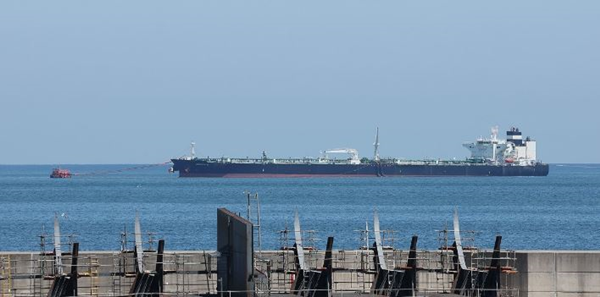
In addition, weekly inventory indicators released by agencies such as the U.S. Energy Information Administration (EIA) played a decisive role in pulling oil prices down. Market experts had expected a significant drop in crude oil inventories, but the actual decrease was much smaller than anticipated. Conversely, inventories of refined products like gasoline and diesel showed an increase from the previous week or maintained a robust trend exceeding expectations. For factory managers producing consumer goods and drivers operating vehicles, this served as a clear signal that fuel supply was smooth. As the market’s vague fears of inventory depletion were refuted by data, speculative funds began to withdraw rapidly. Seeing signs that supply-demand imbalances were being resolved, traders dumped their holdings, leading to price stabilization.
The smaller-than-expected drop in crude oil inventories and the robust trend in refined product inventories contributed to the decline in oil prices.
4. Specific Decline in Brent Crude and WTI

With the release of indicators and news of bypass supply coinciding, oil markets in London and New York uniformly closed with red charts. November delivery Brent crude futures traded on the London ICE Futures Exchange fell 2.69% from the previous close to $105.83 per barrel. October delivery WTI futures on the New York Mercantile Exchange also closed down 3.21% from the previous close at $102.43 per barrel. Having risen sharply over two days, prices gave back a significant portion of those gains in a single day, engaging in fierce battles around the $100 mark. Investors, feeling fatigue from the short-term surge and judging that negative factors had been largely resolved, focused on taking profits. As a result, the burden of raw material purchase costs for businesses was significantly lightened, allowing them to breathe easier.
Brent crude fell 2.69% and WTI fell 3.21%, settling around the $100 mark.
5. Persistent Geopolitical Risks in the Middle East
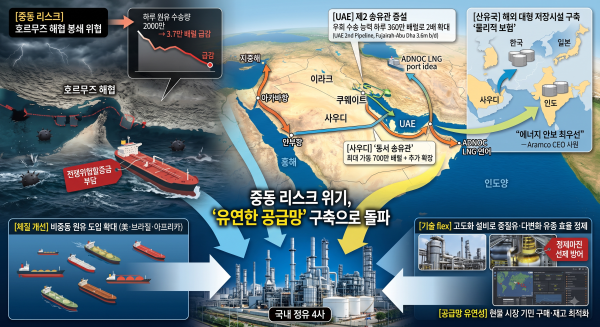
Although this bypass supply news extinguished the immediate fire, fundamental risk factors surrounding the Middle East remain abundant. Transit volumes through the Strait of Hormuz remain unstable, and refining facilities in major oil-producing countries are under threat. The political situation continues to be like walking on thin ice, with the possibility of another physical conflict or facility attack emerging at any time. This geopolitical uncertainty is like a giant time bomb that could shake the oil market at any moment. Just as the sea can suddenly be hit by a typhoon after calm weather, energy prices are prone to unpredictable rollercoaster movements. Therefore, industry professionals should not rest on their laurels with short-term price drops but must maintain a rigorous risk management posture.
Decreased transit volumes through the Strait of Hormuz and geopolitical tensions continue to increase price volatility.
6. Future Energy Market Outlook and Response Strategies

Future international oil prices are expected to be determined by how stably Saudi Arabia’s bypass supply volumes are maintained. Whether oil-producing countries will increase production further and the release of economic indicators from major countries are also key metrics that market participants should watch closely. Companies need to build diversified supply chains and flexibly adjust long-term contracts to prepare for sharp fluctuations in raw material prices. General consumers also need the wisdom to develop energy-saving habits and regularly check oil price trends. In an era dominated by uncertainty, listening to accurate information and responding calmly is the most powerful weapon. Going forward, please continue to monitor energy market trends and wisely manage your economic activities.
Flexible response strategies must be formulated while monitoring the sustainability of bypass supply and geopolitical risks.
Frequently Asked Questions
=