
The South Korean women’s national volleyball team suffered a painful setback, failing to secure a medal for the second consecutive time after losing to Thailand 0-3 in the bronze medal match at the 2026 Aichi-Nagoya Asian Games. Representing South Korea, ranked 28th in the world and led by head coach Cha Sang-hyun, the team gave their all in the match held at Park Arena Komaki in Aichi Prefecture, Japan, but ultimately faced a disappointing result. Failing to win a medal at this tournament is only the third time in history since the 1962 Jakarta Games, making the performance shockingly poor. In particular, questionable calls by the head referee, which disrupted the team’s early momentum, proved to be the decisive variable in determining the outcome. Although the players displayed resilience and refused to give up until the end, they were unable to overcome the opponent’s seasoned game management and the adverse circumstances. In this article, we will carefully examine the match situation, the reality of the refereeing controversy, and the direction South Korean volleyball should take moving forward.
=
Women’s National Volleyball Team Fails to Win Asian Games Medal Amid Referee Controversy

1. The Disappointing Failure of the Asian Games Medal Bid
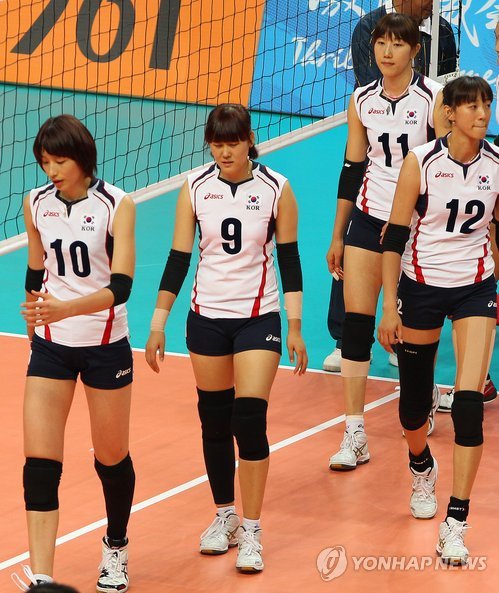
South Korean women’s volleyball has always been a strong medal contender on the Asian Games stage, bringing great joy to the nation. Starting with a bronze medal at the 2010 Guangzhou Games, followed by a gold medal at the 2014 Incheon Games, and a bronze medal at the 2018 Jakarta-Palembang Games, the team achieved the remarkable feat of standing on the podium for three consecutive tournaments. However, after a wave of generational change hit the team, they finished 5th at the recent Hangzhou Games and settled for 4th place this time, suffering a blow to their pride. Given that there are only a handful of instances in history where the team failed to win a medal since women’s volleyball became an official event, this result is particularly bitter. Both the players and the coaching staff poured months of sweat into preparing for this tournament, making the disappointment all the more intense. While the numerous cheering fans on-site and the citizens watching on screen applauded the team’s fighting spirit, they expressed deep regret over the disappointing score. Amidst cold assessments that the team’s competitiveness in international competitions is no longer what it used to be, voices calling for urgent fundamental reforms are growing louder.
South Korean women’s volleyball experienced rare poor form in Asian Games history, failing to win a medal for the second consecutive time.
2. Questionable Calls at Crucial Moments

The most controversial aspect of the match was undoubtedly the incomprehensible calls made by the head referee on the court. Head referee Yulia Akulova, a Kazakh national, repeatedly made unfavorable calls against the South Korean team throughout the game, completely disrupting their momentum. The first incident occurred early in the first set when South Korea was leading 8-5 and maintaining a good atmosphere. As Kim Da-in blocked an opponent’s push attack, the referee suddenly declared an over-net foul, taking away the point. Head coach Cha Sang-hyun immediately came out to the court to protest strongly, but the call was not overturned and remained in effect. Shortly after, even as South Korea was being chased to 8-7, another hard-to-accept call of a catch-ball foul was made against Kim Da-in’s play. Despite the coach and players voicing their grievances, the referee’s criteria remained immovable, significantly dampening the team’s morale.
The referee’s repeated misjudgments and one-sided whistles became the decisive cause that completely broke the South Korean team’s good early-game momentum.
3. Thailand’s Seasoned Game Management and Power Gap
While there was regret over the refereeing, the performance of the Thai national team itself was also a key factor in determining the outcome. Thailand leveraged the precise and diverse setting work of Pimporn Ketsprasit, a famous setter who previously played in the domestic league, to disrupt South Korea’s defense. Facing the opponent setter’s dazzling operations, the South Korean defensive line struggled to time their blocks and easily conceded space. From the second set onwards, the receiving line was completely shaken, failing to properly handle the opponent’s powerful serves. Without a definitive counter-card to block the opponent’s organized play, South Korea continued to be dragged around. This match served as a reminder of how important it is to cultivate diverse attacking options and solid fundamentals that can work on the international stage.
Facing Thailand’s seasoned setting operations and solid organizational strength, South Korea struggled without finding a tactical solution.
4. The Fighting Spirit of Players Who Never Gave Up
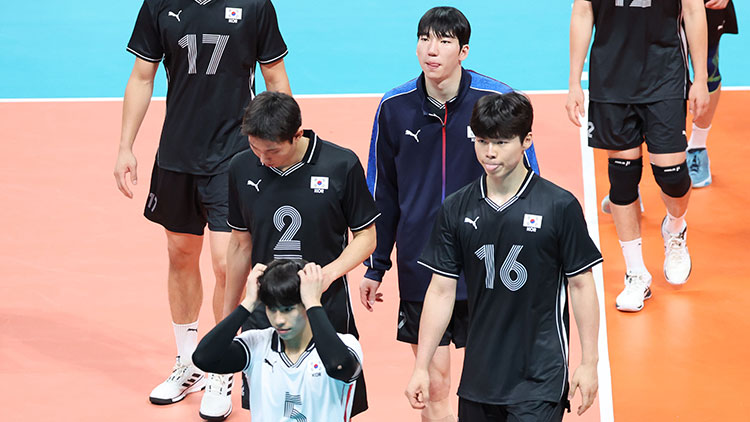
Despite the difficult conditions, the players did not abandon their determination for a medal and gave their best until the very last moment. In particular, captain Kang So-hwi, true to her role as the team’s ace, covered every corner of the court and led the attack with crucial points that were vital for both teams. In the third set, the teams engaged in a tight battle, showcasing their resilience by reaching a 22-2 tie. Although they lost the set due to unforced errors at crucial moments, the fighting spirit displayed by the players was enough to move viewers to tears. The sight of players shedding tears of regret after the match fully demonstrated the joys and sorrows that sports bring, leaving a deep impression.
Including captain Kang So-hwi’s fighting spirit, the players showed they never gave up by engaging in a close battle until the final third set.
5. The Cold Reality Facing South Korean Women’s Volleyball

The result of this Asian Games serves as a mirror and a painful warning showing where South Korean women’s volleyball currently stands. As seen in the difference in world rankings, it is evident that the competitive landscape within the Asian region is being rapidly restructured differently from before. It is widely assessed that the rate of skill development in Southeast Asian countries like Thailand is frighteningly fast, having already overtaken South Korea. Strengthening the competitiveness of the domestic league and establishing a system to discover and nurture promising players early on has become an unavoidable task. On-site coaches and association officials are pouring out criticism, stating that this defeat should be used as medicine to devise fundamental plans for improving the team’s constitution.
Amid the rapid restructuring of the Asian volleyball landscape, South Korean women’s volleyball faces the huge task of fundamental constitutional improvement.
6. Tasks to Turn Crisis into Opportunity

Leaving behind the bitter score of failing to win an Asian Games medal, South Korean women’s volleyball must now turn its gaze toward a new future. The walls of international competitions ahead are too high and rugged to sit and blame the referees. We must thoroughly analyze the weaknesses revealed in this tournament and achieve generational change and tactical diversification with a bone-grinding resolve. Fans should also stop reacting with short-term joy or sorrow to immediate results and instead offer warm support and encouragement with a long-term perspective to help the national team rise again. We look forward to seeing the team climb back to the top of the podium on the upcoming world stage with even stronger organizational strength and skill.
We must use this failure as a valuable lesson and prepare for the future through thorough analysis and bold constitutional improvements.
Frequently Asked Questions
=