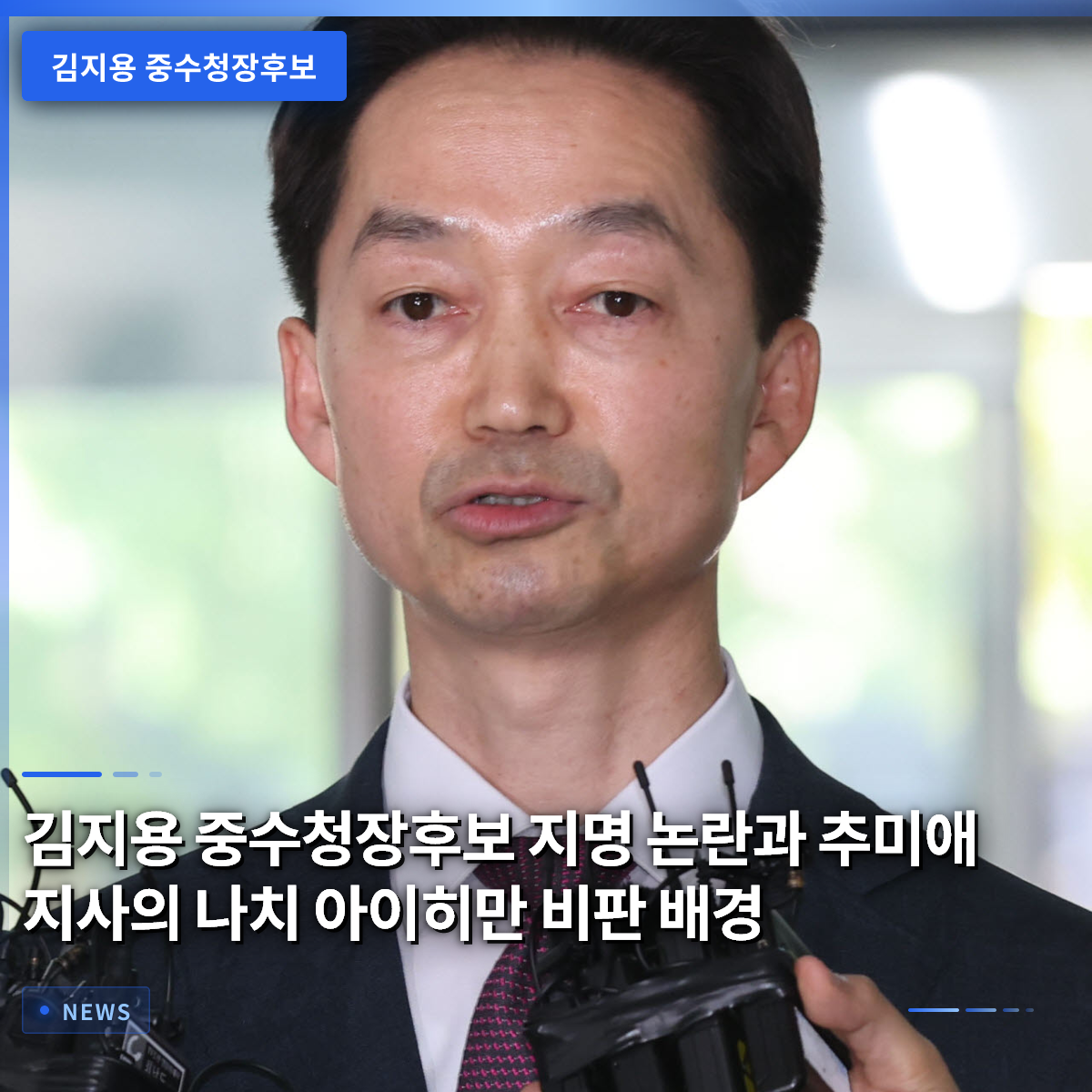
Intense debates over the vetting of past conduct are heating up within political and legal circles surrounding the nomination of Kim Ji-yong as the head of the Major Crimes Investigation Agency (MCIA). In particular, Governor Choo Mi-ae of Gyeonggi Province has launched a fierce critique of his involvement and decisions during his tenure at the prosecution service, raising core questions about whether he is qualified to serve as the inaugural head of the new agency. The controversy surrounding the candidate for the head of this new state agency is drawing significant public attention just as the MCIA prepares to launch. The dilemma faced by a public official caught between professional conviction and organizational orders is not vastly different from the dilemmas ordinary office workers face in their daily lives. It is now a critical moment to watch whether Kim Ji-yong can overcome past controversies to be appointed as the inaugural head, or if an unprecedented situation will arise where his nomination is withdrawn. This article will examine in detail the substance of the criticism directed at Kim Ji-yong, reactions from the legal community, and the key issues to watch during the upcoming confirmation hearing process.
=
Controversy Over Kim Ji-yong’s Nomination as Head of the Major Crimes Investigation Agency and the Context Behind Governor Choo Mi-ae’s Criticism Comparing Him to Nazi Eichmann
1. Involvement in Past Prosecution Investigations and Questions of Responsibility
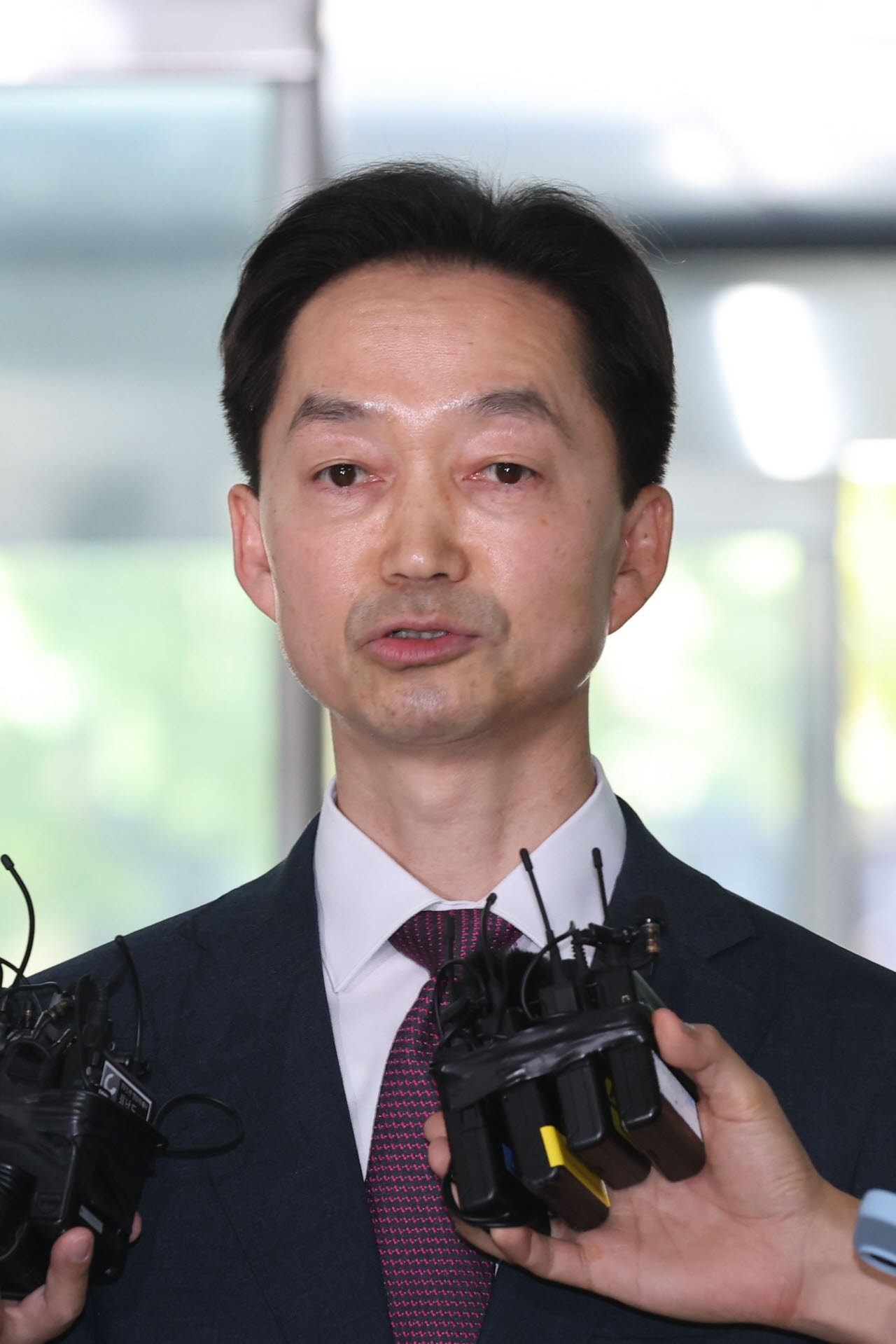
Kim Ji-yong, the nominee for head of the MCIA, has a history of holding key positions within the prosecution service and being directly or indirectly involved in major cases, including the Channel A incident. The controversy was sparked when he explained that he was not the decision-maker regarding several issues where suspicions of obstructing investigations were raised during the proceedings. Critics are strongly questioning whether the defense that he was not the ultimate decision-maker in the organization can serve as a get-out-of-jail-free card. There is a significant difference between an office worker claiming they merely followed their boss’s instructions and a high-ranking public official candidate evading responsibility from the perspective of judicial justice. Sharp criticisms continue, suggesting that he may have acquiesced to unjust organizational trends and ignored the judicial justice he was duty-bound to uphold. Public opinion overwhelmingly holds that a figure aiming to lead a law enforcement agency must demonstrate a stricter and clearer stance on how he handled his duties in the past.
The nominee’s past involvement in investigations and his denial of being the decision-maker have sparked a controversy over evading responsibility.
2. Governor Choo Mi-ae’s Criticism of the “Banality of Evil”
Governor Choo Mi-ae of Gyeonggi Province strongly criticized the nominee’s explanation by invoking the concept of the “banality of evil” proposed by philosopher Hannah Arendt. The core of the criticism is that the attitude of evading responsibility by citing superior orders or organizational logic is seriously inappropriate for a national public official. The defense that he merely followed orders from above directly conflicts with the independent sense of justice required of the head of a massive state investigation agency. Critics point out that this resembles the defense made by Nazi war criminal Adolf Eichmann during his trial, where he claimed he was merely faithfully executing superior orders. This analogy resonates deeply within the public service sector, reminding us of the importance of the moral responsibility individuals must bear within an organization. Citizens do not expect the head of a powerful institution to be a mere machine executing orders; they expect a subject who independently judges right from wrong.
Governor Choo Mi-ae strongly criticized the attitude of using superior orders as an excuse, comparing it to Nazi war criminal Eichmann.
3. Why Calls for Withdrawal of the Nomination Are Intensifying
Calls for the withdrawal of Kim Ji-yong’s nomination are not limited to a single past incident but are rooted in a much more complex background. This is due to the judgment that he lacks the qualifications to serve as the inaugural head of the MCIA, an agency tasked with establishing judicial justice and laying the foundation for fair investigations. Criticisms continue that his conduct within the former prosecution service fell far short of the standards and expectations desired by the public. There are significant concerns that if a person who failed to fulfill their public responsibility in the past is placed at the top of powerful direct investigation powers, it will be difficult to restore public trust. The fact that voices of concern are emerging even within the ruling party indicates that this personnel decision could become a burden for the entire administration, going beyond a mere incident. If the controversy surrounding the head candidate continues before the new investigation agency even launches, the organizational momentum for future operations could be significantly undermined.
The judgment that the nominee lacks the public trust required for the inaugural head of the MCIA, which must uphold judicial justice, is leading to calls for the withdrawal of his nomination.
4. Potential Impact on the Organization and Operation of the MCIA
In the legal community, there are serious concerns about the negative impact that past investigation failures or controversies over obstruction of justice could have on the members of the new MCIA. It would be ironic if the head of a newly launched organization, which should break away from the outdated practices of the former prosecution service, was at the center of past controversies. The key issue is whether the organization led by Kim Ji-yong can instill confidence in its members and the public that it will not repeat past incorrect practices. His past conduct remains a significant unresolved obstacle for citizens who yearn for a transparent and fair investigation system. Pessimistic forecasts suggest that if the leader of the organization cannot frankly explain past mistakes, subordinates will also find it difficult to conduct investigations with conviction. One must not forget that for an agency launching with a pledge of painful reform, the head’s morality and past track record will determine the organization’s fate.
If a person who was at the center of past obstruction of justice controversies becomes the head, it could send the wrong signal to organizational members.
5. The Sincere Explanation and Attitude Citizens Expect
Citizens are tired of candidates who simply deny past mistakes or focus solely on legal liability, and they want to hear a sincere explanation. A candid confession is needed regarding why he believed his judgments in that intense situation aligned with judicial justice, or what parts were wrong. Kim Ji-yong’s final standing will be determined by how diligently he answers these sensitive suspicions during the upcoming National Assembly confirmation hearing. Honesty is the most important virtue: having the courage to bow one’s head when admitting mistakes and providing clear evidence when explaining parts that require clarification. If he persists in superficial excuses, it will be insufficient to quell the angry public opinion and may instead fuel distrust. As a public official candidate, he must humbly accept the public’s sharp scrutiny and show the courage to transparently reveal his past.
Citizens are demanding a sincere and transparent explanation of the situation and judgments at the time, rather than excuses.
6. Outlook for the Confirmation Hearing and Remaining Tasks
Ultimately, the upcoming National Assembly confirmation hearing will be the final test of Kim Ji-yong’s morality and job performance capabilities. The core issue is how he will prove the noble ethical values that a head of a high-ranking investigation agency must uphold, going beyond mere formal legal standards. Since sharp questions are expected from both ruling and opposition parties, it will be difficult to withstand the scrutiny without thorough preparation and a sincere attitude. It is wise to frequently check the latest news through the National Assembly’s schedule and related announcements while closely monitoring future political developments. We must watch to see if this personnel decision will be a positive step toward true prosecution reform and the restructuring of investigation powers, or if it will become a seed of endless conflict. I, too, am very interested in watching what specific explanations and visions the candidate will present in the upcoming hearing room.
The upcoming confirmation hearing is expected to be a decisive gateway for verifying the candidate’s morality and qualifications.
Frequently Asked Questions
=