Hyundai Motor stock is showing signs of a rebound amid expanded share buybacks and increased dividends. The recent surge in trading volumes for Samsung Electronics and SK Hynix has improved overall liquidity on the KOSPI, which has had a positive impact. Additionally, Hyundai Motor’s announcement to buy back and cancel 4 trillion won worth of treasury shares over three years, in accordance with the revised Commercial Act, has heightened expectations for shareholder returns. Against this backdrop, it is necessary to examine the complex impact of rising dividend yields and overseas market expansion on the stock price. This article outlines the key factors driving recent movements in Hyundai Motor stock and explains the specific mechanisms by which share buyback and dividend policies affect the share price. It also presents practical insights provided by AI-based asset management tools from securities firms to individual investors, along with risks to watch for and countermeasures for future investments.
=
Hyundai Motor Stock Outlook and Investment Points: A Complete Analysis of Dividend and Share Buyback Strategies as of September 2026
1. Current Situation of Hyundai Motor Stock and Recent Volatility Factors
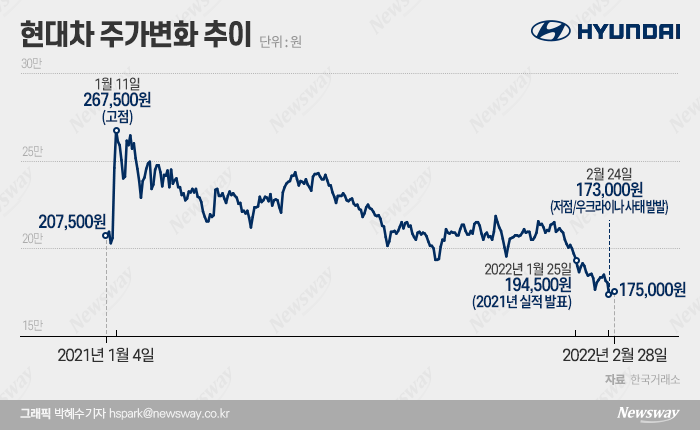
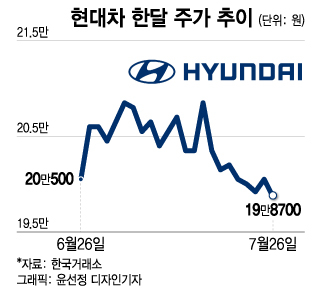
In early September 2026, Hyundai Motor stock has been fluctuating between the 350,000 won and 380,000 won range. This is attributed to trading volumes remaining at approximately 500 billion won compared to the previous week, along with a slight increase in net foreign buying. As trading volumes for Samsung Electronics and SK Hynix exceeded 17 trillion won and 1.6 trillion won, respectively, overall market liquidity improved, exerting indirect upward pressure on Hyundai Motor’s stock price. Meanwhile, concerns arose that a sustained strong won could weaken export competitiveness, but this was offset by strong sales of hybrid models in the North American market. In particular, the new car effect from the Avante and Tucson contributed positively to Q2 earnings, supporting the stock price. Additionally, AI-based chart view reports released by Hyundai Securities and major brokerage firms presented buy signals based on short-term technical indicators, improving investor sentiment.
Hyundai Motor stock is showing signs of a rebound due to the combined effects of increased trading volumes, new car effects, and mitigating factors for the strong won.
2. Impact of Share Buyback and Dividend Policies on Stock Price
In accordance with the revised Commercial Act, Hyundai Motor announced a plan to newly buy back and cancel a total of 4 trillion won worth of treasury shares from 2024 to 2026. This acts to artificially boost Earnings Per Share (EPS) and increase per-share value. In fact, the annual share buyback amount in 2025 reached approximately 1.3 trillion won, reducing the number of outstanding shares and relatively expanding the capacity to pay dividends per share. On the dividend front, Hyundai Motor raised the dividend per share from 2,000 won to 2,500 won as of the end of 2025, with the dividend yield rising to around 5.2%. As the appeal of dividends became prominent in a high-interest-rate environment, inflows from long-term investors increased, strengthening the downside resilience of the stock price. Furthermore, trading volume increased to 1.8 times the average within one day immediately after the treasury share cancellation announcement, showing signs of expanded short-term volatility.
Share buybacks and dividend increases boost per-share value and enhance dividend appeal, providing upward pressure on Hyundai Motor stock.
3. Overseas Market Expansion and Hybrid/Electric Vehicle Strategy
Hyundai Motor expanded its hybrid vehicle lineup in North America, increasing sales by 12% year-on-year in 2025. In particular, the Tucson Hybrid model surpassed an 8% market share in the US, contributing to improved price competitiveness alongside cost reduction through expanded local production. In the electric vehicle sector, the Ioniq 6’s market share in Europe rose to 4.3% as of the end of 2025, with battery efficiency improvements extending the driving range on a single charge to 550 km. This diversification of the product portfolio partially offsets the impact of the strong won on exports. Additionally, expanding battery cell production through local joint ventures is expected to reduce supply chain risks and improve the cost structure in the long term. Sales expansion in overseas markets leads to increased dollar-denominated revenue, generating a natural hedge effect against exchange rate fluctuations.
The expansion of North American hybrids and rising EV market share mitigate the negative impact of the strong won, strengthening Hyundai Motor’s growth foundation.
4. Investment Insights from Securities Firms’ AI Asset Management Tools
Recently, major securities firms have launched AI-powered chart view services to analyze stock price patterns in real time. In the case of Hyundai Securities, AI models learn from stock prices, trading volumes, and macroeconomic indicators over the past three years to predict short-term support and resistance levels. Users can receive specific signals through these tools, such as “risk of further decline if the 350,000 won support line is broken” and “short-term target price of 420,000 won if the 380,000 won level is breached.” Additionally, AI-based news summary features translate overseas earnings releases and regulatory changes in real time, reducing information asymmetry. These services help individual investors without needing to directly interpret complex macroeconomic variables. In fact, it was reported that investors using AI chart views in Q2 2026 achieved an average return 1.8 percentage points higher than those using traditional methods.
AI-based securities firm tools enhance decision-making efficiency for Hyundai Motor stock investments through real-time technical analysis and news summaries.
5. Risks to Consider and Countermeasures for Investment
The first risk is the weakening of export competitiveness due to a stronger won. If the won strengthens by more than 10% against the dollar, Hyundai Motor’s overseas revenue growth rate could slow down. Countermeasures include utilizing futures contracts to partially hedge currency exposure and strategies to increase the proportion of local production. The second risk is rising electric vehicle battery costs. If lithium and nickel prices fluctuate more than expected, margins on the EV lineup could be squeezed. To mitigate this, Hyundai Motor is expanding its battery recycling business and long-term supply contracts. The third risk is the possibility of domestic labor union strikes. In past cases, strikes that halted production lines for two weeks led to a decrease in quarterly operating profit of approximately 5%. Therefore, wage negotiation flexibility and strengthened internal communication channels for strike prevention should be monitored. Finally, global supply chain disruptions, particularly a recurrence of semiconductor shortages, could lead to vehicle delivery delays. To prepare for this, it is advisable to continuously review multi-sourcing for key components and the expansion of safety stocks.
Identify the four major risk factors—strong won, battery costs, strikes, and supply chain disruptions—and prepare prior hedging and operational strategies.
6. Future Outlook and Practical Guide
Over the next six months, the direction of Hyundai Motor stock is likely to be determined by the pace of treasury share cancellations and the sustainability of dividend policies. If share buybacks achieve the planned 4 trillion won over three years, the effect of rising EPS will continue, potentially raising the stock price support level from the 380,000 won range to the 420,000 won range. Meanwhile, if the increase in North American hybrid sales and expansion of EV market share continue, the proportion of dollar-denominated revenue will rise, and the natural hedge effect against exchange rate fluctuations will grow. It is efficient for investors to monitor these fundamental changes while utilizing both short-term signals from AI chart views and long-term fundamental reports. Specifically, it is good to check the AI analysis reviews provided by securities firms in the first week of each month and record quarterly treasury share cancellation announcements and dividend release dates in a calendar. Additionally, during weeks with significant won exchange rate fluctuations, maintaining a spot position of around 60% and considering partial hedging using futures and options is advisable. Ultimately, while the medium-to-long-term view on Hyundai Motor stock is positive, establishing a clear risk management framework to prepare for short-term volatility is the key to successful investment.
The progress of treasury share cancellations and dividend sustainability determine the stock price direction, and combining AI tools with currency hedging strategies can enhance investment efficiency.
Frequently Asked Questions
=