If you sign up for an IRP retirement pension without a clear plan and then cancel it because you suddenly need cash, you could face an irresistible tax bomb of 1.65 million won. While this is an essential tax-saving account that you must utilize to save for your retirement, failing to understand the system properly can result in losing your hard-earned money to taxes. Recently, financial institutions have introduced asset management using artificial intelligence algorithms and same-day trading for Exchange-Traded Funds (ETFs), making the process much more convenient. However, as these features have become more user-friendly, the tax-related precautions and withdrawal conditions that subscribers need to know have also become more complex. In this article, we will cover everything from the core benefit of tax deductions to the mistakes to avoid when cancelling mid-term, as well as the latest management methods. We will explain these concepts clearly using specific examples that any office worker can relate to, so please read through carefully to the end.
=
How to Maximize Tax Savings with IRP Retirement Pensions and Avoid the Mid-Term Cancellation Tax Bomb
1. Subtitle
What is an IRP Retirement Pension and Why Is It Essential Wealth Management for Office Workers
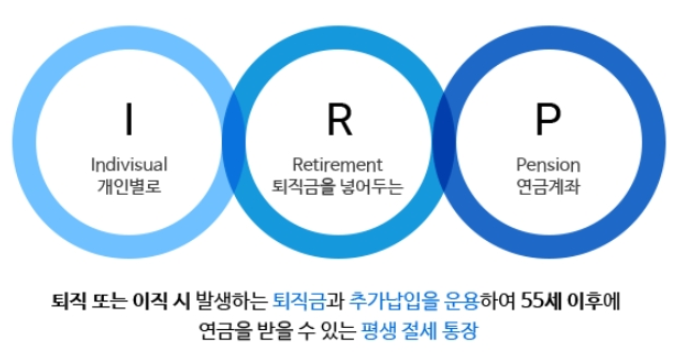
The Individual Retirement Pension (IRP) is a representative tax-saving account that allows all employed individuals and business owners with income to voluntarily participate in preparing for their retirement. In the past, only employees working for a company or those who had received severance pay could use it, but now the door has been opened to anyone who can prove their income, including self-employed individuals and freelancers. The most powerful appeal of this account is that it offers exceptional tax deduction benefits on the amount deposited during the year-end tax settlement. Since a portion of the amount saved within a certain limit each year is returned in cash at year-end, it is considered a basic formula for wealth management among office workers. Rather than simply leaving the money in a bank deposit, you can invest in various financial products such as stocks, bonds, and Exchange-Traded Funds (ETFs) to defend against inflation.
Instead of just envying your colleagues for receiving substantial year-end tax refunds, you should open an account yourself and take action. In fact, Mr. Kim, an office worker, diligently made deposits last year and was so pleased to receive a tax refund of several hundred thousand won during his year-end settlement that he slapped his knee in delight. Since you can reinvest this refunded amount or use it for living expenses, you enjoy a two-for-one benefit. However, since the primary purpose of this account is retirement security, there is a downside that the money is locked in until retirement age. Therefore, you need the wisdom to keep emergency funds that you might need tomorrow in a regular savings account and only transfer funds intended for long-term growth to this account.
The IRP is a tax-saving account available to anyone with income, serving as an essential retirement preparation tool that allows you to enjoy both annual year-end tax deductions and investment in various products simultaneously.
2. Subtitle

Decisive Differences Between Pension Savings Funds and IRPs, and a Comparison of Tax Deduction Limits
Anyone who has studied wealth management to some extent often finds themselves deeply contemplating which product to fill first: a Pension Savings Fund or an IRP. Pension Savings Funds have almost no restrictions on eligibility and offer the advantage of being able to allocate the maximum proportion to equity assets. On the other hand, IRPs require a certain minimum percentage of total assets to be allocated to safe assets, which can feel restrictive for those with an aggressive investment style. However, if you want to maximize your tax deduction limit, it is much more advantageous to combine the two products appropriately or actively utilize the IRP. This is because when the deduction limit for a standalone Pension Savings Fund is insufficient, adding an IRP increases the total amount eligible for deduction.
Mr. Park, a young professional, had been depositing money only into his Pension Savings Fund but, feeling the limit was too low, later opened an additional IRP account to maximize his tax benefits. Understanding the differences between these two accounts accurately and building a portfolio tailored to your income level and investment style is the key to tax savings. The total annual deposit limit is set by law, so simply depositing more does not guarantee a larger tax refund. You should develop the habit of frequently checking the National Tax Service’s Hometax website or financial institution apps to carefully monitor how much of your deduction limit has been utilized.
Pension Savings Funds offer flexibility in investment asset allocation, while IRPs expand the tax deduction limit. It is best to combine them according to your investment style and income.
3. Subtitle
The Truth About the Tax Bomb You Face If You Cancel Simply Because You Need Cash
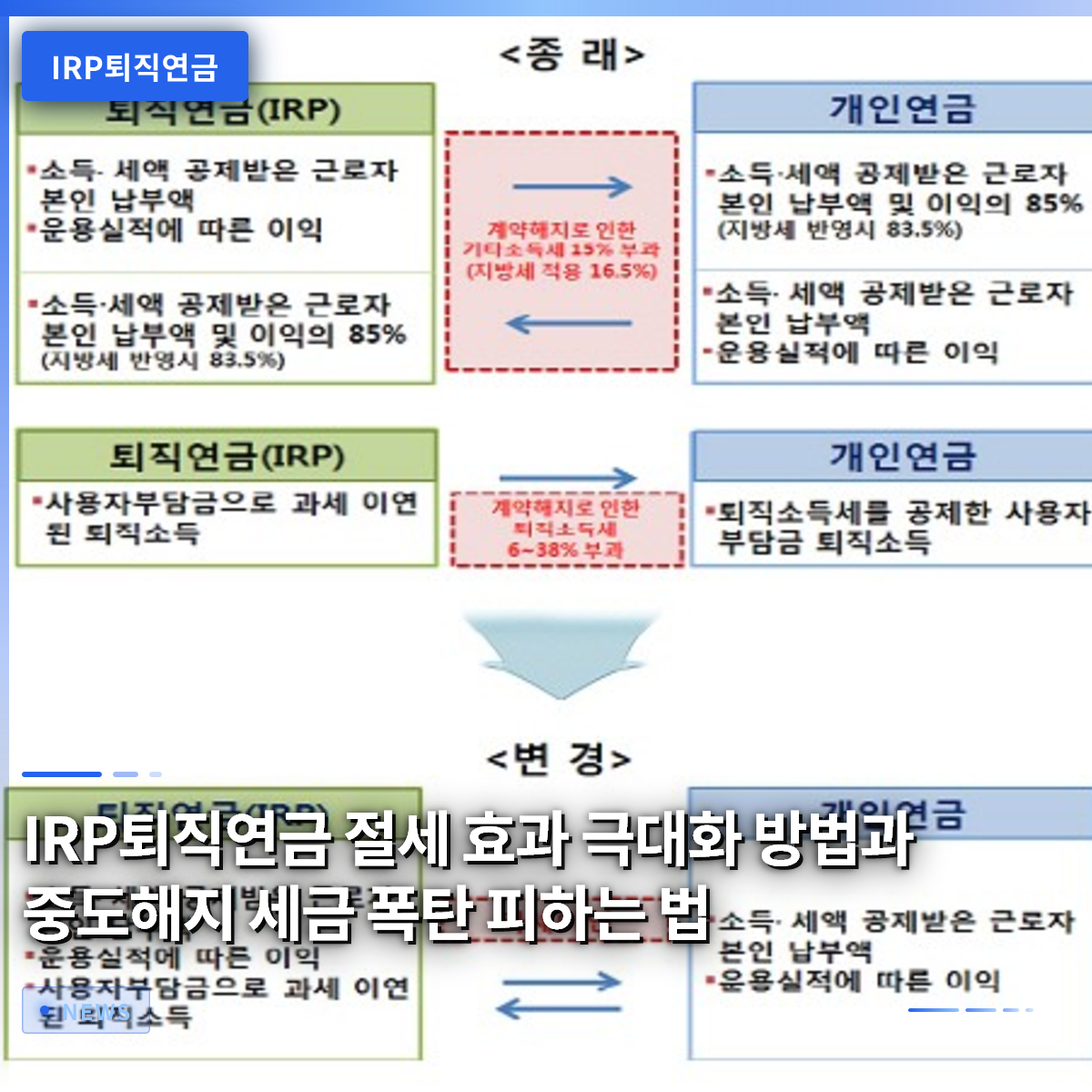
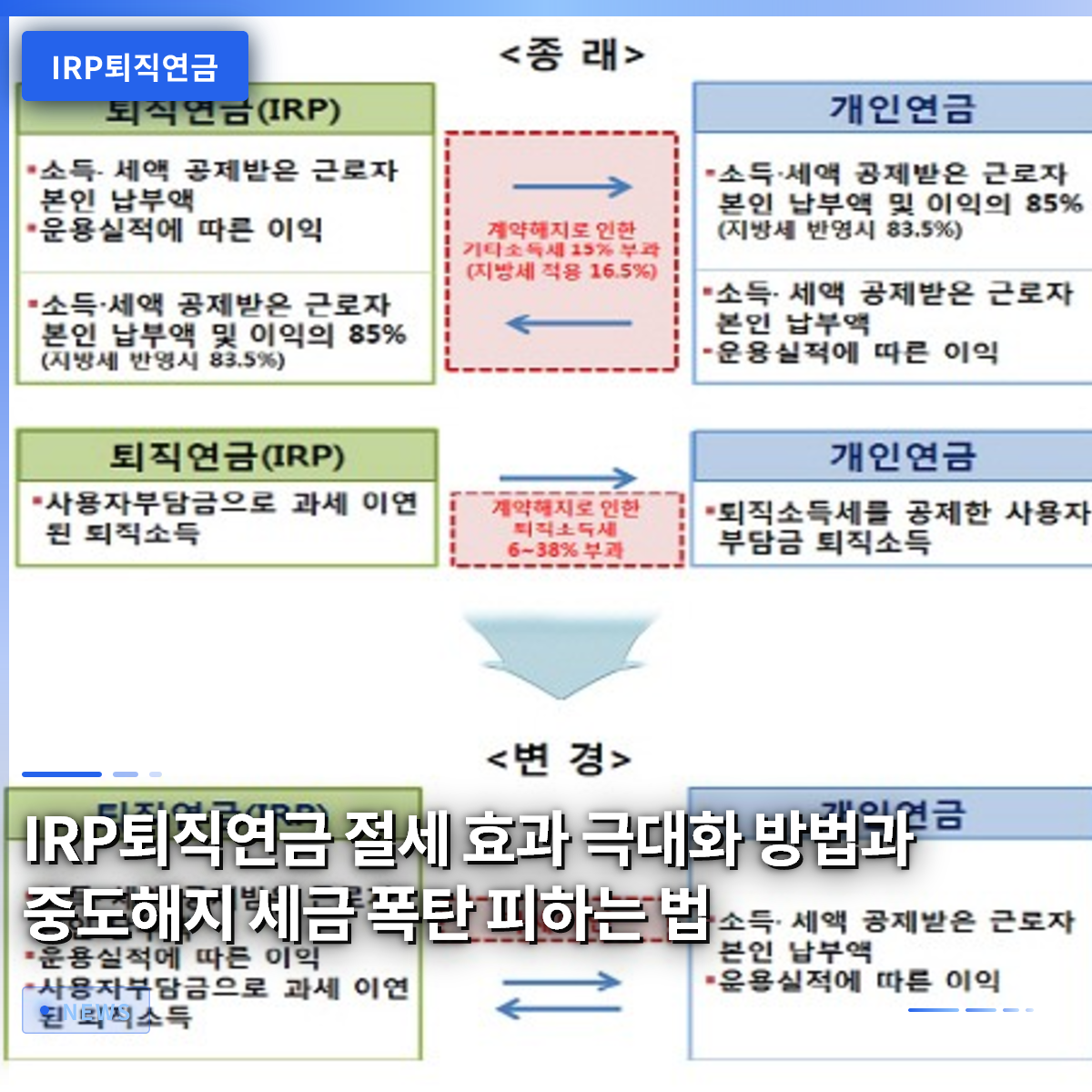
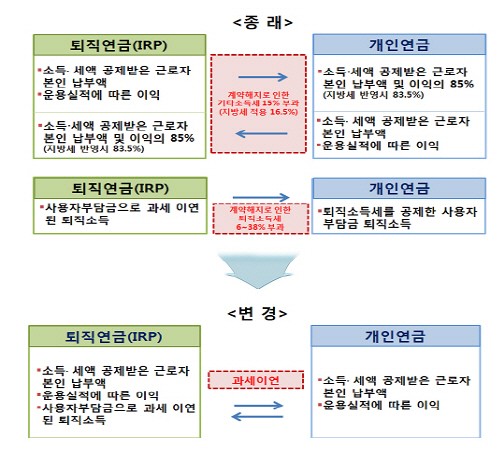
When a situation arises where you suddenly need a large sum of money, humans naturally think first about liquidating assets, and at that moment, their eyes turn to their retirement pension accounts. Mr. Lee, an office worker, cancelled his IRP account, into which he had been depositing money for a long time, to quickly meet his landlord’s demand to increase the deposit for his rental housing. However, a few months later, he nearly fainted when he received a notice from the National Tax Service. A hefty tax of 16.5% was imposed on the tax deduction benefits he had received and the investment returns, categorized as miscellaneous income tax. Since this system was created by the state to protect your retirement by providing tax benefits, there is a severe penalty hidden within: if you cancel mid-term for purposes other than intended, you must return the benefits you have received.
To prevent such unfortunate situations, the law allows for special mid-term withdrawals in cases of unavoidable reasons, such as purchasing a home or paying a deposit for non-homeowners, bankruptcy, natural disasters, or medical treatment lasting more than six months. If you meet the conditions for a special mid-term withdrawal, you can withdraw the money in the form of a withdrawal rather than a cancellation, and a much lower tax rate is applied, significantly reducing the tax burden. If you do not meet the conditions for a special mid-term withdrawal, a wise alternative is to utilize the collateral loan system provided by financial institutions instead of cancelling the account. By using your held assets as collateral without selling them, you can borrow the necessary funds at a low interest rate, thereby wisely avoiding the tax bomb.
Cancelling an IRP mid-term due to a change of mind results in a 16.5% tax bomb. Therefore, you should check for special mid-term withdrawal eligibility or consider a collateral loan first.
4. Subtitle
The Convenience of Recently Introduced AI Asset Management and Same-Day ETF Trading
Thanks to the remarkable development of the financial market, managing and growing retirement pension accounts has become much more convenient and smart than in the past. In the past, investors felt significant fatigue in selecting and changing stocks themselves due to complex product structures and slow trading speeds. However, services that automatically build portfolios suitable for subscribers’ investment styles and manage them using reliable algorithms that have passed the KOSCOM testbed have now become mainstream. Major financial companies such as Mirae Asset Securities and Shinhan Investment Securities have established environments where global asset allocation and actual trading can be handled one-stop through AI-based robo-advisor services.
In addition, major financial institutions, including Shinhan Bank, have introduced a same-day trading service that allows you to buy other ETFs immediately with the proceeds from selling held ETFs on the same day. Mr. Choi, an office worker, opened his smartphone app on his way home from work, checked the records of the rebalancing automatically completed by the AI algorithm, and could not help but marvel. In the past, it often took several days to sell and convert to cash, causing investors to miss opportunities, but now a system is in place that can respond nimbly to market changes. By actively utilizing these advanced technologies, office workers living busy daily lives can easily and efficiently grow their retirement funds.
With the introduction of the latest AI algorithm asset management and same-day ETF trading systems, busy office workers can now manage their retirement pensions easily and quickly.
5. Subtitle
Understanding the Clear Advantages of Retirement Pensions Through Comparison with Variable Insurance
In the process of preparing for retirement, many people struggle between insurance products and pension accounts, pondering which choice is wise. Variable insurance, which is often a point of comparison, has been sold for a long time under the premise of pursuing both the protection function of insurance and the profitability of stock investment. However, variable insurance deducts a significant fee, labeled as “business expenses,” from the monthly premiums, often leaving room for disappointment in terms of long-term returns. In fact, it is not uncommon for neglected variable insurance policies to fail to recover their principal over a period of more than ten years due to high fees, resulting in negative returns.
On the other hand, IRP retirement pensions are subject to relatively transparent and low management fees, backed by the certain tax deduction benefits guaranteed by the state. Unlike complex variable insurance, which mixes insurance characteristics, you can directly invest in various transparently disclosed ETFs and bond products, making it easier for subscribers to control their assets. Mr. Kang, an office worker, has felt much more stability in terms of returns and fees since he organized his past variable insurance and switched those funds to a pension account. Since retirement funds are a long-term race that must be steadily grown over a long horizon, it is advantageous to choose a system with certain tax-saving benefits over products that incur unnecessary high costs.
Variable insurance may be at a disadvantage in long-term returns due to high fees. Therefore, the IRP, which is transparent and offers excellent tax-saving effects, is a better choice for retirement preparation.
6. Subtitle
Utilizing the Integrated Pension Portal and Long-Term Investment Strategies for a Successful Retirement
As retirement approaches, it is more important than ever to accurately grasp the total amount of retirement pension and National Pension you have accumulated so far. Using the Integrated Pension Portal service operated by the Financial Supervisory Service, you can check at a glance the severance pay and personal pension enrollment records scattered across multiple previous employers. Mr. Oh, an office worker, was a few years away from retirement when he found dormant severance pay from his past through the Integrated Pension Portal, safely transferred it to his IRP account, and breathed a sigh of relief. If you receive severance pay as a lump sum, you may face a tax bomb, but if you transfer it to a pension account, taxation is deferred until receipt, allowing you to save significantly on taxes.
Future retirement asset management will be determined by the wisdom to go beyond simply saving money, reducing taxes, and wisely incorporating the latest tools like AI. Do not make the mistake of cancelling your account due to immediate expenses; instead, you must have the patience to steadily grow your assets until retirement. Starting today, turn on your smartphone, carefully check your deposit limits and management status, and complete a solid shield for your future. Small attention and practice will gather to become the most powerful weapon in determining the abundance of your retirement.
Actively utilize asset inquiries through the Integrated Pension Portal and the tax deferral system to prepare for retirement safely and without unnecessary tax burdens.
Frequently Asked Questions
=