As of 2026, the basic deduction amount for the Comprehensive Real Estate Tax (CRET) for households owning a single home remains at the current level of 1.2 billion won in assessed value. In reality, concerns among homeowners regarding tax burdens are growing as the upward trend in Seoul housing prices continues. Fortunately, the plan to lower the deduction amount for non-resident single-homeowners has been withdrawn, offering a moment of relief. However, many people are still confused by the differences between property tax and the calculation methods for various taxes. In this article, we will carefully examine the reformed system and deduction benefits. To avoid losses amidst complex tax regulations, you must check the relevant information immediately.
=
2026 Comprehensive Real Estate Tax Standards and Deduction Benefits for Single-Homeowners: A Complete Guide
1. 2026 Basic Deduction Standards for the Comprehensive Real Estate Tax
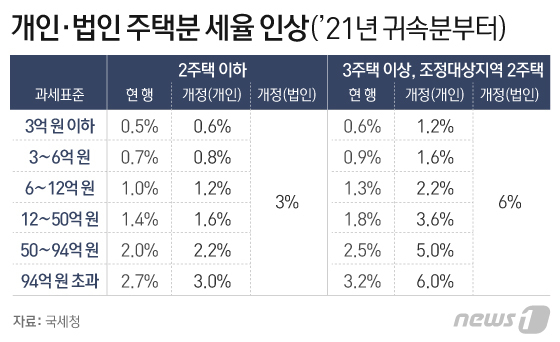
The criteria for those subject to the Comprehensive Real Estate Tax this year are as follows: for households owning a single home, the threshold is an assessed value exceeding 1.2 billion won. For multi-homeowners holding multiple general residences, the threshold is applied at an assessed value exceeding 900 million won. Mr. Kim, who lives in Mapo-gu, Seoul, felt relieved because his apartment’s assessed value was 1.1 billion won, but he was shocked when he realized he had miscalculated the joint ownership shares. As such, the determination is not made by simply adding up all real estate owned by the household as a single unit; instead, it is assessed by dividing shares and housing types. For land, comprehensive aggregation land must exceed 500 million won, and separate aggregation land must exceed 8 billion won to be included in the taxable scope. Therefore, the most important step is to first check the exact assessed value of your owned assets. Since housing and land are assessed separately, you should not hastily predict your tax liability based solely on the market price of one property. If the property is jointly owned, the calculation method varies depending on the share ratio, so careful verification is required. Since assessed values fluctuate annually, you must definitely check if the standards have changed from last year. You should develop the habit of calculating the estimated tax amount in advance before receiving the tax notice. It is safer to directly review the National Tax Service (NTS) guidance materials rather than relying solely on local rumors.
Households owning a single home are subject to the Comprehensive Real Estate Tax if the assessed value exceeds 1.2 billion won, while general residences are subject if the value exceeds 900 million won.
2. Controversy and Current Status of Deductions for Non-Resident Single-Homeowners
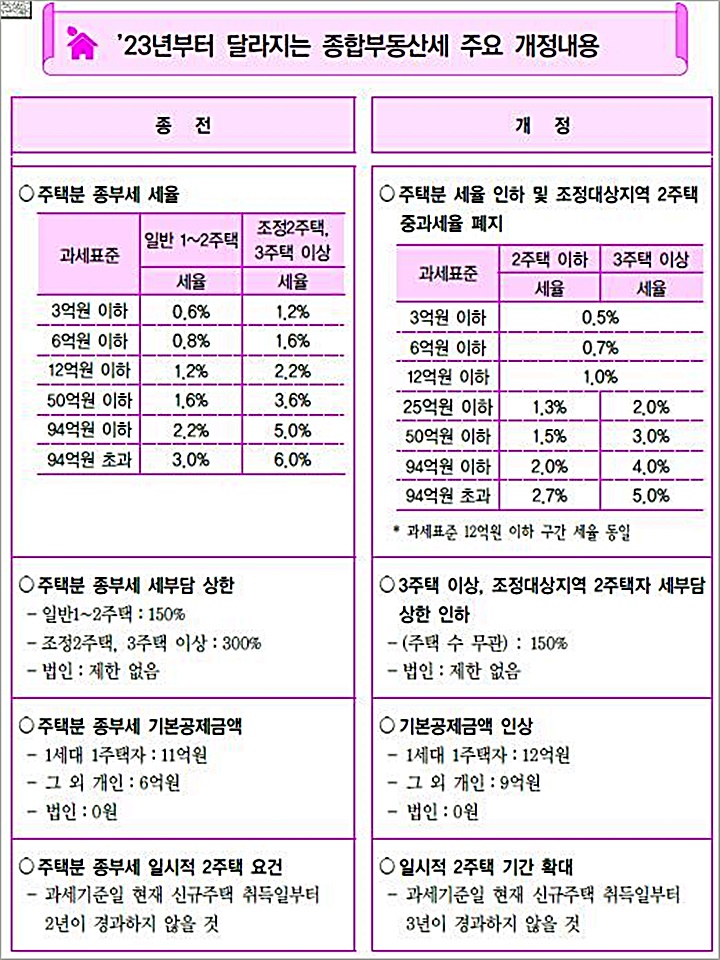
The plan to lower the basic deduction amount for the Comprehensive Real Estate Tax for non-resident single-homeowners from 1.2 billion won to 900 million won has fortunately been withdrawn. This was because strong backlash arose from the ruling party and the market, leading to a final decision to maintain the current level. Mr. Park, an office worker who lives in a jeonse (deposit-only lease) in Seoul because his job is in a local area, was relieved to hear this news. Supplementary measures have also been established for cases where individuals cannot reside in their homes due to unavoidable reasons such as children’s schooling, job transfers, or overseas stays. Non-residence can now be recognized as residence for up to three years, but voices remain loud regarding the detailed criteria. Many owners are voicing dissatisfaction because their properties are treated differently from property tax despite owning the same home. As the government’s direction for tax reform frequently changes according to market conditions, confusion among homeowners is intensifying. Some people are swallowing their disappointment because detailed reasons, such as caring for grandchildren, are not all included in the recognized reasons for non-residence. Criticism continues that applying uniform standards fails to reflect individual circumstances in detail. At a time when housing instability has not been resolved, the stability of the tax system is being demanded more urgently. Owners are spending busy days seeking tax consultations and formulating countermeasures every time a policy is announced.
The plan to lower the basic deduction for non-resident single-homeowners to 900 million won has been withdrawn, and the current 1.2 billion won standard is maintained.
3. How to Reduce Taxes by Applying for Aggregation Exclusion
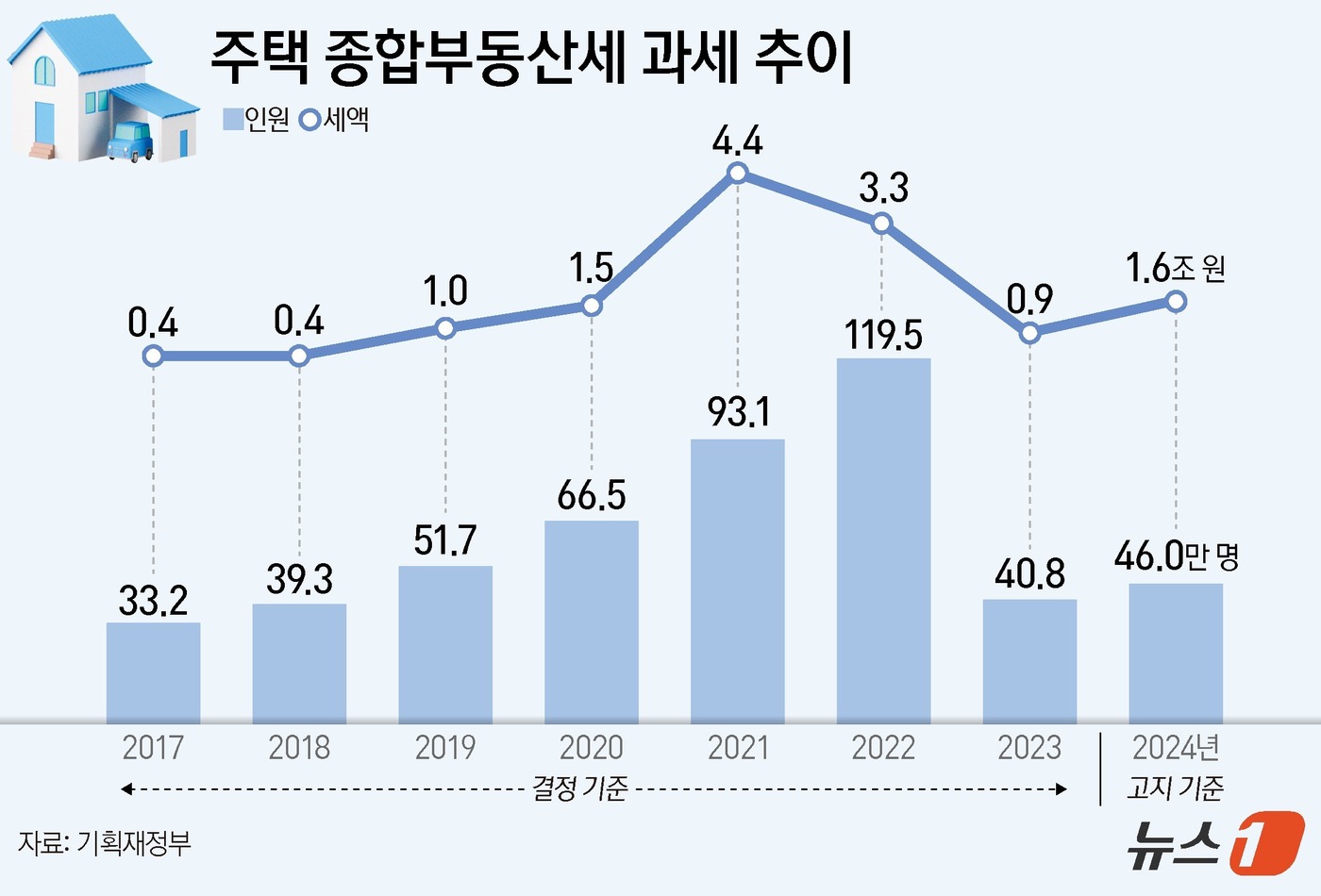
You must not miss the 2026 Comprehensive Real Estate Tax aggregation exclusion period conducted by the National Tax Service if you want to significantly reduce your taxes. Those who own rental housing or employee housing, among others, receive the major benefit of being completely excluded from the taxable scope if they apply during this period. Mr. Lee, who registered his officetel for rental business purposes, completed his application within the deadline and managed to save a significant amount on his taxes this year. The application period is from mid-September to the end of the month each year, so it is a good idea to mark it on your calendar in advance. If you miss the period, you will not receive the tax reduction benefit and will have to pay the unwanted tax in full. You must carefully determine if you qualify for aggregation exclusion and prepare your supporting documents perfectly. Using the Hometax website allows you to easily complete the application online, which is very convenient. Occasionally, people face difficulties by missing the deadline by one or two days, so it is best to act earlier than the final day. You can easily apply by receiving help from a tax agent or following the website’s guidance step by step. A little attention and action is the shortcut to saving taxes ranging from hundreds of thousands to millions of won.
Completing the aggregation exclusion application, which takes place in late September each year, excludes you from the taxable scope and reduces your taxes.
4. Tax Credits for Single-Homeowners and Benefits of Joint Spousal Ownership
If you are a household owning only one home, you must utilize tax credits and various special provisions to avoid losses. Since you can receive both the senior deduction and the long-term holding deduction simultaneously, the tax burden decreases significantly with age. Mr. Jung, a retiree who has lived in Seoul for a long time, greatly reduced his annual tax burden thanks to the senior tax credit. If you own a home under joint spousal ownership, you must complete the special provision application by the end of September to apply the more favorable calculation method. If you apply for the joint ownership special provision, you can either apply the 1.2 billion won basic deduction as if it were sole ownership or choose the senior deduction. The majority of taxpayers miss out on these legitimate benefits because they are unaware of such tax credit systems. Directly choosing and declaring the method most favorable to you is the core strategy for preventing tax expenditure. By using the simulation calculator provided on the NTS Hometax, you can immediately check whether sole or joint ownership is more advantageous. Although tax laws may seem complex, comparing them one by one according to your situation often yields a clear answer. Do not just sit and wait relying on what friends say, missing the opportunity; check your tax conditions right now.
Apply for both the senior and long-term holding deductions, and if you have joint spousal ownership, choose the more favorable taxation method.
5. Differences and Precautions Between Property Tax and Comprehensive Real Estate Tax
Property tax is levied on all housing owners, but the Comprehensive Real Estate Tax is additionally levied only on owners of high-value homes exceeding a certain standard amount. Complaints from taxpayers are constantly arising because the criteria and imposition methods for these two taxes differ, even for the same home. Mr. Kang, who owns one home in Gyeonggi Province, felt relieved after receiving his property tax notice but was startled upon receiving notice that he was subject to the CRET. This is because the legal nature of property tax, levied by local governments, and the Comprehensive Real Estate Tax, collected by the national government, are different. Since the deduction amounts and calculation formulas differ significantly depending on the type of tax, you must accurately master the criteria for each. Some argue for the integration or unification of the two taxes, raising the issue of double taxation. However, as it stands, they are calculated separately according to their respective laws, so taxpayers must pay attention to both taxes themselves. Since the tax burden can snowball due to rising assessed values, you must keep a close eye on the assessed values announced each year. It is wise to directly inquire with local government tax offices or the NTS customer center to confirm if your home is on the boundary of taxation. If you do not plan your finances in advance in line with government policy changes, you may face a sudden tax bomb.
Property tax and the Comprehensive Real Estate Tax have different levying authorities and criteria, so you must check the taxation requirements for each separately.
6. Second Half 2026 Tax Outlook and Wise Countermeasures
It is expected that the real estate market in the second half of this year will see more active movements from homeowners, intertwined with tax system adjustments. Rather than a precise approach targeting specific regions, policy supplements for overall market stabilization are expected to continue. Multi-homeowners and non-resident home owners must find their own way out between strengthened regulations and relaxed benefits. As the upward trend in housing prices continues, the tax burden has reached a level that cannot be ignored, making thorough preparation essential. It is important to maintain an attitude of continuously collecting objective tax information so that you do not waver every time the government’s policy direction changes. Taxes are not automatically reduced if you do nothing; they are costs that can be saved only if taxpayers study and act directly. You must be diligent in noting down various filing periods via Hometax and processing them within the deadline. It is better to consult with tax experts or read official guides carefully rather than being swayed by hearsay. Prepare calmly for the upcoming payment period to ensure you absolutely do not have to pay unnecessary surcharges. The first step to protecting your home and wisely managing your precious assets is grasping accurate tax information.
You must complete filings within the deadline in line with frequently changing tax policies and respond wisely through expert consultations.
Frequently Asked Questions
=