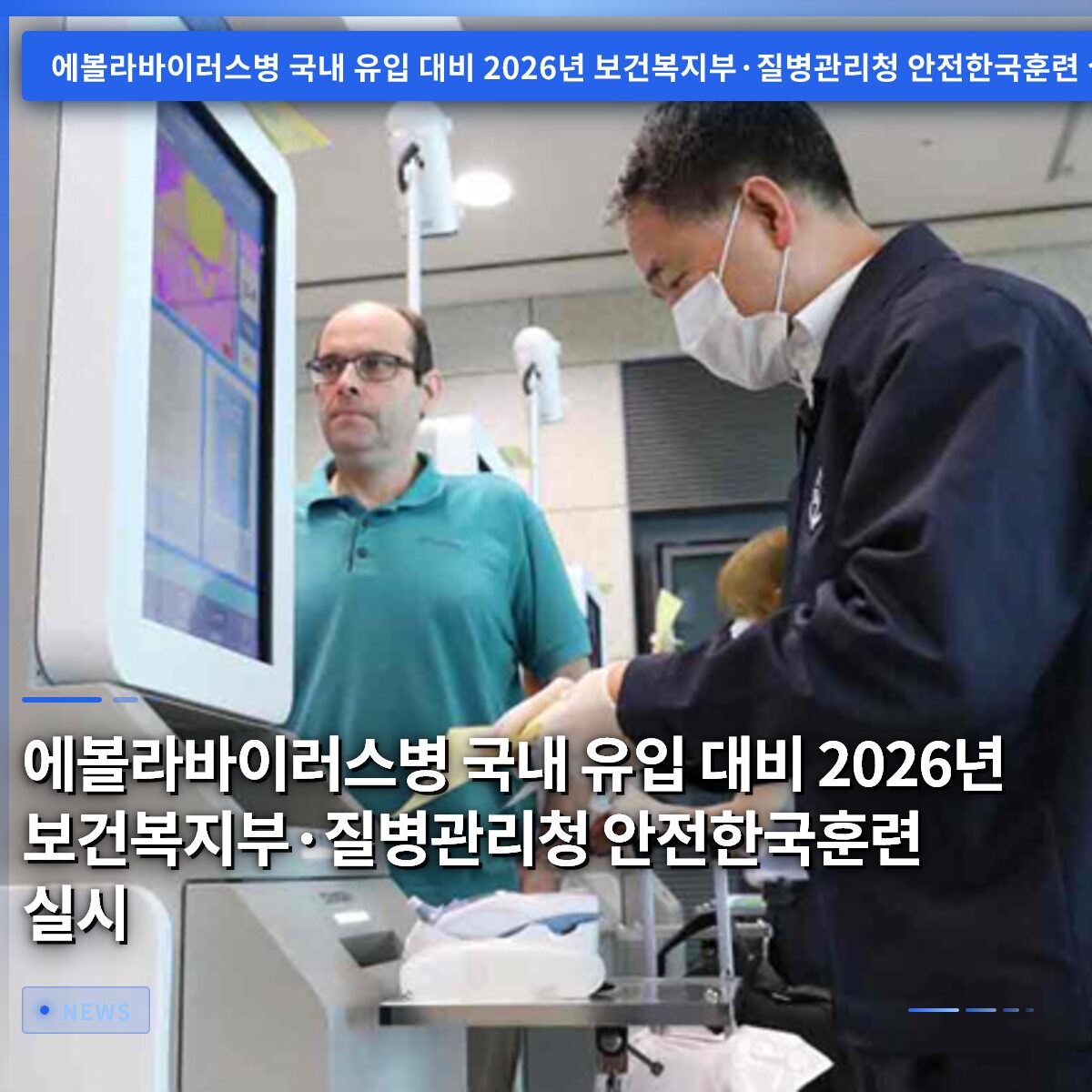
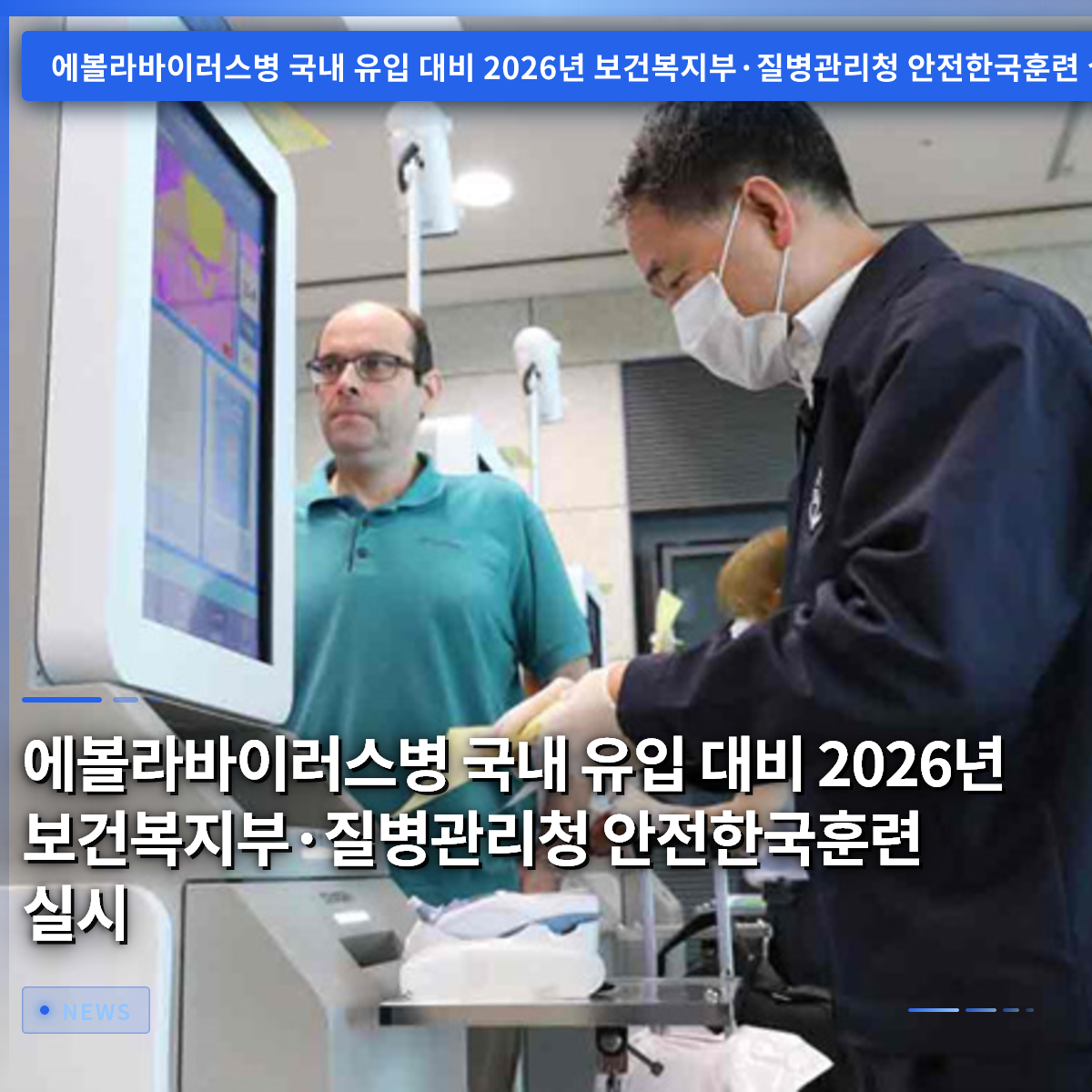
Today (September 15, 2026), the Ministry of Health and Welfare (MOHW) and the Korea Disease Control and Prevention Agency (KDCA) announced the joint implementation of the “2026 Safe Korea Training” to thoroughly prepare for the potential importation and spread of Ebola Virus Disease (EVD) within the country. This training has drawn significant attention as the first occasion to stress-test the government-wide infectious disease crisis response capability to its limits since the recent coronavirus pandemic. It stems from the heightened awareness that South Korea is not immune to the threat of transboundary infectious diseases, given the continuous emergence of EVD cases abroad. On the ground, the exercise went beyond mere paper reviews, simulating the entire process from the identification of confirmed cases to isolation treatment, patient transport, and final funeral procedures as if it were a real situation. While it is easy to casually brush off news of infectious diseases in our daily lives, health authorities are working to solidify a coordinated system that meshes like gears, assuming the worst-case scenarios. We will examine in detail how this training was conducted and how it will strengthen our society’s safety net.
=
MOHW and KDCA Conduct 2026 Safe Korea Training to Prepare for Potential Ebola Virus Disease Importation
1. Background of the Training Assuming Ebola Virus Disease Importation
The background behind the MOHW and KDCA’s joint planning of this training lies in the persistent global spread of high-risk infectious diseases. In particular, concerns about importation have grown as EVD cases have been reported again, primarily in African regions this year. Because the Ebola virus has a very high fatality rate upon infection, failing to contain even a single patient early on could plunge the entire society into massive chaos. Therefore, the government felt an urgent need to pre-check the cooperation structure among relevant agencies based on realistic virtual scenarios. Building on the valuable experiences and lessons learned from the past coronavirus pandemic, the intention this time is to establish a more advanced disease control response network. Much like factories regularly conduct fire drills assuming a fire outbreak, health authorities are training their muscles to prepare for unknown infectious diseases that could strike at any time. Such thorough preparation is the most reliable shield to protect the precious lives and safety of our citizens. Through this training, relevant agencies have clearly understood their respective missions and are ready to act immediately in the event of an emergency. Keeping in mind the possibility of virus importation through overseas arrivals, they have committed to building a thorough defense line starting from the quarantine stage.
The training was organized to check the proactive defense posture of health authorities in response to the global spread of Ebola Virus Disease.
2. Establishing an Organic Government-Wide Cooperation System
The special significance of this training lies in the simultaneous participation of numerous relevant agencies, including the Ministry of the Interior and Safety, the Korea Fire Service, and the National Police Agency, in addition to the MOHW and KDCA. An emergency situation involving the importation of an infectious disease cannot be stopped by health authorities alone; it is a critical task requiring the mobilization of national capabilities. For example, when a confirmed case occurs, the KDCA leads the rapid epidemiological investigation, while the fire service handles the safe transport of the patient, and the police manage traffic control around the movement routes. The core objective of this Safe Korea Training was to cultivate the ability of each agency to leverage its expertise while communicating organically. In the virtual scenario, ministers and field officials held real-time video conferences to share on-site situations and make rapid decisions. It served as an opportunity to meticulously check whether emergency communication networks were functioning properly and whether the division of roles among practitioners was clear. To protect the daily lives of citizens, it is paramount to break down the invisible walls between government ministries and operate as a single, massive disease control community. This training served as an excellent litmus test to gauge how smoothly such a government-wide cooperation system functions.
Relevant agencies, including the MOHW, KDCA, Korea Fire Service, and National Police Agency, all participated to maximize their organic cooperation capabilities.
3. Initial Recognition and Rapid Patient Transport Process
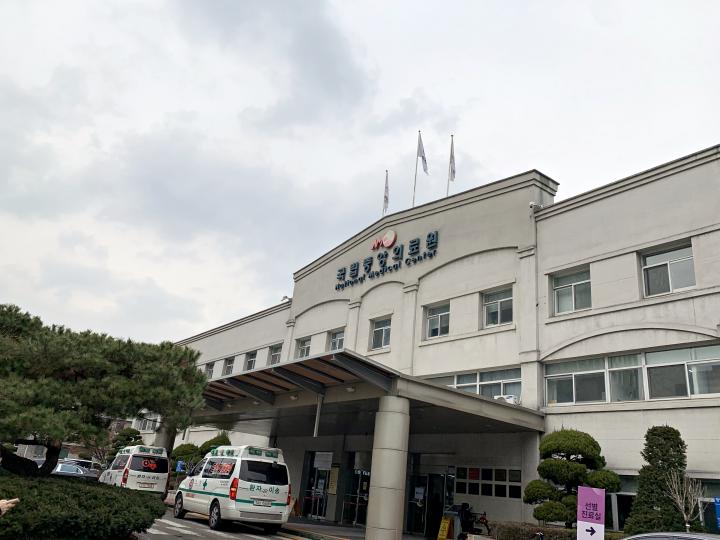
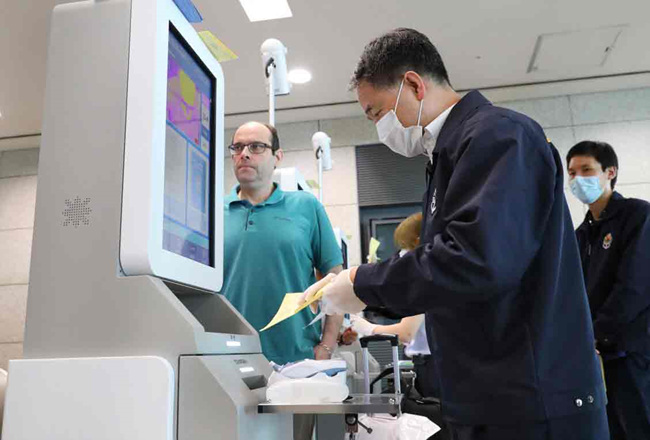
In responding to high-risk infectious diseases like Ebola Virus Disease, the most critical moment is the initial recognition stage: how quickly a suspected patient can be identified. This training vividly reproduced the response process when a person showing suspicious symptoms appears through entry quarantine procedures or local medical institutions. They verified in real-time whether the system for medical staff to rapidly assess a patient’s overseas travel history and immediately report to disease control authorities was functioning. As soon as a report was received, a negative pressure ambulance was dispatched, and paramedics wearing thorough personal protective equipment (PPE) proceeded to safely transfer the patient to an isolation bed. During this process, strict route management and disinfection measures were implemented simultaneously to fundamentally block the risk of the virus leaking to the outside. While it may look like a scene from a movie, the actual field involves tense moments where even a second of negligence is not allowed. It has been re-proven how important repetitive proficiency training is for frontline healthcare workers to act according to manuals without panic. Rapid and accurate transport serves as the most decisive barrier to prevent further spread.
The rapid initial recognition of suspected patients and safe transport procedures using negative pressure ambulances were checked in a realistic manner.
4. Treatment of Confirmed Cases and Measures to Prevent Further Spread
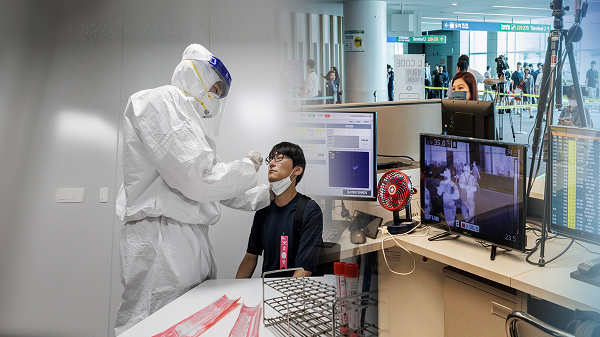
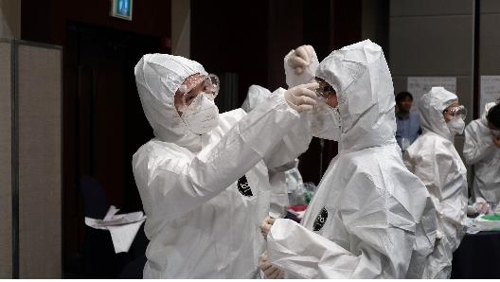
The specialized treatment system and contact management strategies deployed when a patient imported into the country is confirmed positive were also major inspection targets in this training. Due to the high transmissibility and fatality rate of Ebola Virus Disease, specialized medical staff from national designated isolation wards, rather than general hospitals, must be deployed. The training simulated the process of skilled medical staff wearing special protective suits providing dedicated treatment to the patient. Simultaneously, the epidemiological investigation system was activated to rapidly track individuals who may have been in contact with the confirmed case, placing them under self-isolation and monitoring. Training was conducted in parallel to closely manage the health status of all contacts to preemptively break any potential chains of transmission within the community. Health authorities have strived to calm unnecessary public anxiety and enhance the credibility of disease control efforts through thorough epidemiological investigations and transparent information disclosure. The fight against infectious diseases is ultimately a race against time, and success or failure depends on how quickly and perfectly risk factors around confirmed cases are eliminated. This training served as a valuable stepping stone to reconfirm advanced isolation treatment capabilities and supplement any deficiencies.
Measures to prevent further spread through specialized treatment in national designated isolation wards and thorough contact tracing were addressed.
5. Scenario for Funeral and Recovery Procedures in Case of Death
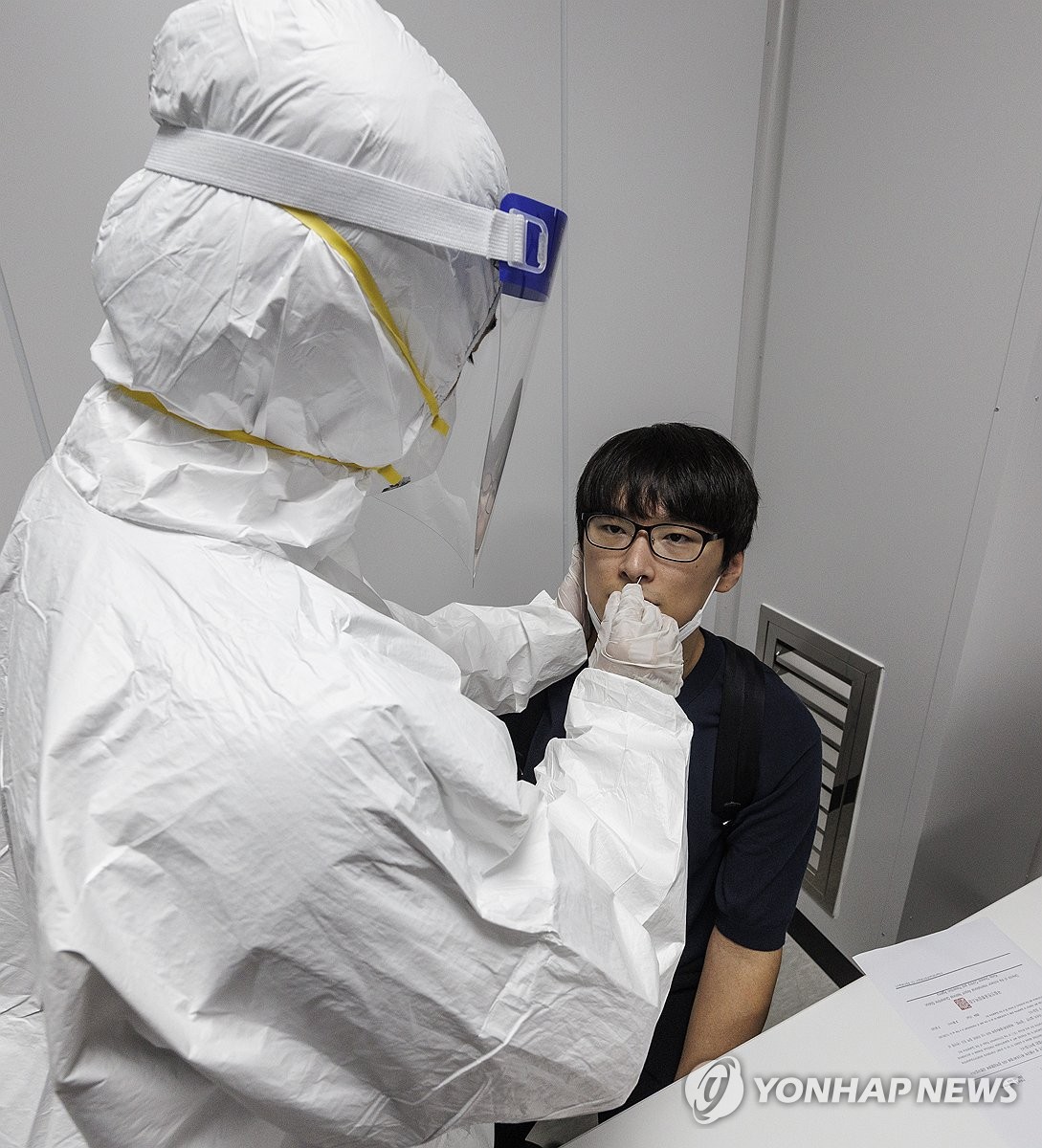
One of the most difficult and sensitive aspects of infectious disease response is the safe handling of bodies and the conduct of funeral procedures when a death occurs. Because Ebola Virus Disease poses a risk of viral transmission even after death, it must be approached completely differently from standard funeral practices. In this Safe Korea Training, a detailed scenario unfolded showing how health authorities and funeral-related institutions would cooperate in the event of a virtual patient death. While comforting the grief of bereaved families, strict adherence to special disinfection guidelines for body wrapping and sealing was maintained to thoroughly block infection spread. Additionally, all movement routes were strictly controlled during the cremation process to ensure that general citizens or funeral home staff would not be infected. Although these processes may feel unfamiliar or frightening, they are essential defense lines that must be followed to protect public health safety. The government is paying close attention to balancing human rights and disease control even in emergency situations, continuously refining related manuals. Thorough post-mortem recovery can be called the final puzzle piece that determines the completeness of infectious disease response.
Special funeral and body recovery procedures to fundamentally block virus leakage in the event of an infectious disease death were checked.
6. Future Infectious Disease Preparedness and Our Attitude
The MOHW and KDCA plan to meticulously analyze the deficiencies identified through this 2026 Safe Korea Training and further advance future infectious disease crisis response manuals. Since the threat of invisible viruses always arrives in ways that exceed our expectations, both the government and the public must maintain a state of constant vigilance. The government plans to continue coordinating with relevant agencies and steadily improving field response capabilities through regular practical training. Readers are also required to practice thorough personal hygiene management when traveling abroad and actively cooperate with health authority guidelines. Infectious disease prevention cannot be completed by government efforts alone; it is only achieved when we all participate with the mindset that we are the main subjects of disease control. Continuous interest and support from all of us are required to build a safe South Korea that can firmly withstand any future crisis. Let us continue to pay attention to government disease control policies, strictly follow health guidelines in our daily lives, and build a healthy society. This training has become a solid milestone proving that South Korea can safely protect the lives of its citizens even amidst global infectious disease crises, rather than just a one-time event.
Infectious disease response manuals will be continuously improved based on training results, and the government and the public must work together to build a safe society.
Frequently Asked Questions
=