The IRP (Individual Retirement Pension) account is an essential financial product that allows anyone, especially working professionals, to save for retirement while simultaneously reducing their tax burden. Recently, as domestic retirement pension reserves have surpassed 500 trillion won, funds previously held in simple savings accounts are rapidly shifting toward more active investment products. However, it is very common for people to open an account and then leave it untouched because they do not know how to manage their money effectively. In this article, we will take a detailed look at how to manage your retirement pension directly, how to handle it when changing jobs, and the specific conditions under which you can withdraw funds in an emergency. Let’s explore concrete strategies to protect and grow your valuable retirement savings.
=
How to Properly Manage Your IRP Retirement Account and a Complete Guide to Early Withdrawal Conditions
1. What is an IRP Retirement Account and Why Is It Essential?
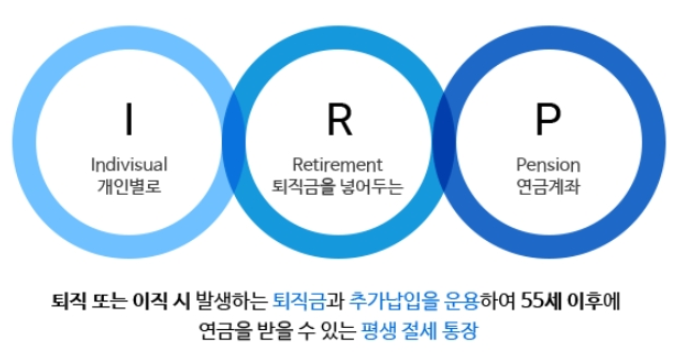
The IRP, or Individual Retirement Pension, is a system that allows employees to deposit their severance pay into their own account and manage it directly when they change jobs or retire. The era has completely shifted from one where companies managed retirement funds on behalf of employees to one where individuals must actively select financial products to grow their own assets. It has become a mandatory item for working professionals, particularly because it is a representative tax-saving product that offers tax deductions during the annual tax settlement. Since you receive a tax refund on a certain percentage of your annual contributions, it is an indispensable tool for working professionals’ wealth management.
In reality, Mr. Kim, a working professional raising three children, consistently deposits money into his IRP account to maximize his annual tax settlement refund. Although the account opening process initially felt complicated, he found it convenient to sign up and manage the account non-face-to-face through a smartphone app. The ability to diversify investments not only in bank deposits but also in various products such as equity funds and Exchange-Traded Funds (ETFs) was a major appeal. He actively recommends it to his colleagues because it allows them to secure retirement savings and immediate tax savings simultaneously. By allocating assets appropriately according to your investment style, you can steadily build a solid retirement fund.
The IRP is an essential tax-saving account that allows you to secure retirement savings and tax deductions simultaneously.
2. Handling Severance Pay When Changing Jobs and Maintaining Investment Continuity

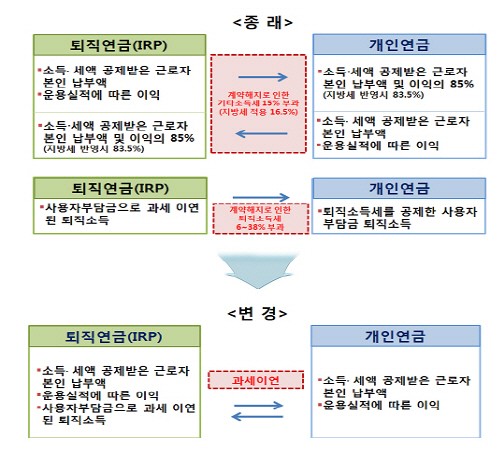
When leaving a job to move to a new company, it is easy to receive your accumulated severance pay in cash, but this is a shortcut that erodes your retirement funds. Retirement funds managed by your company, whether Defined Contribution (DC) or Defined Benefit (DB) type, must be transferred to an Individual Retirement Pension account to maintain continuity in management. If you transfer the severance pay paid by your company directly to your IRP account when changing jobs, you can continue to grow your assets without paying taxes immediately. If you receive the severance pay in your personal account and spend it on living expenses during the job transition, you will not only be subject to substantial retirement income tax but also lose your retirement funds in an instant.
Mr. Park, a working professional who had been at a large corporation, recently transferred his severance pay from his previous company directly to his IRP account during his second job change. Although he was tempted to buy a new car or go on a trip to celebrate the lump sum, he restrained himself and deposited it into the account for his future. As a result, he was able to defer the taxes on his severance pay until the time of pension receipt and continue his existing investment performance without interruption. Based on his understanding of the financial markets, he even restructured his portfolio to record returns above the market average. This illustrates that protecting your retirement pension during times of change, such as job transitions, is the core of long-term asset formation.
When changing jobs, you must transfer your severance pay to an IRP account to preserve tax deferral benefits and investment continuity.
3. Overcoming the 30% Mandatory Safe Asset Limit Using Bond-Hybrid Products
When managing a retirement pension account, there is a strict regulation requiring that safe assets must constitute at least 30% of the total reserves. For investors who want to increase their equity allocation for aggressive returns, this mandatory safe asset ratio can feel like a frustrating constraint. However, by utilizing bond-hybrid Exchange-Traded Funds (ETFs) that mix stocks and bonds, you can wisely navigate around this regulation. These hybrid products are classified as safe assets while holding stocks, allowing you to maximize the actual equity exposure of your entire account.
Mr. Lee, a working professional with a keen interest in investing, recently began actively incorporating stock-and-bond hybrid ETFs through his securities account. By meeting the mandatory safe asset ratio while maximizing his equity allocation within legal limits, he was able to fully benefit from market rallies. It was difficult to keep up with inflation using only bank deposit interest rates, but thanks to these composite products, he was able to significantly boost the overall return of his account. He personally realized that the size of his retirement fund can vary entirely depending on how the portfolio is structured. Wisdom is needed to find various investment means that can enhance returns even within complex regulations.
Using bond-hybrid products allows you to meet the mandatory safe asset limit while increasing equity allocation to improve returns.
4. IRP Early Withdrawal Conditions and Precautions When You Need a Lump Sum Suddenly
Although these funds are locked away for retirement, unexpected emergencies requiring a large sum of money can arise during one’s life. Defined Contribution retirement pensions and Individual Retirement Pensions legally allow early withdrawals only exceptionally when specific statutory grounds are met. Representative withdrawal grounds include purchasing a home in one’s own name as a non-homeowner, securing a deposit for a lease, or medical treatment for a long-term illness requiring care for oneself or a family member. However, early withdrawal is not possible for simple changes of mind or personal debt repayment purposes that do not meet these legal grounds, so one must approach this matter cautiously.
In reality, Mr. Choi, a working professional preparing to buy his first home, carefully reviewed the early withdrawal conditions for his retirement pension when he faced a situation where he needed to increase his lease deposit. Fortunately, as a non-homeowner, he met the requirements for home purchase, and after preparing the necessary documents, he legally withdrew the funds to put out the fire and complete the contract. However, he also felt a chill seeing cases where people were caught trying to manipulate documents or use illegal methods to withdraw money. It is crucial to remember that early withdrawal may require returning previously received tax deductions or result in high miscellaneous income tax. Therefore, unless it is an unavoidable situation, it is wise to keep your retirement funds untouched until the end.
IRP early withdrawal is only possible under strict legal grounds, such as home purchase for non-homeowners or medical treatment.
5. Intense Competition Among Financial Institutions and Choosing the Best Provider for You
As the scale of the domestic retirement pension market has grown enormously, competition among financial institutions such as banks, securities firms, and insurance companies to attract customers has become fierce. Life insurance companies are partnering with bank branches to strengthen customized product guarantee functions for middle-aged and senior customers over 50, broadening their touchpoints. Some financial institutions emphasize high returns, while others highlight stable pension receipt services, waiting for subscribers’ choices. The suitable financial institution varies completely depending on whether your priority is principal protection or pursuing higher returns through active investment.
Mr. Kang, a working professional who had neglected his retirement pension account opened casually in his early career, recently checked his returns and decided to switch providers, a process often called “account transfer.” When the returns from his previous provider fell below the inflation rate, he boldly moved to a securities firm that offered lower trading fees for various ETFs and a convenient management interface. Since the product lines and additional services provided by each financial institution vary greatly, it is essential to periodically check the status of your account. Rather than relying solely on rumors or advertisements, you must carefully compare each company’s disclosed returns and fee structures before making a decision. Only by taking an active interest and doing your own research can you fully preserve the value of your precious retirement funds.
Select the most advantageous financial institution based on your investment style and fee conditions, and manage it periodically.
6. Completing Your Retirement Plan with Retirement Timing and Pension Receipt Strategies
How you bridge the gap between the time of retirement and the age at which you start receiving the National Pension determines the overall quality of your retirement life. There is inevitably an income gap between the mid-to-late 50s, when one typically retires from their main job, and the time of National Pension receipt. During this period, you can wisely fill this income gap by receiving your well-managed IRP account in the form of a pension. Instead of withdrawing a lump sum, receiving a fixed amount monthly as a pension allows you to enjoy significant tax savings through substantial reductions in retirement income tax.
Mr. Oh, a working professional a few years away from mandatory retirement, is currently busy simulating his post-retirement cash flow and formulating a pension receipt strategy. He is carefully piecing together how to withdraw his retirement pension to prepare for potential living expense shortfalls before he starts receiving the National Pension. The fact that the pension income tax rate is much lower than the general interest income tax rate, allowing him to minimize tax burdens while creating a stable monthly cash flow, is his greatest comfort. He deeply feels that retirement is not an end but a new beginning, and only those who are prepared can face a comfortable and dignified old age. The effort to consistently manage your account and study the market right now is the most certain path to completing a prosperous life in the future.
Formulating an IRP pension receipt strategy to prepare for the post-retirement income gap allows you to secure both tax savings and cash flow.
Frequently Asked Questions
=