Following a strong weekly rally, the Ripple price is currently engaged in a fierce battle within the $1.40 to $1.50 range. As of today, massive net inflows into U.S. spot exchange-traded funds (ETFs) have proven that institutional investor interest remains intense. However, the asset also stands at a critical juncture, facing short-term fatigue from the recent surge and the need to defend key support levels. This is precisely why many people, when discussing crypto investments, often experience the relief of patting their chests after blindly buying based solely on charts. In this article, we will meticulously examine the hidden forces and practical variables driving the Ripple price. We will explore in detail what strategies should be adopted at this point to safely protect assets and seize opportunities.
=
Ripple Price Outlook After Breaking $1.40 and Key Variables Investors Must Know
1. U.S. ETF Fund Inflows and Institutional Movements
The flow of funds toward Ripple in the U.S. spot ETF market has recently become noticeably active. With daily net inflows reaching tens of millions of dollars, institutional supply and demand are playing a crucial role in firmly supporting the lower end of the price. In the past, prices swung like a rollercoaster based on retail investor sentiment, but now the market structure is gradually changing as large capital flows enter. Many acquaintances, believing that crypto assets will be safer once institutions enter, similar to the stock market, are pressing the buy button. Indeed, examining the trend of fund inflows reveals that whenever the price undergoes a correction, low-price buying pressure enters, acting as a shield to prevent sharp declines. This institutional supply and demand is a core factor that influences not just short-term news but also long-term value assessment.
When institutional investors include digital assets in their portfolios, they undergo rigorous risk management and analysis processes, which lends high credibility to their actions. It is important to develop the habit of periodically checking the total net inflow volume rather than reacting emotionally to daily minor fluctuations.
The consistent net inflow of funds into U.S. spot ETFs serves as a strong downside support for the Ripple price.
2. Explosive Trading Volume on Domestic Exchanges and Seoul-Centric Price Formation
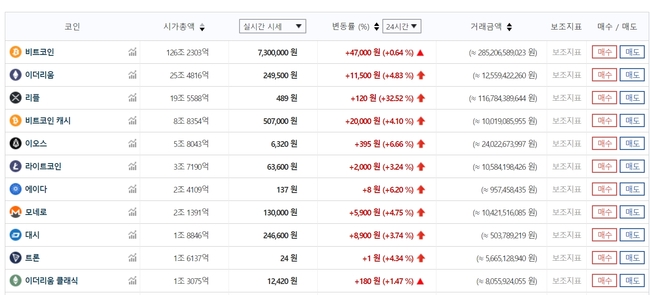
There have been instances where Ripple trading volume on the domestic cryptocurrency exchange Upbit exceeded that of major U.S. exchanges like Coinbase. With massive funds pouring into the won market, Seoul-based investors and exchange indicators are exerting significant influence on global price formation. It has become a familiar sight for us to see colleagues gathering during lunch breaks to check the day’s coin prices, either sighing or cheering. As the heat of the domestic market intensifies, short-term liquidity becomes abundant, increasing the possibility of sharp price swings. Conversely, if domestic investor sentiment cools down, trading volume may plummet, easily leading to a dull sideways market.
This is why it is essential to monitor both global market indicators and the order book of domestic exchanges, including the “Kimchi Premium” phenomenon. Impulsive trading based on the idea of “everyone else is buying, so I should too” can lead to principal loss in an instant, so special caution is required.
Explosive trading volume on domestic exchanges is a primary cause of increased short-term price volatility, making a cautious approach essential.
3. Real-World B2B Payment Use Cases and the Significance of CEO Statements

Ripple’s CEO recently emphasized in an interview that he is not a price maximizer and that the needs of actual customers are the top priority. The intention is to secure the price stability essential in the interbank payment market and increase practical commercial applications, rather than chasing speculative price surges. In fact, as global corporate payment service providers adopt Ripple’s custody and liquidity solutions, their on-the-ground utilization is noticeably increasing. It is easy to understand this by imagining how fees and processing times for international remittances or corporate payments are drastically reduced. As these real-world use cases expand, the token’s intrinsic value becomes more robust, establishing a distinct domain beyond a mere speculative instrument.
While this may feel somewhat dull to investors who only look at the red and green lines on price charts, it is a necessary process for improving the company’s fundamental health. From a long-term perspective, verifying whether the actual business ecosystem is expanding can be considered true investment analysis.
The expansion of real-world use cases in the interbank payment market lays the foundation for the long-term resilience of the Ripple price.
4. Short-Term Correction Phase and the Importance of Defending Key Support Levels
As the entire cryptocurrency market enters a breather following an upward breakout, the Ripple price has also not been spared from a short-term correction. While Bitcoin holds key price levels, trading volume across altcoins is decreasing, deepening investors’ concerns. It is similar to the anxiety felt when the surrounding market fluctuates as the move-in date for a newly purchased apartment approaches; there is a similar nervousness about whether support levels will break. Whether the support level around $1.40 holds firm will completely alter the short-term trend over the next few days. Chart analysts advise that corrections without accompanying volume may be a natural breather, so there is no need to sell out of excessive fear.
If support levels are breached, further declines may occur, so it is necessary to prepare strategies for split buying and adjusting cash ratios in advance. This is a moment when the wisdom to step away from market noise and calmly compare the current price position with volume trends is required.
During the short-term correction phase following a rise, it is crucial to closely observe whether key support levels are defended and the trend of decreasing trading volume.
5. The Gap Between Past $10 Forecasts and Current Price Reality
On internet communities and YouTube channels, rosy predictions that Ripple will soon break $10 have been repeated for years. However, investors who have experienced past litigation risks and prolonged price stagnation are not easily swayed by such unconditional optimism. One might recall the case of Mr. Kim, an office worker who believed experts’ claims that a major bull run was inevitable every year-end, only to suffer losses. We must not forget that what moves prices is not simple wishful thinking or sensational articles, but the actual regulatory environment and institutional fund flows.
While setting high target prices is a matter of freedom, it must be preceded by verifying whether the basis for reaching those targets and external variables have actually changed. The moment one engages in blind investing based on past glory or vague expectations, valuable assets are put at risk.
Do not be misled by long-term high-price forecasts; one must calmly face realistic price variables and changes in the regulatory environment.
6. Preventing Impersonation Scams and Wise Investment Strategies
Recently, scam crimes have been rampant, exploiting the upward trend in Ripple’s price by impersonating official investment channels or promising guaranteed high returns. Methods such as approaching victims under the guise of professional consulting to steal personal information or demand money are becoming increasingly sophisticated, requiring special caution. The best course of action is to never respond to text messages from unknown numbers offering “insider information.” Any entity that induces deposits into personal accounts rather than through the official website or verified exchanges should be suspected of being a scam without hesitation. It is most important to adopt the mindset of “I guard my own wallet,” immediately blocking suspicious contacts and using safe trading environments.
To remain steady amid rapidly changing market conditions, one must establish clear investment principles and shut out hearsay from the surroundings. Please respond calmly based on the criteria of spot ETF inflows, real-world use cases, and the defense of support levels discussed today.
Be wary of impersonation scams promising high returns, and continue principled investing based on verified indicators.
Frequently Asked Questions
=