The inheritance tax exemption limit is not a single fixed number; rather, it is determined by combining the basic deduction with various additional deductions. If a spouse and children inherit together, they can transfer assets up to a minimum of 1 billion won without any tax burden. Many people vaguely assume that if the market value of the house left by their parents does not exceed 1 billion won, no tax will be owed. However, since the deduction limits can vary depending on the scale of prior gifted assets and financial assets, accurate calculation is necessary. In this article, we will examine in detail the various deduction items that make up the inheritance tax exemption limit and practical tax-saving strategies to utilize them effectively. We will also check how to use the National Tax Service’s simulation program to prevent unnecessary tax expenditures. We will gradually explain the core information that will be practically helpful for those preparing for smooth asset transfer within the family.
=
Complete Guide to Inheritance Tax Exemption Limits: Tax-Saving Strategies for a 1 Billion Won Family Home
1. Criteria for Choosing Between Basic and Lump-Sum Deductions
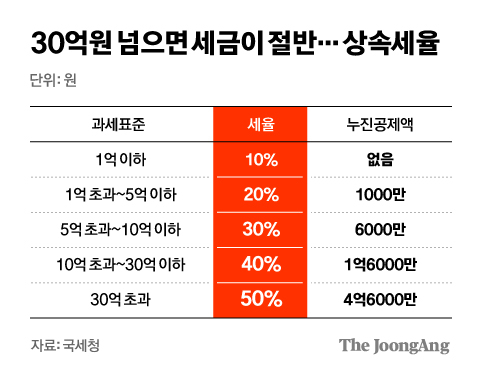
The fundamental framework for inheritance tax is the combination of the 200 million won basic deduction and various personal deductions. However, in practice, choosing the 500 million won lump-sum deduction is often much more advantageous than this method. For most households, applying the lump-sum deduction is a shortcut to reducing the tax burden, rather than calculating complex personal deductions one by one. For example, Mr. Kim, an ordinary office worker living in Seoul, was able to significantly reduce his tax burden by choosing the lump-sum deduction while settling his late father’s estate. If the total of the basic deduction and other personal deductions does not reach 500 million won, applying the 500 million won lump-sum deduction is the wisest choice legally permitted, without any need for hesitation. When combined with other deductions that are applied by default, the exemption range becomes much wider, so it is essential to compare both methods when filing a tax return. It is also a standard tax-saving process to prioritize reviewing the applicability of the lump-sum deduction when consulting with a tax agent.
If the combined amount of the basic deduction and personal deductions is less than 500 million won, it is advantageous to choose the 500 million won lump-sum deduction.
2. Core Aspects and Limit Calculations of the Spousal Inheritance Deduction
If inheritance begins while the spouse is alive, a significant deduction of up to 3 billion won can be received through the spousal inheritance deduction. This deduction system is designed to guarantee a stable retirement life for the surviving spouse and has a very powerful tax-saving effect. However, the deduction can only be received if the spouse actually inherits assets, and it is recognized only within the limit of the statutory inheritance share. For example, if the statutory inheritance share is 400 million won, registering 1 billion won in the spouse’s name does not mean the entire 1 billion won is deductible, so caution is required. Looking at an actual case that occurred in Daegu, there were regrettable instances where additional taxes were levied due to the mistaken application of the statutory inheritance share when calculating the spousal deduction limit. Therefore, when dividing assets in the spouse’s name, it is essential to carefully examine the taxable inheritance amount and the statutory inheritance share and undergo review by a tax expert.
The spousal inheritance deduction is applied up to a maximum of 3 billion won, based on the assets actually inherited and within the limit of the statutory inheritance share.
3. Child and Joint Deductions and Additional Deduction Items
When children inherit assets from their parents, a certain amount is granted as a basic child deduction per person, and additional benefits are added if minors or persons with disabilities are included. There are various items that reduce the tax amount depending on the age or physical condition of family members, so detailed family relationships must be proven without omission. Additionally, children who have lived with their parents for a long time and maintained the residence can enjoy the significant benefit of deducting a substantial portion of the house value through the cohabiting residence inheritance deduction. Even in cases with financial assets, a certain percentage can be deducted based on the net financial asset value, which is a great help for households with many deposits or savings. In this way, various personal and material deductions combine organically to form the final inheritance tax exemption limit. When preparing tax return documents, missing even one of these deduction items can result in paying tens of millions of won in additional tax, so meticulous verification is required.
To maximize the exemption limit, you must secure not only the child deduction and minor deduction but also the cohabiting residence inheritance deduction and financial asset deduction.
4. Aggregation of Prior Gifts and the 10-Year Taxation Rule
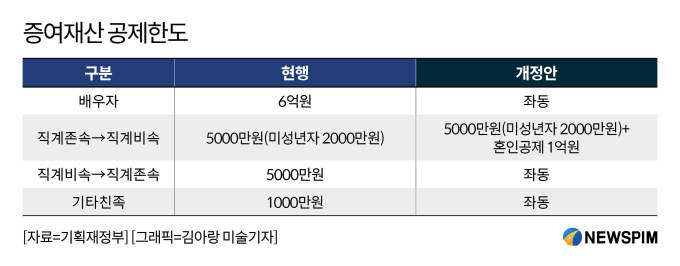
You must keep in mind that if assets were gifted to children or a spouse within 10 years prior to death, they will be fully re-aggregated when calculating inheritance tax. Many people mistakenly believe that gradually dividing assets while the parent is alive can completely avoid taxes, but the tax law imposes aggregation taxation over a specific period to prevent this. For example, if a large sum was transferred to a child as a deposit for a lease five years ago, this amount may be included in the inheritance asset value and become the cause of a tax bomb. However, if the gift was made within the gift tax deduction limit and the period has significantly exceeded 10 years, it may be excluded from the aggregation target. It is wise not to overlook casual account transfers or monetary transactions between family members and to leave clear documentary evidence in preparation for future tax audits. To prevent the unfortunate situation of being charged additional taxes while trying to reduce taxes, it is important to develop the habit of thoroughly managing prior gift history.
Prior gifted assets made within 10 years of the date of inheritance are re-aggregated into the taxable inheritance amount, so prior planning is essential.
5. How to Use the National Tax Service’s Hometax Simulation
If you want to directly check how much inheritance tax you need to pay or whether you safely fall within the exemption limit, it is best to actively utilize the National Tax Service’s Hometax system. By accessing the Hometax screen and selecting the inheritance tax simulation menu, you can quickly grasp the estimated tax amount by entering the total assets and debts left by the deceased. You simply need to enter the decedent’s real estate announced price, deposit balances, and the family relationships of the heirs in the respective input fields. Through this process, you can simulate the results of applying the spousal deduction and lump-sum deduction in advance, which greatly helps in meeting the filing deadline after the inheritance begins. It is the most accurate and fast way to estimate the approximate amount on your own before relying entirely on a tax accountant. The Hometax simulation function also serves as an excellent compass for preventing unexpected additional taxes and facilitating fair asset division negotiations among family members.
Using the National Tax Service’s Hometax inheritance tax simulation function allows you to simulate the estimated exemption limit and tax amount in advance.
6. Future Outlook and Actions for Successful Inheritance Tax Saving
The inheritance tax system is constantly changing according to economic conditions and government policy trends, and various revision discussions regarding deduction limits and tax rates are expected to continue in the future. While voices calling for the alleviation of inheritance tax burdens to keep up with inflation and real estate price fluctuations are growing, verification by tax authorities is becoming stricter every year. Therefore, rather than vaguely assuming that no tax will be incurred, it is necessary to take the stance of periodically checking and diagnosing your current asset status with an expert. You must accurately grasp the scale of the housing and financial assets held by your parents and establish prior countermeasures such as writing a will or utilizing trust systems. Small actions like gathering with family now to organize a list of held assets and running a simulation through Hometax can prevent a large future tax burden. We recommend starting wise asset management right now, based on transparent and legal tax-saving strategies, to protect your precious family’s assets.
To avoid a tax bomb, you must periodically check your assets and thoroughly prepare in advance to keep up with changes in the inheritance tax system.
Frequently Asked Questions
=