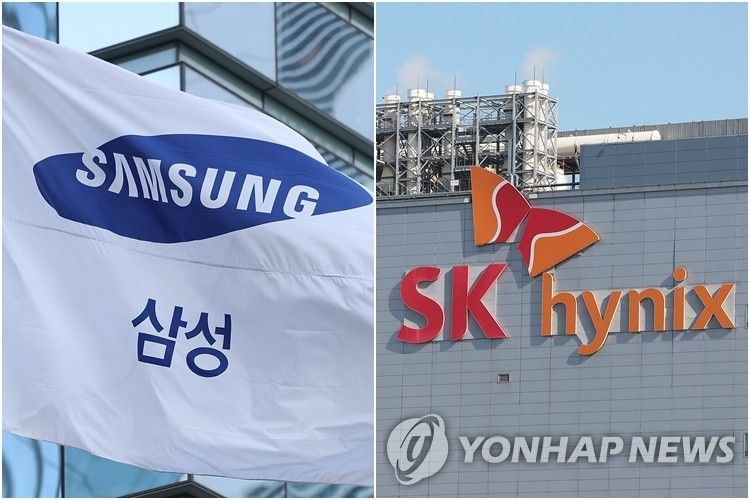
Recently, the securities industry has issued radical forecasts for Samsung Electronics and SK Hynix that differ significantly from existing market expectations, sparking considerable buzz among investors. BNK Investment Securities has drawn market attention by presenting target prices of 270,000 won for Samsung Electronics and a shockingly high 1.48 million won for SK Hynix. Compared to other major securities firms maintaining high forecasts of 400,000 to 600,000 won for Samsung Electronics, this level is less than half. Behind these extreme forecasts lies an analysis that memory semiconductor prices are approaching their peak and have reached a cost limit, along with a diagnosis that the purchasing power of finished product manufacturers is flashing red lights. In this article, we will examine in detail the specific reasons behind this pessimistic analysis and its potential impact on the future stock market. If you are currently invested in semiconductor-related stocks, this analysis may help broaden your perspective on the market.
=
Why Target Prices for Samsung Electronics and SK Hynix Diverge: 270,000 Won vs. 1.48 Million Won
1. Reaching Memory Cost Limits and Securities Industry Forecasts
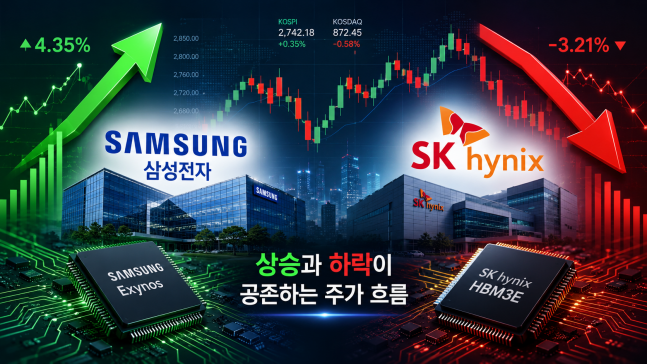
According to a recent report by BNK Investment Securities, the target prices for Samsung Electronics and SK Hynix have been significantly lowered to 270,000 won and 1.48 million won, respectively, delivering a fresh shock to the market. For Samsung Electronics, this is only half the level of forecasts presented by other major large securities firms, while SK Hynix also shows a significant gap from market expectations. Analyst Lee Min-hee diagnosed that as memory costs hit a limit, demand elasticity is rapidly declining not only in IT products but also in the server sector. The reason for such radical figures is that memory semiconductor prices have risen excessively, reaching a critical point where further price increases are difficult. In the stock market, this analysis is acting as a concern that it could hinder future earnings growth. In fact, there is ongoing debate among investors about whether this forecast is excessive pessimism or a painful warning of an impending crisis. Since some securities firms’ radical claims have been proven correct in the past, market participants are in a mood where they cannot simply overlook this report. In particular, individual investors who have invested substantial funds in large semiconductor stocks are concealing their confused feelings. In a situation where target prices vary so drastically between securities firms, it is necessary to carefully examine the companies’ fundamental performance and global macroeconomic indicators. Whether this pessimistic forecast will become reality or remain a groundless worry will be determined by the future trend of memory semiconductor prices.
Radical target prices showing a large gap from the average of major securities firms were presented, along with the diagnosis that memory costs have reached their limit.
2. AI Market Changes and Semiconductor Purchasing Power
As the market share of closed models in the Large Language Model (LLM) market plummets and competition intensifies, price reduction measures are being implemented one after another. In fact, since mid-year, the price paid per token has plummeted to less than half, hindering the revenue growth of related companies. This revenue slowdown is naturally acting as a decisive factor in lowering semiconductor purchasing power, leading to a decrease in component orders. Major tech giants like Google and Meta have shifted dramatically from being solely focused on performance competition to strategies emphasizing cost-effectiveness and power efficiency. Even leaders like OpenAI and Anthropic are showing a tendency to moderate the development speed of frontier models while focusing more on restoring security and reliability. This shift in approach by AI-related companies ultimately causes the wallets of the big spenders who were buying memory semiconductors in bulk to close. In the past, securing the highest performance chips was the top priority, but we have now entered an era where efficiency relative to investment is strictly evaluated. With server investment costs surging and profitability falling short of expectations, tech companies are structurally forced to cut costs. Consequently, for semiconductor manufacturers, this change in attitude by major customers could lead to long-term order reductions, which is a significant burden. At a point where the controversy over the AI industry bubble has not been fully resolved, this decrease in purchasing power can be interpreted as a sign of a semiconductor market slowdown.
Due to intensified competition in the AI market and a trend toward cost reduction, the semiconductor purchasing power of major tech companies is gradually weakening.
3. Cost Pressure and Response Strategies of Finished Product Manufacturers
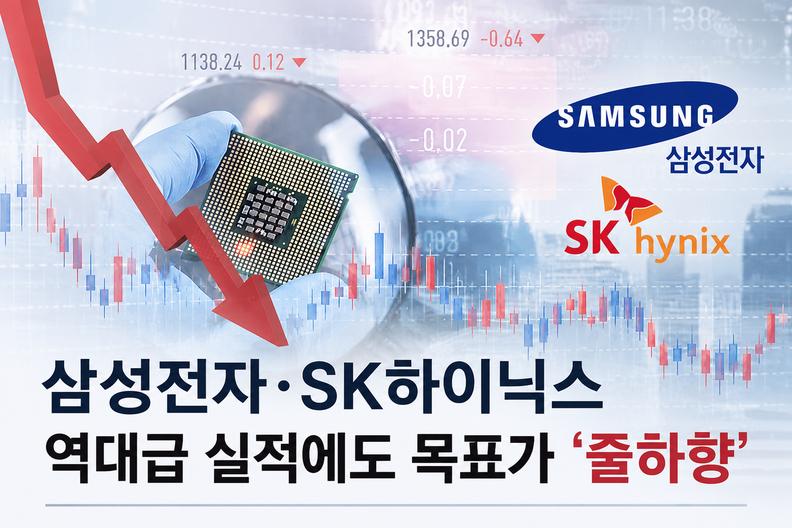
Due to an unprecedented surge in memory semiconductor prices, the finished product industry is suffering from unprecedented severe component cost pressure. A phenomenon has occurred where memory costs account for as much as half of the total component cost for personal computers and smartphones. As a result, mid-to-low-end Original Equipment Manufacturer (OEM) companies are reluctantly drastically reducing the memory capacity in their products. On the other hand, companies handling high-end lineups are passing on the cost burden to consumers by raising product sales prices in the second half of the year. These cost-cutting moves are being transmitted directly to the server market beyond mobile devices, leading to reduced memory capacity in new products from major companies like NVIDIA. The reason why the prices of smartphones and laptops commonly seen around us have recently become more expensive is closely related to this rise in component costs. As manufacturers choose to compromise by finding cheaper components or lowering specifications to maintain margins, consumer satisfaction is also declining. The situation in the server market is not much different, with companies building data centers prioritizing cost efficiency. As memory prices have risen to the point of being too expensive, a paradoxical situation is unfolding where demand itself is being eroded. The moment finished product manufacturers seek such self-help measures for survival, the upward trend in earnings for memory semiconductor manufacturers is inevitably hindered.
As memory costs account for half of component costs, smartphone and server manufacturers are responding by reducing capacity or raising prices.
4. Diverging Earnings Forecasts for Samsung Electronics and SK Hynix
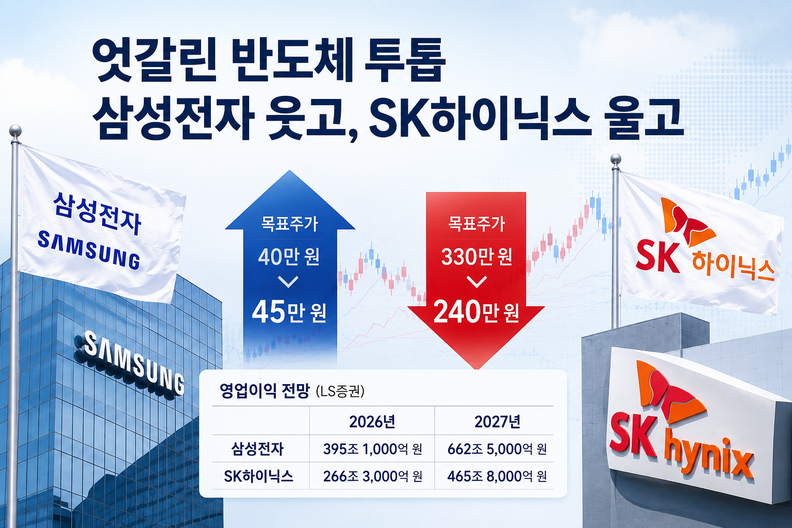
BNK Investment Securities assessed that despite the existence of a positive shareholder return program for Samsung Electronics, it is not a decisive factor that will change the direction of the stock price. While there are some expectations for improved profitability in the foundry business, the analysis suggests that this has already been largely priced into the current stock price. Reflecting this downward revision in earnings, Samsung Electronics’ target price was lowered from the previous 300,000 won to 270,000 won, and the investment opinion was also downgraded to Hold. On the other hand, for SK Hynix, the target price was maintained at its previous level, revealing a subtle temperature difference between the two major semiconductor companies. However, for both companies, the forecast remains unchanged that operating profits in the upcoming third and fourth quarters will fall below market expectations due to the slowing rise in memory prices and the strengthening of the won. The securities industry views that for Samsung Electronics, the sluggishness in the set business sector (smartphones and home appliances) and the slow pace of reducing foundry losses are holding back earnings. Conversely, SK Hynix is evaluated as showing relatively strong defensive capabilities based on its technological advantage in the High Bandwidth Memory (HBM) field. However, the strengthening of the won due to exchange rate declines acts as a negative factor for both semiconductor companies, which have an extremely high export ratio, by lowering their won-denominated revenue. This is why warnings are being issued that if results fall short of market expectations, a short-term stock price correction will be difficult to avoid. For investors, it is a time to carefully compare the earnings defense capabilities of each company’s business structure and approach cautiously.
With the slowing rise in memory prices and the strengthening of the won, the earnings of Samsung Electronics and SK Hynix are expected to fall below market expectations.
5. Extreme Divergence in Securities Industry Target Prices
Looking at the current securities market, the target prices for Samsung Electronics and SK Hynix by securities firms are divided into extremes, intensifying confusion. While Mirae Asset Securities presented 400,000 won for Samsung Electronics, KB Securities offered an overwhelming forecast of 600,000 won. LS Securities predicted 450,000 won, Samsung Securities 400,000 won, and Eugene Investment Securities 560,000 won, showing a large gap compared to BNK Investment Securities’ 270,000 won. Similarly, for SK Hynix, BNK Investment Securities’ 1.48 million won appears particularly low compared to LS Securities’ 2.4 million won, Samsung Securities’ 3 million won, and Hanwha Investment & Securities’ 3.15 million won. The fact that securities firms show target price differences of several hundred thousand won for the same company is because their interpretations of the future semiconductor industry outlook are completely divergent. Securities firms presenting optimistic arguments argue that the AI boom is still ongoing and that supply shortages will not be easily resolved. On the other hand, firms maintaining conservative forecasts sharply point out the increasing uncertainty in the macroeconomy and the declining demand elasticity in downstream industries. For general investors, it is inevitable to be confused about which expert report to trust. While positive and negative forecasts always coexist in the stock market, such a large gap is rare. Therefore, investors need the wisdom to verify the grounds and logic presented by these firms themselves, rather than being dazzled solely by the target price figures of a specific securities firm.
While firms like Mirae Asset and KB Securities maintain high target prices, BNK Investment Securities presents extremely conservative figures, leading to diverging views.
6. Future Market Response Strategies and Investor Precautions

Past supply-demand prediction failures by memory manufacturers have always stemmed from the chronic problem that demand forecasts were less accurate than supply forecasts. In a situation like the current one, where the macroeconomic environment is uncertain and memory prices have already reached their peak, demand elasticity is bound to decline. The analyst repeatedly emphasized that clear signals of demand slowing down are being detected in the current market, regardless of the motivation. Therefore, investors should abandon blind expectations of rising prices and focus on risk management by calmly grasping the cycle of the semiconductor industry. While AI-related investments will not turn sharply in the short term, the wind of cost efficiency will likely increase the earnings volatility of related component companies. In conclusion, current semiconductor stock investment has entered a complex phase with too many variables to simply jump in based on growth potential alone. Negative and positive factors are mixed, including exchange rate fluctuations, decreased finished product demand, and the adjustment of investment pace by major tech companies. When managing funds, it is safe to adopt conservative strategies such as split buying while closely monitoring companies’ quarterly earnings reports. Listening to the market’s voice while maintaining a balanced perspective that does not lean too heavily on a specific forecast is the shortcut to successful investing. We hope you will make wise investment decisions by closely monitoring the earnings of major IT companies and semiconductor export indicators to be released in the future.
In line with macroeconomic uncertainty and signs of slowing demand, thorough risk management and a conservative investment strategy are required.
Frequently Asked Questions
=