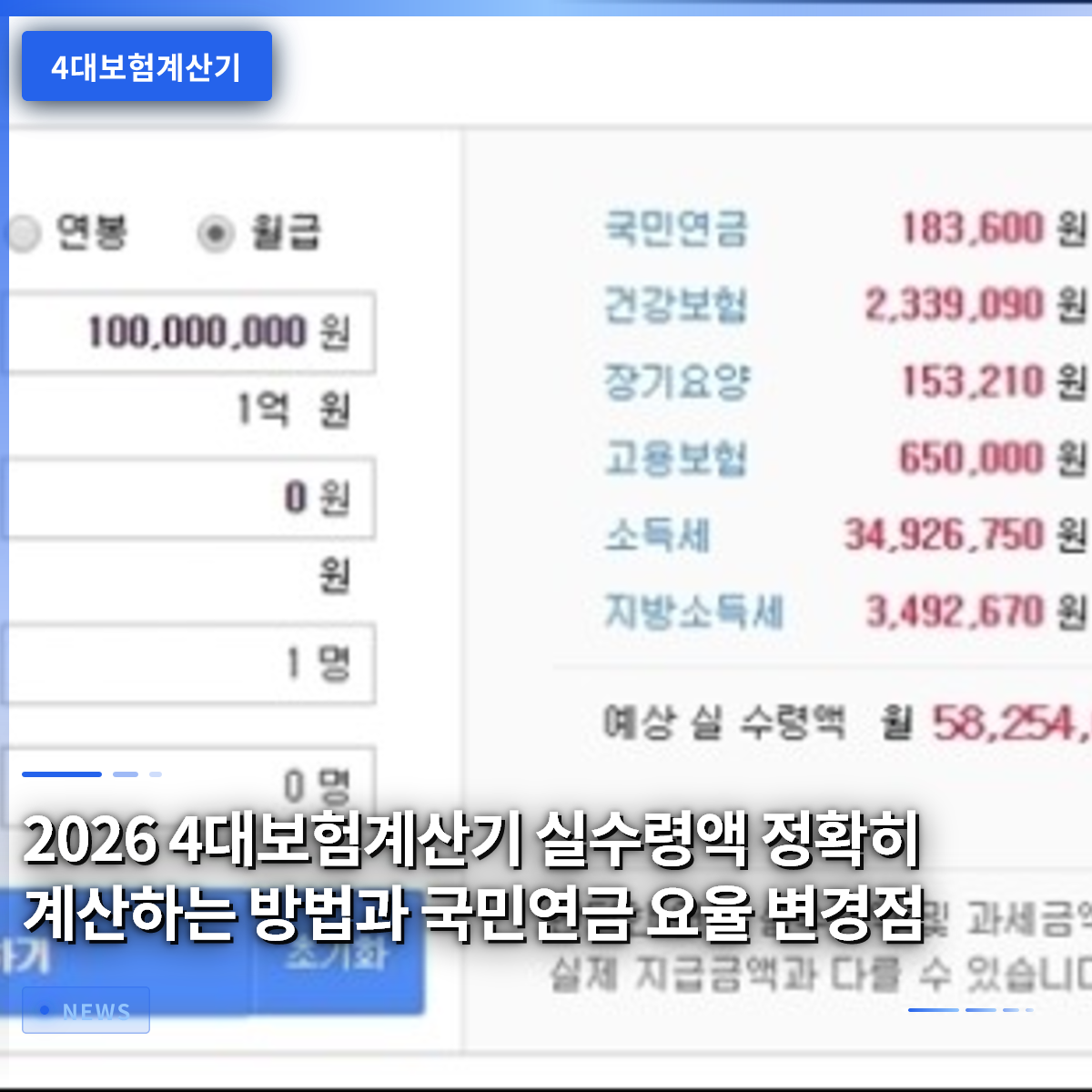
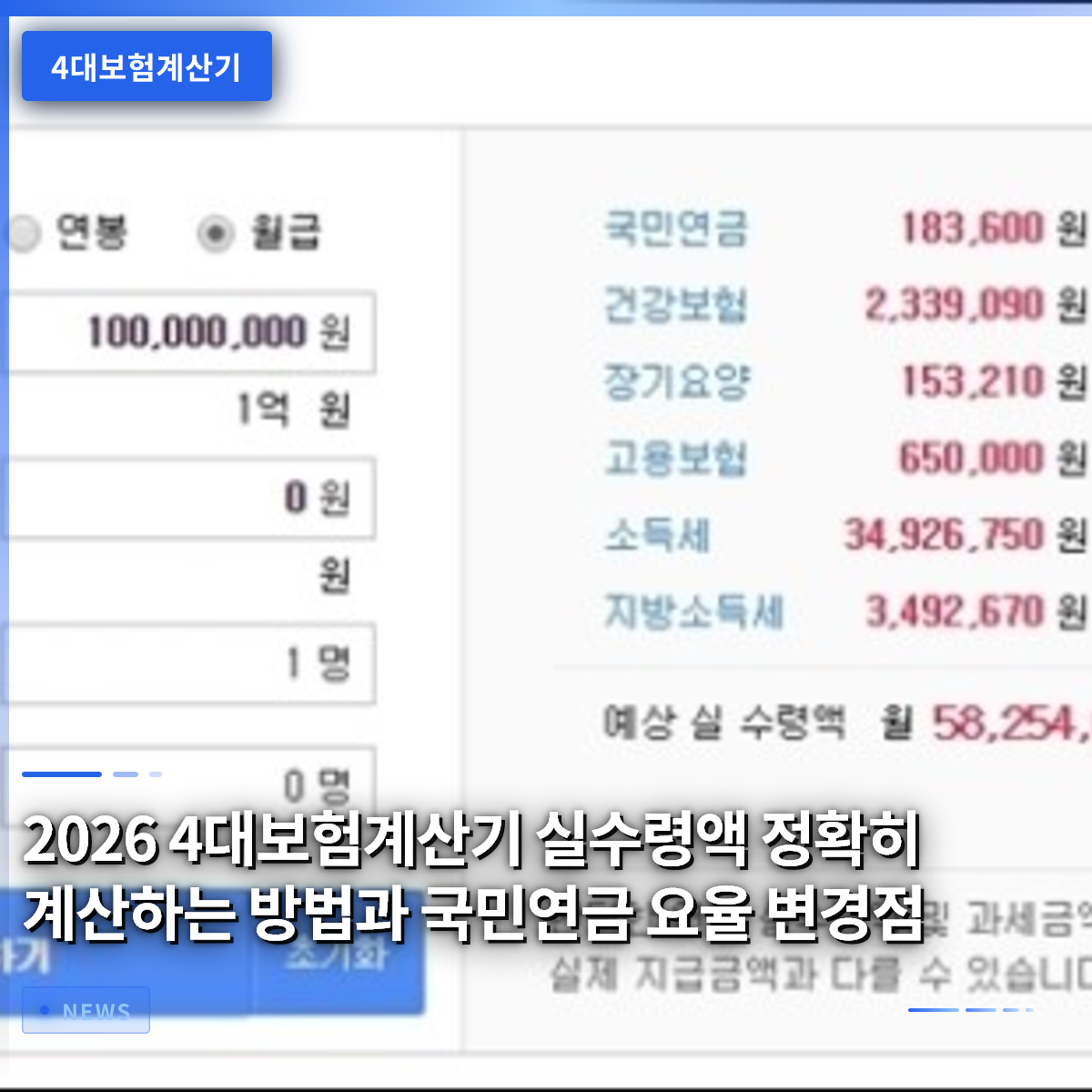
When using the Four Major Social Insurances calculator as of 2026, it is essential to accurately input the National Pension insurance rate, which has been increased to 9.5% this year, and to correctly separate non-taxable allowances. Most people have likely found themselves puzzled, holding their monthly pay stubs, wondering why the amount they calculated differs from the actual deductions. Since the majority of employees simply input their annual salary contract or approximate monthly salary into the calculator, slight discrepancies often arise between the calculated take-home pay and the actual amount. Some even rely solely on the simplified calculators found on Naver or other portal sites for their financial planning, only to be caught off guard during year-end tax settlement or at monthly payroll. In this article, we will thoroughly examine the criteria for taxable income that must be checked when using the Four Major Social Insurances calculator and the hidden structure of the contributions borne by employees and employers. By reading this article to the end, you will fully understand the secrets behind the deductions on your pay stub and be able to calculate your take-home pay accurately without errors.
=
2026 Four Major Social Insurances Calculator: How to Accurately Calculate Take-Home Pay and Changes in the National Pension Rate
1. The Changed National Pension Rate and Basic Structure in 2026

As of 2026, the National Pension insurance rate has been adjusted upward from the previous 9% to 9.5%, directly impacting the monthly expenses of employees. For employed participants, the changed rate means that employees and employers each bear 4.75%, splitting the cost in half, which is deducted from the salary. Therefore, sticking to the calculation methods used until last year or using calculators with outdated data will result in errors where the calculated amount does not match the actual deduction. It is important to remember that the reason the National Pension item on your pay stub appears slightly higher than usual is due to this overall increase in the insurance rate. Since these amounts paid diligently each month are linked to your valuable retirement funds, it is wise to master the accurate calculation method. Employees should develop the habit of finding the latest tools that accurately reflect the changed rate and applying them to their own income.
The change in the National Pension insurance rate is not just a numerical game; it is a core variable that determines the size of the take-home pay deposited into your account every month. Only by discarding past misconceptions and running the calculator based on the latest 2026 standards can accurate financial management be achieved.
The 2026 National Pension insurance rate has been increased to 9.5%, with employees and employers each bearing 4.75%.
2. Accurate Separation of Taxable Income and Non-Taxable Allowances

The most common mistake made when entering salary into the Four Major Social Insurances calculator is including non-taxable allowances, such as meal allowances or self-driving subsidies, in the total amount. Social insurance premiums, such as the National Pension and Health Insurance, are not calculated based on total income before tax; rather, they are assessed based on taxable income, excluding non-taxable items. For example, if your monthly meal allowance is within the non-taxable limit, this amount should be cleanly excluded from the income subject to the Four Major Social Insances. If you fail to distinguish this and input the total amount into the calculator, the calculation result will naturally differ from the deductions on your actual pay stub. Therefore, it is essential to first carefully classify which items in your salary composition are non-taxable and exempt from tax.
Many people find this complex classification process tedious and simply input the total amount, mistakenly believing the calculator is wrong. However, to grasp the accurate take-home pay, one needs the wisdom to precisely break down the items that form the framework and flesh of their salary.
When using the Four Major Social Insurances calculator, you must accurately input the taxable income excluding non-taxable allowances to avoid discrepancies.
3. Differences Between Employee and Employer Contributions

The Four Major Social Insurance premiums deducted from the pay stubs we receive monthly represent only half of the total cost; the other half is fully borne by the company. Looking at the overall social insurance structure, the proportion borne by employees is approximately 9.4%, while the employer’s share easily exceeds 10% depending on the industry. In specific industries such as food service or construction, the industrial accident insurance rate differs from that of general office jobs, making the calculation of the total cost incurred by the employer even more complex. From the employer’s perspective, the actual labor cost of hiring one employee is accurately calculated only by adding the employer’s share of the Four Major Social Insances to the simple monthly salary. Conversely, employees need to objectively understand not only the amount deducted from their pay but also how much more the company is spending on their behalf.
Clearly understanding these differences in contribution responsibility allows for wise decisions when considering contract forms between freelancers and employees in the future. It is important to understand how the social security system allocates resources to both sides, rather than simply looking at the money left after taxes.
The structure involves employees bearing approximately 9.4% and employers bearing over 10% of the insurance premiums, respectively.
4. Common Mistakes in Calculating Take-Home Pay and Solutions
It is a very common phenomenon that when you enter your annual salary into the basic calculators on Naver or other portals, the result does not match the actual amount deposited into your account down to the 500-won unit. This is because there are subtle differences in each company’s salary payment methods, whether bonuses are included, and how local income tax or simplified tax tables are applied. In particular, for mid-year hires or employees with fluctuating monthly overtime pay, it is virtually impossible to perfectly predict future take-home pay using a fixed calculator. To resolve this, it is necessary to make the effort to run multiple simulation calculations by reflecting your exact previous year’s income or the average value of fluctuating monthly allowances.
Relying solely on one famous calculator screen recommended by others can lead to setbacks when designing loan interest or depositing large sums into savings. Developing the ability to use Excel formulas yourself or verify detailed items directly is the true beginning of financial management.
Discrepancies between portal calculator results and actual take-home pay arise from differences in variable allowances and tax application methods.
5. Special Four Major Social Insurance Calculations for Construction and Specific Industries
Unlike general office jobs, labor management becomes extremely complex in construction sites or specific industries as the final settlement period for employment insurance and industrial accident insurance approaches. In the construction industry, the number of working days and total compensation for daily-wage workers must be accurately reported monthly for each site, making it difficult to handle with general simplified calculators. Therefore, field practitioners seek specialized integrated practical tools that can handle complex labor costs, retirement benefits, and Four Major Social Insurance calculations all at once. These tools provide robust support not just by outputting a single amount, but by covering labor management specific to the construction industry and preparation for final settlement.
Since industrial accident insurance rates and employment insurance special provisions vary by industry, you must find a specialized calculation method suitable for your workplace. You must always check industry-specific characteristics to prevent unfair situations such as tax audits or additional charges that result from applying only general standards.
Specific industries such as construction require separate customized labor management calculation tools, unlike general calculators.
6. Four Major Social Insurance Utilization Strategies for Wise Financial Planning
Accurate use of the Four Major Social Insances calculator is more than just checking monthly outflows; it becomes a solid foundation for annual asset formation plans and retirement design. Rather than just looking at how much the annual salary increases, you should pay attention to how much the real money actually deposited into your account increases after deducting all taxes and social insurance premiums. Financial environments and social insurance systems will continue to change, and our financial management strategies must be flexibly updated to keep pace. Try to develop the habit of periodically checking your expected pension benefits by linking with various retirement preparation diagnostic tools provided by the government and public institutions.
Based on the calculation principles and the concept of non-taxable income learned today, please secure a favorable position in the upcoming year-end tax settlement and new year salary negotiations. Small attention and accurate information gathering will combine to become the most powerful weapon in protecting your lifelong assets.
You should establish systematic asset management and retirement design strategies based on an accurate understanding of take-home pay.
Frequently Asked Questions
=