To receive your retirement pension under the most favorable conditions, the key is to opt for a pension payout rather than a lump sum to significantly reduce your tax burden. For employees approaching retirement, the biggest concern is often whether to receive a large sum all at once or to receive it in monthly installments. In the past, people simply waited for their companies to deposit their severance pay into their accounts, but today, it is essential to understand the system and manage it wisely. If you receive your retirement income as a lump sum, the tax burden on the large amount can be heavy. However, if you receive it as a pension, you can enjoy a tax reduction of up to 30% to 50%. Before blindly signing the notice provided by your company, it is crucial to accurately understand the nature of your account. In this article, we will explore in detail the methods of receiving different types of retirement pensions and tax-saving tips that often confuse people.
=
Complete Guide to Receiving Your Retirement Pension: Comparing IRP Accounts, Lump Sums, and Taxes
1. Identifying Your Type of Retirement Pension
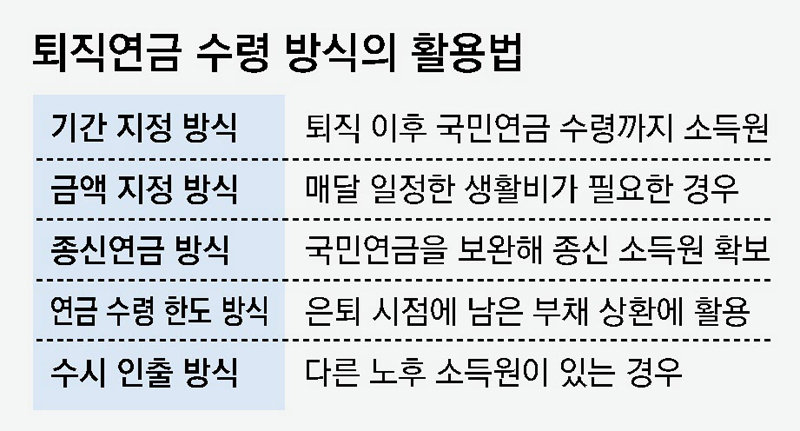
Before formally receiving your retirement pension, you must first determine whether you are enrolled in a Defined Benefit (DB) plan or a Defined Contribution (DC) plan. Mr. Kim, an office worker, was surprised by the amount of severance pay notified by his company, only to realize he was a participant in a DC plan, meaning he had to manage his own assets. In a DB plan, the company accumulates and manages the severance fund, so you receive a fixed amount upon retirement. In contrast, a DC plan involves the company making regular contributions annually, while the participant selects and manages financial products. Since the final amount received varies greatly depending on investment performance, those who have not paid attention to their investments may find themselves in a difficult situation. You can easily check the type of your retirement pension through the enrollment certificate provided by your workplace or the mobile app of the financial institution where you hold your account. If you have changed jobs or cannot remember your past enrollment details, it is best to use the integrated pension portal site. Carefully checking for any missing amounts is the first step in securing your retirement funds. Note that losses during asset management can sometimes result in a lower payout than expected. Your management strategy should also differ depending on whether you prefer stability or aggressive investment.
Before receiving your retirement pension, confirm whether you are in a Defined Benefit or Defined Contribution plan and check the status of your account.
2. Opening an IRP Account and Essential Conditions
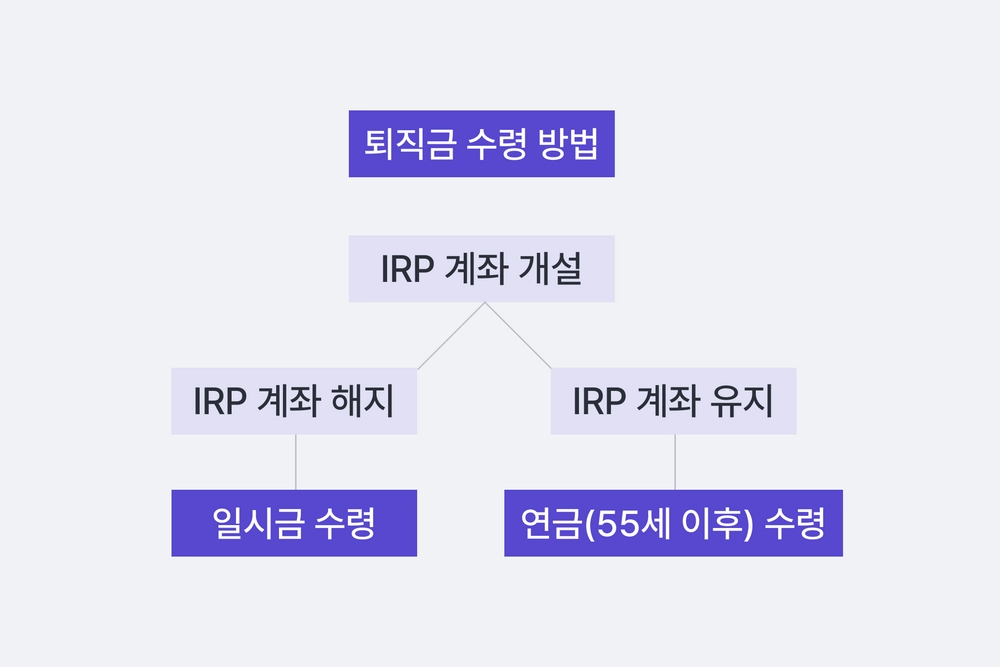
To receive your retirement pension, you are required to open an Individual Retirement Pension (IRP) account in your own name. Mr. Park, who had just retired, hurriedly opened an IRP account following a bank employee’s guidance and transferred his severance pay into it. This account is a versatile tool that not only receives the retirement benefits paid by your company but also allows individuals to make additional contributions to enjoy tax deduction benefits. When opening an account, it is advantageous to choose a bank or securities firm where you already transact, prioritizing low fees and easy management. Recently, it is possible to open an account non-face-to-face with just a few taps on your smartphone without visiting a branch. One thing to note when opening an IRP account is that the product lineup and asset management fees vary slightly among financial institutions. Since these funds are typically held for a long period, fee differences can have a significant impact on the final return on investment, so careful comparison is necessary. Once the account is successfully opened, you must submit a copy of the account to the relevant department at your company to arrange for the transfer of your severance pay. Only after the severance pay is safely deposited into this account can you begin the formal process of receiving your pension. Although it may seem complex, it is a process that anyone can easily complete by following the steps in order.
To properly receive your retirement pension, you must open an Individual Retirement Pension (IRP) account in your name and submit the details to your company.
3. Differences Between Lump Sum and Pension Payouts

Whether to receive your severance pay as a lump sum or as a monthly pension determines the quality of your retirement life. Mr. Lee, who had worked for over ten years, used his entire lump-sum severance pay to build a detached house but immediately faced a shortage of living expenses. Receiving a large sum at once may feel good initially, but without a plan, it can be depleted in an instant. On the other hand, receiving it as a pension creates a stable monthly cash flow, serving as a reliable pillar for your retirement alongside the National Pension. The government actively encourages pension payouts to prevent old-age poverty, offering tax incentives as an incentive. When receiving a lump sum, the full retirement income tax is applied, but receiving it in installments as a pension significantly reduces the tax burden. The longer the pension payout period, the lower the applicable tax rate, resulting in a higher net amount received. However, you must maintain minimal asset management during the payout period to preserve asset value against inflation. You should carefully calculate your expected lifespan after retirement and the monthly living expenses required to make a prudent decision on the payout method. Once you choose to start a pension, it is often difficult to switch to a lump sum later, so initial planning is crucial.
While a lump sum is useful for securing a large amount of cash, it carries tax and depletion risks. Therefore, split pension payouts are better for tax savings and retirement stability.
4. Tax Benefits and Savings Strategies for Retirement Pensions
The biggest appeal of receiving your retirement pension as a pension is the significant tax savings. Mr. Jung, a retiree, chose to receive his pension over ten years instead of a lump sum, legally saving millions of won in taxes. Legally, receiving your severance pay as a pension grants a 30% reduction in the retirement income tax that would otherwise be applied to a lump sum. Furthermore, if the pension payout period exceeds ten years, the reduction rate increases to 40%, enhancing the tax-saving effect. To fully enjoy these tax benefits, you must receive the pension within the limits designated by the state, requiring annual adjustment of the payout amount. You can also enjoy tax deduction benefits during your annual tax settlement for additional contributions made to your IRP account. If you have consistently saved during your working years, the economic reward at retirement can be greater than imagined. However, if the annual pension payout exceeds a certain amount, it may be subject to comprehensive income tax when combined with other income, so caution is needed. Financial experts advise that maintaining the annual pension payout at an appropriate level is a wise way to avoid a tax bomb. Regularly checking for subtle changes in tax regulations and seeking expert advice is also a good asset management strategy.
Receiving your pension can reduce retirement income tax by up to 50%, and additional contributions qualify for tax deduction benefits.
5. Application Procedures and Precautions for Receiving Pensions
The application procedure for receiving a retirement pension is not as complicated as it seems, but you must prepare several essential documents. Mr. Choi, an employee nearing retirement, prepared the forms in advance according to his company’s retirement procedures and visited a financial institution branch to complete the process smoothly. First, once your retirement is confirmed through your company, you obtain a severance pay calculation statement and request the transfer to your IRP account. Then, you visit the financial institution or use their mobile channel to fill out a pension payment application form and submit your ID and a copy of your bankbook. At this stage, you can freely set the payout frequency, such as monthly or quarterly, according to your financial needs. The most common mistakes during the application process are entering the wrong account number or omitting essential supporting documents. There may be a time lag of about one week (business days) between the deposit of severance pay and the actual start of pension payments, so this should be considered in your financial planning. Additionally, the time required to liquidate assets varies by product type, so it is safe to coordinate the schedule with the financial institution’s representative in advance. Since this is an important period for designing your post-retirement life, you must carefully check for any minor administrative errors. If you have any questions, do not hesitate to contact the dedicated counselor at the financial institution for a clear answer.
To receive your retirement pension, prepare the necessary documents in advance, submit a pension payment application to the financial institution, and coordinate the schedule.
6. Outlook for Pension Management for a Successful Retirement
The retirement pension system has established itself as a core mechanism for protecting retirement assets for life, going beyond simply receiving a lump sum. Mr. Kang, who continues to manage his assets diligently after retirement, enjoys leisurely hobbies through a stable monthly cash flow. As the trend of low economic growth continues, how you manage and receive your retirement pension will significantly determine the quality of your life in old age. Financial authorities are also improving various systems and offering support measures to help participants manage their pension assets more easily. In a changing economic environment, only those who take an interest and study on their own can look forward to a prosperous retirement. Rather than being swayed by the immediate lure of a lump sum, you need an attitude of looking ahead to the long years after retirement and making a steady plan. Let’s start today by checking the status of your retirement pension account and seeing which products your money is invested in. Small interests and actions will accumulate to become a reliable pillar for your post-retirement life, promising a worry-free old age. As we head toward the era of longevity, let’s cultivate smart asset management habits and prepare for a confident retirement life.
Retirement pensions are core assets supporting life after retirement, so they should be received wisely based on continuous interest and thorough planning.
Frequently Asked Questions
=