The research team led by Professor Jeemin Hwangbo from the Department of Mechanical Engineering at the Korea Advanced Institute of Science and Technology (KAIST) has made history. Their quadruped robot, Rybo2, completed a full marathon course without a battery swap, and the achievement has been published in the prestigious journal Nature. This is the first time a robotics study conducted in South Korea has appeared in Nature, making it a particularly significant milestone. Until now, the robotics industry has primarily focused on how fast robots can run or how well they can navigate obstacles. However, for robots to be used for extended periods in real-world industrial settings or daily life, the key challenges have been managing battery efficiency, heat dissipation, and the stability of the drive systems. Rybo2 overcame these limitations by officially participating in an actual marathon and successfully completing the full 42.195 kilometers. In this article, we will explore in detail how Rybo2 achieved this remarkable record and discuss its academic significance.
=
Quadruped Robot Rybo2 Completes Marathon; Achievement Published in Nature
1. World’s First Quadruped Robot Marathon Completion
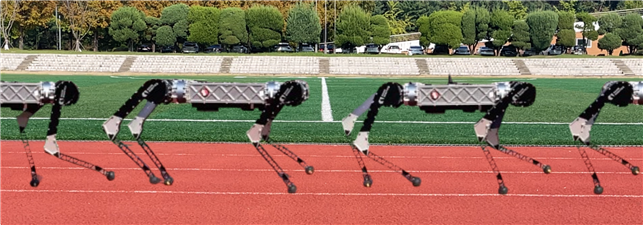
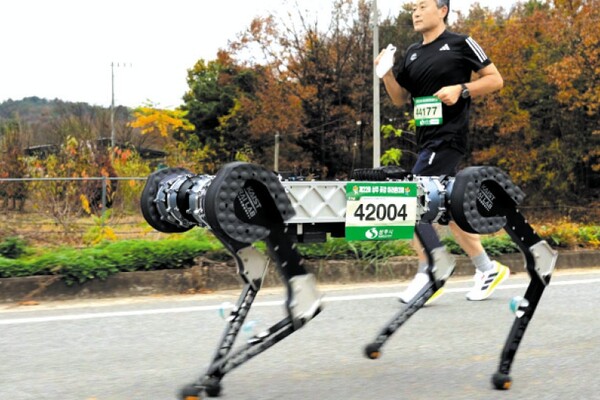
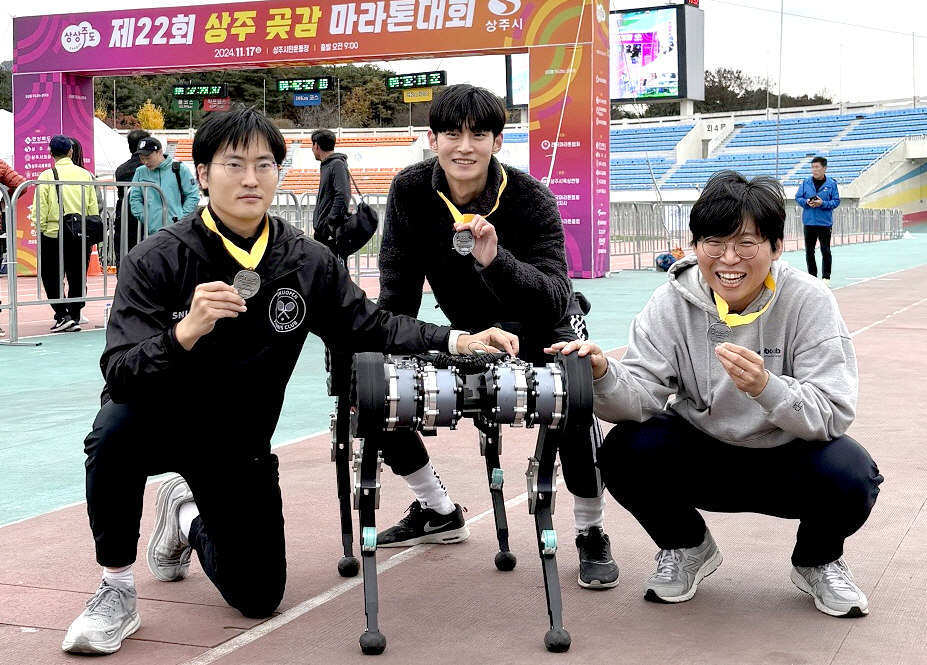
Completing a full marathon distance of 42.195 kilometers was a challenge that seemed almost unimaginable in the field of robotics. Rybo2 officially entered the Sangju Gochim Marathon held in November 2024. It started alongside numerous human runners and crossed the finish line without charging or swapping its battery even once. It successfully completed the course with a stunning time of 4 hours, 19 minutes, and 52 seconds, surprising robotics researchers around the world. This event caused a significant ripple effect because it went beyond simple short-distance tests, proving that the robot could run alongside humans in a real road environment. It can be described as a historic moment that most convincingly demonstrated the potential for robots to be deployed in real-life scenarios.
Setting records in a laboratory is a completely different matter from running on actual outdoor roads. Weather changes, road gradients, and irregular road surfaces introduce numerous variables for a robot. Rybo2 silently endured all these harsh conditions and perfectly navigated the designated course.
Rybo2 set a world record by completing the 42.195 km Sangju Gochim Marathon without a battery swap.
2. Academic Significance of the Nature Publication
The fact that this research achievement was formally published in Nature, the world’s most authoritative scientific journal, has elevated the standing of South Korea’s robotics technology. It is a historic first for a robotics study conducted domestically to grace the pages of Nature. The academic community assesses that this publication officially recognizes South Korea’s robot control and mechanical design technologies as being at the world’s highest level. It proves that the team has secured foundational technology of immense academic value, going beyond merely creating a novel robot. This lays a strong foundation for South Korea to take the lead in the global robotics market.
World-renowned academic journals are notorious for their rigorous review of a paper’s originality and effectiveness. The study on Rybo2’s marathon completion passed this scrutiny because it provided thorough scientific evidence rather than being just a one-off event record. This brilliant achievement by the research team is highly likely to be recorded as a model case in robotics textbooks worldwide.
Rybo2, the first domestic robot study published in Nature, has impressed the world with the excellence of South Korea’s robotics technology.
3. The Secret to Maximizing Energy Efficiency Through Integrated Design
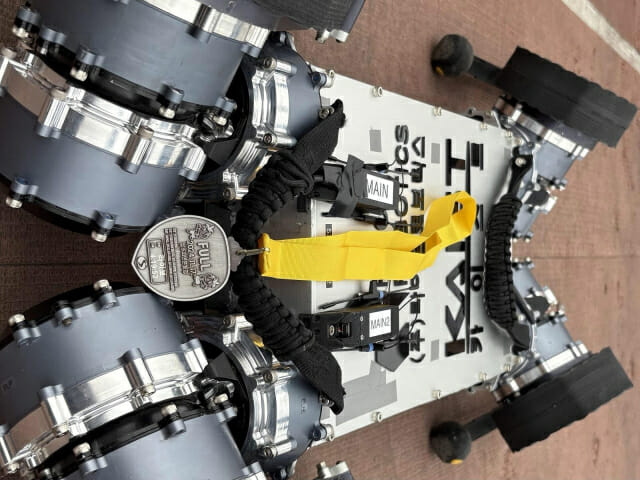
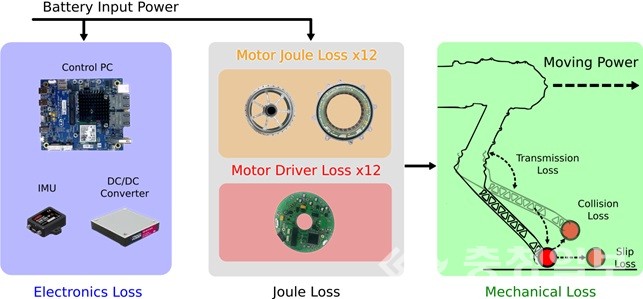
The biggest secret behind Rybo2’s ability to run long distances without fatigue lies in its integrated design, which unifies mechanics, electricity, drive systems, and control. When building robots, it is easy to make the mistake of trying to improve battery performance or motor power in isolation. However, the research team meticulously analyzed where energy was being lost most significantly during the repetitive movement of the robot’s legs. To reduce invisible energy losses generated by electrical components and mechanical parts, they organically connected the entire robot. Instead of replacing just one specific component, they designed the robot by simultaneously refining its “skeleton,” “muscles,” and “nervous system.”
Thanks to this comprehensive approach, Rybo2 was able to maintain powerful and stable walking performance while using minimal power. It effectively solved both the heat generation and battery consumption issues that typically hinder long-duration operation in quadruped robots. Robotics researchers have even referred to this design as a successful “diet” that improved the fundamental constitution of the robotics industry.
Rybo2 applied an integrated design that organically combines mechanical and electrical systems to minimize energy loss.
4. Real-World Data and Thorough Field Verification
The research team did not settle for virtual simulation results within the laboratory; instead, they meticulously collected all data from the actual marathon site. During the run, the robot’s internal voltage, current, temperature, and remaining battery level were recorded in real time. These values were precisely synchronized with location, speed, and altitude information measured by GPS, serving as valuable scientific evidence. The entire driving process from the starting line to the finish line was captured on video without omission, adding to its perfection. While the completion record itself was a spectacle, this vast amount of real-world data is a treasure-like asset that will guide future robot development.
The academic community highly praised the fact that the team directly observed how the robot’s performance was maintained despite fluctuations in the external environment. They perfectly verified the theoretical formulas for long-distance driving through actual outdoor testing. This rigorous verification process is another hidden reason why Nature took notice of this research.
The massive amount of data collected in real time during the marathon completion serves as scientific evidence proving the reliability of long-distance robot driving.
5. Scalability for Industrial Applications
This research achievement is not just a one-off experiment to be applauded in the lab; it is squarely aimed at industrial applications. The research team is refining the outstanding performance demonstrated by a single specialized research robot so that it can be utilized repeatedly in real-world settings. It is not long before such robots will be active in dangerous construction sites, disaster areas inaccessible to humans, and vast logistics warehouses. If robots can travel long distances carrying heavy loads without worrying about battery depletion, the landscape of the entire industry will change completely. An era where robots safely and efficiently perform missions, replacing our daily labor, is rapidly approaching.
Lion Robotics, a faculty-founded startup originating from Professor Jeemin Hwangbo’s lab, is actively leading this commercialization process. They are determined to directly connect research achievements to actual products to respond quickly to market demands. It is expected that we will see quadruped robots delivering packages or conducting patrols much more frequently in our surroundings in the future.
Rybo2’s technology is moving beyond simple research use toward the commercialization stage, where it can be widely used in actual industrial fields.
6. A New Leap and Outlook for the Future Robotics Industry
The publication of Rybo2 in Nature is a symbolic event showing that South Korea’s robotics industry has completely transformed from a follower to a leader. Having previously been in a rush to catch up with the technology of advanced foreign countries, South Korea now confidently possesses foundational technology that the world is paying attention to. As it combines with physical AI technology, quadruped robots will become smarter and gain the ability to make independent judgments. Coupled with further advancements in battery technology, the operational range of robots is expected to expand beyond cities to rugged mountainous terrain. We hope readers will watch the changes in the amazing future world of robots that our country will create with a warm eye.
As technology advances, our lives are bound to become more convenient and safer. We sincerely hope that this achievement will inject fresh vitality into the entire domestic robotics industry and attract more outstanding talent. With close cooperation between the government, corporations, and research institutes, South Korea will firmly establish itself as a world-class robotics powerhouse. We hope you will cheer for the day when robots made with our technology roam the world.
Building on the success of Rybo2, South Korea will firmly establish itself as a key player leading the global robotics market.
Frequently Asked Questions
=