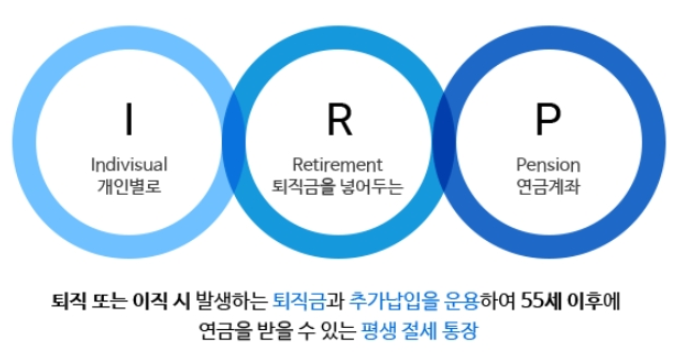
An Individual Retirement Pension (IRP) account is an essential financial tool that allows you to build a secure retirement fund while simultaneously enjoying tax benefits during your annual tax settlement. The story of Mr. Kim, a corporate employee who nearly faced a tax bomb after carelessly receiving his severance pay in a regular checking account upon changing jobs, offers valuable lessons. Mr. Kim initially panicked when he learned that his severance pay was legally required to be transferred to an IRP account, but he soon realized that this system allowed him to save on taxes while investing. Many employees feel at a loss when receiving severance pay or generous bonuses, often opting to simply park the money in a savings account. However, by fully understanding and actively utilizing the IRP system, you can grow your valuable assets in a much safer and more efficient manner. In this article, we will explore in detail how to manage your retirement pension wisely, how to maximize tax deductions, and strategies for utilizing various investment products.
=
How to Maximize Your IRP Retirement Account: Save on Taxes and Grow Your Retirement Fund
1. Severance Pay and Mandatory IRP Transfer Upon Job Change
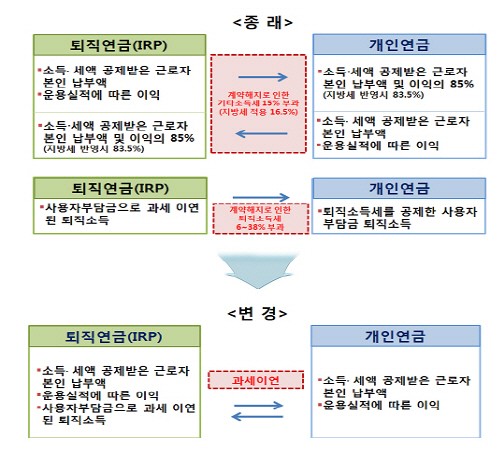
By law, severance pay received from a company upon changing jobs must be transferred to and accumulated in an Individual Retirement Pension (IRP) account. Surprisingly, many employees find this process annoying or complain about not being able to use their money freely. However, if severance pay is received directly into a regular account, it is often quickly depleted by immediate living expenses or consumption rather than being preserved for retirement. The government enforces this system to create a protective barrier, ensuring that the valuable retirement assets accumulated by workers over their lifetimes remain safe until old age. If you do not urgently need the cash, it is far more advantageous to keep the funds in the account until retirement to benefit from compound interest. If you wish to withdraw the funds immediately after a job change, you must meet specific legal exceptions, so caution is required. Cashing out the account immediately after receiving severance pay results in significant tax losses. Not only is severance income tax applied, but you also forfeit the substantial tax savings available when receiving the funds as a pension. In reality, it is common to see seniors who, unable to resist temptation, spent their lump-sum severance pay on a new car or travel, only to face a bleak retirement. Severance pay should be viewed not as a temporary stopover, but as your most important emergency fund and seed capital for life. Therefore, even when changing jobs, you should seriously consider leaving the deposited funds in the account and receiving them as a pension upon retirement.
Severance pay transferred upon a job change is a valuable asset for your retirement. Avoid unauthorized withdrawals and hold the funds long-term as a pension to maximize tax savings.
2. The Hidden Gem of Annual Tax Settlement: IRP Tax Deduction Limits

Every year during the annual tax settlement season, this account acts as a savior for employees who anxiously wonder whether they will owe more tax or receive a refund. Even if you diligently save from your monthly salary, the tax burden can be heavy. However, utilizing this system can lead to significant tax refunds. Mr. Park, an employee, used part of his generous Chuseok bonus to pay off high-interest debt and deposited the remainder into his IRP account. As a result, he maximized his tax deduction limit for the upcoming annual tax settlement, earning the envy of his colleagues. The tax deduction limit is recognized up to a certain annual amount when combined with pension savings, so you should strategically contribute based on your income level. Since the deduction rate varies depending on your total annual income, it is wise to estimate your annual income at the beginning of the year and plan your contributions in advance. Many people rush to deposit money solely for the tax benefits, only to regret it later when they urgently need cash. Once money is deposited into this account, early termination is difficult and comes with significant penalties in exchange for tax benefits. Therefore, you should treat this account as a separate domain completely distinct from living expenses or emergency funds, using it solely for retirement savings and tax reduction. Choosing to make regular automatic transfers of a fixed amount each month reduces the burden of lump-sum deposits and helps cultivate a natural savings habit. It is much more comfortable for fund management to contribute in monthly installments rather than scrambling to meet the limit with a lump sum at year-end. If you want to enjoy the double benefit of careful tax planning and retirement preparation, check your current contribution status today.
To maximize annual tax settlement benefits, it is best to set up regular monthly additional contributions tailored to your income level.
3. Harmonizing Principal-Guaranteed and Performance-Based Products
Whether you want to protect your assets safely or actively pursue returns, you can directly select a variety of products within this account. In the past, accounts were limited mainly to principal-guaranteed products like bank deposits, leading to criticism that they could not keep up with inflation. However, recently, it has become possible to include a wide range of products, such as index funds tracking stock market indices and bond-type products, through securities firms. Mr. Choi, an employee, initially only held deposits but realized the returns were too low. He then restructured his product portfolio with expert advice, adopting a regular investment approach. By setting up automatic purchases of equity and safe bond assets on specific dates each month, he found peace of mind even when the market fluctuated. It is crucial to appropriately adjust the proportion of risky assets within legal limits based on whether your investment style is conservative or aggressive. Many individual investors suffer significant losses and psychological stress by impulsively buying specific products based solely on rumors of high returns during periods of high stock market volatility. Since this is an account for retirement funds, you should diversify into high-quality assets with long-term upward potential rather than reacting emotionally to short-term market conditions. For example, holding a mix of products tracking major US indices and stable domestic high-quality bonds can help grow assets without major shocks. Recently, new long-term investment products like individual investment government bonds have also become available, broadening your options. Utilizing regular investment (dollar-cost averaging) to mechanically purchase assets each month lowers the average purchase price, which is highly advantageous for long-term investing. You should not just set up a portfolio and forget it; you need to review your asset allocation and rebalance it once or twice a year.
Wisdom is required to pursue both safety and returns through regular, diversified investments tailored to your investment style.
4. Switching Financial Institutions: Utilizing the Physical Transfer System
In the past, even if you were dissatisfied with the returns or fees of your current financial institution and wanted to switch, the process was extremely complex. You had to sell all your existing stocks or funds and convert them to cash before transferring to another institution, which carried a high risk of loss depending on market conditions. However, a physical transfer system has recently been introduced, allowing you to move your existing products to another financial institution’s account without the complex process of selling them. This allows employees to easily move to institutions that offer better fee structures or a wider variety of investment products. In fact, many employees who were dissatisfied with high fees and limited product offerings at their current securities firms are quickly taking advantage of this system. You can carefully compare fees and past performance across different financial institutions through platforms like the Financial Supervisory Service’s Integrated Pension Portal and choose the most advantageous option. When transferring your account to another financial institution, consider not only fees but also the integration with the stock trading app you frequently use. You are more likely to manage your assets consistently in the long term if you can do so in a familiar and comfortable environment. Before applying for a transfer, you must carefully verify that your existing products are supported at the new institution. Although it may seem complex, the process is actually easy to handle following online guides or counter instructions, so there is no need to be afraid. Since choosing a financial institution is like selecting a lifelong vault for your retirement funds, you need the decisiveness to actively move if better benefits are available. You no longer need to keep your money tied up in an unsatisfactory financial institution due to cumbersome cash-out processes, so check your current situation now.
Using the physical transfer system allows you to easily switch to a more advantageous financial institution without selling your existing products.
5. The Risks of Early Termination and Fatal Mistakes to Avoid
While managing this account, life crises may arise where you suddenly need a large sum of money, leading you to consider termination. However, if you terminate the account for simple change of heart or short-term funding needs, rather than legally recognized exceptions like home purchase or bankruptcy, you will face a tax bomb. You will have to return all tax deduction benefits received to date, and other income tax will be applied to investment returns, resulting in substantial losses. Mr. Jung, an employee, impulsively terminated an account he had opened years ago under the pretext of securing a deposit for a rental apartment. He was shocked to have to pay a large additional tax bill during the following year’s annual tax settlement. You must view the money in this account as a lifeline for your retirement that truly belongs to you only after you retire; otherwise, you will be swayed by short-term temptations. If you are in a situation where you urgently need money, it is wiser to first look into the collateral loan system allowed by law rather than terminating the account. Receiving severance pay as a lump sum and spending it all at once is also one of the very dangerous mistakes that invites retirement poverty. When a large sum hits your bank account, it is easy to lose control, buying expensive items you have wanted or lending money to others, only to find your funds depleted in an instant. From a tax perspective, receiving a lump sum results in a higher severance income tax rate, increasing the tax burden, whereas receiving it as a pension significantly reduces taxes. You must choose to receive a fixed monthly pension to create a stable cash flow for life, which can cover living expenses when combined with the National Pension. Do not be dazzled by the large numbers hitting your bank account immediately; instead, approach this with the mindset of building a sturdy shield that will sustain you through the long years after retirement. You must make careful choices at every moment to avoid losing your lifelong retirement savings due to minor mistakes or impatience.
Early termination or receiving a lump sum leads to heavy tax burdens and retirement poverty; these should be absolutely avoided unless under exceptional circumstances.
6. The Importance of Long-Term Investment and Action for a Successful Retirement
Life after retirement is much longer and more vast than many think, and the most powerful weapon protecting us during that time is the IRP retirement account we are preparing now. The small habit of regularly depositing money and checking products, even if it feels tedious, will return as a significant difference in assets years or even decades later. It is important to set your own criteria and walk the path steadily rather than stressing over complex economic news terms or stock market fluctuations. Start by opening your account today and lightly checking last month’s returns and how much of your annual tax deduction limit you have filled. The comfortable retirement life 10 or 20 years from now depends on the small action of checking your account on your smartphone right now. Even if you do not know all the complex financial theories, anyone can achieve a successful retirement if they hold onto the two weapons of consistency and tax savings. We encourage you to actively cultivate this account, viewing it not as a box you check because everyone else does, but as the most reliable companion in your life.
The shortcut to success is putting into practice long-term retirement preparation starting today through consistent regular investments and thorough tax-saving strategies.
Frequently Asked Questions
=