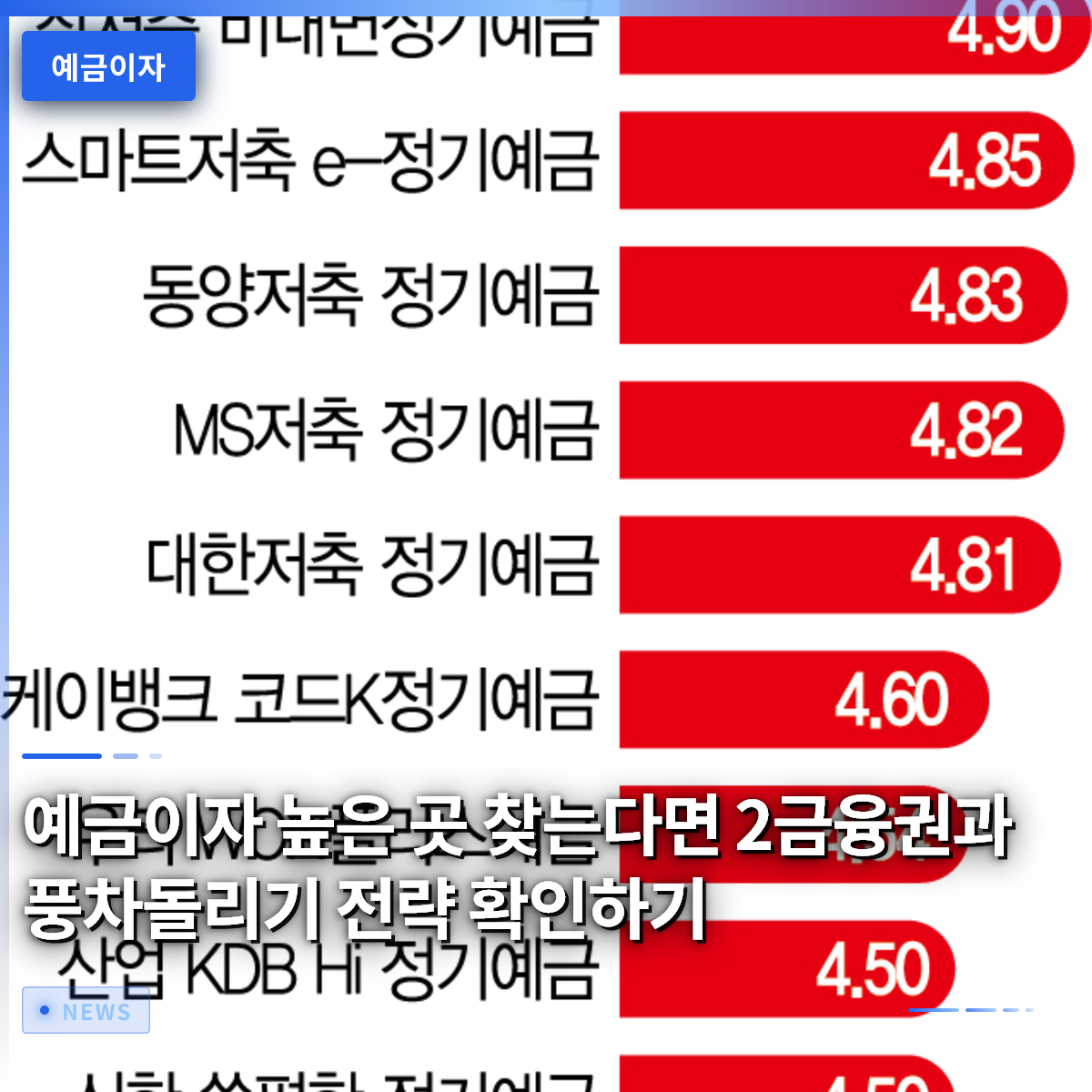
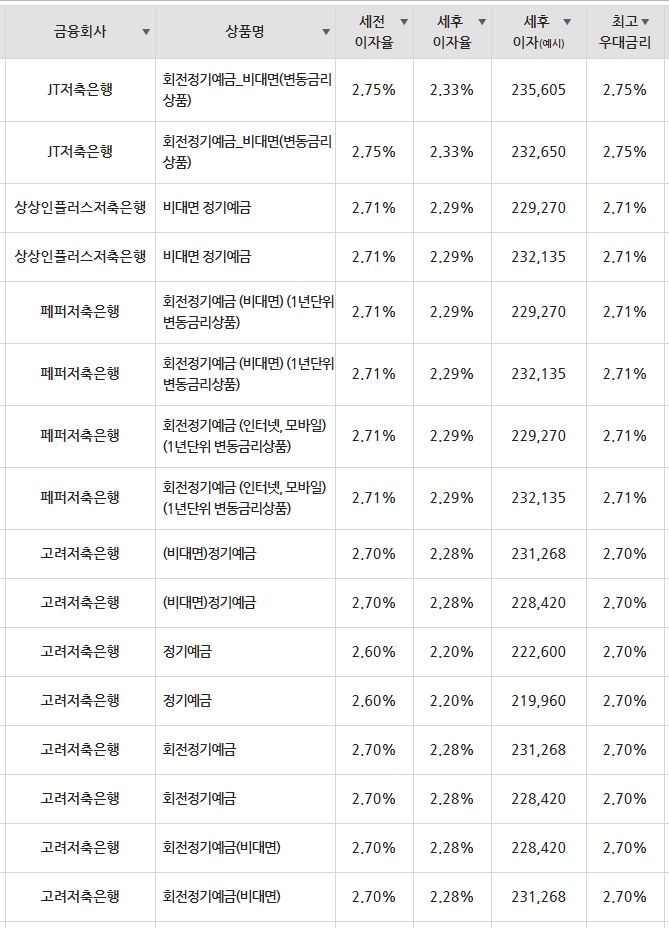
To safely manage a lump sum while maximizing returns, it is essential to actively utilize special products from secondary financial institutions or non-face-to-face fixed deposits from savings banks, rather than relying solely on major commercial banks. Recently, as the yields on fixed deposits at major banks have barely kept pace with inflation, a surge in people turning their attention to savings banks and mutual financial institutions like regional agricultural cooperatives, which offer relatively higher interest rates, has been observed. In fact, institutions such as Dream Savings Bank and Union Savings Bank are capturing the attention of savers looking to lock in their funds by offering interest rates in the 4% range through their internet fixed deposits. The appeal of deposit products with guaranteed principal and interest shines brightest during periods when the stock market or bond assets exhibit high volatility. However, rather than blindly joining just because the interest rate is high, it is paramount to devise a tailored savings plan that considers the maturity and liquidity of your funds. In this article, we will compare interest rate differences between major banks and secondary financial institutions and detail various financial management techniques to help you wisely secure interest.
=
Looking for Higher Deposit Interest Rates? Check Out Secondary Financial Institutions and the Windmill Strategy
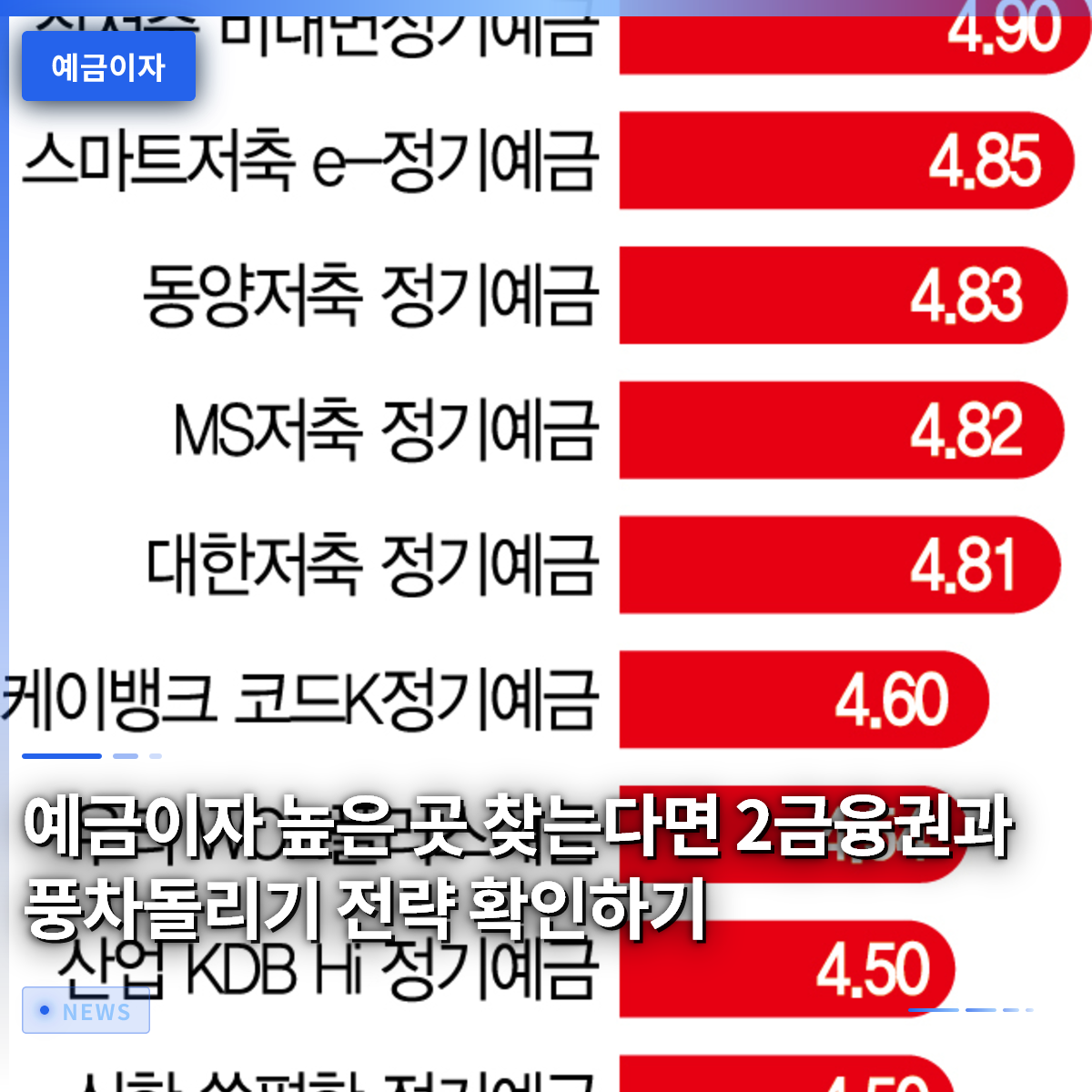
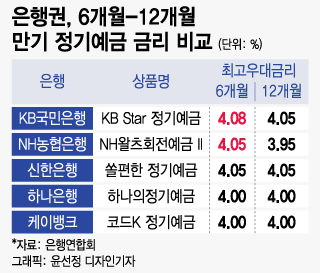
1. Comparing Deposit Interest Rates: Major Banks vs. Secondary Financial Institutions

The return you can expect from a one-year fixed deposit at a typical major bank is often lower than anticipated, and when factoring in inflation, it is easy to feel that your real income is actually decreasing. While deposit yields at major banks remain at low levels, mutual financial institutions such as savings banks and Saemaul Geumgo offer much more attractive interest rates to attract customers. If you can safely lock in a lump sum for the same period, choosing secondary financial institutions over major banks alone can yield a decent amount of additional interest income. For example, the difference in the final account balance for an office worker named Kim is surprisingly large when comparing a lump sum from a Chuseok bonus deposited in a major bank versus a 4% range fixed deposit at a secondary financial institution. Of course, secondary financial institutions may feel slightly riskier compared to major banks, but under the Deposit Insurance Act, the state safely protects the combined principal and interest up to 50 million won. Therefore, there is no need to worry if you diversify your deposits within this limit. Thus, if you want to grow your assets efficiently, you should not insist on using only your primary bank; instead, you need the wisdom to split your deposits across multiple financial institutions based on the 50 million won deposit insurance limit. Financial consumers are increasingly showing a clear tendency to carefully consider their asset size and deposit insurance limits before selecting the financial institution offering the most favorable conditions. Non-face-to-face exclusive products from internet banks or savings banks are also gaining significant popularity among younger generations, as they can be easily opened via smartphone apps without visiting a branch.
Deposit products from secondary financial institutions, which offer higher interest rates than major banks, are safest and most effective when utilized within the deposit insurance limit.
2. Securing Liquidity with the Windmill Strategy for Deposits and Savings
If locking in a lump sum for a long period feels burdensome, it is advisable to actively try the “windmill” savings strategy, which involves splitting the principal and interest and reinvesting them monthly. An office worker named Park repeated the method of joining a one-year fixed-term savings plan with 100,000 won monthly for 12 months. As a result, starting from the first year, the savings mature monthly, and he created a virtuous cycle of using that money to open new deposits. Using this method allows you to avoid the critical loss of having to prematurely withdraw all your funds in an emergency; instead, you can get through the crisis by withdrawing only a portion or using the principal and interest from maturing products. Additionally, because you reinvest by combining the new monthly savings with the principal and interest from the previous month’s maturity, you will experience the surprising phenomenon of your deposit size snowballing over time. Unlike investment products such as stocks or ETFs, which carry the risk of principal loss depending on market conditions, the windmill strategy is an excellent alternative that builds the habit of saving while steadily accumulating stable interest income. Listening to the stories of successful financial managers around you, you will find that many have consistently maintained such small but certain savings routines for years, rather than engaging in flashy stock speculation. The most critical thing to guard against in asset growth is premature withdrawal due to impatience and lack of liquidity, and the windmill strategy helps you naturally avoid these psychological traps. As you enjoy the fun of monthly maturities, you will naturally find joy in saving, and the habit of reducing unnecessary spending will become second nature.
The windmill strategy, which involves joining products monthly to stagger maturities, is the best savings method for reducing the risk of premature withdrawal and managing funds flexibly.
3. Understanding the Difference in Interest Calculation Between Deposits and Savings
While both deposits and savings are safe savings products where you entrust money to a bank, there is a decisive difference in how interest is calculated, so understanding this accurately is essential to avoid disappointment. For a fixed deposit, the agreed interest rate is applied to the entire lump sum for the full term, meaning interest is calculated and paid on the same principal from the first day to the last. In contrast, for a fixed-term savings plan, since a fixed amount is deposited monthly, the money deposited in the first month earns interest for a long period, but the money deposited in the last month only earns one month’s worth of interest. For example, if you join a savings product where you deposit 300,000 won monthly for six months, the 300,000 won deposited in the first month will accrue six months of interest, while the 300,000 won deposited in the last month will only accrue one month’s interest, making the actual amount received seem lower than expected. For this reason, it is not uncommon for people to join savings plans based solely on the high interest rates seen in bank advertisements, only to be puzzled by the interest amount reflected in their account upon maturity. If you already have a lump sum, you must remember that looking at fixed deposits or parking-type financial products instead of savings plans is much more advantageous in terms of interest income. The difference between accurately understanding the structure of a financial product before joining and not doing so is clearly proven by the numbers in your account balance over time. The habit of carefully comparing the basic interest rate and the conditions for the highest preferential interest rate listed in product descriptions or explained by bank staff is the foundation of wise financial life.
Deposits earn full-term interest on the entire lump sum, whereas savings earn interest based on the deposit timing, resulting in differences in the actual amount received.
4. How Interest Is Handled When Maturity Dates Coincide with Holidays
If a long holiday period, such as Chuseok or Lunar New Year, coincides with your deposit maturity date, you may spend the holiday with anxiety about how your precious interest will be handled if you do not check in advance. Fortunately, according to relevant regulations, deposits that mature during a holiday are paid normally on the first business day after the holiday, including all interest accrued during the holiday period. For example, if a fixed deposit matures during a holiday period, the interest for the number of holiday days is calculated in full and deposited into your account without being deducted due to the bank being closed. If you urgently need funds just before a holiday, some bank products allow you to receive the principal and interest in advance before the holiday starts upon prior request, so it is best to contact the customer service center. For seniors receiving housing pensions, if the payment date coincides with a holiday, measures are taken to allow them to receive the money before the holiday to ensure no inconvenience in their daily lives. As the financial system has various safety mechanisms in place to protect customers’ assets and interest, you do not need to stress over date calculations. Knowing the holiday schedules and maturity handling rules of financial institutions in advance allows you to reduce unnecessary worries and enjoy a peaceful rest before holidays. In particular, if you have set up the auto-renewal function for your deposit, it will be processed without issue even during holidays, which is a great help in your busy daily life.
Deposits maturing during a holiday period are safely paid on the first business day immediately following the holiday, with all holiday interest calculated.
5. Deposit Joining Strategies for Rising and Falling Interest Rate Periods
Carefully observing the Bank of Korea’s base rate outlook and market conditions to adjust the maturity of deposit products is a crucial technique for maximizing financial returns. During periods when interest rates are expected to rise further, it is advantageous to keep maturities short to manage funds flexibly, and then switch to long-term deposits once you judge that rates have peaked. Conversely, if interest rates are expected to continue falling, it is a much wiser choice to join the highest-interest long-term products available now to lock in your interest income. In fact, many financial experts advise that when the market enters a phase of declining interest rates, one should seek out and join special long-term fixed deposit products of two years or more to prepare for future low-rate shocks. When stock market volatility is high and the KOSPI index is trading sideways, adjusting the proportion of your assets to deposit products that guarantee certain interest, rather than obsessing over risky investments, brings peace of mind. Financial management is not simply about chasing products that others say are good, but a continuous process of finding the optimal balance by connecting the nature of your assets with economic trends. The habit of consistently checking base rate outlooks through economic news and calculating how they affect your loan interest and deposit rates is a great strength in asset management. Understanding the characteristics of variable and fixed rates and cultivating the eye to choose products suitable for your situation is the shortcut to becoming wealthy.
It is advantageous to lock in rates with long-term deposits during falling interest rate periods and to respond with short-term products during rising interest rate periods.
6. The Future of Utilizing Deposits for Safe Asset Management
In the future financial environment as well, fixed deposits, which guarantee principal and provide stable interest income, will continue to serve as the most solid foundation for any financial portfolio. While investment products like stocks or ETFs may bring high returns, when the market freezes or volatility is extreme, the certain deposit interest reflected in your account ultimately provides the greatest comfort. Only savings that are diligent in the basics—searching for special products from secondary financial institutions, consistently practicing the windmill savings method, and strictly adhering to the deposit insurance limit—serve as a shield protecting our precious assets. Starting today, please calmly check your account balances and, if you have products approaching maturity, carefully compare which financial institution’s product offers the highest interest. Rather than rushing after a quick windfall, I sincerely hope you will enjoy the fun of steadily accumulating interest step by step and complete a solid economic foundation. I look forward to seeing you become a wise financial consumer who pioneers a safe and prosperous future for yourself. Asset management is like an endless marathon, not a sprint, so having an unshakable principle and a consistent attitude of moving forward is paramount. I hope you will always possess the wisdom to safely grow your assets in line with changing financial trends.
Deposits, which offer guaranteed principal and stable interest income, will continue to be the most solid foundation for all financial management in the future.
Frequently Asked Questions
=