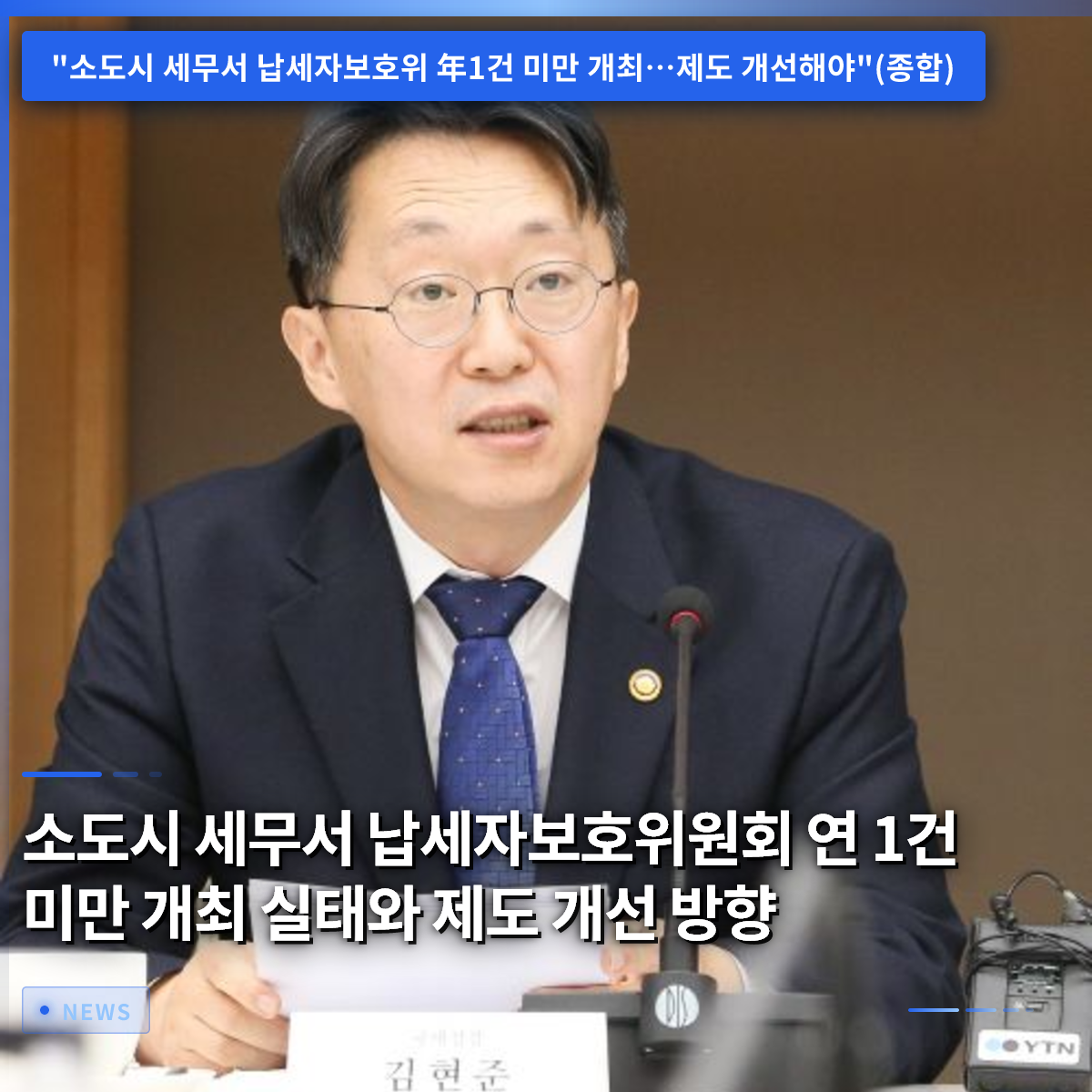
The Taxpayer Protection Committees at so-called second-tier tax offices located in small towns and suburban areas across the country are suffering from severe operational stagnation, with meetings often not held even once a year. This situation urgently calls for institutional improvements. For self-employed individuals and small and medium-sized business owners living in the regions, the channel through which they should seek redress for unfair tax assessments and protect their rights is effectively shut down. According to documents submitted by the National Tax Service to Rep. Jung Tae-ho, a member of the National Assembly’s Committee on Finance, Economy and Planning, the number of Taxpayer Protection Committee meetings held at 22 second-tier tax offices nationwide is less than one per office on an annual average. Even if there are structural limitations due to the small size of these tax offices, voices are growing louder that citizens’ fundamental rights regarding taxes should not be discriminated against based on their region. This reality goes beyond mere administrative delays, starkly exposing the blind spots in substantive rights protection faced by taxpayers in small local towns. In this article, we will examine the low meeting frequency of Taxpayer Protection Committees at second-tier tax offices and explore supplementary measures for genuine rights protection, including the National Tax Service’s proposals for unification.
=
The Reality of Taxpayer Protection Committees at Small-Town Tax Offices Meeting Less Than Once a Year and Directions for Institutional Improvement
1. The Shocking Reality of Taxpayer Protection Committee Meetings at Second-Tier Tax Offices
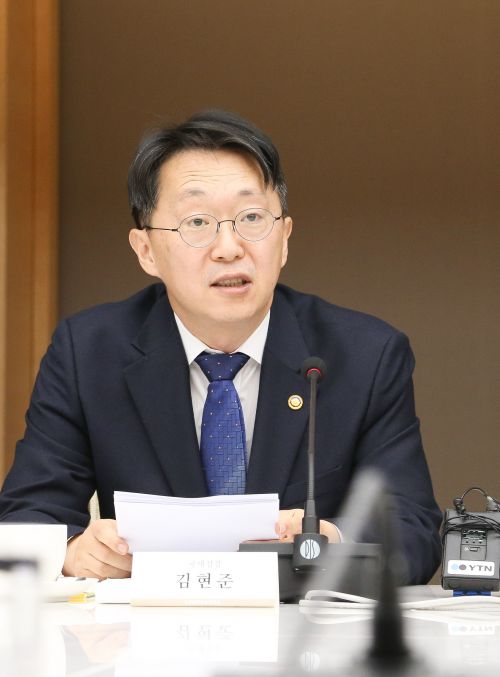
The operational performance of Taxpayer Protection Committees at second-tier tax offices in small towns across the country has recorded dismal levels year by year, sparking significant controversy. According to relevant data, the total number of applications at 22 second-tier tax offices nationwide has steadily declined over the past two years, remaining at a level of less than one case per office on an annual average. The frequency of the committee meetings themselves is no different, with many tax offices failing to conduct even a single review hearing in a year. For example, a self-employed business owner running a small restaurant in a rural area may find themselves helpless when trying to object to an unfair tax assessment, as the committee itself does not meet to provide consultation or conduct reviews. Since the committee does not convene, taxpayers are left in a frustrating situation where they have no opportunity to assert their rights and are forced to accept the tax authority’s decisions as they are.
The primary reason for such extremely low meeting frequencies is that the number of tax audits and petition applications in these areas is significantly lower compared to first-tier tax offices centered in major metropolitan areas. Structural factors are at play, such as the small population of economically active people and the small absolute scale of tax-related disputes, which are characteristic of depopulating regions and small local towns. However, depriving or reducing the opportunities for rights protection for taxpayers in small towns directly contradicts the constitutional values of fair taxation and the protection of taxpayer rights. In fact, at tax offices in small towns near rural and fishing areas in provinces like Gangwon and Jeolla, it is not uncommon for expert committee members to be appointed only to complete their terms without holding a single meeting.
Due to structural limitations, applications and meetings for Taxpayer Protection Committees at second-tier tax offices have fallen to less than one per office per year, resulting in severe operational stagnation.
2. The National Tax Service’s Consideration of Regional Office Unification and the Dilemmas Behind It
In response to the Taxpayer Protection Committees at second-tier tax offices becoming nominal, the National Tax Service is seriously considering abolishing them and integrating them into the committees of the competent Regional Tax Offices to achieve unification. This approach stems from the calculation that concentrating functions in Regional Tax Offices, which have the manpower and expertise, will improve the efficiency of reviews rather than maintaining individual tax office committees with low performance. The intention is to reduce the administrative waste of building and maintaining committee infrastructure at each tax office and to enhance the quality of reviews through in-depth discussions by expert members. In fact, concerns have consistently been raised that objective and fair reviews may be difficult at small-town tax offices due to local community characteristics or personal networks.
However, opinions are sharply divided on whether this unification plan proposed by the National Tax Service will actually help the substantive rights protection of taxpayers in small local towns. While it may receive positive evaluation in terms of efficiency, there are concerns about the fatal side effect that taxpayers’ accessibility could be critically reduced due to the increased physical distance from administrative offices. Taxpayers in small local towns, unlike those in Seoul or major metropolitan areas, often feel burdened even by direct face-to-face communication with tax office staff; traveling to a Regional Tax Office or communicating only in writing can feel like a significant barrier. This is why there are arguments that a fundamental analysis of why local residents do not even apply for rights protection in the first place must precede any merger of committees driven by administrative convenience.
The National Tax Service is considering a plan to unify second-tier committees into Regional Tax Offices, citing reduced effectiveness and lack of expertise.
3. The Need for Institutional Supplements to Resolve Regional Disparities in Rights Protection
The phenomenon where the system for protecting taxpayers’ rights and interests is severely discriminated against based on the region of residence or the size and grade of the tax office is an administrative task that must be corrected. It is unfair that taxpayers in Gangnam, Seoul, or downtown Busan can relatively easily access and receive redress, while taxpayers in mountainous areas of Gangwon or small towns in Jeolla are forced to give up their rights because the system is absent or too far away. Political figures, including Rep. Jung Tae-ho, are raising their voices, stating that there should be no blind spots in taxpayer rights protection between regions. The state has a duty to build a more meticulous and careful rights protection network to ensure that residents of small towns facing population decline do not suffer disadvantages in tax administration.
The low number of rights protection applications suggests a high probability that residents in these areas either do not know how to find their rights or are unaware that the system exists in the first place. Therefore, simply abolishing committees because they meet infrequently will not solve the problem but may instead completely erase the voices of taxpayers in small towns. To enhance the effectiveness of the system, small-town tax offices must proactively engage in promotional activities and introduce mobile taxpayer protection services. Additionally, it should be considered to guide taxpayers through rights protection procedures in easily understandable language and to substantively link small taxpayers with free tax representative systems.
Institutional supplements must be established to ensure that taxpayer rights protection is fair, regardless of region or tax office size.
4. Positions of the National Tax Service and Government Ministries and Future Directions for Improvement
The National Tax Service emphasizes the realistic constraint that the scope of review and operational methods of the Taxpayer Protection Committee are strictly defined by law. They explain that due to the nature of second-tier tax offices, the number of taxpayers under their jurisdiction and the number of tax audits are small, structurally leading to a low number of rights protection requests. Nevertheless, the National Tax Service is exploring various efficiency measures from multiple angles to minimize the inconvenience experienced by taxpayers and provide substantive rights protection within these structural limitations. In particular, they have expressed their will to derive reasonable alternatives through close consultation with the Ministry of Strategy and Finance, the competent ministry, regarding institutional improvements that require legal amendments.
The direction of improvement pursued by the government and the National Assembly should focus on harmoniously achieving two values: administrative efficiency and the guarantee of taxpayer rights. The key is not to reduce the accessibility of small-town taxpayers through unconditional mergers, but to ensure that Regional Tax Offices and local tax offices cooperate organically so that no region is left behind. For example, actively utilizing video conferencing systems to allow small-town taxpayers to participate remotely in Regional Tax Office committees and state their opinions without long-distance travel could be a good alternative. The task ahead is to lower the barriers to tax administration and create a smart environment where every citizen can receive fair and equal protection of tax-related rights, regardless of their place of residence.
Acknowledging structural limitations, the National Tax Service is consulting with the Ministry of Strategy and Finance on substantive improvement measures to minimize taxpayer inconvenience.
5. Practical Tips for Rights Protection for Taxpayers in Small Local Towns
If you are running a business in a small local town or have received an unfair tax decision, you need to take an active stance to find your rights rather than being discouraged by the low meeting performance of second-tier tax offices. If visiting the tax office is difficult or communication with the responsible department is not smooth, it is wise to actively utilize the online HomeTax system operated by the National Tax Service or the Taxpayer Protection Officer system. There are various legally guaranteed means of redress, such as applications for extension or postponement of tax audits and pre-tax assessment review requests, so you should not suffer in silence but seek expert assistance or actively file objections. Small taxpayers can receive professional help without financial burden by utilizing the Sharing Tax Accountant system, which provides free tax consultations and assistance with appeals.
Additionally, filing tax-related grievances jointly or submitting collective petitions through local small business associations or merchants’ guilds can be much more effective than dealing with it individually. Postponing or giving up on rights protection applications because committees do not meet frequently at the tax office will ultimately lead to paying unfair taxes, so this must be avoided. Only when taxpayers themselves confidently demand their rights and raise their voices can administrative change be driven, even while the National Tax Service and the government are organizing the system and discussing unification plans. When receiving an unfair tax notice, it is most important to quickly prepare the relevant documents and clearly communicate your position to the responsible department so as not to miss the payment deadline or the deadline for filing an appeal.
Taxpayers in small local towns should actively seek their rights by utilizing online systems or free tax representative systems, despite the limitations of the current system.
6. Restoring Trust in Tax Administration and Future Prospects

The controversy over the poor operation of Taxpayer Protection Committees at small-town tax offices across the country serves as an important touchstone for how much our society’s administrative services can reduce regional disparities. Since taxes are a very sensitive and important issue directly related to citizens’ property rights, ensuring fair and transparent rights protection procedures regardless of where one lives is a basic premise of a democratic society. We expect the National Tax Service and the Ministry of Strategy and Finance to humbly accept the points raised in this national audit and to prepare institutional improvement plans that prioritize taxpayer interests over simple administrative convenience. All citizens hope for a day when taxpayers in small local towns can enjoy tax services at the same level as residents of major metropolitan areas.
Going forward, the government should periodically monitor the operational performance of committees at small-town tax offices and, if necessary, introduce regional integrated operations or remote video review systems to dramatically improve accessibility. No matter how well-designed a system is, it is useless if it does not function in practice, so strengthening promotion and education to make it easy for taxpayers to use the system is also essential. Public trust in tax administration ultimately depends on how much attention is paid to the voices of aggrieved taxpayers and how fairly their rights are redressed. It is time for continued interest and oversight to ensure that transparent and fair tax administration takes root in all regions of the country.
A transparent and effective tax administration system must be established so that all taxpayers can receive equal rights protection regardless of their place of residence.
Frequently Asked Questions
=