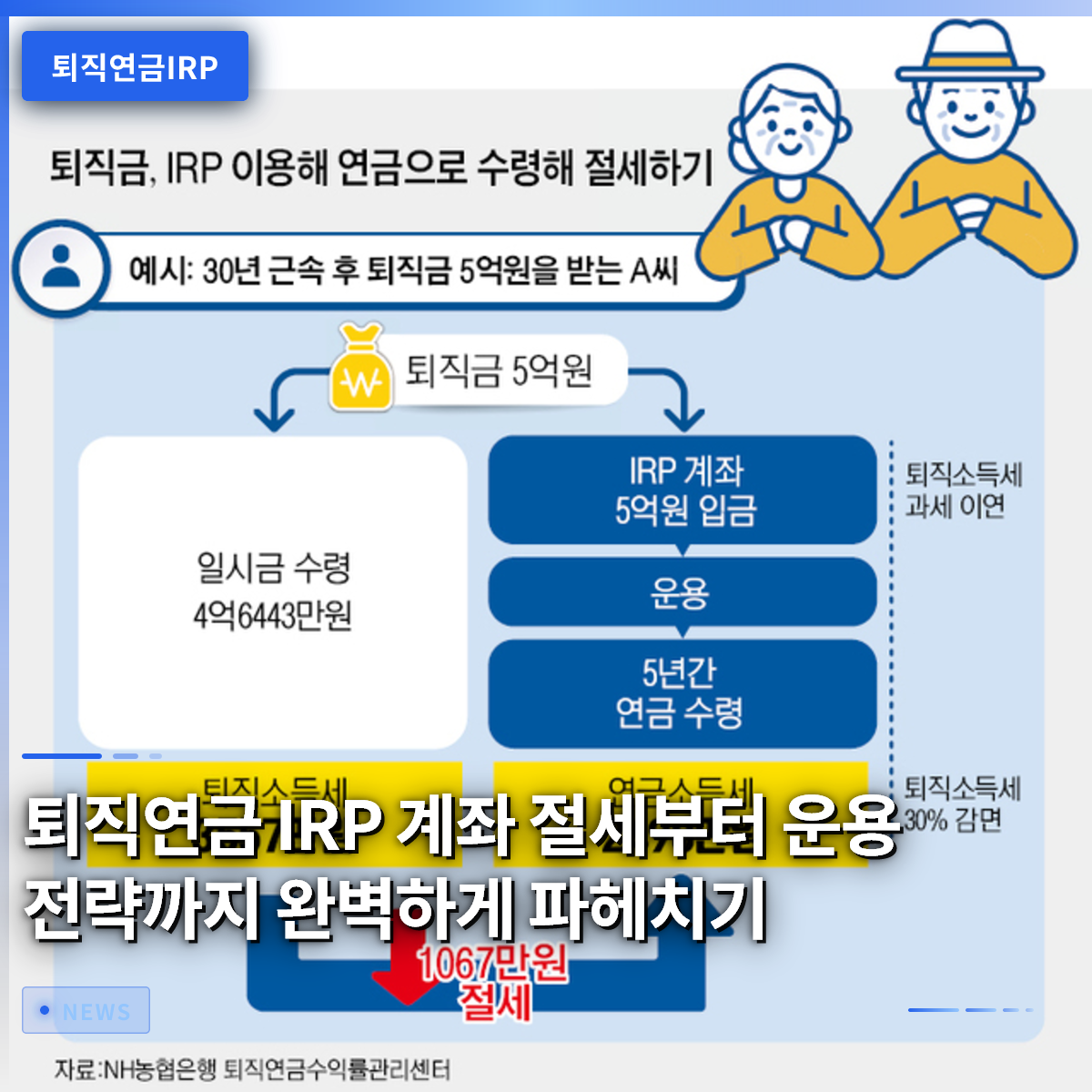
The Individual Retirement Pension (IRP) account is an essential tax-saving tool that every employee should have, yet many people leave it neglected because they are unsure how to utilize it effectively. You must receive your severance pay into this account to avoid a massive tax bill, and it can also result in a significant refund during your year-end tax settlement. It is not uncommon to hear about cases where people prematurely closed accounts they had opened in the past, only to end up paying hundreds of thousands of won in taxes. This article examines in detail how to maximize tax deduction benefits and specific strategies to safely grow your assets. We cover everything from tips on selecting investment products, which employees are most curious about, to the penalties associated with early termination. Let us look at how to use this account to protect your assets and prepare for a secure future.
=
A Complete Guide to IRP Accounts: Tax Savings and Investment Strategies
1. Why You Must Open an IRP Account

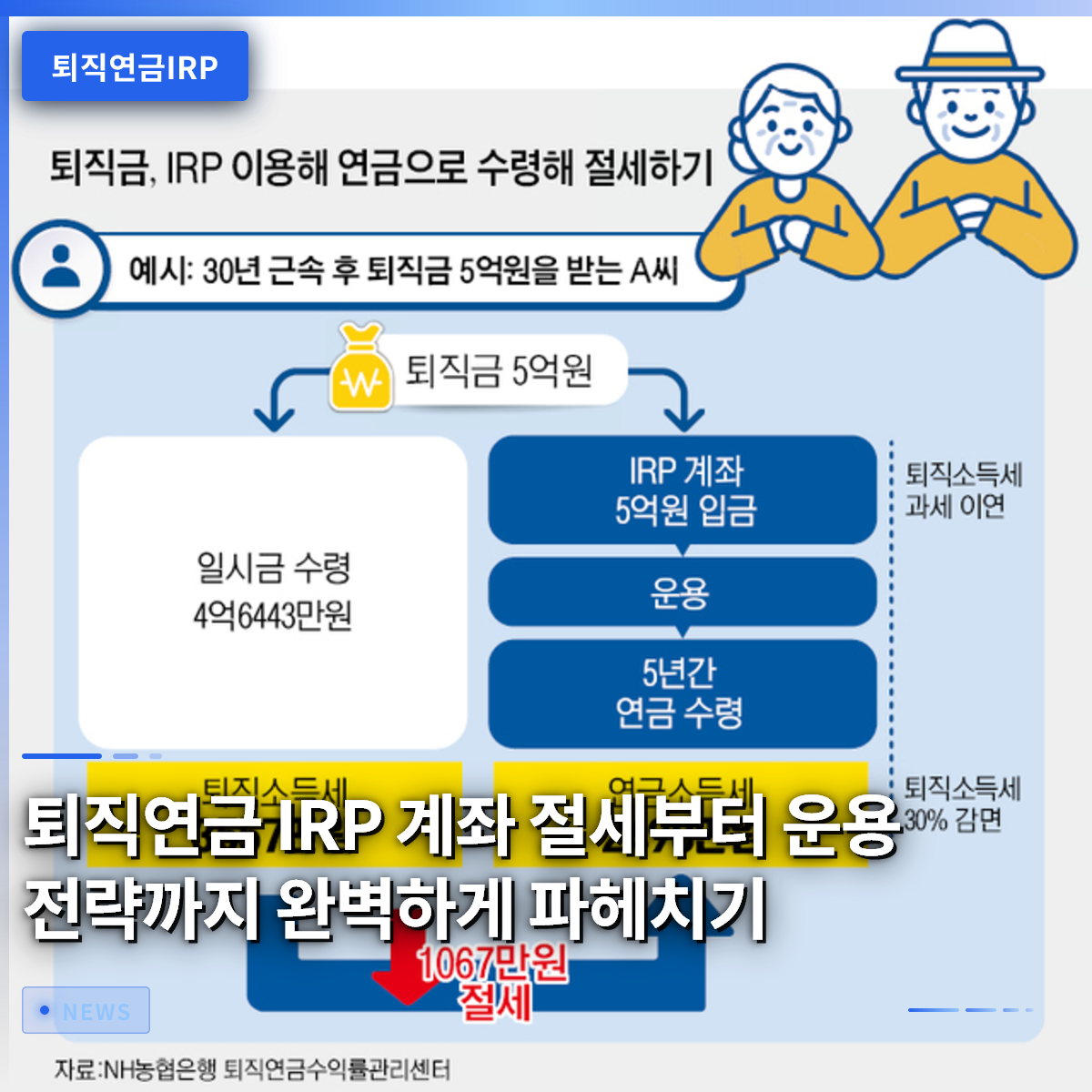
An IRP account is a unique financial space where workers can consolidate and manage their valuable severance pay when they change jobs or retire. Many people make the mistake of cashing out their severance pay into a regular checking account when they switch jobs, only to end up paying a substantial amount in taxes. However, if you transfer your severance pay to an IRP account, you can defer taxation until you receive it as a pension in your old age. Since you do not have to pay taxes immediately, you can invest that money as well, creating a decisive difference by maximizing the effect of compound interest. In fact, it is not rare to see employees who regretted receiving their severance pay directly and losing hundreds of thousands of won in taxes. Therefore, when changing jobs or retiring, you must open this account first and receive your severance pay safely to avoid losses.
This account has long been established as an essential tax-saving tool for employees, going beyond its role as a mere storage for severance pay. If you voluntarily deposit spare funds monthly or annually, you can also enjoy tax deduction benefits during your year-end tax settlement, achieving a two-for-one effect. You can receive a certain percentage of your taxes back based on the amount deposited annually, combined with your pension savings account. This is why many employees rush to make additional deposits at the beginning of each year. Unless there are unavoidable circumstances, such as securing a monthly rent or a deposit for a lease, it is a wise financial strategy to keep this money for your retirement. Instead of just envying a colleague who boasts about a large year-end tax refund, you should actively utilize this account. Check right now if an account in your name is properly opened and develop the habit of making consistent deposits, even if the amounts are small.
The IRP account is an essential tool for retirement preparation that allows you to enjoy both tax deferral on severance pay and year-end tax deductions.
2. 2026 Tax Deduction Limits and Maximization Strategies
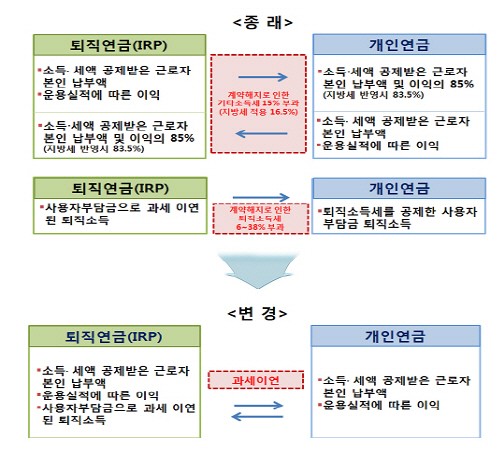
As of 2026, the tax deduction limit for IRP accounts is up to 9 million won annually when combined with pension savings accounts. Employees with a total annual income of 55 million won or less can receive a refund of 16.5% of their deposits, while those earning more can receive a 13.2% refund, making the tax-saving effect significant. For example, if you deposit the full 9 million won annually, you can receive a cash refund of up to 1.485 million won during your year-end tax settlement, assuming the highest tax rate. Setting up automatic transfers of 750,000 won monthly allows you to save a lump sum while preventing a tax burden, achieving two goals at once. Mr. Kim, an employee who has always been interested in taxes, realized last year that he received a smaller refund because he did not reach the limit, and this year he is strictly making a fixed deposit every month.
To fully enjoy these tax benefits, it is wise to calculate your annual income level and the amount already deposited in your existing pension savings products. If you have already deposited 4 million won into your pension savings, you need to deposit the remaining 5 million won into your IRP account to exactly match the maximum legal limit of 9 million won. Occasionally, people deposit money blindly, exceeding this limit. However, excess deposits are excluded from tax deductions, which can disrupt your fund management. That said, excess deposits can be carried over to the following year for tax deduction claims or recognized as principal that is not taxed upon withdrawal. Therefore, it is most important to carefully consider your financial situation and expected year-end tax refund before setting the optimal deposit amount. You should become a smart employee who checks your deposit records before autumn ends and fills in any shortfalls.
By depositing up to 9 million won combined with pension savings, you can fully enjoy a tax deduction benefit of up to 1.485 million won.
3. Smart Asset Management: From Deposits to Index Funds
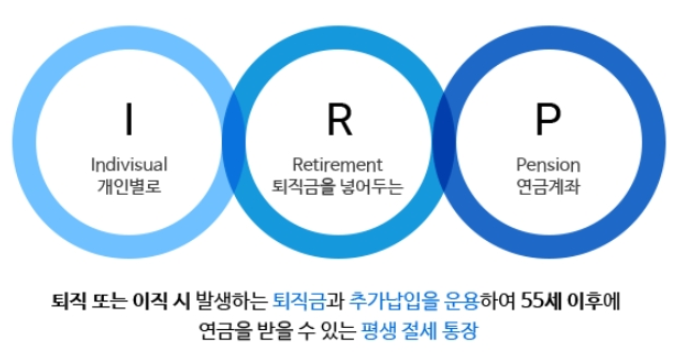
If you open an IRP account and leave the money sitting there, only the principal will accumulate, and your real asset value will decrease as it fails to keep up with inflation. When you access a financial company’s app, you can choose products that suit your taste, ranging from stable commercial bank deposits to various risky assets like funds and exchange-traded funds (ETFs). In particular, recent regulatory changes allow the purchase of individual investment government bonds, providing long-term investors with more robust and safe options. Mr. Lee, an employee, initially chose only principal-guaranteed products because he found the options complex. However, after seeking expert advice, he diversified his portfolio by mixing in some products that track stock market indices. If your investment style is conservative, it is advisable to maintain a certain percentage of safe assets with guaranteed principal while simultaneously employing strategies to increase returns.
Properly adjusting the ratio of safe assets to risky assets is the most crucial rule for successful retirement pension management. According to regulations, a certain percentage of the total accumulated funds must be invested in safe assets, so it is advantageous to actively utilize bond-mixed products or government bonds. Instead of reacting emotionally to short-term fluctuations in the stock market every month, it is safer to invest regularly in global index products that trend upward from a long-term perspective. In fact, looking at past data, people who patiently and consistently accumulated high-quality products achieved much higher final returns than those who traded frequently based on emotion. If it is difficult to choose products yourself due to a busy daily life, referring to robo-advisor services or expert-recommended portfolios provided by financial companies is a good alternative. You need to make an effort to check where your valuable retirement funds are invested once a quarter and make slight adjustments according to market conditions.
You should balance the ratio of safe and risky assets and utilize government bonds and stock index products, in addition to deposits, to increase returns.
4. Why Early Termination Is Costly and How to Handle It
Since IRP accounts are intended for retirement funds and offer tax benefits, terminating the account midway results in significant economic disadvantages. Not only do you have to return all the tax deduction benefits you have received, but you must also pay high taxes on investment returns, classified as miscellaneous income tax. Mr. Park, an employee, suddenly needed a large sum of money and closed his account, which he had diligently funded for several years. He ended up facing a tax bill of several million won and deeply regretted his decision. It was a painful lesson that while the government tempts you with tax savings, it does not let you off easily when it comes to collecting taxes. Even if you urgently need cash, avoiding the stamp of full termination is the shortest path to protecting your assets.
If you need to purchase a home, secure a deposit for a lease, or if you or a family member is seriously ill and urgently needs medical expenses, you can utilize the partial withdrawal system. If you meet the specific legal grounds and thoroughly prepare the supporting documents to pass the review, you can withdraw a portion of the accumulated funds without terminating the account. Since withdrawal is not possible in all situations, it is essential to carefully check the requirements in advance through your company’s HR department and financial institution counters. If this is not feasible, it is much wiser to use the deposit suspension system to temporarily stop contributions or look into collateral loans rather than terminating the entire account. You must absolutely avoid the foolish choice of destroying the tower you have carefully built for your retirement due to a minor crisis. It requires the grit to endure silently with the mindset that the money in your account is reserved solely for your future self.
Early termination results in the recoupment of tax deductions and taxes on returns, so you should consider withdrawal or loans instead of termination unless there are specific legal grounds.
5. Tips for Using IRP Accounts When Changing Jobs or Retiring
For employees who are changing jobs or approaching retirement, an IRP account is not just an option but an essential gateway for survival, akin to a treasure trove. If you receive your severance pay into a regular personal account when changing jobs, it will instantly evaporate into taxes, so you must transfer it directly to an account in your name. Even after joining a new company, managing your previous severance pay and new retirement pension in a single account makes it easy to grasp your cash flow at a glance. If you transfer your severance pay without tax deductions and let it grow until retirement, the compound interest effect is maximized, and you will experience the miracle of your retirement funds snowballing. Even in cases where you receive a generous severance package due to voluntary retirement or early retirement, utilizing this account can significantly reduce severance income tax, maximizing tax savings.
Even when it is time to receive your pension after retirement, the tax burden varies greatly depending on how you withdraw the funds. Receiving the money as a lump sum is less tax-efficient than receiving it in a fixed monthly pension form, which is subject to pension income tax rates. If you choose to receive it over a long period of 10 years or more, the state offers substantial tax reductions to encourage long-term pension receipt, thereby increasing your actual income. Retirement-focused financial advisors strongly recommend a strategy of setting a period of at least 10 years and withdrawing the money monthly like living expenses. Life after retirement is longer than you think and involves many expenses, so the ability to save on taxes while creating a stable cash flow is paramount. How wisely you handle this account at major life turning points like job changes and retirement will determine the prosperity of your old age.
You must transfer your severance pay to an IRP account when changing jobs or retiring, and receive it as a pension over 10 years or more after retirement to save the most on taxes.
6. Final Advice and Action Plan for a Successful Retirement
The IRP account is not a speculative tool for making quick, lucky profits in the short term, but a reliable retirement companion for life. The key to success is the diligence to periodically check for changes in tax benefits and financial products and to frequently monitor the returns on your account. Do not just follow the crowd; you must develop a customized strategy that considers your income level and retirement timing. While monthly deposits may feel burdensome right now, the habit of consistently accumulating small amounts will completely change your life ten and twenty years from now. I hope you start with the small step of opening your smartphone app on your way home from work today to check your account balance and investment products, and filling in any gaps.
As South Korea enters a super-aged society, the importance of the ability to prepare for one’s own retirement is emphasized more than ever. It is difficult to expect a comfortable retirement life relying solely on the basic pension provided by the state, so employees must actively utilize systems like the IRP. Even if a long-term bear market or economic crisis arrives, if you remain unshaken, stick to your principles, and accumulate high-quality assets, you will eventually be able to face retirement with a smile. If you neglect this valuable tax-saving account under the excuse that it is complex and difficult, the loss will fall entirely on your future self. Time is passing even at this very moment, and you must remember that the best time to start preparing for retirement is today. I sincerely encourage you to take a confident first step toward a prosperous and stable retirement based on thorough information gathering and wise asset management.
Since the IRP account is a retirement companion for life, you should prepare for a stable retirement through consistent deposits and thorough asset checks starting today.
Frequently Asked Questions
=