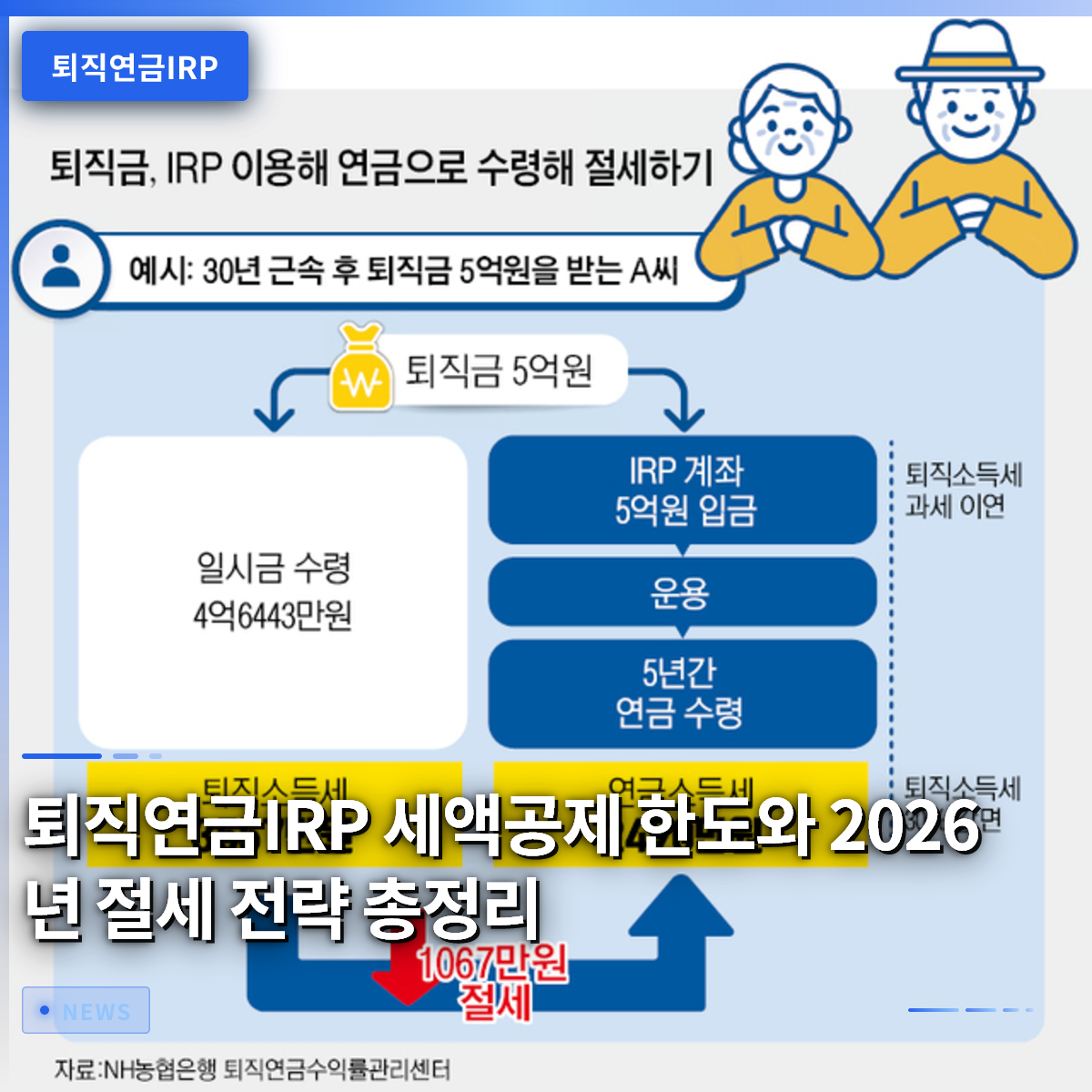
The Individual Retirement Pension (IRP) account is the most reliable tax-saving tool, allowing you to reclaim hundreds of thousands of won in taxes during your annual year-end tax settlement. Therefore, it is essential for all salaried employees to open one. If you have only been envious of colleagues who receive substantial year-end tax refunds, it is time for you to open your own account and claim these benefits. While it was once viewed merely as a storage account for severance pay, it has recently established itself as an essential asset management tool that simultaneously addresses tax benefits and retirement preparation. In particular, with the revised tax laws and the emergence of diverse financial products, the scale of your retirement funds can vary significantly depending on how you manage the account. This article thoroughly covers the basic concepts of the account, tax deduction limits, penalties for early withdrawal, and efficient asset management methods.
=
IRP Tax Deduction Limits and 2026 Tax-Saving Strategies: A Complete Guide
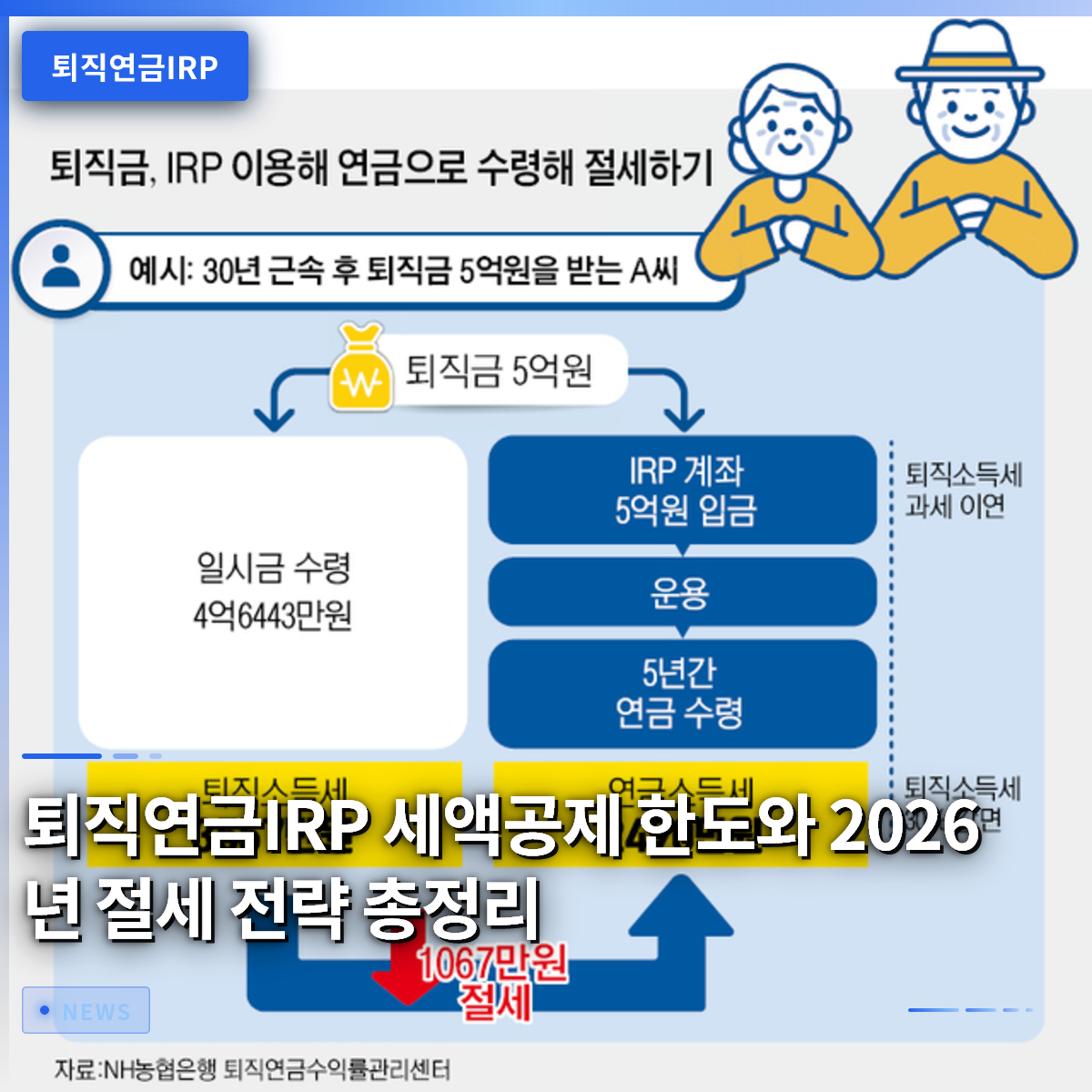
1. Basic Concepts and Eligibility for IRP Accounts

The Individual Retirement Pension (IRP) is a personal account that allows employees to voluntarily contribute while employed or to continue investing the lump-sum severance pay received upon changing jobs. In the past, only participants in Defined Benefit (DB) or Defined Contribution (DC) plans provided by their companies could use this service. However, the eligibility criteria have been broadened, and now almost all employed individuals with income can join. With freelancers and self-employed individuals who can prove their income also gaining eligibility, it has become a platform for tax-saving benefits accessible to the general public. You can save a fixed amount each month or make additional contributions whenever you have surplus funds, offering high flexibility in fund management. If you want to prepare for life after retirement while working, this account is not an option but an essential tool. You can open an account in just a few minutes by visiting a bank or securities firm with only your ID card, without complex paperwork.
IRP is an essential account available to all employed individuals with income, allowing you to simultaneously prepare for retirement and save on taxes.
2. Year-End Tax Settlement Deduction Limits and Maximization Strategies
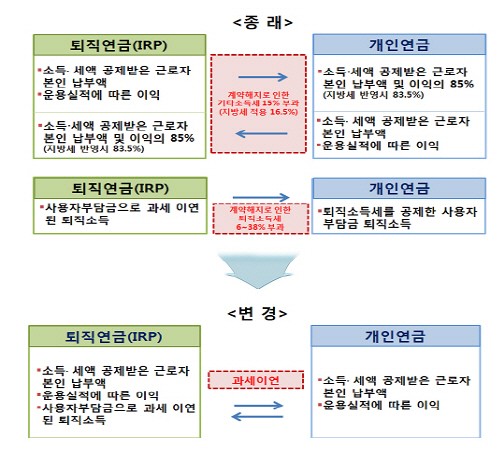
The primary reason for utilizing this account is the powerful tax deduction benefit, which can result in significant tax refunds based on your annual contributions. Combined with pension savings accounts, the annual contribution limit eligible for tax deductions is up to 9 million won, with the deduction rate varying according to your total salary. For example, employees with a total salary of 50 million won or less can receive a maximum deduction rate of 16.5%, resulting in a substantial tax refund of up to 1.485 million won. Even if your total salary exceeds 50 million won, you can receive a refund of up to 1.188 million won with a 13.2% deduction rate, offering a return on investment that cannot be compared to bank deposit interest. Ideally, you should consistently contribute 750,000 won each month to reach the limit, but if that is not feasible, you can still receive the benefits by making a lump-sum payment of the remaining amount at year-end. Many acquaintances regret missing out on this benefit every year, so it is strongly recommended that you check the schedule and ensure you meet the contribution limit this year.
By contributing up to 9 million won combined with pension savings, you can enjoy a maximum tax deduction benefit of 16.5%.
3. Tax Deferral and Tax-Saving Effects When Receiving Severance Pay
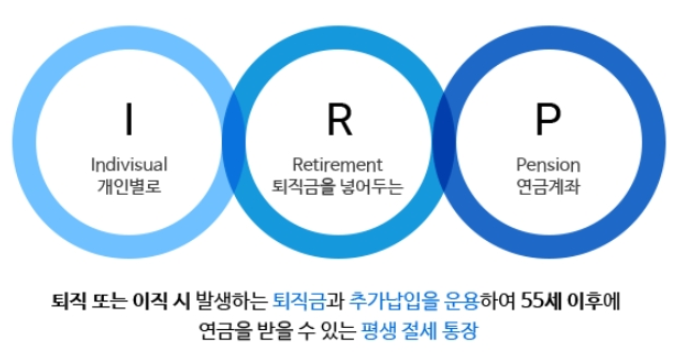
If you receive your severance pay directly into a regular bank account upon leaving a company or retiring, you must pay a large amount of severance income tax all at once, resulting in a significant loss. However, if you transfer your severance pay to an IRP account, you benefit from tax deferral, allowing you to postpone paying taxes until you receive the funds as a pension in the future. Since taxes are not deducted immediately, a larger principal remains in the account, allowing it to grow through the power of compound interest. Later, if you receive the funds in the form of a pension after the age of 55, you can receive a reduction of 30% to a maximum of 40% on the original severance income tax. Unfortunately, news and online communities frequently report regrettable stories of many employees who, unaware of this system, withdrew their severance pay directly and suffered a “tax bomb.” To protect your retirement funds and minimize the tax burden, it is essential to structure the receipt of your severance pay to go through this account.
Transferring severance pay to an IRP allows you to enjoy tax deferral and receive up to a 40% reduction in income tax when receiving the pension.
4. Selecting Investment Products and Utilizing Default Options
The future size of your assets can vary dramatically depending on which products you invest your valuable funds in. You can build a diverse portfolio tailored to your investment preferences, ranging from principal-and-interest guaranteed products like deposits and savings accounts to performance-linked funds and Exchange-Traded Funds (ETFs). To prevent funds from being left idle if subscribers do not actively manage their assets, the government has implemented a Default Option system that automatically manages the assets. If you do not issue specific management instructions during the subscription period, experts will manage your funds according to pre-designated products or the default portfolio settings. However, if you focus solely on safety, your real asset value may decrease as it fails to keep up with inflation, so it is wise to diversify investments at appropriate ratios. Regularly checking your account status and flexibly adjusting your asset composition to match market trends is the shortcut to successful retirement preparation.