Reviewing major securities firm reports from September 22, two stocks, Samsung Electronics and Hanwha Ocean, are drawing investors’ attention. Daishin Securities maintained Samsung Electronics’ target price at 560,000 won, predicting that the semiconductor upcycle will last longer. Meanwhile, NH Investment & Securities set a target price of 126,000 won for Hanwha Ocean, highlighting next year’s US LNG carrier and submarine orders as the key to an earnings turnaround. Samsung Electronics is evaluated as having secured demand visibility through 2030 due to the combination of expanded long-term fixed contracts and strengthened HBM competitiveness. Hanwha Ocean is securing new growth pillars in US warships, offshore plants, and floating data centers, moving away from price competition with Chinese shipyards. This article breaks down the core investment points of both stocks into six sections, detailing specific figures and schedules. After reading, you will have practical grounds for adjusting your portfolio allocation.
=
Samsung Electronics Maintains 5.6 Million Won Target Price Amidst Hanwha Ocean’s US Order Expectations; Semiconductor and Shipbuilding Sentiment Heats Up
1. Rationale for Samsung Electronics’ Extended Memory Upcycle and Long-Term Fixed Contract Structure
Daishin Securities analyst Ryu Hyeong-geun diagnosed that the sustainability of the upcycle has strengthened, citing a large number of positive changes supporting strong demand for Samsung Electronics’ memory. In the past, aggressive capacity expansion followed hot demand, shortening the cycle. However, the current situation is different, as it is unclear whether such supply responses will appear until Q2 2027. Samsung Electronics has adopted a rolling basis structure where contract periods are extended by one year annually, securing five years’ worth of demand in advance. The company is currently concretizing negotiations for 2031 volumes and is estimated to have successfully extended contracts to 10 years with some customers. Thanks to these longer contracts, memory price volatility has decreased, and revenue predictability has significantly increased. With demand visibility extended to 10 years, the foundation has been laid for shareholder return policies to move beyond one-off events and gain continuity.
Samsung Electronics has secured demand visibility through rolling basis 5-year and up to 10-year long-term fixed contracts, significantly extending the memory upcycle period compared to the past.
2. Simultaneous Leap to HBM No. 1 and Improvement in Profit Structure
Forecasts suggest that Samsung Electronics will capture the No. 1 market share in the HBM market next year, leading to simultaneous price advantages and cost improvements. HBM, an essential component for NVIDIA GPUs, is a high-value-added product that widens data channels compared to standard DRAM, increasing speed while reducing power consumption. Samsung Electronics is rapidly increasing the proportion of multi-stack products to raise its average selling price (ASP). Analysis indicates that the combination of raw material cost reduction and yield improvement is driving an improvement in operating profit margins. This is a point where memory semiconductor stocks can be re-evaluated not just as a cyclical turnaround but as a structural change in quality. For investors, this means a higher probability of earnings surprises with each earnings release.
By becoming the HBM leader and expanding the share of multi-stack products, Samsung Electronics is achieving both price increases and cost reductions, thereby improving the quality of its profits.
3. Continuity of Shareholder Return Policies and Schedule for Next-Generation Policy Announcement
Daishin Securities noted that the market reaction to the August shareholder return announcement was lukewarm, suggesting that the company is actively considering share buybacks and cancellations. Assuming all remaining resources are paid out as special dividends, the dividend per share could reach 13,014 won this year. The next-generation shareholder return policy, starting from 2027, is expected to be announced in January next year. While past memory semiconductor shareholder returns were one-off events, continuity can now be expected through the reduction of cycle risks based on long-term contracts. The dividend yield is attractive at mid-4% relative to the current stock price. If an additional share cancellation announcement is made before the general shareholders’ meeting, the downside rigidity of the stock price will strengthen further.
Samsung Electronics is expected to secure continuity in shareholder returns through the possibility of a 13,014 won special dividend per share this year and the announcement of the next-generation shareholder return policy in January next year.
4. Hanwha Ocean’s Order Backlog Status and Expectations for Large Q4 Contracts
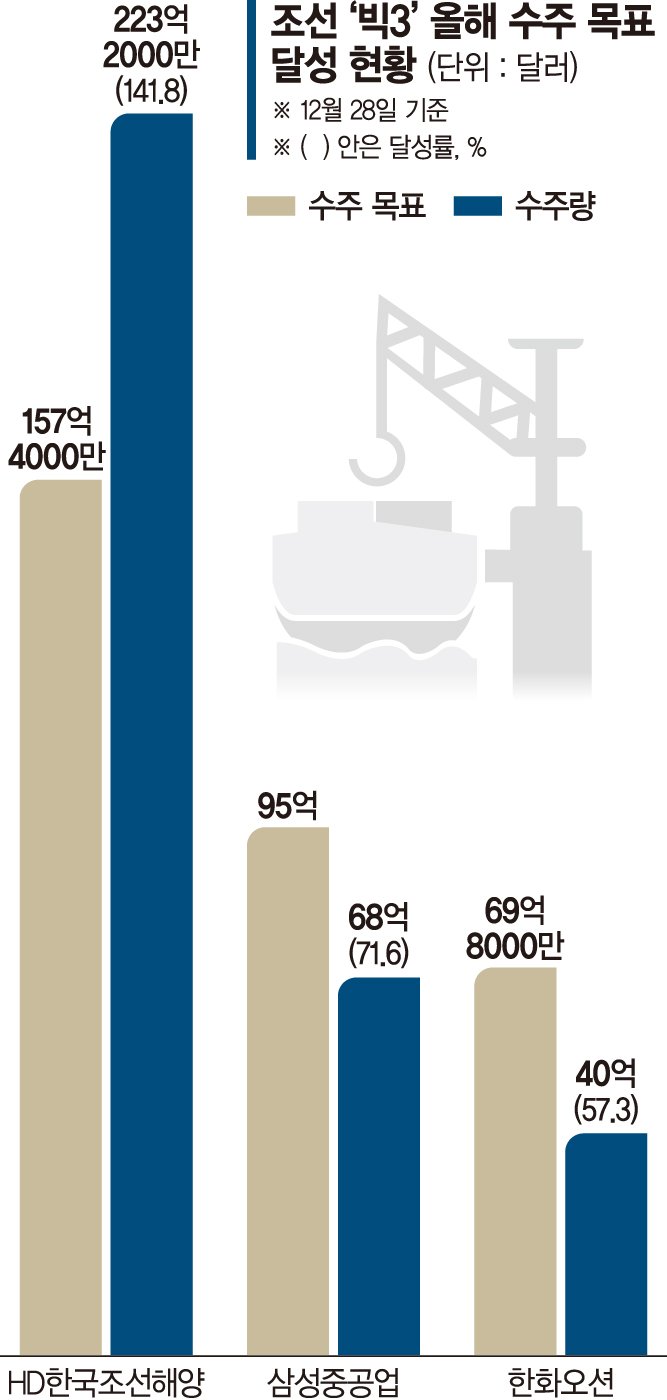
NH Investment & Securities analyst Jung Yeon-seung maintained a target price of 126,000 won, stating that Hanwha Ocean’s medium-to-long-term LNG carrier and submarine order pipeline remains valid. Cumulative orders as of the end of August were recorded at $5.94 billion, and with the addition of six large container ships worth approximately $1.1 billion in September, this year’s commercial ship orders are projected to exceed $5.5 billion. In Q4, results for the Namibia Venus Oil Field FPSO (over $3 billion), the main contract for one Thai warship (680 billion won), and additional LNG carrier orders are pending. As price competition with China intensifies in the commercial ship sector, the strategy of shifting focus to high-value-added offshore plants and warships is proving effective. The stock has entered a phase where price momentum can erupt with each order announcement. Marking order announcement schedules on a calendar until year-end is advantageous for trading timing.
Hanwha Ocean is likely to exceed its annual order target with large contracts such as the Namibia FPSO ($3 billion) and Thai warship (680 billion won) in Q4.
5. New Growth Pillars: US LNG Carriers, Submarines, and Floating Data Centers
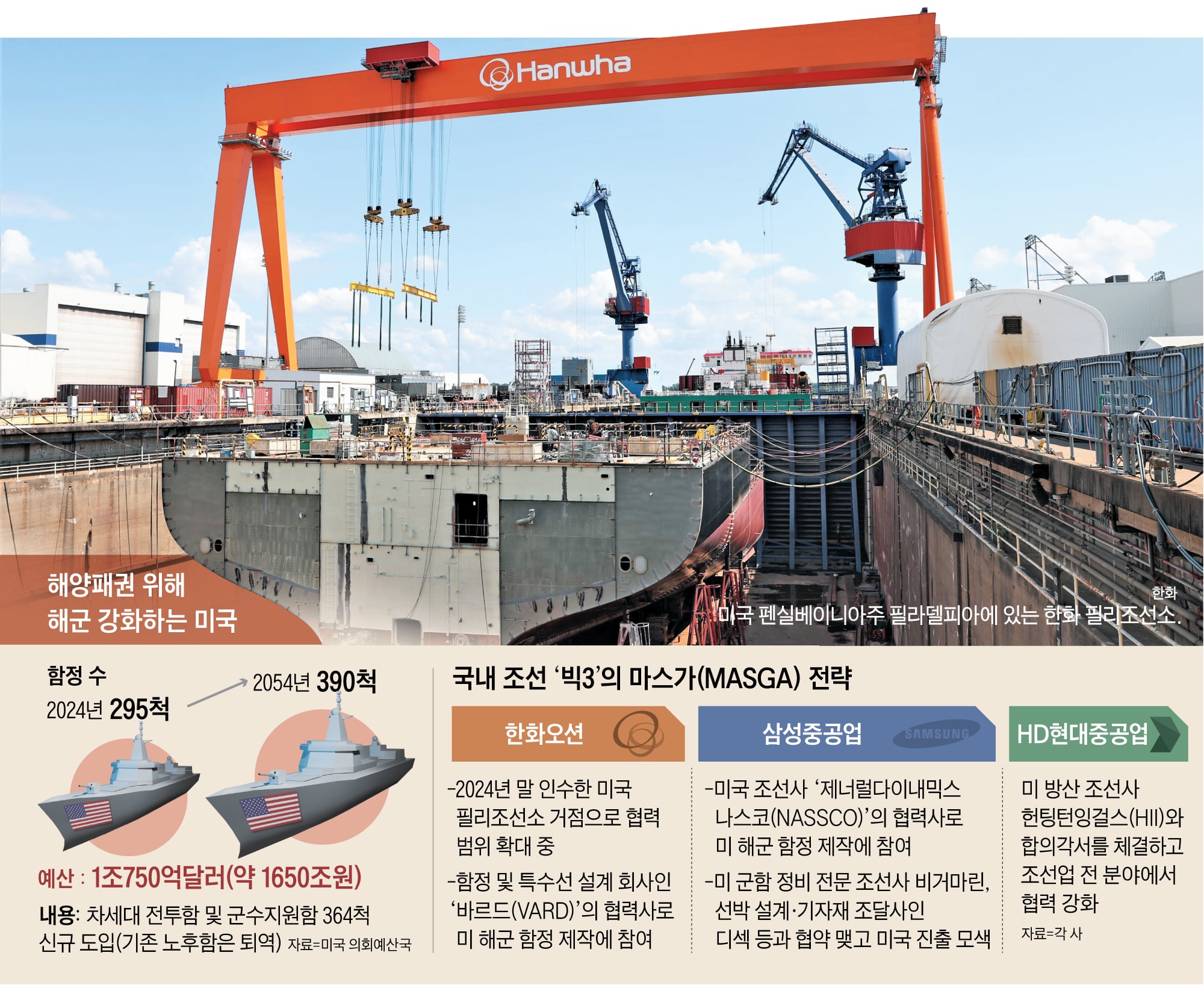
Hanwha Ocean’s order opportunities are expected to expand as LNG carrier orders linked to US LNG projects begin in earnest next year. Discussions on US Navy vessel maintenance, construction, and submarine exports are also progressing, suggesting the warship sector will increase its revenue share. Floating data centers are preparing for market entry after securing design certifications, potentially becoming a medium-to-long-term cash cow in line with demand from US Big Tech companies facing power shortages. The company is defending its margins using high-difficulty LNG carrier and warship technologies that Chinese shipyards find difficult to match. Adding the exchange rate effect, the magnitude of earnings improvement in won terms is even greater, given the high proportion of USD revenue typical of shipbuilding stocks. Even within the shipbuilding industry, Hanwha Ocean is a rare stock holding three keywords simultaneously: “US-bound orders,” “high-value-added products,” and “defense.”
Hanwha Ocean is building a differentiated high-value-added order pipeline with China through a three-pronged approach of US LNG carriers, submarines, and floating data centers.
6. Summary of Investment Strategy and Future Checkpoints
Samsung Electronics has an upside potential of over 100% from its current price of 274,000 won against the 560,000 won target price, offering significant medium-to-long-term holding appeal. Setting the first half of next year (when HBM No. 1 status is confirmed) and January next year (when the next-generation shareholder return policy is announced) as timing for split purchases can reduce risk. Hanwha Ocean has a 54% upside potential from its current price of 81,800 won against the 126,000 won target price, and short-term momentum can be targeted with each Q4 order announcement. Both stocks possess “long-term fundamental improvements” and “short-term event momentum,” making them suitable as core portfolio holdings. A strategy of adjusting allocation while checking quarterly reports and order announcement calendars is advisable. Positive news flow is likely to continue for both stocks until the Q1 earnings release next year.
Use Samsung Electronics’ January shareholder return announcement and HBM No. 1 confirmation, and Hanwha Ocean’s Q4 large order announcements and the full-scale start of US orders next year, as points for split purchases and allocation adjustments.
Frequently Asked Questions
=