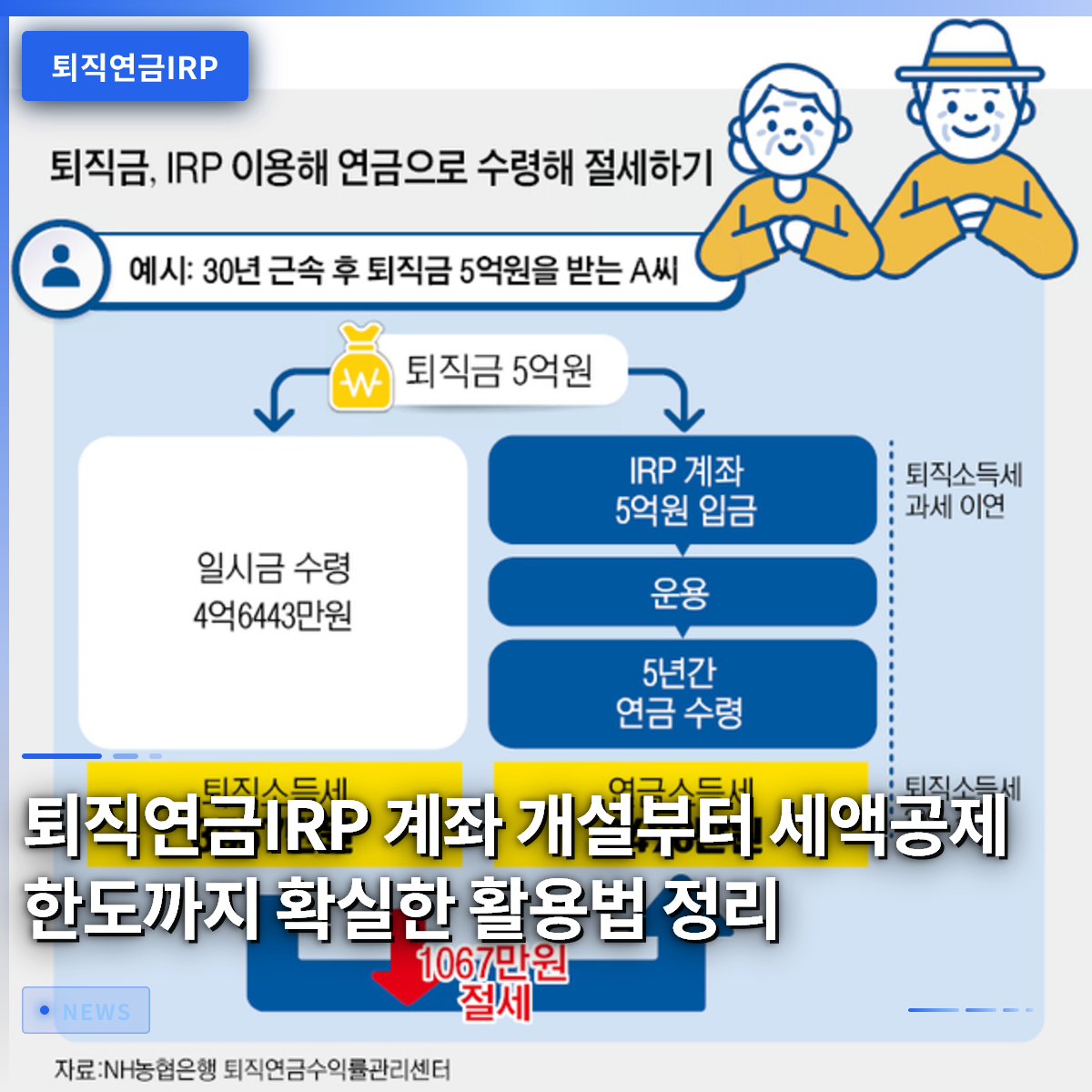
The Individual Retirement Pension (IRP) account is the most reliable tax-saving tool for employees, allowing them to secure retirement funds while claiming annual tax refunds. Instead of just envying colleagues who receive refunds ranging from hundreds of thousands to millions of won during year-end tax settlement, you should open this account and start contributing immediately. While many people view it simply as savings for old age, it actually plays a magical role in reducing your current tax burden. Let’s look at the story of Manager Kim, who recently changed jobs and left his severance pay from his previous employer sitting idle in this account. Manager Kim had temporarily deposited his severance into a regular checking account and nearly lost a significant portion to taxes, but by transferring it to the IRP account, he deferred the tax and even secured additional tax deduction benefits through extra contributions. In this article, we will thoroughly cover everything from the basic concept of the account to specific tax benefits, investment management methods, and important precautions. We will explain these concepts in an easy-to-understand manner, using real-life examples, so that even first-time subscribers can grasp them easily.
=
A Comprehensive Guide to IRP Accounts: From Opening to Maximizing Tax Deductions
1. Basic Concepts and Eligibility for IRP Accounts

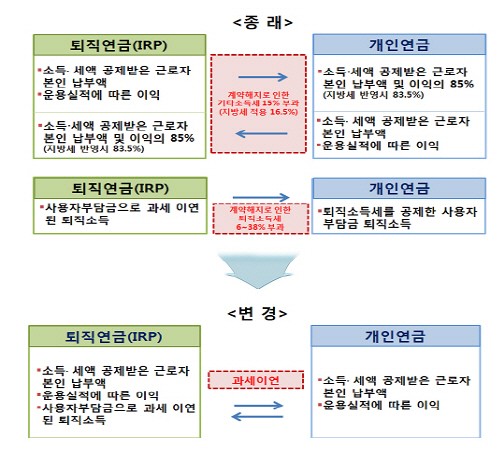
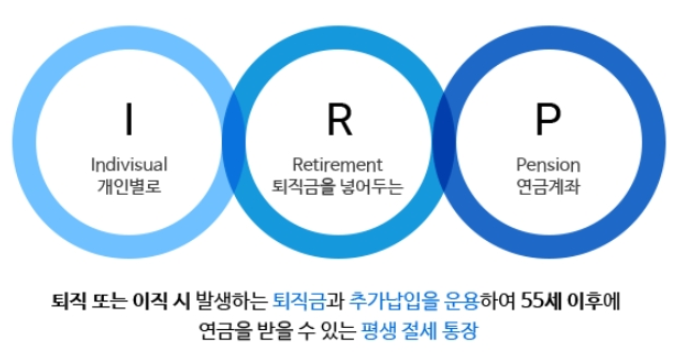
The IRP account is a personal retirement pension system where individuals can directly deposit funds to accumulate retirement savings while enjoying tax benefits. In the past, only employees could join, but now the door is wide open to anyone with income, including self-employed individuals and public officials. If you have any spare funds beyond your monthly salary, you can easily open an account at a bank or securities firm. Since the government provides tax refunds for annual contributions up to a certain amount, this account has become an essential financial product among employees.
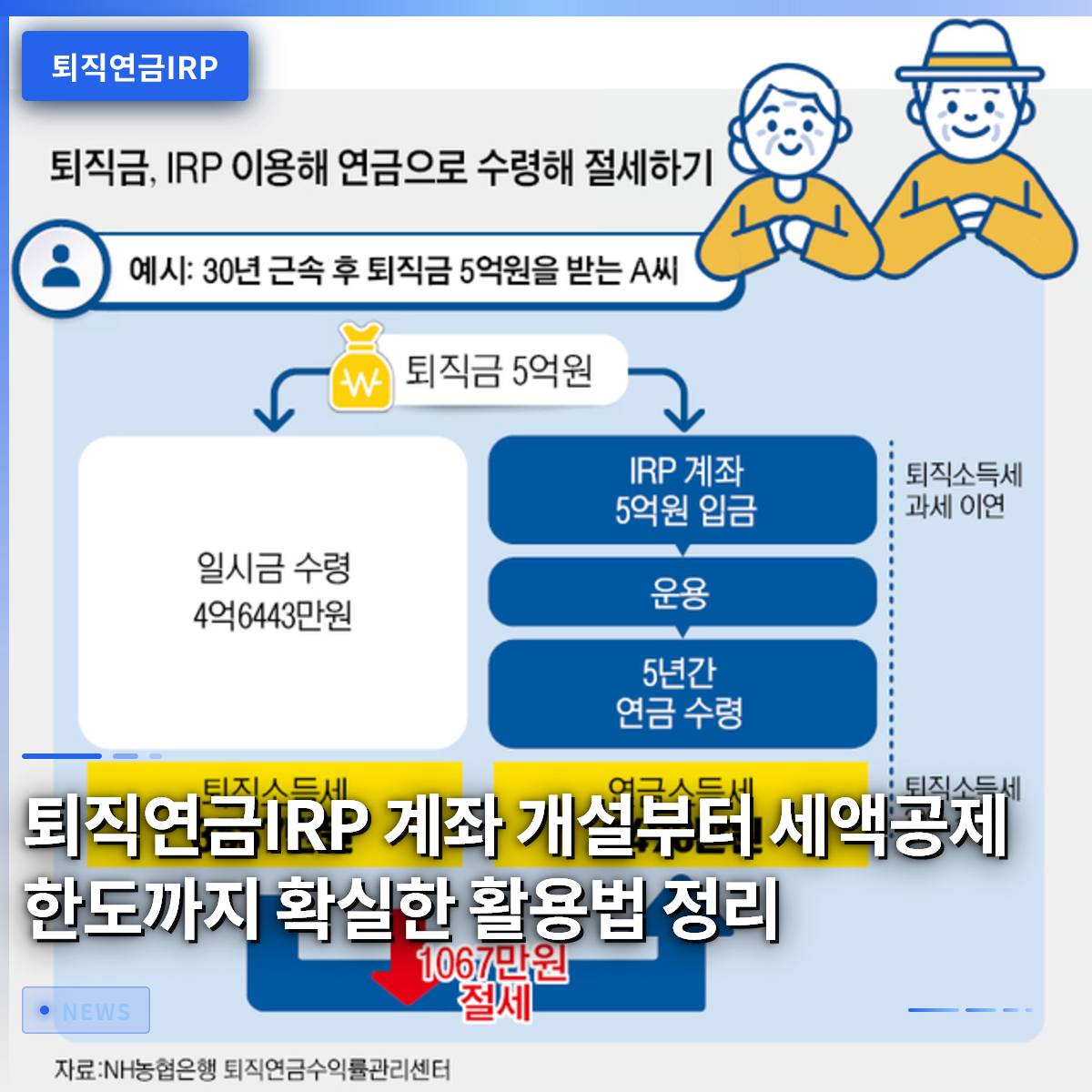
When you change jobs or resign, you must receive your lump-sum severance pay into this account to defer immediate tax payments until retirement. For example, if you receive 30 million won in severance into a regular checking account, severance income tax is withheld immediately, significantly reducing the amount you actually take home. However, if you transfer the severance to an IRP account, you can invest it without paying taxes now, and you will be subject to a much lower tax rate when you eventually receive it as a pension. For this reason, in modern society where job changes are frequent, this account serves as a sturdy shield to protect your assets.
The IRP is an essential account for anyone looking to save on taxes, secure their severance pay, and prepare for retirement.
2. Everything About Year-End Tax Deduction Benefits
The biggest reason to use this account is undoubtedly the generous tax deduction benefit available during the annual year-end tax settlement. You receive a tax refund based on a certain percentage of the amount contributed to the account during the year, with the deduction rate varying depending on your total annual income. If your total annual income is 55 million won or less, you receive a refund of 16.5% of your contributions; if it exceeds that amount, the refund rate is 13.2%.
For example, if an employee with an annual salary of 50 million won contributes the maximum limit of 9 million won over the year, they will receive a tax refund of over 1.48 million won. It is as if the state is depositing a large sum back into your account just for saving diligently, making it one of the best wealth management tools available. Manager Park, who had a grim face last year due to a heavy tax bill, opened this account early this year and set up automatic monthly transfers of 750,000 won. When the year-end tax settlement season arrived, Manager Park enjoyed the joy of receiving a refund of several hundred thousand won, unlike the previous year, and actively promoted this account to his colleagues.
By contributing up to the annual maximum of 9 million won, you can enjoy a powerful tax-saving effect with refunds of up to 16.5%.
3. Safe Asset Management and Tips for Choosing Investment Products
Funds in this account can be invested in various financial products, which you can carefully select and manage yourself. You can deposit them in safe deposits or savings products where the principal is never at risk to steadily earn interest. However, many people also invest a portion in performance-linked products such as equity funds or Exchange-Traded Funds (ETFs) to beat inflation and accumulate larger assets.
However, since this is a precious account for retirement funds, you must absolutely avoid recklessly investing your entire fortune in high-risk products. There is a legal requirement that the proportion of stable assets must be at least 30% of the total, which naturally ensures risk diversification. You need the wisdom to take slightly bolder investments to boost returns when the stock market is favorable, and to shelter funds in safe deposits when the market is unstable. The wisest strategy is to periodically review your portfolio and gradually shift the weight toward stable products as your retirement date approaches.
You should appropriately allocate and manage a mix of safe assets like deposits and investment products like funds according to your personal risk profile.
4. Precautions Regarding the Tax Burden of Early Withdrawal
Since this account is designed for retirement funds, withdrawing money early can result in significant penalties. Unless it is for a very specific reason defined by law, such as buying a house or receiving medical treatment, you must pay a heavy “miscellaneous income tax” if you terminate the account midway. In addition to returning all the tax deduction benefits previously received from the state, a high tax rate is also applied to any investment gains.
Mr. Choi, who had deposited money into this account without fully understanding it in his early career, later regretted it greatly after terminating the account midway to urgently increase his deposit for a rental apartment. He found that the tax he had to pay upon termination was much higher than the money he had saved through tax deductions, resulting in a net loss. Therefore, the funds deposited into this account should be strictly limited to surplus funds that you absolutely will not need until retirement. If you suddenly need a large sum of money, it is far more advantageous to explore other options, such as taking out a loan from a financial institution while maintaining the account, rather than terminating it.
Since you must return all tax deductions received if you terminate the account early, you should only deposit funds you can maintain until retirement.
5. Pension Receipt Timing and Tax-Saving Strategies
If you receive the accumulated funds in this account in the form of a pension after the age of 55, you can use your assets efficiently while paying the least amount of tax. Withdrawing a lump sum can subject you to high miscellaneous income tax or comprehensive income tax, but receiving it as a monthly pension applies the pension income tax rate. The longer the pension receipt period, the lower the applicable tax rate becomes, with a remarkably low tax rate of 3.3% applied after the age of 70.
Director Jung, who is approaching retirement, is carefully planning to cover his living expenses by combining his monthly corporate pension and personal pension. Instead of withdrawing a lump sum to buy an expensive car or invest in risky ventures, he has set it up to arrive in his account like a monthly salary, enhancing the stability of his retirement life. The state actively encourages pension receipt to prevent old-age poverty, which is why there is a significant difference in tax benefits. The ultimate goal of this account is to use the assets steadily accumulated from a young age as spare funds to buy a warm meal without tax worries after retirement.
Receiving funds as a pension after age 55 applies a lower pension income tax rate, allowing you to save significantly on taxes.
6. Practical Action Guidelines for Retirement Preparation
Based on the content reviewed so far, you should start by opening an IRP account in your financial transaction app today. Simply reducing unnecessary monthly expenses slightly and setting up automatic transfers of 300,000 or 500,000 won can completely change your future life. Do not be swayed by complex rumors; instead, calculate the optimal contribution limit suitable for your salary level and grow your assets planfully.
In 2026, a time when inflation and economic uncertainty are increasing, the shield protecting your own retirement must be prepared thoroughly. A simple action of tapping your smartphone a few times on your way home from work today will definitely return as a year-end tax refund bonus and a solid retirement fund in a few years. I hope you will step out of the past time spent hesitating and take the first confident step toward economic freedom by acting right now.
Open an account and set up automatic transfers immediately to start both future tax savings and retirement preparation.
Frequently Asked Questions
=