An Individual Retirement Pension (IRP) account is the most reliable and powerful tax-saving tool, capable of securing a refund of several hundred thousand won during your annual year-end tax settlement. In addition to the severance pay received from your employer, you can make direct contributions to prepare for retirement while enjoying tax benefits, which is why many office workers are now making it a must-have. While visiting a bank or securities firm was previously mandatory, the process has become much more accessible as you can now easily open an account non-face-to-face. We have all likely felt envious when hearing a colleague talk about receiving a refund of over 100,000 won during their year-end tax settlement. The secret to this lies in this account, which requires consistent monthly contributions. If you don’t have one yet, you should start preparing right now. In this article, we will cover everything in detail, from eligibility criteria and tax deduction limits to effective management strategies.
=
The Ultimate Guide to IRP Accounts: From Opening to Tax Deduction Limits
1. What is an IRP Account?

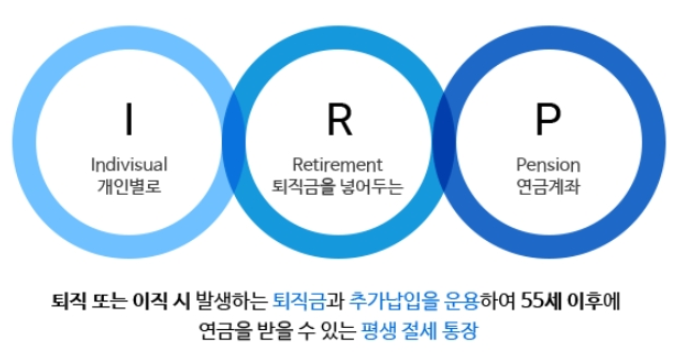
An IRP (Individual Retirement Pension) is a system where subscribers directly contribute funds, manage them, and receive them as a pension after retirement. Previously, it was viewed merely as a mandatory savings account for severance pay received upon changing jobs or retiring, but its nature has changed significantly. The eligibility criteria have been broadened, allowing not only office workers but also self-employed individuals with income and public officials to join freely. If you leave your job, your accumulated severance pay is safely transferred to this account and remains untaxed until retirement. This means you can invest the full amount without immediate tax deductions, maximizing the compound interest effect. For economically active individuals with steady annual income, this is a core tool for achieving both retirement preparation and tax savings. Many people confuse it with a regular savings account, but it is a special-purpose account designed solely to support life after retirement. Therefore, it is difficult to withdraw funds at will under normal circumstances; early withdrawal is only permitted under specific reasons. Due to these characteristics, locking away a large sum of money may feel burdensome at first, but from a long-term perspective, it serves the positive function of forcing you to save. Mr. Kim, a colleague, initially felt it was a waste to see money leaving his account every year, but his mind changed completely after seeing a large refund during his year-end tax settlement. By accurately understanding and utilizing this system, you can secure the core benefits for office workers and design a solid future.
An IRP account is an essential tax-saving account that helps you accumulate retirement funds while enjoying tax benefits.
2. Tax Deduction Limits and Tax Savings
The most attractive feature of an IRP account is undoubtedly the powerful tax deduction benefit, which significantly reduces the burden of year-end tax settlement. While the maximum annual contribution is 90 million won, the limit for tax deductions is 9 million won per year. Employees with a total annual income of 50 million won or less can receive a refund of 16.5% of their contributions, saving up to 1,485,000 won in taxes. Employees with a total annual income exceeding 50 million won can enjoy a tax deduction of 13.2% of their contributions, up to a maximum of 1,188,000 won. If you are already contributing to a pension savings product, you can combine the limits of both products to receive a deduction of up to 9 million won in total. I once recommended this account to a friend who was lamenting a “tax bomb,” and they were thrilled to receive a refund the following year. Simply transferring a fixed amount monthly ensures a definite tax refund within the government-set limits, making it a loss if you don’t participate. In particular, office workers can wisely utilize this by depositing their bonuses or surplus funds into the account before the end of the year. However, contributions exceeding the annual limit can be carried over to the next year for deduction, so there is no need to force a large lump sum deposit. Carefully considering your annual income level and financial situation and setting up automatic monthly transfers is the most prudent tax-saving strategy.
You can contribute up to 9 million won annually to receive a tax deduction of up to 16.5%.
3. How to Open an Account and Non-Face-to-Face Enrollment
IRP accounts can be easily opened through various financial institutions such as securities firms, banks, and insurance companies, and nowadays, it can be done in just a few minutes via mobile apps. In the past, you had to visit a branch in person, fill out documents, and wait a long time, but now the entire process is handled non-face-to-face with just a smartphone. For office workers who find it difficult to find time on weekdays, the non-face-to-face option, which allows enrollment anytime on weekends or at night, is much more convenient. You simply install the mobile app of a financial institution, complete identity verification, and enter a few pieces of information as guided to create the account immediately. Since fee conditions and the types of products offered vary slightly among financial institutions, it is best to compare them carefully. Mr. Park, an office worker, opened an account through a securities firm’s mobile app in just five minutes on his commute home by subway and immediately set up automatic transfers. If he had visited a branch, he would have spent over an hour waiting for a number ticket and filling out documents, but thanks to technological advancements, he saved a significant amount of time. Recently, many financial institutions offer exceptional benefits, such as waiving management fees, to attract non-face-to-face customers. Saving on fees makes a huge difference in long-term returns, so this is a crucial point to check before enrolling. Choosing your primary bank or securities firm, which you are familiar with and use frequently, is also a good method for management purposes.
You can easily open an account non-face-to-face via mobile apps and also take advantage of fee benefits.
4. Asset Management Methods and Safe Investing
Once you have opened an IRP account, you must decide how to manage the funds within it and construct your portfolio. Legally, you must invest at least 70% of your total accumulated funds in safe assets, and only the remaining 30% can be allocated to risky assets such as equity funds or Exchange-Traded Funds (ETFs). While filling the account entirely with deposits or principal-guaranteed products is stable, considering inflation, the actual growth of your assets may be slow. Therefore, it is very important to appropriately allocate safe and equity assets according to your investment style to aim for consistent returns. The habit of periodically reviewing and rebalancing your portfolio in response to changes in the financial market determines the size of your retirement funds. One acquaintance who had kept their money only in deposits was disappointed by the low interest rates and, following expert advice, allocated a small portion to high-quality ETFs, significantly improving their return rate. Rather than insisting solely on principal protection, it is advantageous to manage assets more actively from a long-term perspective, considering the time remaining until retirement. By purchasing equity products through monthly systematic accumulation, you can benefit from buying more shares when prices drop and realizing profits when prices rise. Don’t be misled by complex and difficult financial product names; choosing safe index-tracking products that everyone knows is the shortest path to reducing the risk of failure. As retirement approaches, you need the wisdom to gradually lower the proportion of risky assets and shift towards safe assets.
You must maintain a ratio of 70% safe assets and 30% risky assets while consistently managing your assets.
5. Precautions and Penalties for Early Termination
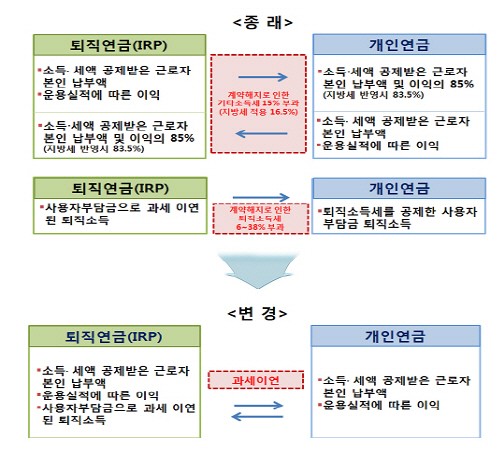
IRP accounts have a hidden strict rule: if you terminate the account early because you need money, you must return all the benefits you have received. If you are forced to terminate the account early for personal reasons, a miscellaneous income tax of 19.8% is imposed on the principal for which you received tax deductions and the interest earned. This leads to a frustrating situation where, after diligently saving taxes, you face a “tax bomb” and cannot even recover your principal when you terminate the account due to urgent financial needs. Therefore, to be safe, the amount contributed to this account should consist only of surplus funds that you absolutely cannot withdraw until retirement. We often see people who regret terminating their accounts to buy a new car or increase their deposit for a rental apartment, so you must be especially careful. However, there are exceptions for legally defined reasons, such as purchasing a home or securing a deposit for a rental apartment for non-homeowners, bankruptcy declarations, natural disasters, or long-term care for oneself or family members. If you fall under these exceptional legal reasons, you can wisely overcome the crisis through withdrawal or collateral loans rather than early termination. When facing sudden medical expenses or unavoidable financial hardship, you should first check if the situation qualifies as a legal withdrawal reason rather than immediately terminating the account. Various channels are available to overcome crises while fully preserving tax benefits, so contacting the financial institution directly is the most accurate way to proceed. Since this is a long-term product, having a firm mindset that does not waver under short-term funding needs is the key to successful retirement preparation.
Be cautious, as early termination may result in a tax penalty on the tax deductions you have received.
6. Pension Receipt and the Future of Retirement Preparation
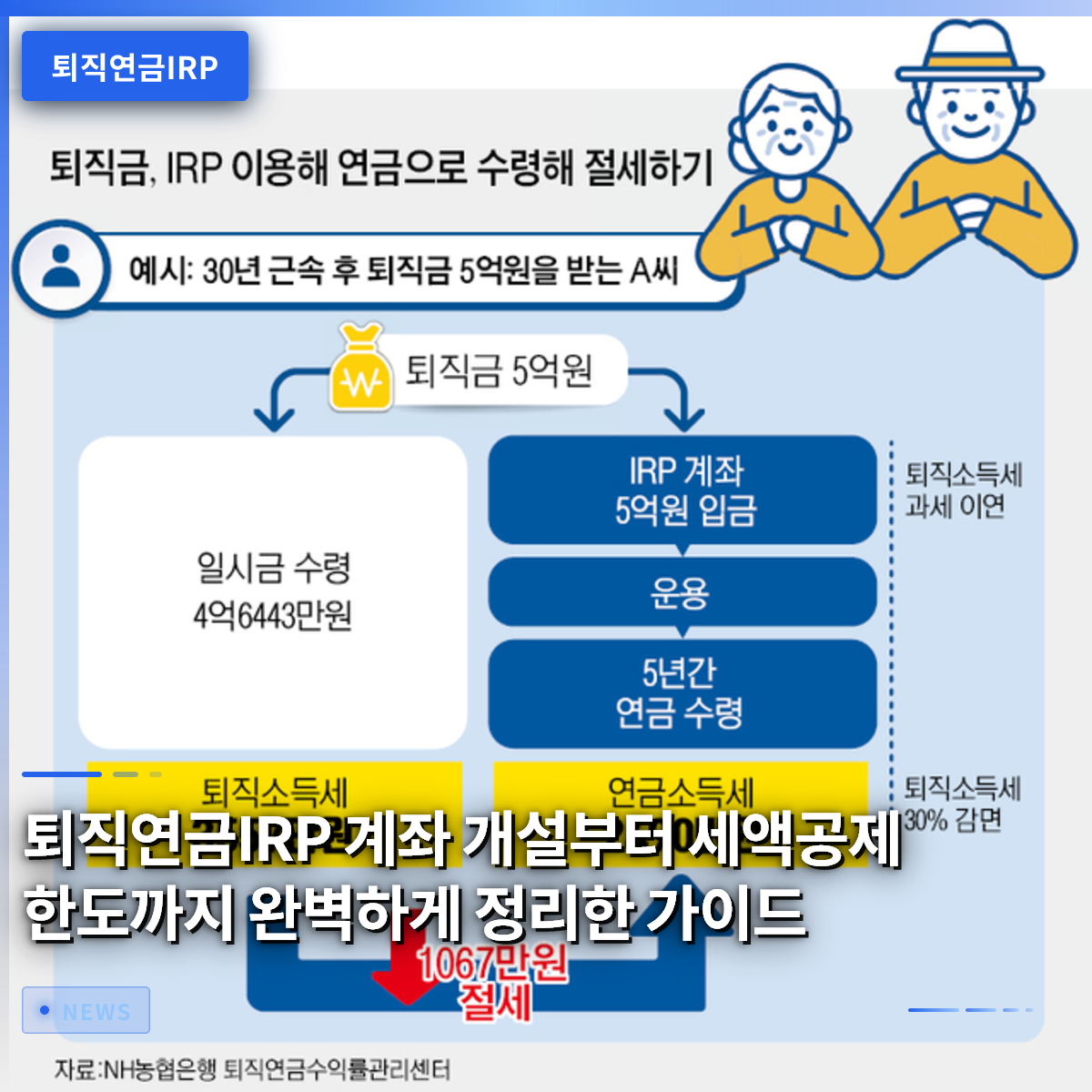
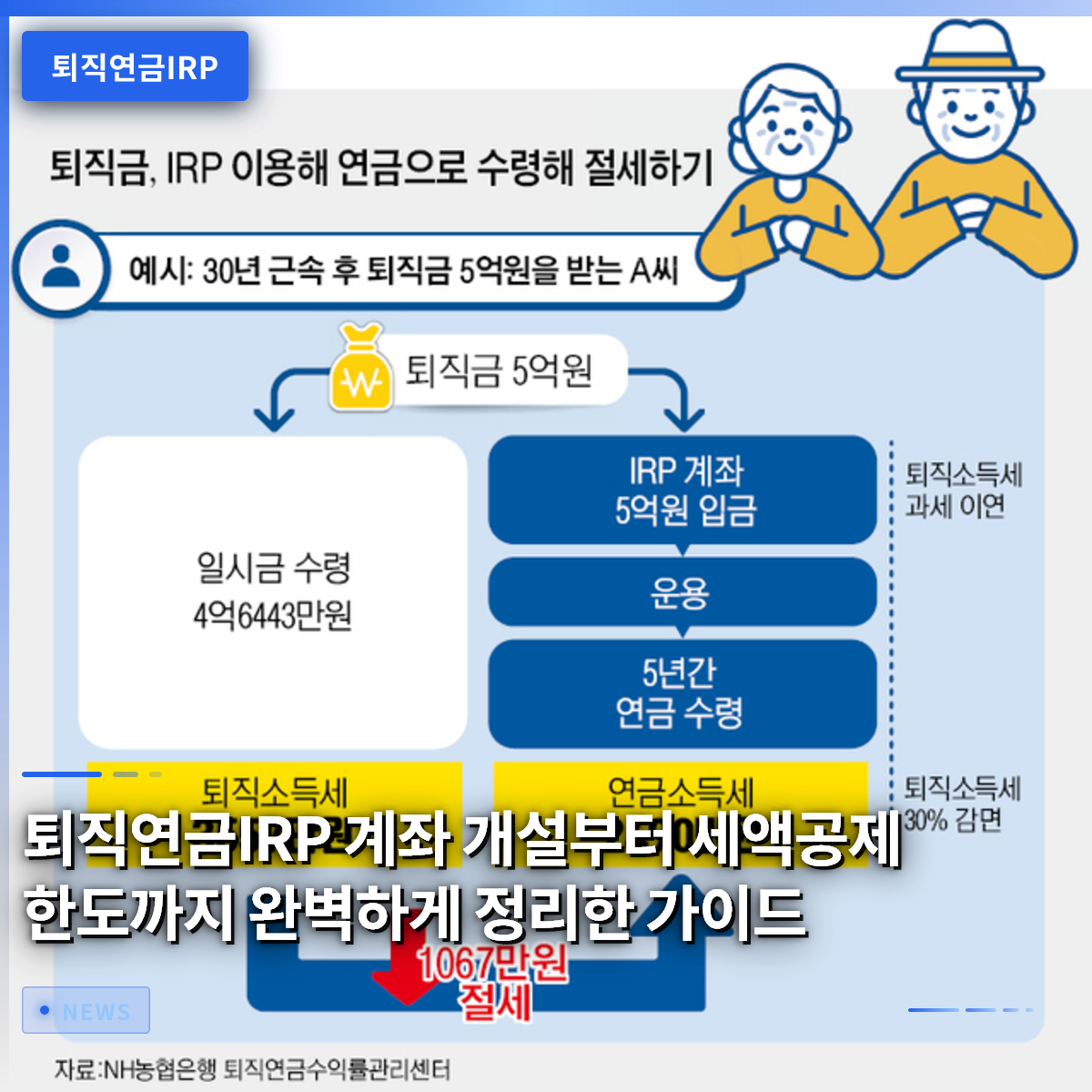
Once you reach retirement age and begin receiving funds from your IRP account in the form of a pension, your tax burden decreases dramatically, which is very advantageous. If you withdraw a large lump sum, a high tax rate applies, but if you receive it as a pension in installments after the age of 55, only a pension income tax of 3.3% to 16.5% is deducted. Since the government provides tax benefits to support stable retirement living, this system is an unparalleled blessing for retirees. Imagine a warm pension depositing into your account every month; the pain of saving small amounts now feels sufficiently rewarded. As an aging society becomes more severe, the importance of this account will grow to a degree that cannot be overstated. While the monthly contributions may feel burdensome right now, this account is the most certain seed that will change your future ten or twenty years from now. Successful retired seniors unanimously praise that consistently accumulating pension assets from a young age was the best decision of their lives. Just as “a mountain is built grain by grain,” the money faithfully deposited monthly, amounting to several hundred thousand won, grows into a massive asset at retirement, securely protecting your later years. I strongly recommend that you stop delaying and turn on your smartphone today to open an account and start automatic transfers, even with a small amount. The most realistic and powerful weapon for an ordinary office worker to retire wealthy is in your hands.
Receiving funds as a pension after age 55 ensures a low tax rate and a secure retirement.
Frequently Asked Questions
=