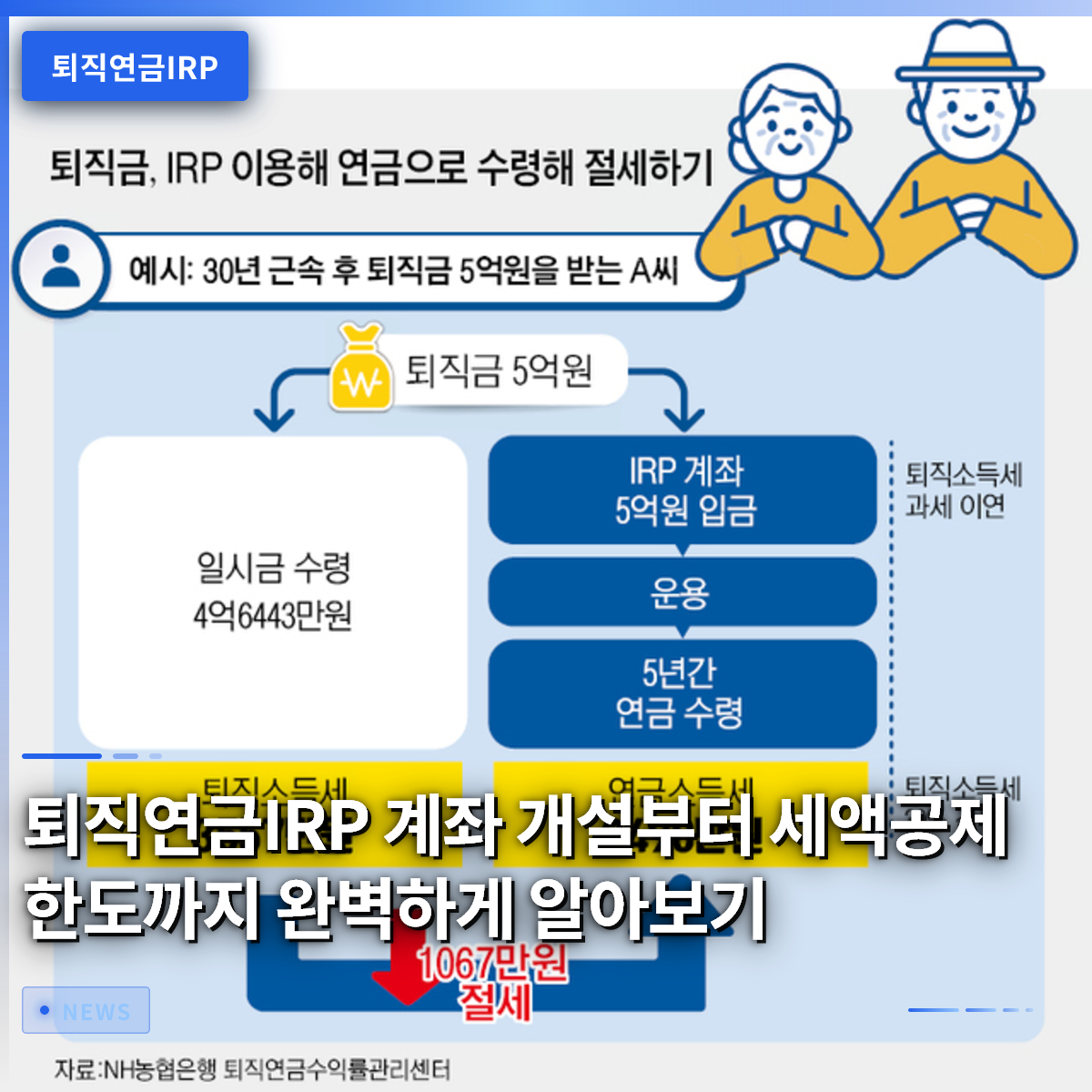
The IRP (Individual Retirement Pension) account is the most reliable wealth management tool that can help you get hundreds of thousands of won back in taxes during your annual year-end settlement. Many employees simply open an account because their company sets it up for them or because they hear it offers good tax benefits. However, once they actually start depositing and managing their money, they are often surprised by the annual fees and the strict conditions for early withdrawal. Last month, my colleague, Mr. Kim, was preparing for his year-end settlement and realized too late that he hadn’t reached the tax deduction limit, leading to great regret. In this article, we will thoroughly examine the basics of the IRP account, strategies to maximize tax deductions, and tips for safely growing your retirement funds. We will explain in detail with real-world examples so that even beginners can easily understand. If you follow along step by step, you will gain the wisdom to protect your valuable assets.
=
A Complete Guide to IRP Retirement Accounts: From Account Opening to Tax Deduction Limits
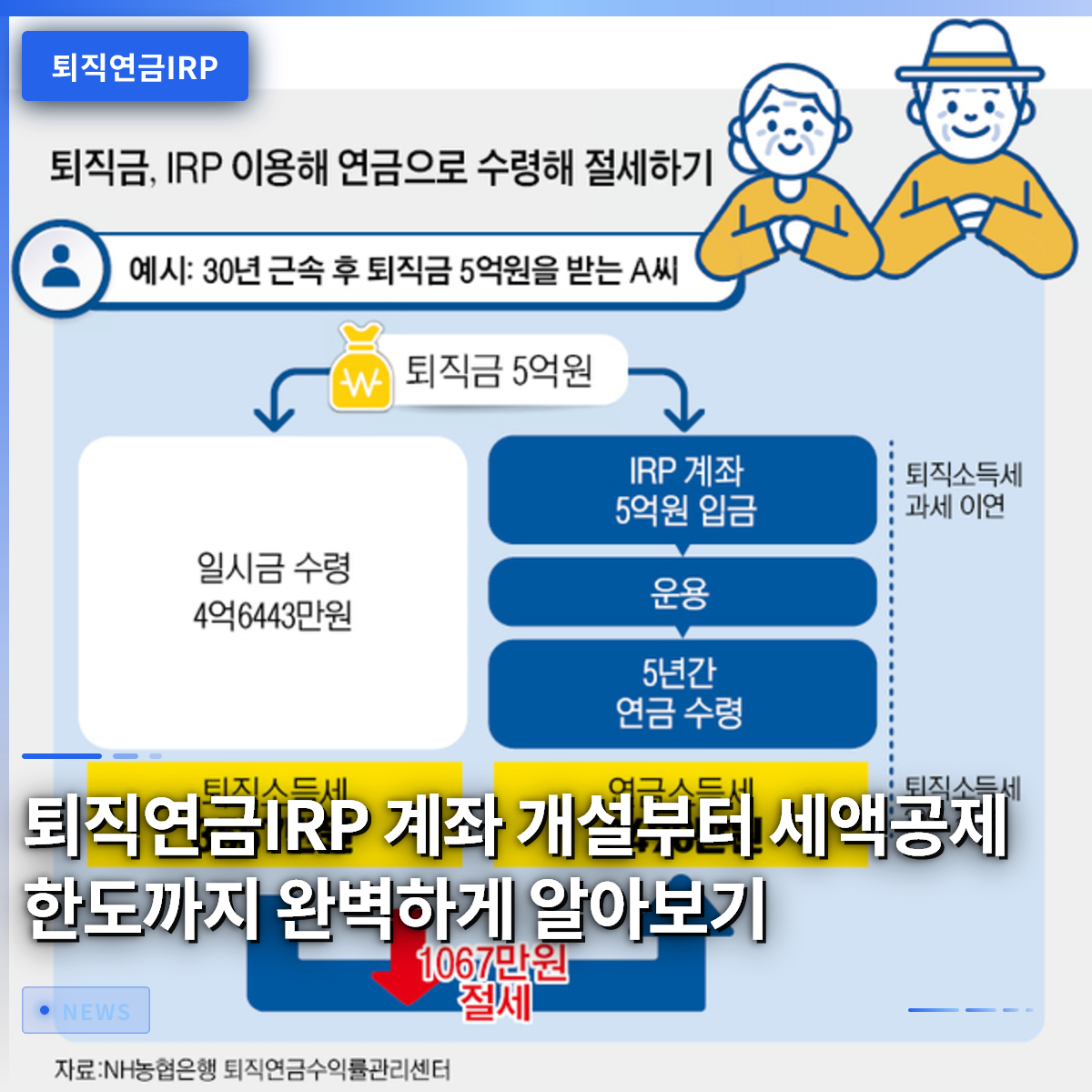
1. What is an IRP Retirement Account?

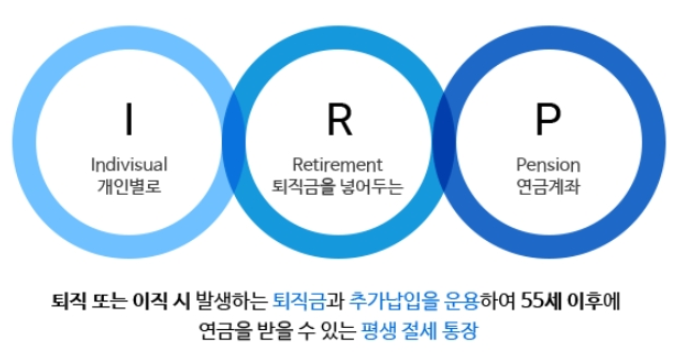
The IRP is an individual retirement pension account designed to allow individuals to accumulate funds on their own to prepare for retirement. Its advantage is that it allows workers to consolidate their severance pay from previous jobs into a single account and continue investing it. In the past, severance pay had to be managed in the manner designated by the company, but now individuals can directly choose a financial institution to open an account. In particular, since both current employees and self-employed individuals can join, the range of eligible participants has expanded significantly. If you look around, you will find many people sighing that they have spent their severance pay on living expenses every time they changed jobs, leaving them with nothing in the end. It is easy to understand this system as a safety net created by the state to solve exactly this problem.
Looking at it in more detail, this account helps stabilize workers’ post-retirement lives while providing opportunities to invest in various financial products. Mr. Park, an office worker, once left his company and left his severance pay in a regular savings account, only to suffer the pain of its real value decreasing due to inflation. If he had actively utilized this system at the time and diversified his investments into stable funds or bonds, he would have achieved much better results. This account is like a magical passbook that goes beyond simple savings to grow your assets. In modern society, where retirement is approaching for more and more people, it is becoming a necessity rather than a choice. Therefore, it is wise to understand the characteristics of the system as soon as possible and create your own asset management plan.
The IRP is an essential tax-saving account that allows individuals to accumulate retirement funds on their own and consolidate severance pay from job changes in one place for management.
2. Understanding Tax Deduction Benefits and Limits
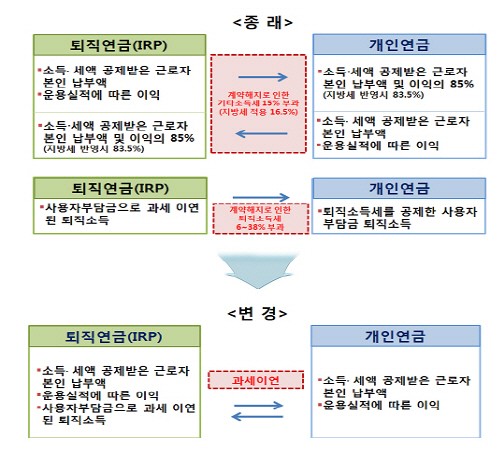
The reason employees love this account the most is the significant tax deduction benefit they can receive during the annual year-end settlement. The maximum annual contribution is 18 million won, but the limit for receiving tax deduction benefits is 9 million won per year. Workers with a total annual income of 50 million won or less can receive a refund of 13% of their contribution amount, saving up to 1.18 million won in taxes. If the total annual income exceeds 50 million won, a 10% deduction rate is applied, allowing for tax savings of 900,000 won. Manager Lee, who works for a large corporation, receives a much larger refund than others because he consistently maxes out this limit at the end of every year.
On the other hand, it is common to see regrettable cases where people, unaware of these benefits, try to rush a lump sum deposit only when the year is ending and fail. The tax deduction limit is calculated based on contributions made from January 1st to December 31st of each year, so it is essential to plan in advance. Setting up automatic transfers of a fixed amount each time your salary is deposited can significantly reduce the burden while helping you reach the limit. This is a rare opportunity to secure a definite return in the form of a tax refund, so employees must utilize it. However, since you may have to return the tax benefits if you withdraw money midway, it is wise to manage it with surplus funds.
Contributing up to 9 million won annually allows you to receive a tax refund of up to 1.18 million won, making it the best tax-saving product.
3. Safe Asset Management and Investment Methods
The size of your retirement funds when you finally receive them can vary drastically depending on how you manage the money in your account. Legally, you are restricted to investing only up to 70% of your total accumulated funds in risky assets such as equity funds or exchange-traded funds (ETFs). The remaining 30% must be allocated to safe assets like deposits or bonds, which helps defend against the risk of principal loss. Mr. Choi, a young professional, tied up his entire amount in safe deposits when he joined this system, only to find that the low interest rates couldn’t even keep up with inflation. On the other hand, Mr. Jung, who had some financial knowledge, allocated 30% to bond products and the remaining 70% to high-quality equity products, achieving decent returns.
As seen here, it is most important to construct a portfolio considering your investment style and the time remaining until retirement. Regularly checking returns and adjusting asset allocation each year can significantly reduce risk. Since the types of products and fees vary slightly among financial institutions, it is necessary to compare them carefully before joining. There are often cases where people regret joining a high-fee institution simply because they trusted an advertisement promising high returns, only to find it difficult to manage later. Therefore, a cautious attitude is required to select assets that can steadily rise over the long term.
The key is diversification: allocating 70% of your funds to equity assets and 30% to safe assets.
4. The Truth About Early Termination and Withdrawal Conditions
Many people ask whether they can terminate this account or withdraw money when they urgently need a large sum. In principle, funds are legally locked and cannot be freely withdrawn before the maturity age of 50. However, special circumstances are recognized, such as purchasing a home or securing a deposit for a rental if you do not own a house, or medical treatment for yourself or a family member lasting more than 3 months. In cases falling under these legal grounds, early withdrawal is possible, but for other simple changes of mind or personal reasons, the account must be terminated. The moment you terminate the account, you must return all the tax deduction benefits you have received so far and also bear the burden of miscellaneous income tax, which can be a devastating blow.
Recently, Mr. Kim, a junior staff member who urgently needed funds for his wedding, terminated his account forgetting about the tax deductions he had received, only to hit a tax bomb and cry in regret. As such, early termination leads to enormous financial loss, so it should absolutely not be considered unless it is a truly unavoidable situation. If you really need money, you should first look for alternatives such as collateral loans or using other emergency reserve funds. You must keep in mind that the state has strictly locked this system because its very purpose is to secure retirement. Therefore, it is safest to form the habit of contributing only with surplus money that you will not need immediately.
Early termination without a special legal ground results in a massive tax penalty, so the account should be maintained until retirement.
5. Tips for Reducing Fees and Choosing a Financial Institution
One part that many people overlook when opening an account is the asset management and operation fees charged by different financial institutions. Securities firms, banks, and insurance companies each apply different fee rates, and this small difference can grow into a huge amount over several decades. Recently, many securities firms are running aggressive events that waive fees for customers who open accounts non-face-to-face. Mr. Kang, an impatient office worker, joined a high-fee institution without any comparison just because it was his main bank, only to discover later that a significant amount of money was being deducted every year. On the other hand, Mr. Song, who compared carefully, chose a securities firm with no fees and successfully saved hundreds of thousands of won over the long term.
When switching financial institutions, you can use the transfer system to move your existing assets and tax benefits without losing them. Therefore, if you are dissatisfied with the service of your current institution or find the fees too high, you can move to a better place at any time. However, since there may be a gap period where asset management is temporarily halted during the transfer process, it is advisable to consult thoroughly with the responsible staff. Finding an institution that actively recommends suitable products and provides good after-service is the secret to winning the long race. You need a wise attitude of comparing fee tables directly and making a decision, rather than relying on hearsay from others.
You should waive fees by opening an account non-face-to-face and carefully compare and choose a financial institution that is advantageous to you.
6. Core Strategies and Implementation for Retirement Preparation
Based on the content reviewed so far, let’s set up a specific retirement preparation strategy that can be implemented immediately today. As retirement approaches, the stability of assets becomes more important, so you should operate aggressively when young and defensively as you age. You should set up automatic transfers of a certain portion of your salary each month and aim to fill the tax deduction limit of 9 million won. Retirement experts unanimously say that how well you utilize this system is the most important key to determining the quality of your life in retirement. In fact, an increasing number of retirees are enjoying a comfortable life by receiving pensions through this account.
We will all eventually step down from our active careers and live our second lives, and the most reliable ally at that time will be these prepared funds. I recommend that you turn on your smartphone right now and check the status of your account through the app of your securities firm or bank. Checking with your own eyes how much in fees you are paying and how much of the tax deduction limit you have filled is the true beginning of wealth management. Small interests and actions will gather to bear the beautiful fruit of a plentiful and stable retirement in the future. I hope you will start this most certain investment for your future by gradually increasing your automatic transfer amounts starting today.
Consistently contributing through automatic transfers and receiving it as a pension in line with your retirement timing is the completion of retirement preparation.
Frequently Asked Questions
=