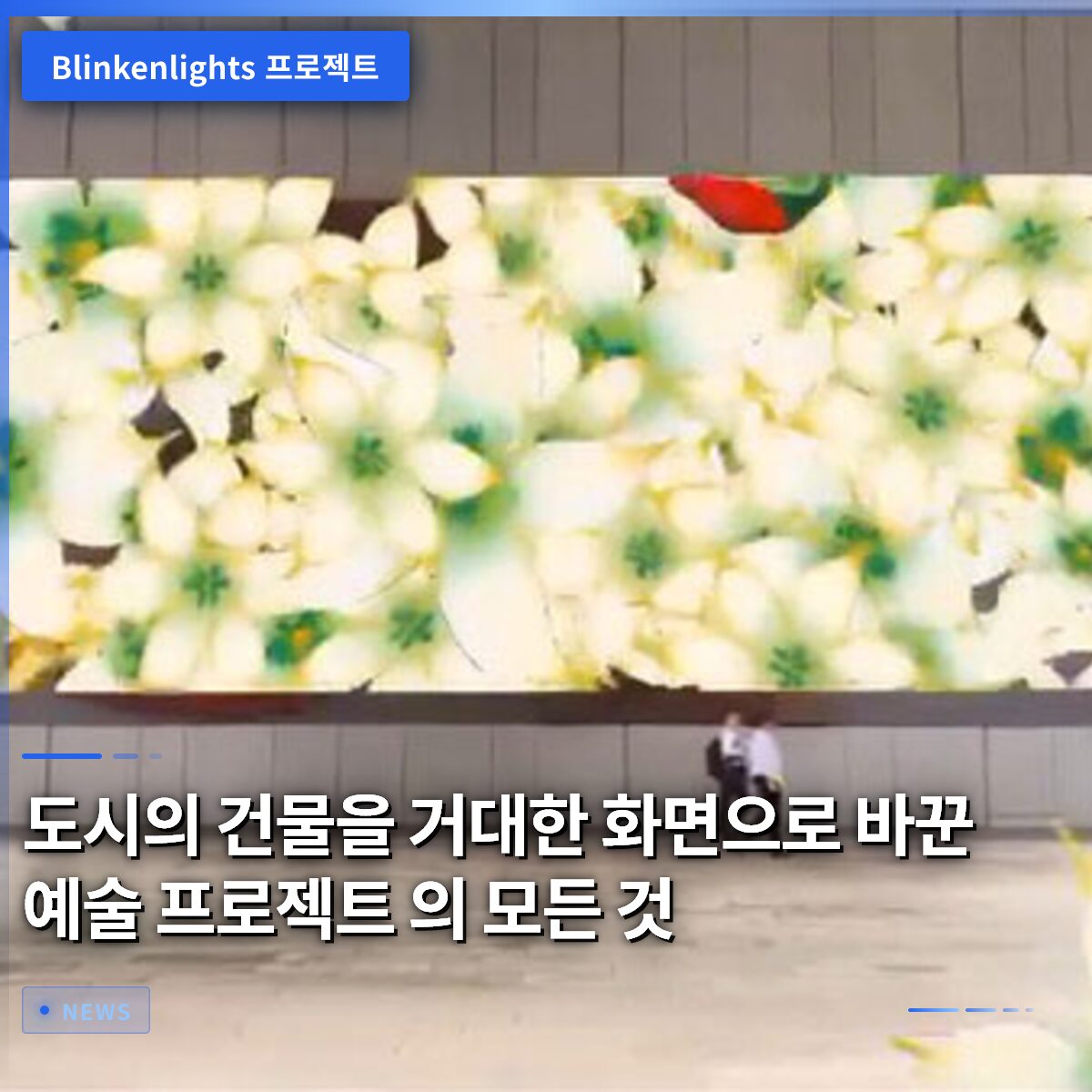
The legendary art project that transforms large city buildings into massive screens is the ultimate example of how technology and art can beautifully intertwine. It first came to light in 2001 when the renowned German group, Chaos Computer Club, conceived it as a gift to celebrate their own birthday. Since then, this unique concept has spread across continents, gifting countless people with astonishing visual experiences. It holds great significance for creating interactive exhibitions that go beyond simply lighting up, allowing for communication and shared enjoyment. In this post, we will explore the project’s journey and the fascinating stories that unfolded in major cities. If you have always been interested in the intersection of original art and technology, this will be a very engaging read.
=
Everything About the Art Project That Turns City Buildings into Giant Screens
1. The First Festival of Light: Starting in Berlin
In 2001, a building in the heart of Berlin, Germany, suddenly transformed into a massive screen that captured the attention of people around the world. It was a stunning first installation, directly planned and executed by the Chaos Computer Club to commemorate their founding anniversary. On the exterior wall of a building near Alexanderplatz in Berlin at the time, they implemented a monochrome panel measuring 18 pixels wide by 8 pixels high by densely weaving numerous light bulbs. While it might look like simple blinking lights from a distance, rigorous calculation and programming were hidden within, causing the building to move like a giant electronic billboard. Passersby stopped in their tracks, mesmerized by the rare sight of the building appearing to move on its own in the darkness of the night streets. This initial attempt became a historic moment, demonstrating how dramatically technology can transform the urban environment beyond a mere prank. Later, for those who missed the initial sentiment, reproduction works like Reloaded and derivative works like Bauschild continued to be carried out. People would stay up late, using this giant screen to display their own messages or share simple drawings.
The first installation, which began in Berlin in 2001, was the starting gun announcing the meeting of technology and art.
2. The World’s Largest Game Stage: Unfolding in Paris
Building on its successful start in Berlin, the project moved its stage to Paris, the capital of neighboring France, to take on an even greater challenge. Utilizing the entire building of the Bibliothèque nationale de France, they completed the largest computer game screen in history, measuring 26 pixels wide by 20 pixels high. In particular, by adding a gray-scale expressiveness of up to eight levels beyond simple blinking, it could showcase much more refined and diverse visual effects. As the entire building transformed into a giant arcade screen, numerous spectators gathered in the streets of Paris every night to enjoy the games directly. Each massive window of the building served as a small pixel on the screen, with characters moving according to people’s controls. Even ordinary citizens unfamiliar with technology could naturally join in the massive play happening in the heart of the city and feel great joy. This work was praised for turning public art, once the exclusive domain of artists, into a playground where the public could directly participate and play. The magical moment when the city’s rigid architecture was filled with people’s laughter and cheers was vividly broadcast to the world.
The work utilizing the library building in Paris created a massive game stage where the public could directly participate.
3. A Grand Stereoscopic View: Dyeing Toronto City Hall
As time passed, in 2008, the stage moved to the major Canadian city of Toronto, where a more advanced form of large-scale light art adorned the night sky. They undertook the bold adventure of linking the two massive tower buildings that make up Toronto City Hall to form a giant pixel panel. This time, the resolution was significantly increased to 96 pixels wide by 32 pixels high, and the gray-scale levels were subdivided into sixteen stages. As a result, the clarity and three-dimensionality of the images projected on the building’s exterior were refined to an incomparable degree. As night deepened, the massive crowds gathered in the square in front of City Hall could not help but marvel at the fantastic light show unfolding between the two towers. This event, held as part of an art festival, was evaluated as having elevated the city’s night scenery to a completely new dimension. It infused entirely new vitality by draping digital clothing over the building while preserving its inherent structural characteristics. The sight of the entire building becoming a giant canvas, beautifully dyeing the city’s night, remained deeply etched in people’s memories for a long time.
The installation utilizing the two towers of Toronto City Hall provided a stunning visual experience with even more refined resolution.
4. Evolving into Polychrome with Diverse Colors
As time passed and technology developed dazzlingly, this project also boldly broke the mold of monochrome and evolved to embrace vibrant colors. The Polychrome series works newly introduced from 2023 began to showcase dazzling, diverse natural colors, moving away from the previous black-and-white expression. From the campsite to the famous festival venue, the Nation of Gondwana, the light art clad in color left a more intense impression. By adding modern color technology to the nostalgic sentiment of the past’s monotonous lights, it provided viewers with a fresh shock and visual pleasure. It no longer simply meant a building glowing; rather, the interplay of numerous colors changing moment by moment resembled a giant modern art museum. It can be seen as a very exemplary developmental process showing how technological advancement can expand the expressive range of art. People enjoyed the public art of the new era with their whole bodies, taking photos and leaving memories against the backdrop of the even more dazzling building screens.
The color expansion works introduced from 2023 provided even more intense and diverse visual enjoyment.
5. Conversion Tools and Website for Everyone to Participate
The reason this project has been loved for a long time, rather than being just a one-off event, lies in its open structure that allows the public to participate directly. The official website space is well-organized so that anyone can freely access all installation histories and related materials from the past to the present. In particular, a magnificent gallery space is prepared where the original animations that were directly played on the building’s massive exterior wall are collected, allowing anyone to appreciate them. A video conversion tool is also provided that easily converts user-uploaded videos to specifications suitable for the giant building screen. Thanks to this, not only skilled artists but also ordinary people could create videos containing their imagination and display them on the massive urban building screen. Numerous articles and records reported in the media over the past two decades are also gathered without omission, allowing one to read the project’s historical footprint at a glance. This thorough documentation and open participation method provided a model answer for how technological art should communicate with the public.
The various conversion tools and resource collections provided on the website elicited active participation from the public.
6. Future Prospects of New Art Embracing the City
This fresh concept, which started with a small building in early Berlin, is now inspiring countless cities and artists around the world. Recently, attempts have emerged to combine wirelessly controllable streetlights or public facilities across the entire city to turn the whole city into a giant stage. Urban architecture, which once felt only rigid and cold, is transforming into a warm space that emotionally resonates with people when it meets technology and art. It is also the reason why our hearts are already fluttering with anticipation for what kind of ingenious imagination will dye the world’s dark nights with beautiful light. We look forward to these wonderful attempts, which make us look at the ordinary spaces in our daily lives anew, being carried out more frequently in the future. We also encourage you, our readers, to look at the buildings around you tonight and imagine the joy of them transforming into giant screens. This project has silently proven for decades that technology ultimately points to people, and art adds warmth to it.
The combination of technology and art will continue to change our urban landscapes to be more surprising and warm in the future.
Frequently Asked Questions
=