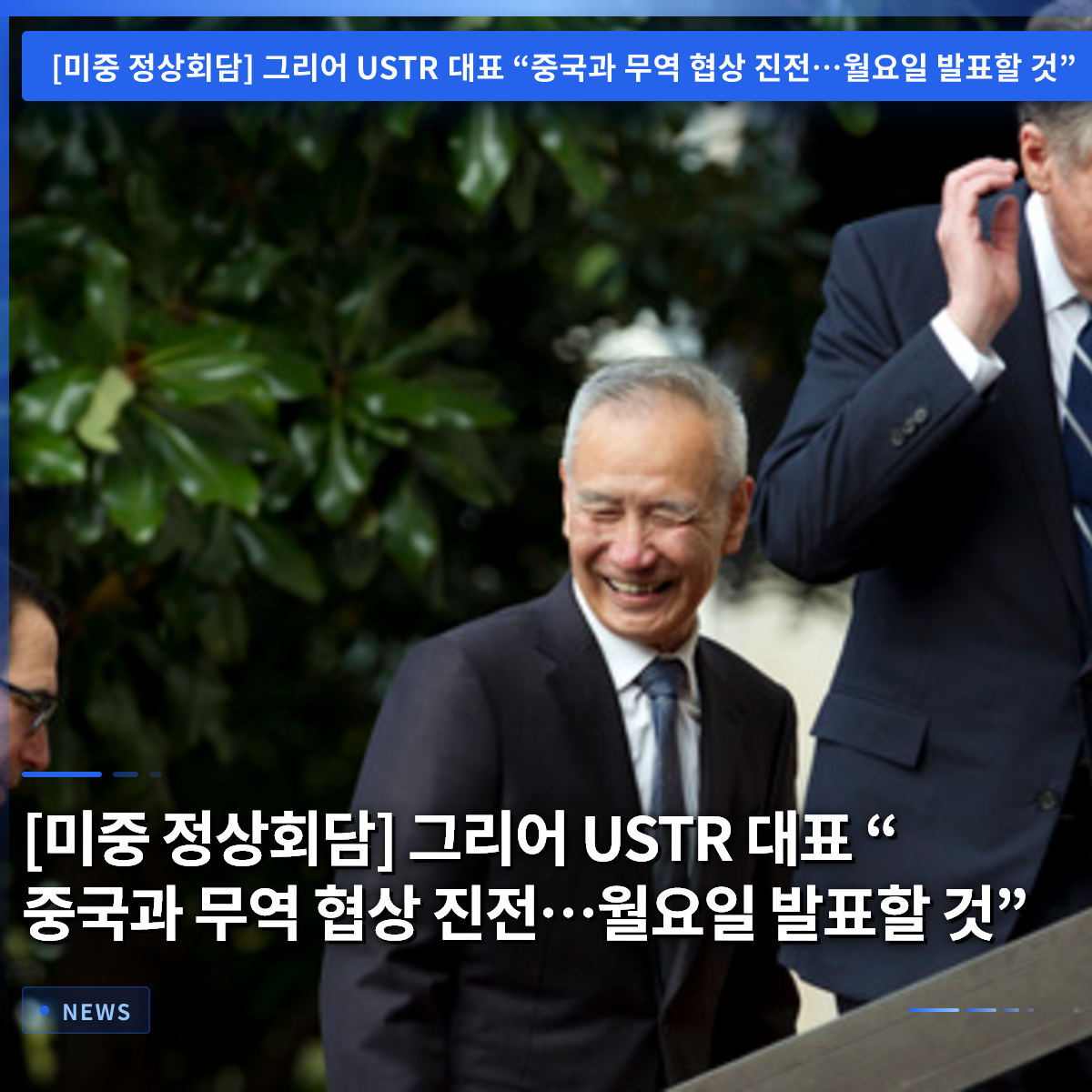
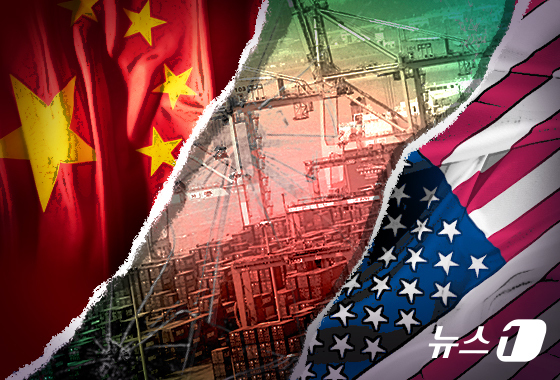
USTR Representative Greer announced that progress has been made in trade negotiations with China on the occasion of the US-China summit. He stated that he plans to announce the detailed results of the negotiations on Monday. This progress is being concretized through measures such as expanded agricultural purchases and commitments to rare earth supply. Additionally, US Treasury Secretary Scott Bessent and Chinese Vice Premier He Lifeng agreed to extend the existing trade truce by two more months. This is assessed as providing market stability for both countries. In this article, we will examine the background of the negotiations, specific agreement details, the significance of the truce extension, the status of semiconductor control discussions, and the implementation status within the US in that order. Finally, we will present future outlooks and actions readers can take.
=
[US-China Summit] USTR Representative Greer: “Progress in Trade Negotiations with China… To Be Announced on Monday”
![[US-China Summit] USTR Representative Greer:](https://pub-e310bf4303744c7295d9b556111ff394.r2.dev/thumbnails/1790359591825_yhqzo0.png "[US-China Summit] USTR Representative Greer:")
1. Background and Current Status of the US-China Summit
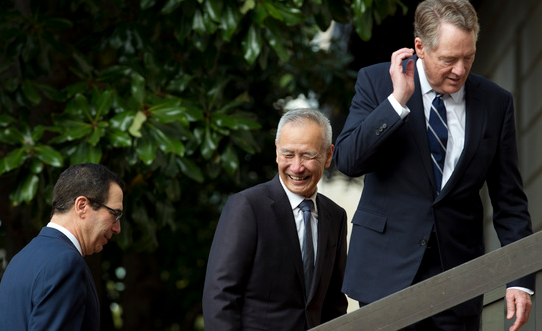
The recent US-China summit was held in Washington, where the leaders of both nations discussed easing trade tensions. Prior to the summit, the imposition of high tariffs and technology sanctions had created significant uncertainty in global supply chains. Representative Greer described the current relationship as a state of “managed trade,” explaining that dialogue channels are active. He assessed that conflicts have eased compared to the past and that practical outcomes are being derived. Following the summit, both sides accelerated working-level negotiations to reach specific item-by-item agreements. Representative Greer raised expectations by stating that this progress is scheduled to be disclosed on Monday. Currently, both countries are adopting a strategy to maintain trade tensions at a manageable level rather than fully resolving them.
Progress in trade negotiations was confirmed at the US-China summit, and Representative Greer is scheduled to announce detailed results on Monday.
2. Specific Agreement Details: Agricultural Products and Rare Earths
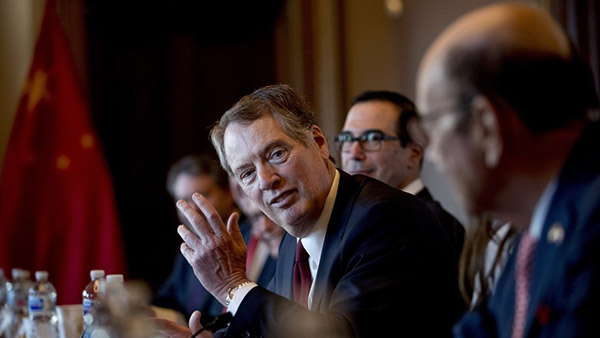
Representative Greer stated that China has agreed to expand its purchases of US soybeans and other agricultural products. Specifically, while maintaining existing targets for soybean purchases, the agreement includes additional purchases of grains and fruits. This is expected to open new markets for US farmers and contribute to income stability. Additionally, China agreed to increase imports of medical devices, broadening the scope of health cooperation between the two countries. These agreements are assessed as providing direct benefits to the industrial sectors and consumers of both nations. Representative Greer emphasized that the agreement details have already been finalized at the working level.
In the rare earth sector, China promised to stably supply the rare earths needed for US factories and manufacturing. Rare earths are essential raw materials for the manufacturing of electronic devices, defense equipment, and clean energy, directly impacting US industrial competitiveness. There are indications that actual supply has not been smooth due to delays in China’s export review procedures. Representative Greer stated that he plans to inspect the implementation status using the trade war suspension period. He projected that if rare earth supply becomes smooth, supply chain risks for US manufacturing will decrease. Overall, the agreements on agricultural products and rare earths are cited as examples showing substantive progress in bilateral trade relations.
China has promised to expand purchases of US agricultural products and supply rare earths, which is expected to bring direct benefits to the industries of both countries.
3. Trade Truce Extension and Its Significance

US Treasury Secretary Scott Bessent and Chinese Vice Premier He Lifeng agreed to extend the existing trade truce by two more months, pushing the originally scheduled end date from November to January 2027. Both representatives stated in unison that this extension provides predictability to the markets of both countries. In particular, import and export companies have assessed that investment decisions have become easier due to reduced tariff volatility risks. The truce extension is also analyzed as buying time for both countries to discuss additional structural issues. Representative Greer reacted positively, saying, “It is a good thing because it provides stability for both countries.” In the markets, this news acted as a factor for easing exchange rate fluctuations and rising stock prices.
The effect of the trade truce extension is notable not only for short-term stability but also for laying the groundwork for long-term negotiations. Companies can calculate costs more accurately as tariff volatility decreases. Additionally, by lowering policy risks when planning supply chain restructuring, it is positive for attracting foreign direct investment. On the other hand, some experts have raised concerns that merely extending the truce does not solve fundamental structural problems. However, the prevailing assessment is that it is effective in mitigating immediate market shocks. Overall, the truce extension is evaluated as a practical measure to reduce uncertainty in bilateral trade relations.
US Treasury Secretary Scott Bessent and Chinese Vice Premier He Lifeng extended the trade truce by two more months, which is expected to contribute to market stability.
4. Reason for Excluding Advanced Semiconductor Controls from Discussions
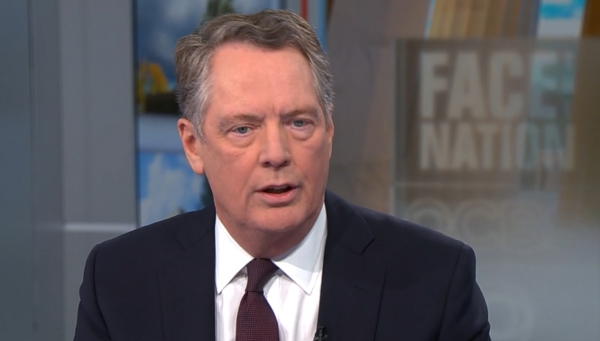
Representative Greer revealed that the issue of US export controls on cutting-edge semiconductors has barely been discussed in current negotiations. He explained that semiconductors are “the most valuable asset of the United States and a key means to maintain superiority in the superintelligence competition.” Therefore, he maintained the position that sensitive technology sectors should be handled within a separate security framework. The decision to focus negotiations on pure trade issues and practical economic outcomes is based on this strategic judgment. Representative Greer hinted that semiconductor controls will be addressed at a separate high-level discussion table in the future. He emphasized that at the current stage, priority is given to consumer-related items such as agricultural products and rare earths. This distinction is interpreted as an intention to improve the efficiency of negotiations.
The advanced semiconductor sector is considered a matter that cannot be easily compromised, as it is essential for maintaining US technological superiority. Therefore, it was judged realistic to focus on items that can create mutual economic benefits at the trade negotiation table. Representative Greer viewed this approach as appropriate for deriving practical results while avoiding unnecessary conflict for both countries. He proposed that a separate security and technology dialogue channel needs to be activated to resolve semiconductor issues in the future. Currently, it can be seen that both countries are moving in a direction of protecting their respective strategic assets rather than finding a point of agreement. In summary, it becomes clear that advanced semiconductor controls have been intentionally excluded from the scope of current trade negotiations.
Advanced semiconductor export controls are not being discussed in current US-China trade negotiations and are expected to be handled within a separate security framework.
5. Implementation Status and Issues within the US
The US side reported that China is faithfully fulfilling its promise to purchase soybeans. Specifically, it was confirmed that soybean imports of approximately 25 million tons are proceeding as scheduled. This demonstrates that a stable export market is being provided to US Midwest farmers. However, the $17 billion purchase promise for other agricultural products is assessed as having a slower implementation speed. In particular, some items such as corn, wheat, and cotton appear to be falling short of their targets. Accordingly, the US Department of Agriculture is reported to be reviewing additional incentive and promotion measures. Overall, while soybeans have met their targets, other agricultural products require continuous monitoring.
In the rare earth sector, there are continuing indications that supply is not being made in a timely manner due to delays in China’s export review. According to analysis by the Center for Strategic and International Studies (CSIS), China’s rare earth exports to the US are estimated to have decreased by approximately 25% compared to before the tariff war. This has led to concerns about production disruptions for US semiconductor, battery, and automobile manufacturers. Some companies are adopting response strategies such as seeking alternative supply sources or increasing stockpiles. Representative Greer stated that he will strengthen implementation inspections during the trade war suspension period to resolve these issues. He projected that if China improves its export procedures, supply chain stability will improve significantly. Overall, the implementation status within the US shows differences by item, indicating the need for continuous management.
The US has met its soybean purchase targets, but implementation of other agricultural products and rare earths is delayed, requiring additional inspections.
6. Outlook and Suggested Actions for Readers

Representative Greer previewed that the detailed content to be announced on Monday will include the specific scale of agricultural and rare earth agreements and an implementation roadmap. Depending on the announcement content, there may be fluctuations in related stock prices and exchange rates, drawing attention from market participants. In particular, agriculture-related companies and rare earth processing firms are considering portfolio adjustments while watching for potential benefits. Experts project that this announcement will be an important opportunity to indicate the direction of future US-China trade relations. However, it should be noted that the actual market impact may vary depending on the speed of execution and the method of implementation verification. Therefore, it is necessary to develop the habit of comparing and reviewing reliable reports and official statements immediately after the announcement. It is a wise strategy to continuously monitor future developments and plan investments and business from a long-term perspective.
Readers are first advised to check news bulletins in real-time to avoid missing changes in the announcement content. Second, review the supply chain structure of related industries and simulate what impact your field will face. Third, refer to expert reports or industry outlook materials to establish a basis for decision-making when necessary. Fourth, consider a diversification strategy from a long-term perspective to reduce dependence on specific countries or items. Fifth, it is also good to check internal compliance systems in preparation for potential regulatory changes. Finally, we recommend maintaining a flexible mindset and an active attitude toward information acquisition to capture the opportunities brought by this negotiation.
It is helpful to carefully observe market reactions ahead of the Monday announcement and prepare individual response strategies based on relevant information.
Frequently Asked Questions
=