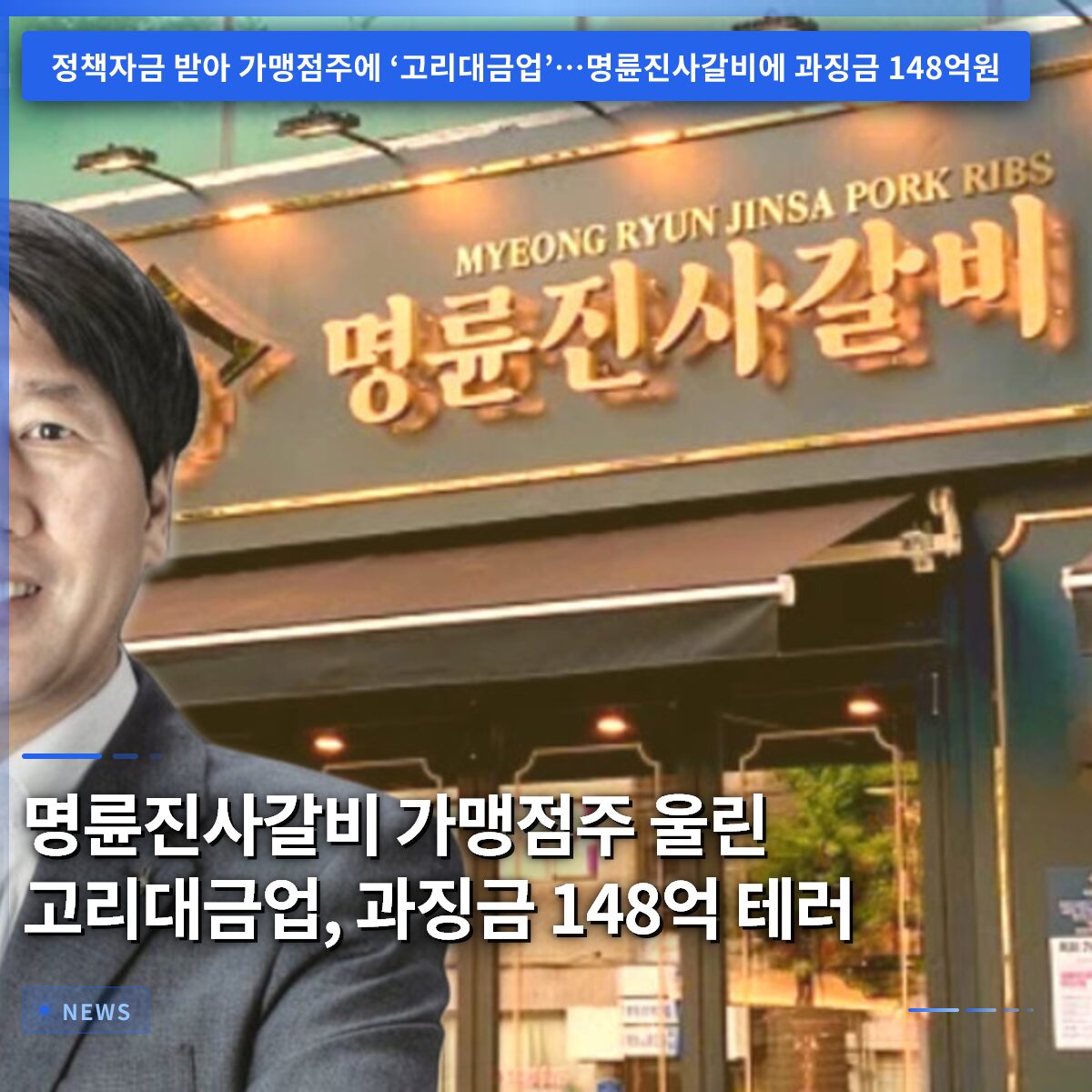
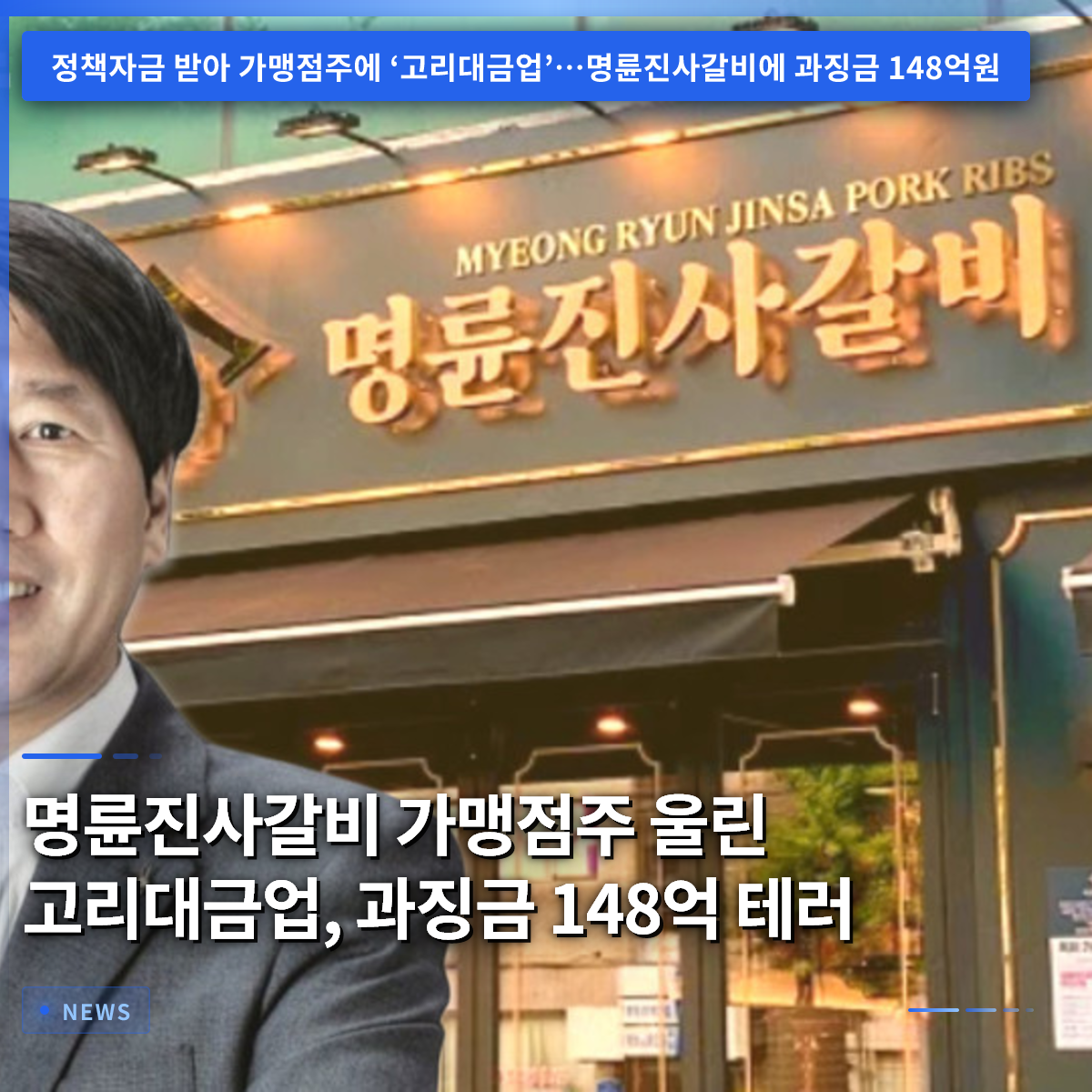
It has come to light that the operating company of Miryun Jinssa Galbi, a famous meat restaurant franchise, exploited low-interest government policy funds to grow a lending company owned by the shareholders’ family and forced franchisees into predatory high-interest loans, causing a major shock. The Fair Trade Commission (FTC) has decided to impose a total fine of 14.872 billion won on Miryundang Corporation and Chairman Lee Jong-geun for these unfair trade practices and to refer the case to the prosecution. The headquarters used the lending business as a shameless means of pursuing private interests, pretending to offer warm support to desperate small business owners seeking to start a franchise while secretly lining the pockets of the shareholders’ family. Franchisees suffered under a distorted repayment structure where loan principal and interest were automatically deducted every time they purchased essential ingredients for their business. This incident is expected to be recorded as a representative case of livelihood infringement, where the power imbalance between the franchisor and franchisees was exploited to extract undue profits. In this article, we will delve into the specific details of this incident and how the headquarters operated a predatory lending business targeting franchisees.
=
Miryun Jinssa Galbi Franchisees Devastated by Predatory Lending: 14.87 Billion Won Fine
1. Shareholders’ Family Diverting Government Policy Funds

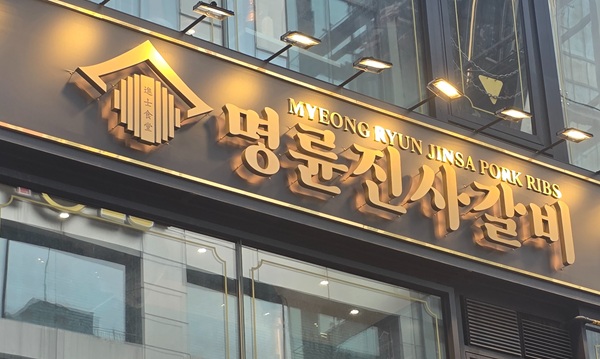
According to the FTC’s investigation, Miryundang lent massive amounts of money to 14 affiliated lending companies, most of which were owned by the shareholders’ family, under the pretext of supporting franchise startup funds from the end of 2021 to April of this year. It was revealed that approximately 79 billion won in operating funds, procured at relatively low interest rates of 3% to 4% per annum from institutions like the Industrial Bank of Korea, was entirely used to support these lending companies. The scale of funds lent by the headquarters to these lending companies reached a staggering 298.3 billion won, with applied interest rates of 2.3% to 4.6% per annum, which were significantly lower than normal rates. As a result, these 14 lending companies were able to save a whopping 21.7 billion won in funding costs, effectively funneling the savings directly into the shareholders’ family pockets. These newly established lending companies, which had no ability to borrow money on their own, rapidly grew to a massive scale thanks to the headquarters’ substantial support. The lending companies proliferated as paper companies in shared offices of about 10 square meters, without even having proper resident staff. Circumstances were also captured showing that they employed cunning methods to split their assets to avoid becoming subject to registration by the Financial Services Commission. Through these irregularities and tricks, the 14 lending companies, which had inflated their size, jumped to the top 27th largest among all domestic lending companies as of last year.
The headquarters funneled policy funds procured at low interest rates to lending companies owned by the shareholders’ family, allowing them to save significantly on funding costs.
2. High-Interest Loans and Splitting Tactics That Wounded Franchisees Twice
The 14 lending companies owned by the shareholders’ family, which received massive funds at low prices from the headquarters, executed predatory high-interest loans of 12% to 18% per annum to franchisees and prospective franchisees. The money borrowed by the franchisees was mostly used for essential funds needed to open a new meat restaurant or renovate an existing store. Small self-employed individuals who found it difficult to obtain legitimate loans from banks had no choice but to fall into the quagmire of high interest rates approaching 20% per annum, trusting the lending companies introduced by the headquarters. The lending companies, lacking their own credit evaluation or funding capabilities, easily expanded their predatory lending business solely on their trust in the headquarters. As a result, franchisees, who had started their businesses believing in the headquarters’ rhetoric of mutual growth, ended up becoming customers of the shareholders’ family’s loan shark market. The headquarters had continued this shameless business practice for years, exploiting the desperate situation of franchisees to boost the performance of their affiliated lending companies.
Based on the low-interest funds received from the headquarters, the lending companies conducted high-interest lending businesses to franchisees at rates up to 18% per annum.
3. Distorted In-Kind Repayment Automatically Deducted with Every Purchase
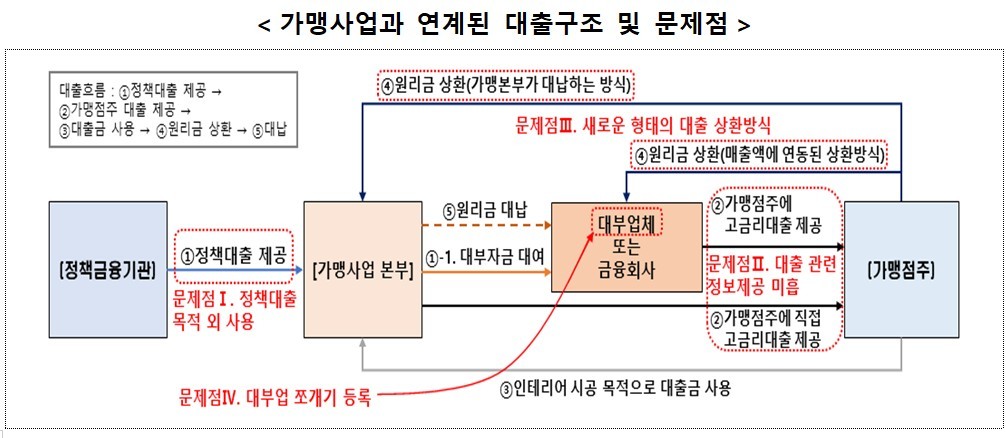
To fundamentally prevent franchisees from failing to repay their loans on time and incurring delinquency, Miryundang employed a distorted recovery method that is hard to understand by common sense. Every time franchisees purchased raw meat, which is essential for store operations, at an average of 120,000 won per box, they were forced to pay an additional 36,000 won as loan principal and interest repayment. From the franchisees’ perspective, it was a structure where the loan amount was automatically deducted every time they had no choice but to buy meat to continue their business when their meat supply ran out. This method effectively turned the headquarters into a debt collection window that aggressively collected money on behalf of the shareholders’ family lending companies. Franchisees suffered the double pain of having their principal and interest forcibly deducted every time they bought meat, even while struggling to survive by saving on daily store operating costs and labor costs. Through this unreasonable transaction structure, the headquarters completely blocked the risk of default for the lending companies and thoroughly protected the interests of the shareholders’ family.
The headquarters used a distorted method of forcibly including and recovering loan principal and interest every time franchisees purchased raw meat.
4. Deceiving Prospective Franchisees with Information Concealment and False Reporting
During the franchise contract process, Miryundang thoroughly concealed the special relationship with the lending companies, specific loan conditions, and the fact that the main contract and the lending contract were closely linked from prospective entrepreneurs. In the credit provision and brokerage section of the Information Disclosure Document, which is mandatory to provide under the Franchise Business Act, they falsely stated that there were no applicable items, completely concealing the fact of the lending transactions. Prospective franchisees stamped their seals on the contracts believing that the headquarters was purely providing startup support, but in reality, they were stepping into the shareholders’ family’s loan shark business. Of the total 14.8 billion won fine imposed by the FTC this time, a massive 4.4 billion won was levied specifically for this false information provision and deceptive conduct. The headquarters showed meticulousness in manipulating contract clauses to bind franchisees, despite knowing in advance that their pursuit of private interests would be legally problematic.
The headquarters falsely reported the relationship with lending companies in the Information Disclosure Document and thoroughly concealed the fact of loan linkage, deceiving prospective franchisees.
5. The FTC’s Hammer and the Franchisor’s Responsibility

The FTC’s recent sanction is significant in that it put a stop to the practice of franchisors packaging themselves as having a wonderful startup support system on the surface while exploiting the lending business for the private interests of the shareholders’ family behind the scenes. In particular, it clearly confirmed how important the facts of lending conditions and special relationships linked to franchise contracts are for the rational decision-making of prospective entrepreneurs. The fine of over 14.8 billion won imposed this time and the referral of the corporation and the chairman to the prosecution are expected to have a significant warning effect on other franchise industries in the future. The fair trade authority plans to continue to track and strictly take action against behaviors that unfairly support affiliates or provide false and deceptive information to franchisees in livelihood areas directly related to the people’s economy. Many small business owners and citizens earnestly hope that the unfair practice of exploiting franchisees’ sweat and blood by abusing the superior position of the franchisor will be completely eradicated through this opportunity.
The FTC took strict action, including heavy fines and prosecution referrals, against the franchisor’s unfair pursuit of private interests and deceptive information provision.
6. Tasks for a Healthy Franchise Ecosystem
This Miryun Jinssa Galbi incident blatantly showed how severe the unfair trade practices and moral hazard of the shareholders’ family have become in our society. Franchisors and franchisees should be partners who grow together in mutual benefit, but some companies have treated franchisees merely as tools for profit generation. The government and judicial authorities should conduct a thorough investigation across the entire franchise industry to check for similar illegal loans or unfair support behaviors, using this incident as an opportunity. Prospective franchisees also need the wisdom and caution to carefully examine the governance structure between the headquarters and its affiliates, as well as any hidden contract terms, before signing a contract. I sincerely hope that a transparent and fair trading order will be established so that no more small business owners have to shed tears. We also ask our readers to pay close attention to franchise startup information in their surroundings and raise their voices against unfair practices.
Continuous monitoring and effort are needed to eradicate the chronic unfair practices in the franchise industry and create a transparent structure of mutual benefit.
Frequently Asked Questions
=