Pension savings accounts are an essential financial product that office workers must join every year during the year-end tax settlement season to secure a generous 13th-month salary. While the immediate cash outlay might feel like a loss, the tax deduction benefits are so powerful that they significantly contribute to long-term asset formation. Recently, various financial companies have been running events for their customers, and with the introduction of AI-based asset management technology, account management has become much easier. Many people often find themselves struggling with how to structure their funds or exchange-traded funds (ETFs) to maximize their tax deduction limits. In this article, we will cover everything from the basic concepts of pension savings accounts to effective asset allocation strategies and practical tips for saving on taxes. We will walk you through realistic methods that you can easily implement in your daily life, so please stay with us until the end.
=
How to Prepare for Retirement Using Pension Savings Account Tax Deduction Limits and Tips
1. Basic Concepts of Pension Savings Accounts and Tax Deduction Benefits

Pension savings accounts are a representative tax-saving product available to all citizens of South Korea, offering the advantage of simultaneously preparing for retirement and reducing taxes. Since you can receive a tax deduction at a certain rate on the amount deposited each year, it has already become a mandatory item for office workers. The deduction rate varies depending on total income, and maximizing contributions within the annual limit is the fastest way to maximize your year-end tax refund. If you have heard a colleague say they got hundreds of thousands of won back last year through pension savings, it is thanks to this tax deduction magic. Beyond simply saving on taxes, you can also enjoy the benefit of tax deferral, where taxes on interest or dividend income generated while managing products within the account are not deducted immediately but deferred until you receive the pension. Because deferred taxes grow with the power of compound interest, they make a significant difference in asset growth over time. For example, if you consistently deposit a fixed amount each year and use it to buy dividend-paying ETFs, you can enjoy full compound interest effects without tax deductions during the reinvestment process. Therefore, from young professionals just starting their careers to middle-aged and older individuals approaching retirement, everyone should actively utilize this account to avoid regret later.
Pension savings accounts are an essential financial product that helps efficiently accumulate retirement funds through powerful tax deductions and tax deferral benefits.
2. Differences from and Linked Utilization of Personal Pension Accounts

Personal pension accounts, which are often mentioned alongside pension savings accounts, have similar characteristics but differ in eligibility and specific regulations. While pension savings accounts can be opened by housewives or students without income, personal pension accounts are primarily for workers or business owners with income, making the eligibility criteria relatively stricter. Since you can receive tax deductions up to the maximum annual contribution limit when combining both accounts, office workers typically adopt a strategy of depositing into pension savings accounts first and then contributing to personal pension accounts if there is remaining limit. In reality, Mr. Kim, an office worker, spends busy times checking the contribution balances of both accounts and filling in the shortfall every time the year-end tax settlement deadline approaches. Personal pension accounts have a mandatory allocation for safe assets, requiring a certain percentage of the total accumulated funds to be invested in deposits or bond-type products. In contrast, pension savings accounts offer relatively higher autonomy in asset management, allowing for a higher proportion of equity-type ETFs. Therefore, it is wise to adjust the ratio between the two accounts appropriately, considering your investment style and retirement timing.
Managing pension savings accounts and personal pension accounts together allows you to maximize tax deduction limits and increase investment autonomy.
3. Organizing and Managing ETFs Within the Account
If you indiscriminately buy various ETFs within your account, managing the portfolio later becomes very difficult, and managing returns can easily be neglected. In fact, one investor held more than 16 ETFs across their pension savings and personal pension accounts and had to work hard to organize them later. If there are too many products with overlapping characteristics, it becomes difficult to respond when the market declines, so it is essential to aggressively reduce the number of holdings by half or more. Unlike general accounts, no immediate tax is imposed on capital gains when selling and buying products within the account. Utilizing this point, it is wise to aggressively clean up products with low returns or overlapping strategies and compress the portfolio to focus on core stocks with excellent dividend tendencies. Repeating the process of using monthly dividends to buy more high-quality ETFs makes the account’s structure much stronger over time. Regularly checking and pruning unnecessary stocks to improve asset efficiency is the key to successful retirement investment.
To manage efficiently, you must organize overlapping stocks among the numerous ETFs in your pension account and compress the portfolio to focus on core high-quality stocks.
4. Pension Receiving Age, Conditions, and Tax Benefits
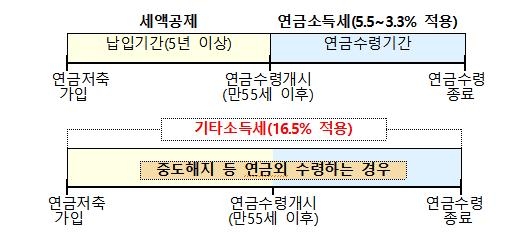
When the time comes to finally use the retirement funds you have diligently saved, you must remember that the pension income tax rate varies depending on your age. The general requirement for starting pension payments is being at least 55 years old, and the account must have been open for at least five years to receive funds smoothly. The older you are when you start receiving payments, the lower the tax rate applied by the state, so if you have financial flexibility, adjusting the timing of receipt is a good tax-saving strategy. Including local income tax, a relatively low tax rate applies between the ages of 55 and 69, and the rate becomes even lower as you get older. It is often observed that acquaintances who did not know this system well withdrew a large sum of money all at once right after retirement, only to face a massive tax bill and regret it later. If the annual receipt amount exceeds a certain limit, it may be included in comprehensive income tax, so you must plan to distribute the amount received each year appropriately. Thoroughly designing the receipt period to minimize taxes and maintain a stable cash flow after retirement is the completion of retirement planning.
Pension receipts are possible after age 55 and five years have passed, and since lower tax rates apply as you age, distributing the receipt period is advantageous.
5. Utilizing Digital Asset Management Technology and Latest Financial Services
Recently, the financial sector has been rapidly introducing AI-based fund management services and customized tax-saving guide systems. An environment has been created where you can diagnose your asset status and check for unnecessarily neglected products through smartphone apps without visiting a bank branch in person. However, note that products within accounts eligible for certain tax benefits may be excluded from automatic checks, so you must examine them carefully. Mr. Park, an office worker, recently used a newly released AI fund management feature to grasp his investment portfolio at a glance and receive appropriate advice. By actively utilizing such digital-based asset management tools, you can easily check your retirement assets and take necessary actions even in a busy daily life. The fun of taking advantage of various events and discount benefits offered by financial companies is also a small but enjoyable bonus. As technology continues to advance, it is expected that individual investors will be able to employ sophisticated asset allocation strategies comparable to those of experts.
Utilizing the latest AI-based asset management services allows you to manage your pension account conveniently and efficiently even in a busy daily life.
6. Practical Action Guidelines for Successful Retirement Preparation
To apply the various advantages and utilization methods of pension savings accounts discussed so far to real life, a concrete action plan is most important. Rather than showing fleeting interest only during the year-end tax settlement season, it is desirable to set up automatic deductions of a fixed amount on your payday regularly. The attitude of patiently accumulating high-quality ETFs without being swayed by every fluctuation in asset prices is the foundation for long-term investment success. Retirement experts unanimously state that the importance of tax benefits will grow further in the future, and the quality of life in retirement will differ vastly between those who are prepared and those who are not. Why not turn on your smartphone right now, check your pension account balance, and verify if your contribution for this month is sufficient? Small actions will eventually gift you a prosperous and leisurely retirement life. If you discard impatience and consistently accumulate, anyone can complete a solid retirement asset.
The most important thing is to check and act on your pension account immediately based on consistent automatic contributions and a long-term investment mindset.
Frequently Asked Questions
=