The most reliable sources for real-time exchange rate checks right now are Naver’s currency page and the official apps of various financial institutions. As of September 30, 2026, it is crucial to remember that the volatility of the KRW/USD exchange rate is significantly higher than in previous years due to deepening global economic instability. The era of simply checking numbers is over; we are now in an era where you must read supply-and-demand-driven trends. This article covers everything from free lookup tools available to the general public to the chart analysis techniques used by professionals. In particular, we will meticulously go through practical tips needed for the timing of overseas remittances and KRW currency exchanges. If you read the following content in order, you will develop the ability to independently grasp the flow of exchange rate fluctuations.
=
The Ultimate Guide to Checking Exchange Rates: From Real-Time Quotes to Expert Tips
1. Exchange Rate Lookup Basics: Where and What Data Should You Check?
If you type “KRW/USD exchange rate” into the Google search bar, Naver and major portal sites display only real-time connected quotes. However, this screen shows only the sell and buy prices and the confirmed price at a specific reference time, making it difficult to know detailed supply and demand trends. I have never made major decisions based solely on these basic quotes, because the actual execution price for cashing out or remittances can differ slightly from what is displayed. Differences arise between institutions, so acting based solely on the numbers on the first page of search results can lead to minor losses. For example, it is common for the posted exchange rates of Bank A and Bank B to differ by 1 to 2 won at the same time, and this difference can amount to several thousand won when sending $10,000. Therefore, you should develop the habit of cross-checking prices from at least two sources when looking up rates. Choosing the optimal channel suitable for your purpose can be considered the first hurdle.
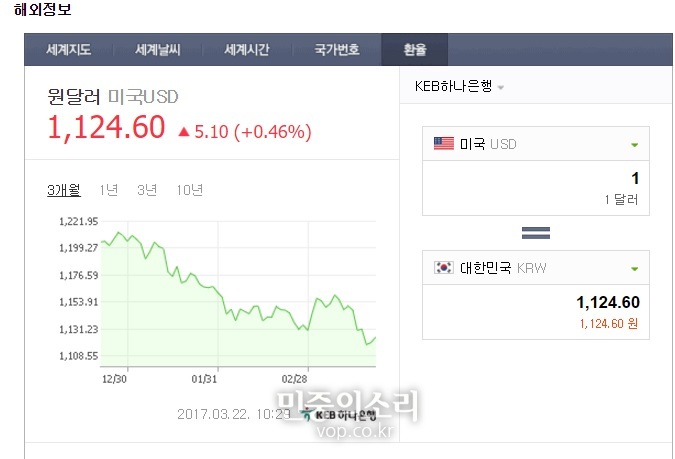
The free Naver exchange rate page offers the most accessible interface for beginners. It presents only simple line graphs and numbers without complex charts or technical jargon, making it easy to grasp visually. However, keep in mind that this page reflects the official posted standards of the central bank, so there may be a discrepancy with actual market trading prices. You should not force this figure when you encounter an urgent situation requiring an emergency remittance while abroad or traveling. Before actually executing an overseas remittance, you must always reconfirm the real-time executable quote through the bank’s customer center or personal banking app. Once, while traveling, I applied for a remittance based only on the Naver exchange rate, but the actual processing rate was applied 5 won higher, resulting in a deduction larger than the fee I had estimated. This experiential lesson is essential for understanding the link between simple number lookups and the actual trading environment. Use free lookup tools for reference only, and always perform mandatory re-verification at the execution stage.
Free portal quotes are for reference only; reconfirming the real-time execution price on the bank’s app before actual remittance is essential.
2. Advanced Lookup Tools and Supply-Demand Analysis Methods Used by Experts

To read market sentiment beyond simple quote checking, you must simultaneously consult public statistics from the International Monetary Fund (IMF) and official data from central banks of various countries. As mentioned in the news, you can predict the direction of exchange rates more accurately by looking at the monthly and quarterly trends in foreign exchange reserves alongside daily fluctuations. By comparing the value of the won on an index basis using the IMF database or the Bank of Korea’s Economic Statistics Information System (ESIS), you can understand competitiveness based on the entire basket of currencies, not just against the dollar. Such macroeconomic data serves as a much more useful indicator for long-term exchange rate forecasting than the flow of short-term speculative funds. I recommend that even individual investors develop the habit of scanning this macro data once a quarter. You must understand the background behind the numbers, even if the figures remain the same, to avoid being swayed by trivial rumors.
When analyzing charts, examining candlestick patterns and trading volume together is the standard process. If trading volume does not accompany a sharp rise in prices, it is highly likely to be a false rally; conversely, if trading volume explodes amid extreme selling pressure, it may be a signal of a bottom. When I usually open daily charts provided by financial information sites, I focus on where the price range is tilting, centered on moving averages and Bollinger Bands. During periods when global events occur consecutively, as is the case at the end of September, the sensitivity of these technical indicators increases compared to usual. Additionally, volatility in the Asian time zone before and after the New York Stock Exchange opening must be included in your checklist. This is because it is common for the exchange rate to appear fixed during the Seoul daytime but fluctuate sharply immediately after the US market opens. To avoid missing supply and demand movements during this time, multi-timeframe lookups are recommended.
Combine IMF macro data with technical chart analysis to read the supply-demand flow beyond simple quotes.
3. Practical Management Strategies to Reduce Exchange Rate Volatility

To defend against exchange losses when investing in overseas assets, an asset allocation strategy that manages exchange rate risk in advance is necessary. When concentrating investments in US stocks or overseas bonds, exchange rate volatility risk is inherent, so aim for a hedging effect by mixing in some KRW-denominated products. Asset allocation simulation services provided by securities firms like Shinhan Investment Securities are valuable tools that calculate these complex factors. In particular, when holding dividend growth stocks or covered call ETFs, the compounding effect of dividend reinvestment combines with exchange rate fluctuations, so a long-term perspective must be maintained. It is also worth considering combining tax planning with methods that reduce exchange rate risk while enjoying the tax-deferral effect through pension savings or IRP accounts. To avoid being overly elated or distressed by short-term exchange rate spikes and drops, you must have clear criteria regarding your initial investment purpose.
Actively utilizing the target price notification feature for currency exchange in smartphone banking apps can prevent impulsive exchanges at expensive times. To receive push notifications when a specific price you have set in advance is reached, you must activate the exchange rate clause in the ‘Notification Settings’ menu within the app. I set a target hoping for the rate to drop to the 1,300 won range and decide whether to sell each time I receive a notification during my daily work. In this process, it is important to focus only on established principles and data-based verification, rather than rumors from acquaintances on SNS. To reduce emotional involvement, it is also a good tip to wait for a 10-minute cooling-off period before acting after receiving a notification. These small habits accumulate to complete a broad framework of asset management that reduces unreasonable risks.
Use asset allocation simulations and app notification features to time currency exchanges based on principles rather than emotions.
4. Corporate Fund Management Solutions and Exchange Rate Lookup Integration
For mid-sized companies, company-wide fund flow monitoring becomes a core task on a different level from individual exchange rate lookups. Solutions like WeCMS supplied by Webcash Vietnam allow complex business processes to be handled in a single place by integrating with local banks, the National Tax Service, and accounting systems. These enterprise-grade fund management tools allow real-time tracking of fund flows while managing sales and purchases, preventing cash shortage situations. In particular, the integration of corporate card usage details and electronic tax invoice lookup functions has proven to significantly shorten the time previously spent on manual tasks. Reports from adopting companies like Hansung Bolt show that the time to process daily fund reports has been shortened to under 10 minutes, succinctly demonstrating the effects of digital transformation. When exchange rate and transaction lookup functions are connected to the ERP, actual investments are reflected in the dashboard that management views every morning.
The exchange rate lookup data built into the system can be used not only for providing simple quotes but also for modeling future quotes based on expected future settlement dates. From the perspective of strengthening internal controls, minimizing the time difference between the approval process and the actual execution of foreign exchange transactions is also an important point. The difference in accuracy between cases where one employee records manually and cases where a computerized system records automatically can lead to massive errors. For global companies handling hundreds of foreign exchange transactions annually, such an integrated lookup system has become essential infrastructure. Beyond simply knowing the current quote, you also gain the ancillary benefit of strengthening internal accounting verification by comparing with past data. Weaving small pieces of information into a single flow is the essence of such professional solutions.
ERP-integrated fund management solutions improve real-time data accuracy, structurally reducing corporate foreign exchange transaction risks.
5. Understanding the Impact of Government Policies and Market Stabilization Measures
As the KRW/USD exchange rate surged this year, the government took market stabilization measures using foreign exchange reserves, which has been cited as a factor for the exchange rate decline. The Bank of Korea emphasized that if you are curious about such rankings or specific figures, you can look them up through public materials such as IMF statistics or central bank data from various countries. The statement that there is no reason for non-disclosure is interpreted as an intention to increase transparency and provide market clarity. The clearer communication from official institutions acts as a psychological stabilizer that alleviates investor tension, especially when market uncertainty is high. Rather than ignoring these macroeconomic news headlines, we must cultivate the ability to find out the actual figures moving behind them. Market reactions immediately after policy announcements often appear extreme in the short term but frequently return to fundamentals.
Publicly disclosed information, such as the results of emergency meetings by the Blue House or government ministries, becomes the clearest indicator of changes in the financial market atmosphere over the coming weeks. In particular, import and export companies frequently need to adjust the timing of forward exchange sales or purchases in line with these policy signals. This also indirectly affects individual investors, as the outflow of foreign funds from the domestic stock market is directly linked to the exchange rate. You must understand the characteristic of the won’s value reacting sensitively to political events or changes in international conflict structures to remain calm even in a crash market. I recommend changing your daily news consumption habits to pay more attention to original materials or official press releases rather than analysis articles from economic media. Direct verification from reliable information sources can be the strongest defense in the digital age.
Directly check official public statistics from the government and central banks to accurately read the gap between policy announcements and market reactions.
6. Future Outlook and Actions to Take Immediately
The global economic environment after September 2026 is expected to continue a phase where uncertainty persists. The spread of the artificial intelligence industry and the resulting changes in energy costs, along with potential shifts in the monetary policy direction of major central banks, are likely to intertwine. These complex variables will create multi-layered waves in exchange rates, and explaining them with a single factor will have its limits. Therefore, I am confident that making regular data lookups and cross-verification from diverse sources a habit is the best defensive strategy. In particular, those with plans for overseas study or long-term residence should grasp the remittance fee structures and exchange rate spread structures of various banks in advance. Constructing a portfolio that simulates future currency appreciation or depreciation scenarios to prepare for the worst-case scenario significantly reduces psychological burden. Try creating a routine of scanning key macroeconomic indicators and real-time quotes for just 5 minutes every morning.
You can appropriately combine and use the Naver, IMF statistics, professional chart tools, and corporate solutions introduced today according to your respective purposes. What is important is not which specific tool you use, but what judgments you make based on that data. Prioritize drawing a safe line that fits your finances rather than reckless early purchases or indiscriminate low-price accumulation. I strongly recommend becoming a principled person who stays true to the basics while utilizing digital tools. Whenever you have questions, please reopen comprehensive summary materials like this one and use them as a checklist. I sincerely hope this article serves as a reliable compass on your journey to wise asset management. After all, small interest and consistent learning are the most certain insurance against major disasters.
A daily routine combining real-time quote lookups with macroeconomic indicator checks is the best defense for assets in uncertain times.
Frequently Asked Questions
=