How you receive and manage your retirement pension can result in a difference of tens of millions of won in your actual take-home amount. In reality, even among those who receive the same severance pay, some end up paying taxes exceeding 5 million won, while others pay significantly less and continue to grow their assets. Recently, as the total scale of domestic retirement pension reserves has surpassed 500 trillion won, many employees are personally feeling the importance of managing their post-retirement assets. However, when they actually open their accounts, the majority find that their funds are stuck in low-interest deposit products or feel overwhelmed by not knowing how to invest. In this article, we will thoroughly examine the differences between Defined Contribution (DC) and Individual Pension (IRP) accounts, tax-saving methods, and successful asset allocation strategies. We will now organize the complex topic of post-retirement asset management in an easy and clear manner.
=
Smart IRP Management and Tax-Saving Strategies for Your Retirement Pension
1. Understanding the Basic Structure of Retirement Pensions and Individual Pensions
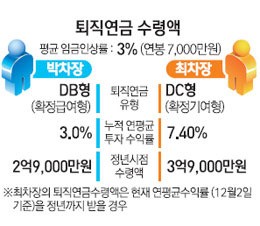
The retirement assets we accumulate during our working lives are broadly divided into three pillars, with the retirement pension being the core. A stable retirement life is only possible when the retirement benefits accumulated by the company and the pensions prepared by individuals in harmony with the solid foundation of the National Pension. The first step is to accurately understand the difference between Defined Benefit (DB) plans, which are managed by the company, and Defined Contribution (DC) plans, where employees must directly issue investment instructions. The landscape of asset management has completely changed with the addition of Individual Retirement Pension (IRP) accounts, where individuals can make additional contributions or consolidate funds received when changing jobs. While many people view these accounts as simply dormant money, they are actually the most powerful tool for bridging the gap until the National Pension begins after retirement. Therefore, it is essential to first check what type of account you currently have and understand the characteristics of each product. IRP accounts also carry the nature of the third pillar, individual pensions, making them an essential financial product for employees looking to secure year-end tax deductions. Unlike general stock accounts, these accounts are subject to the strict protection and supervision of the Act on the Guarantee of Workers’ Retirement Benefits, offering significant advantages in terms of safety. They are often managed through dedicated independent menus, providing a favorable environment for systematic asset diversification. Ultimately, only those who properly understand and utilize these structural characteristics can become winners in the retirement market.
You must understand the basic structure of retirement and individual pension accounts and the characteristics of each product to properly start your retirement preparation.
2. Legal Tax-Saving Tips to Avoid a Tax Bomb
The applicable tax rate and the actual amount received differ vastly depending on whether you receive your severance pay as a lump sum or as a pension. In fact, it is not uncommon to see cases where people who received the same lump sum face tax differences of tens of millions of won due to the difference in receipt methods. The most certain and proven way to reduce taxes is to transfer your severance pay to an Individual Pension account and receive it in installments within the pension receipt limit. The government provides a benefit of reducing retirement income tax by up to 30% when received as a pension to encourage stable post-retirement lives for workers. In addition, you can receive a considerable refund during year-end tax settlement for additional contributions made to fill the tax deduction limit, yielding a double benefit. Occasionally, people withdraw their severance pay immediately due to a need for a lump sum, but this can be a regrettable choice from a long-term perspective. You must remember that minimizing hidden costs like taxes is the shortcut to rapidly growing your assets. You should consult with experts or carefully consider on your own the options provided by financial institutions to adjust pension receipt cycles and maximize tax benefits. A little interest and knowledge about taxes can serve as a sturdy shield protecting valuable assets equivalent to several years’ worth of salary.
You can save tens of millions of won in taxes by receiving your severance pay as a pension rather than a lump sum and actively utilizing related tax benefits.
3. Managing Defined Contribution Accounts and Practical Investment Strategies

If you hold a Defined Contribution (DC) account where you must build your own portfolio, leaving it unmanaged is a shortcut to eroding your asset value. Many employees leave their money in deposit products, passively accepting low-interest situations that cannot even keep up with inflation. A strategy is needed to secure some stable assets while increasing returns by appropriately mixing and buying hybrid products including high-dividend stocks or bond assets. In fact, consistently buying quality assets with a fixed amount weekly or monthly is an excellent investment habit for overcoming market volatility. Beginners can manage their portfolios without difficulty by utilizing the various indicators and asset allocation tools provided by securities firms or financial platforms. Recently, with the introduction of asset management solutions incorporating robo-advisors or artificial intelligence technology, more precise investment management has become possible. When market conditions change rapidly, referring to expert analyses or utilizing automatic rebalancing features allows you to pursue returns consistently without being swayed by emotions. Rather than blindly chasing high returns, you should maintain an appropriate ratio of risky and safe assets considering your investment style and retirement timing. Do not forget that a prosperous life ten or twenty years from now is completed by the accumulation of small investment decisions made today.
In DC accounts, you should diversify investments into hybrid products or bonds rather than staying only in deposits to pursue both returns and stability.
4. Designing a Lifetime Pension to Bridge the National Pension Gap
Even after leaving a beloved job upon retirement, there is typically a long gap of about ten years until the National Pension begins. How you endure this period determines the quality of your entire retirement life, so thorough preparation combining pension savings and retirement pensions is essential. Relying solely on the pension paid by the government can lead to significant economic damage during the period of income interruption. Therefore, you must use your Individual Pension account to adjust the receipt timing in advance and build a system that generates a stable monthly cash flow. You can enjoy your retirement with peace of mind and flexibly handle unexpected expenses only if there is a fixed amount hitting your account every month after retirement. Looking around, we often see people who regret their vague thinking about life after retirement when it is too late. Even if that period feels far away now, it is advantageous to start contributing to and investing in your pension account as soon as possible to enjoy the magic of compound interest. Even if you do not fill the annual contribution limit, you need to make the effort to fill your balance using the additional contribution feature whenever you have some leeway. Only those who have prepared consistently since their youth can maintain a stable standard of living after retirement that is no less than during their working years.
You must design a multi-layered cash flow through pension accounts to prepare for the gap until the National Pension begins after retirement.
5. Smart Asset Management in the Digital Finance Era
The financial market is evolving day by day, and securities firms are introducing innovative technologies to manage customers’ retirement assets more efficiently. Comprehensive digital services covering asset management and retirement pensions have become the mainstream, moving away from the past focus on simple entrusted trading. An environment has been created where you can check your account’s return rate in real time and easily modify your portfolio with just a smartphone app. With the generalization of AI-based financial services, we have entered an era where it is easy to obtain customized investment advice that perfectly matches individual preferences. If you fail to ride this wave of change, you may fall behind others, paying unnecessary fees or missing good opportunities. Features that allow you to transfer and manage accounts non-face-to-face without complex paperwork or branch visits provide great convenience for busy employees. You need the wisdom to carefully compare the events or fee discounts provided by various financial companies and choose the platform most advantageous to you. Think of it as gaining one more weapon to protect and grow your assets as you become more accustomed to the digital environment. The ability to actively utilize these financial technologies is an essential competitive advantage for surviving in the coming super-aged society.
You should actively utilize the latest digital financial services and AI-based asset management tools to manage your account efficiently.
6. Practical Action Guidelines for a Successful Retirement
Based on the content reviewed so far, you should start by opening your retirement pension account today and checking its status. It is most important to make a realistic investment plan suitable for your situation and consistently execute it, rather than just envying others’ success stories. There is no perfect timing in the world, so remember that this very moment is the fastest and most appropriate time to invest. The diligence of periodically reviewing your account and slightly adjusting your portfolio according to market conditions will eventually return as massive assets. Please remember that retirement does not come out of nowhere; it is the result of the choices we make every day. Taking this article as a starting point, I hope you will build a sturdy defense for your old age and take the first step toward a leisurely future.
Do not procrastinate; check your account immediately and consistently manage your pension assets from a long-term perspective. This execution determines success.
Frequently Asked Questions
=