Even if you receive the same severance pay, the difference in how you manage and withdraw it can result in tax savings ranging from several million to tens of millions of won. The IRP (Individual Retirement Pension) account has become an essential financial product for employees, serving as a key tool for smart tax savings and retirement preparation. Recently, an environment has been created where assets can be managed more easily using AI investment advisory solutions, not only at securities firms and banks but also on various financial platforms. Many people have heard stories from their surroundings about getting tax refunds through pension accounts, but they hesitate because they do not know how to utilize it effectively for their own situation. In this article, we will clearly explain the basic concepts of the IRP, tax deduction benefits, specific withdrawal methods, and management tips. We will examine these in detail so that everyone, from young professionals opening their first account to middle-aged and senior individuals approaching retirement, can receive practical help.
=
Saving Taxes for Retirement: IRP Tax Deductions and Payout Methods
1. What is an IRP (Individual Retirement Pension)?
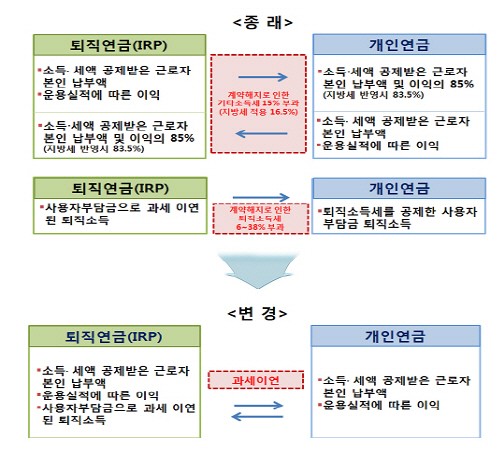
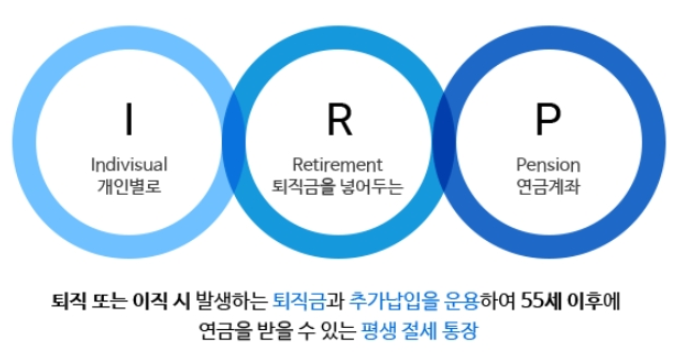
An Individual Retirement Pension (IRP) is a personal account that allows workers to pool and manage their severance pay received when changing jobs or retiring, along with any additional funds they contribute directly. In the past, severance pay would simply accumulate at a financial institution designated by the company, but now individuals have the initiative to invest in a variety of products. In particular, the scope of this system has expanded to allow almost all economically active individuals with income, including self-employed workers and public officials, to participate, not just regular employees. If you spend the lump sum of severance pay immediately as living expenses, you may face significant financial difficulties in your old age; this system serves to protect that capital safely. A major advantage of transferring your severance pay to this account is that it defers the severance income tax you would otherwise have to pay immediately, allowing you to grow the full amount, including the tax portion. As retirement approaches, creating a systematic cash flow becomes crucial, and this account serves as a sturdy pillar.
Many people vaguely worry about life after retirement and miss the opportunity, but it is important to maintain consistent interest from a young age. I have seen many acquaintances who regret spending their severance pay on living expenses every time they changed jobs. On the other hand, those who consistently deposit money into their accounts enjoy the joy of seeing their assets grow over time due to the power of compound interest. When you leave a company, the accumulated severance pay is naturally transferred to an IRP account in your personal name. At this point, the attitude of not leaving it untouched but carefully considering which products to invest in and how to manage them can completely change the final size of your assets.
The IRP is an essential retirement preparation account that allows you to manage your severance pay and additional contributions yourself while reducing your tax burden.
2. A Complete Guide to Tax Deduction Benefits and Limits

Every year during the year-end tax settlement season, the biggest concern for employees is undoubtedly how much tax they can get back. If you directly deposit money into an IRP account, you can enjoy significant tax deduction benefits within the annual maximum contribution limit. Combined with pension savings accounts, you can receive tax deductions on contributions of up to 9 million won annually, resulting in a substantial refund. Employees with a total annual income of 55 million won or less can receive a refund of 16.5% of their contributions, while those with higher incomes can still benefit from a high refund rate of 13.2%. For example, if you contribute the maximum amount for the year, you effectively get back a considerable sum of up to 1.485 million won in taxes. This benefit is a legitimate tax-saving investment method encouraged by the state, going beyond simple savings, so employees should never miss out on it.
In the early stages of your career, you may not fully appreciate the value of year-end tax refunds, but as your years of service increase, you will keenly feel the importance of tax refunds. It would be frustrating if your colleagues receive refunds of several hundred thousand won each year while you do not receive any benefits. By splitting the amount into small monthly deposits via automatic transfer, you can reduce the financial burden and naturally complete your year-end tax settlement preparation at the same time. However, be careful: if you terminate the account midway because you suddenly need money, you may have to return all the tax deduction benefits you have received so far. Therefore, it is a wise financial strategy to plan your contributions based on surplus funds that you do not need immediately.
Contributing up to 9 million won annually can yield tax deductions of up to 16.5%, making it an essential tool for tax savings for employees.
3. The 30% Safe Asset Rule and Investment Methods
Since the retirement pension account holds valuable assets for your old age, institutional safeguards are in place to defend against principal loss. You can invest up to 70% of your total accumulated funds in stocks or other high-volatility risky assets, while the remaining 30% must be allocated to safe assets. While many investors find this regulation restrictive, you can balance profitability and stability by utilizing bond-type products or bond hybrid exchange-traded funds (ETFs). Recently, securities firms and asset management companies have introduced AI-based robo-advisor solutions that automatically adjust the ratio of safe and risky assets according to market conditions. An era has arrived where even beginner investors can build an expert-level asset allocation portfolio without having to analyze complex indicators.
It is common to see people around you anxiously wondering which stocks to buy whenever the stock market fluctuates. On the other hand, those who have appropriately mixed high-quality bonds and equity products in their pension accounts from a long-term perspective tend to live their daily lives relatively peacefully. To meet the mandatory 30% safe asset ratio, choosing long-term bond products may be more advantageous in terms of yield than simply opening deposits. By using non-face-to-face account opening services provided by various financial institutions, you can save on fees and easily select products that suit you. The small habit of regularly checking your account to ensure your asset allocation is maintained can significantly change your balance at retirement.
The mandatory 30% safe asset rule can be wisely overcome by utilizing bond-type products or AI solutions.
4. The Difference Between Lump-Sum and Pension Payouts for Severance Pay
When you leave a company and receive a lump sum, the first major dilemma is whether to receive it as a lump sum or split it into a pension. Receiving the severance pay all at once may make you feel secure with a large amount in your bank account, but you will have to pay the accumulated taxes all at once, potentially resulting in a “tax bomb.” On the other hand, if you transfer the severance pay directly to your IRP account and receive it in pension form after the age of 55, you can receive a tax reduction of up to 30% to 40% on the severance income tax. Since you can receive a fixed amount monthly, similar to living expenses, your post-retirement fund management becomes much more systematic and stable. Beyond simply saving on taxes, the pension payout method is far more advantageous in that it creates a fixed cash flow for your old age.
One of the biggest regrets among retired seniors is receiving their severance pay as a lump sum and investing it in a house or business, only to fail. If you have millions of won deducted in taxes and fail to manage the remaining money properly, your retirement life can quickly become bleak. Looking at the tax calculation structure, the tax rate applied when receiving the funds as a pension over several years is much lower than when receiving it as a lump sum. By saving the valuable money that would have gone to taxes, you can use it directly for your retirement living expenses, making the long-term benefit incomparably large. Therefore, unless there is a special situation where you urgently need the lump sum, it is wise to plan to receive it in pension form.
Receiving funds as a pension rather than a lump sum allows for a significant reduction in severance income tax and creates a stable cash flow.
5. Comparing Fees by Institution and Non-Face-to-Face Account Opening
Where to open your IRP account is a hidden variable that can significantly impact your returns. Various financial institutions, including banks, securities firms, and insurance companies, handle these accounts, but the asset management fees and operational management fees vary greatly from one institution to another. Recently, many securities firms are offering exceptional benefits, such as full fee waivers, to attract customers who open accounts non-face-to-face. Given that these accounts are meant to be managed over several decades, even small annual fees can amount to a significant sum when considering the effect of compound interest. Therefore, even if it seems troublesome, you need the wisdom to carefully compare the conditions of multiple financial institutions and choose the most advantageous one.
I often hear stories from people around me who visited bank branches in person and have been paying fees consistently every year as a result. It is a pity that you can easily open a non-face-to-face account from home with just a few taps on your smartphone and even take advantage of fee waivers. There are also slight differences in the types of products and specific lineups available at each financial institution, so you need to understand your own investment style. If you want to actively invest in equity products or various exchange-traded funds, a securities firm account is a much better choice. On the other hand, if complex investing is difficult and you want to protect your assets primarily through safe deposits, commercial banks or insurance companies can also be safe options.
It is important to waive fees through non-face-to-face account opening and choose a financial institution that matches your investment style.
6. Pension Asset Management Strategies That Change Your Retirement
Retirement does not come out of nowhere; it is largely the result of careful preparation started in your younger years. The IRP is not just a tool for saving taxes but the most powerful weapon in determining your economic freedom in the latter half of your life. A consistent attitude of making regular monthly contributions, not being shaken by market volatility, and managing assets from a long-term perspective creates a successful retirement. While the monthly contributions may feel like a burden right now, the magic of compound interest will show surprising results over time. Do not be swayed by short-term investment trends around you; instead, establish your own clear principles for pension asset management. I hope you will turn on your smartphone today, check the status of your pension account, and take the first step toward a secure future.
To live a comfortable and abundant life after retirement, small actions and attention in the present moment are most precious. When you are young, words like retirement and pension may feel unrelated to you, but time passes much faster than you think. It is much wiser to open an account and set up automatic transfers now than to regret it when you are in your fifties and retirement is just around the corner. If you carefully take advantage of the tax deduction benefits and tax-saving effects provided by the state while steadily building your retirement funds, anyone can become a pension millionaire. You must also maintain the flexibility to adjust your investment strategy to what is most advantageous for you, keeping up with changes in the financial market. I encourage you to complete a happy and stable retirement beautifully, together with a solid pension account.
The habit of consistently contributing and managing from a long-term perspective completes a prosperous and stable retirement life.
Frequently Asked Questions
=