Thoroughly comparing medical expense insurance is essential to save on fixed monthly expenses while ensuring full coverage for necessary medical costs. Many people who enrolled in older products are finding their premiums rising to unmanageable levels each year, leading them to cancel their policies and switch to new ones without hesitation. However, indiscriminate cancellation and switching can actually be detrimental, so it is crucial to first review the coverage scope and out-of-pocket costs of your current contract. Rather than blindly changing products based on hearsay from acquaintances, it is wiser to calmly assess your own health status and frequency of hospital visits. In this article, we will explain in detail, in an easy-to-understand manner, the differences between generations of medical expense insurance and the correct methods for comparison.
=
Essential Guide to Comparing Medical Expense Insurance: How to Make a Wise Choice from 1st Generation to the Latest Products
1. Understanding the Structural Differences Between Generations of Medical Expense Insurance
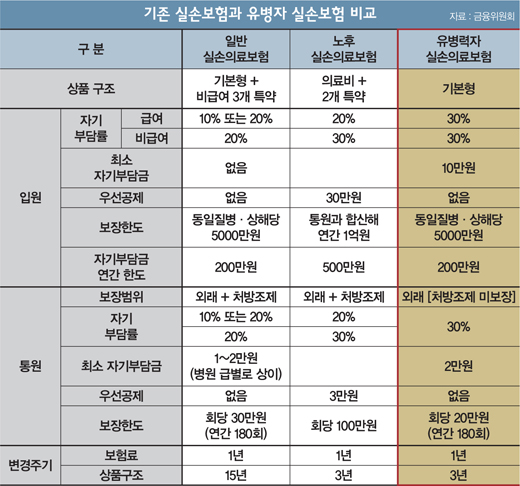
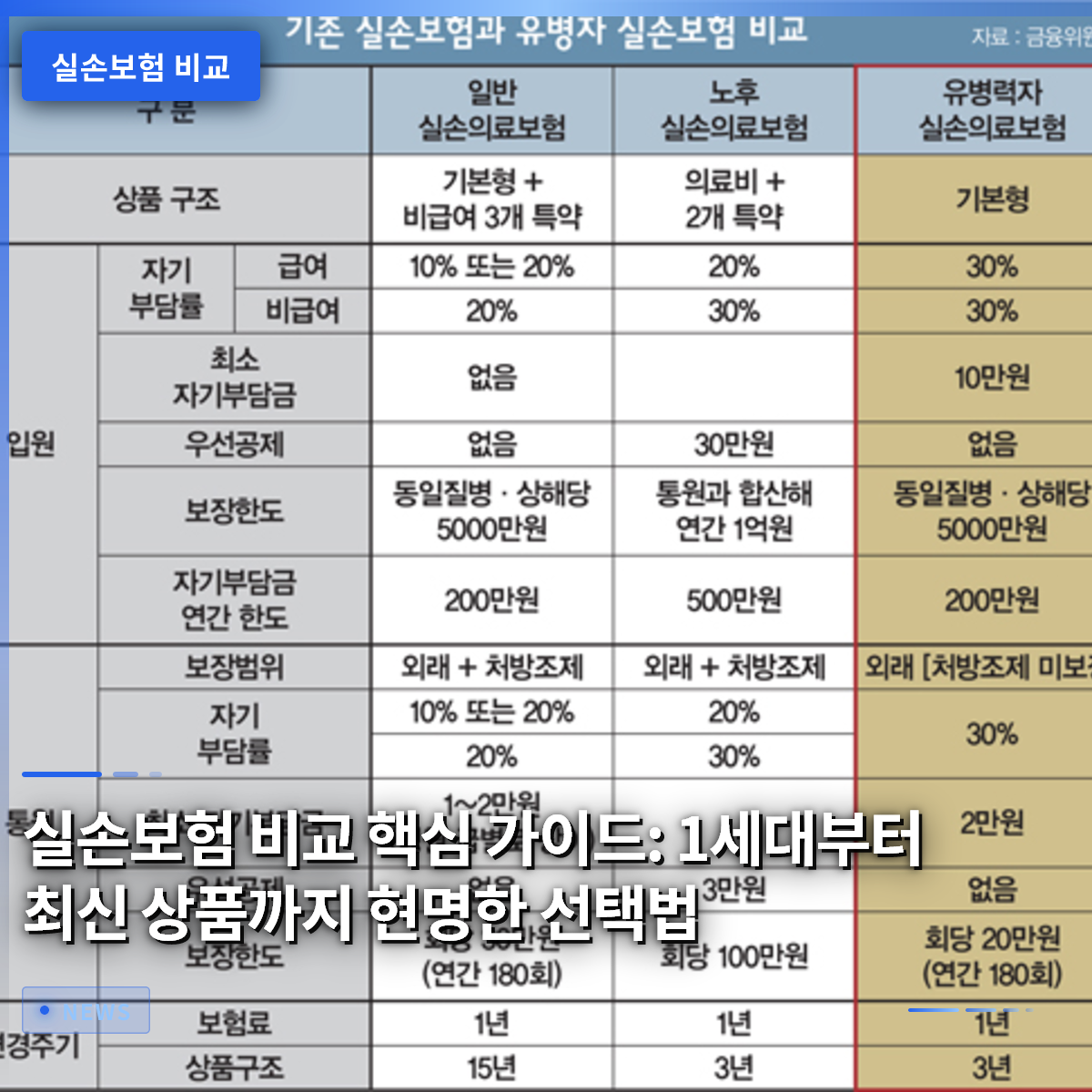
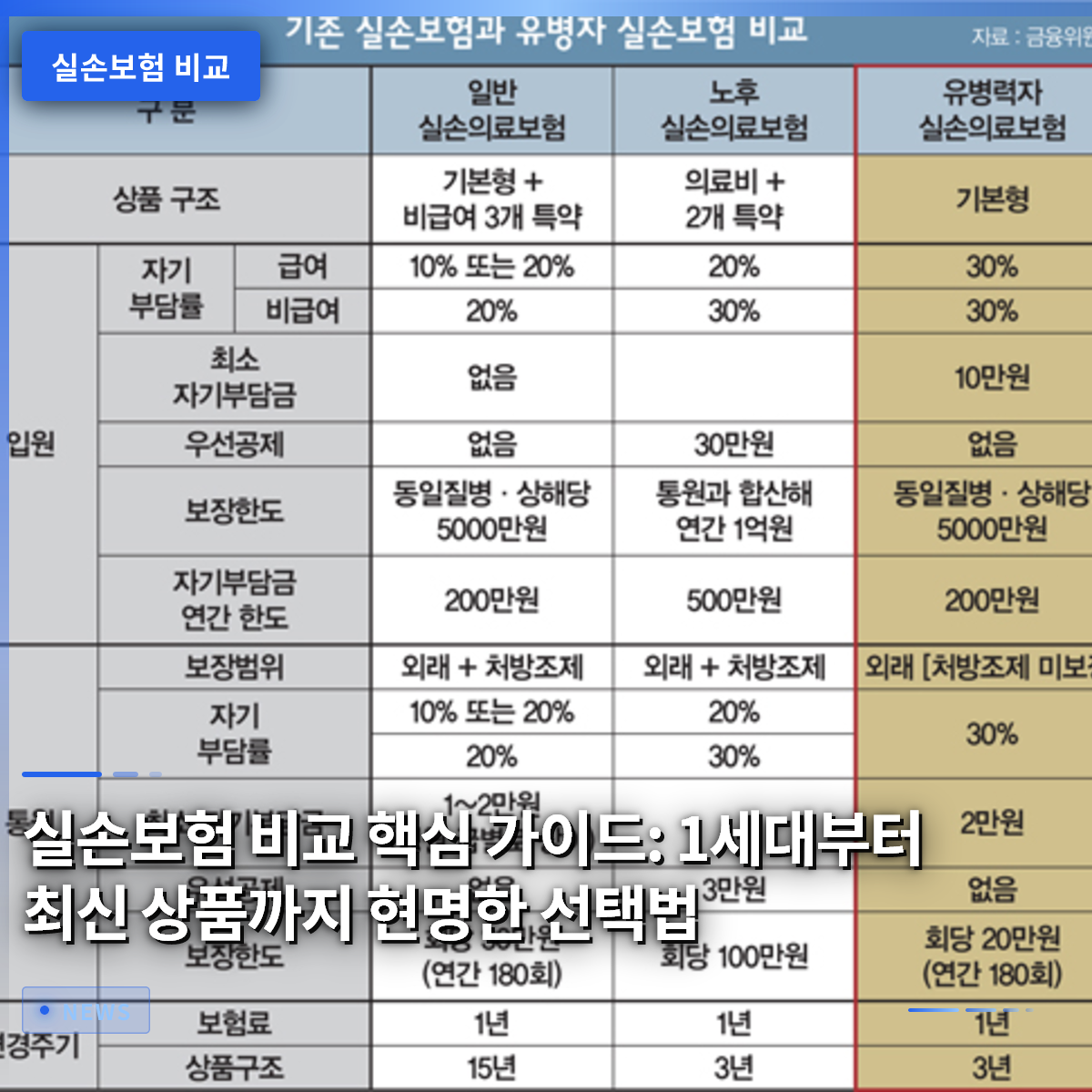
The first step in comparing medical expense insurance is to accurately identify which generation your current product belongs to. 1st and 2nd generation products sold in the past had little to no out-of-pocket costs, which was advantageous for those who frequently used medical services. However, as loss ratios surged, insurance companies significantly raised premiums at each renewal period, causing the financial burden on policyholders to snowball. In contrast, the latest products have been reformed to increase out-of-pocket costs for non-covered medical services (non-NHI) to prevent excessive treatment while lowering premiums. Consequently, the latest products are favorable for young people who rarely visit hospitals, but older products may still be better for the elderly who frequently seek medical care. You must remember that the pros and cons change completely depending not just on the monthly cost, but on how often you actually visit the hospital. Regardless of the generation, all medical expense insurance operates on a structure where you receive reimbursement for the medical costs you actually incurred, minus a certain amount. However, since the out-of-pocket percentage and coverage limits vary greatly by generation, meticulous comparison is essential. For example, Mr. Kim, an office worker who regularly receives physical therapy at an orthopedic clinic for back pain, decided whether to keep his old product after comparing its coverage with the latest products. Recalling the experience of nearly suffering a loss because physical therapy coverage was reduced after hastily switching, he realized how fortunate he was to have maintained his current status. Understanding and comparing the characteristics of each generation accurately is key to making a choice without regret.
Generations of medical expense insurance differ significantly in out-of-pocket costs and coverage scope, so you should compare them considering your frequency of hospital visits.
2. Why Hasty Cancellation Leads to Regret and What to Check

If you cancel your existing contract hastily simply because you faced a “renewal bomb” (sudden premium increase) without comparing medical expense insurance, you could incur significant financial losses. 1st and 2nd generation medical expense insurance often provides extensive coverage for non-covered medical items, offering benefits that are impossible to obtain with new products today. If you have recently suffered from a serious illness or are consistently taking medication for a chronic condition, the probability of being rejected during the underwriting process for a new product is very high. Many people do not realize the value of their old products until they age or fall ill, only to shed tears of regret. Therefore, rather than unconditionally canceling just because premiums have risen slightly, you should calmly weigh your current coverage against expected future medical costs. In reality, it is common to see cases where parents canceled their old medical expense insurance at their children’s suggestion because premiums became expensive, only to face millions of won in out-of-pocket costs later when they required surgery. Insurance companies apply different underwriting criteria based on the policyholder’s medical history and age, so once you terminate an existing contract, you can never return to the previous terms. You should also consider reducing the burden by adjusting specific riders or organizing unnecessary coverage while maintaining the existing contract. Switching to a new product is not always the right answer; you need the wisdom to coldly assess the practical benefits your current contract provides you.
Canceling your existing medical expense insurance means you can never enjoy the previous favorable coverage conditions again, so you must definitely check your current coverage before canceling.
3. How to Utilize Korea Insurance Association Disclosure Data
If you want an objective comparison of medical expense insurance, it is much more advantageous to use certified comparison platforms or association disclosure data rather than searching for each insurance company’s products one by one. By using the disclosure room operated by the Korea Insurance Association or related comparison websites, you can check the expected premiums and coverage details of multiple insurance companies at a glance. For example, it is transparently disclosed how the monthly payment amounts differ among various non-life insurance companies for a healthy 40-year-old male. This allows you to choose the company that best fits your budget and prevents you from enrolling in unnecessarily expensive products. However, you need the meticulousness to look at detailed conditions such as out-of-pocket costs and renewal periods, not just simple premium figures. Many people make the mistake of enrolling without thorough research simply because a product is from a large company with flashy designs or heavy advertising. However, in practice, there is little difference between companies in terms of the amount covered or processing speed, so comparing objective figures is the wisest approach. Reviewing disclosure data shows that the range of premium fluctuations differs by company depending on loss ratios, so you should make your choice with future expected costs in mind. Even if you lack financial knowledge, anyone can easily find the optimal product for themselves by carefully reading the summaries of disclosure data.
Using Korea Insurance Association disclosure data allows you to objectively and transparently compare premiums and conditions across multiple companies.
4. The Importance of Non-Covered Medical Services and Rider Selection
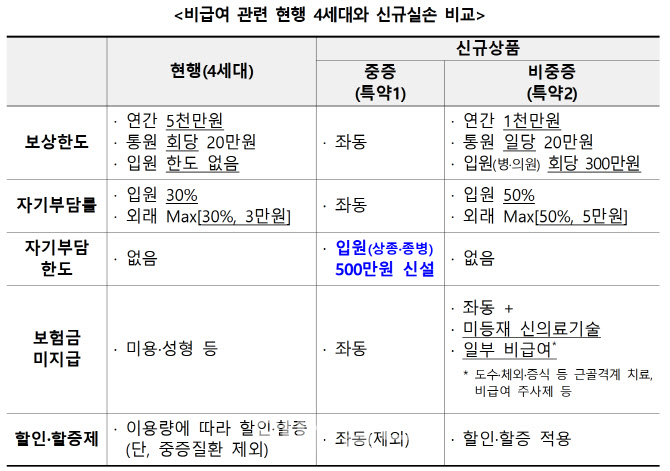
The most critical aspect to watch when comparing medical expense insurance is the coverage scope and the size of out-of-pocket costs for non-covered medical services (non-NHI). Non-covered items that have recently gained popularity, such as various injections and manual therapy, vary in price from hospital to hospital, often becoming a breeding ground for excessive treatment. The latest medical expense insurance adopts a structure where premiums increase the more frequently you use these non-covered services, which is advantageous for people who rarely visit hospitals. Conversely, if you frequently receive non-covered physical therapy due to joint or back issues, a product with a lower out-of-pocket percentage may be much more beneficial. Therefore, you should reflect on your lifestyle and health status and coldly assess whether non-covered coverage is truly necessary for you. Recently, as more people enjoy overseas travel and leisure activities, there is a trend of comparing additional benefits such as related riders or daily life liability insurance. If you have a regular hospital or a family history of a specific disease, choosing a product with robust coverage for that specific condition is a wise strategy. Chasing only the cheapest premiums can lead to disappointment when you actually go to the hospital and receive little practical help. You must not forget that the core purpose of comparing medical expense insurance is to balance the money deducted from your account each month with the money you receive back from the hospital.
You should meticulously compare the frequency of non-covered medical service usage and rider conditions to match your lifestyle patterns.
5. Insurance Claim Process and How to Increase Approval Rates
When comparing medical expense insurance, how easily and quickly you can receive insurance payouts is as important as the premium and coverage details. No matter how cheap the premium or good the coverage, if the paperwork is complex or the review is difficult when you actually pay for medical treatment, it will cause significant stress throughout the usage period. Recently, simple claim systems have become widespread, allowing users to upload photos of receipts via mobile apps or internet websites and receive deposits within hours. However, since insurance companies differ slightly in their review criteria and the frequency of requesting additional documents, it is good to know this in advance before enrolling. You should develop the habit of carefully keeping hospital receipts and detailed medical expense statements to ensure smooth claims. If you have pre-existing conditions or a recent surgical history, accurately fulfilling your duty of disclosure is paramount to increasing the approval rate. If you enroll without accurately informing the insurance company of your past medical history, you may face the injustice of having your contract terminated or being accused of fraud during the claim process. When receiving consultation through comparison sites, it is safer to openly disclose your health status and receive recommendations for the company with the highest approval probability and most favorable terms. Since small mistakes can lead to major disputes later, choosing a company with a transparent claim process and prompt customer service is a great long-term help.
It is very important to choose an insurance company that offers convenient simple claim systems and transparent review criteria.
6. Final Recommendations for Wise Medical Expense Insurance Comparison
Comparing medical expense insurance is not just about saving a few thousand won in immediate premiums; it is a process of building a sturdy fence to protect the health of your future self and family. As medical technology advances and new treatments emerge, the role and importance of medical expense insurance are expected to grow even larger. Rather than impulsively canceling or changing contracts under the pressure of immediate renewals, you should make decisions based on expert advice and objective data. I hope you will take the time to calmly reflect on your hospital usage tendencies and financial situation, rather than being swayed by hearsay from others. Based on the generational differences and how to use disclosure data explained today, please wisely choose the best medical expense insurance that fits you perfectly. Even now, many people are wasting time browsing various comparison platforms in search of a product that suits them. However, if you have clear criteria, you can make the most rational and economical choice without getting lost in the sea of information. I sincerely encourage you to become a wise policyholder who reduces fixed monthly expenses while receiving practical help when it matters most. Insurance management and comparison must continue consistently to create an environment where you can receive treatment comfortably without worrying about hospital bills. Please stop just worrying and start today by opening your insurance policy and checking the necessary parts one by one.
You should wisely prepare for future medical cost burdens through thorough comparison and choices that match your own criteria.
Frequently Asked Questions
=