Pension savings funds are the most reliable financial tool for securing retirement funds while also enjoying annual tax benefits. Recently, many office workers are shifting away from conservative methods focused on savings accounts and insurance toward performance-linked products. In fact, it is easy to find cases where office workers in their early 30s are rapidly building assets worth over 100 million won by contributing a significant portion of their salaries to pension savings funds and individual pension plans. At a time when bank deposit interest rates fail to keep up with inflation, saving on taxes while increasing returns is not a choice but a necessity. In this article, we will cover in detail the specific benefits of pension savings funds, the differences in returns, and the common mistakes you must absolutely avoid. Please refer to the key points introduced below to protect and grow your valuable assets.
=
Tax Deduction Limits and Return Comparison for Pension Savings Funds: Essential Asset Building Strategies for Your 30s
1. Tax Deduction Limits for Pension Savings Funds and Individual Pension Plans
When combined, pension savings funds and individual pension plans offer a maximum annual tax deduction of 9 million won. A pension savings account alone allows for deductions up to 6 million won, and you can reach the full limit by additionally contributing to an individual pension plan. Employees with total income below a certain threshold can receive 16.5% of their contributions back during the year-end tax settlement, which is a significant benefit. More office workers are filling the limit by making consistent monthly contributions. You have likely seen acquaintances struggling with a “year-end tax bomb” due to not utilizing these tax-saving accounts. It is not too late to start now.
It is far wiser to invest your valuable salary while enjoying tax deduction benefits than to simply leave it in a checking account. Setting up automatic monthly transfers can also help you build the habit of forced saving.
Combining pension savings funds and individual pension plans allows you to enjoy a maximum annual tax deduction of 9 million won.
2. The Extreme Difference in Returns Between Principal-Protected and Performance-Linked Products
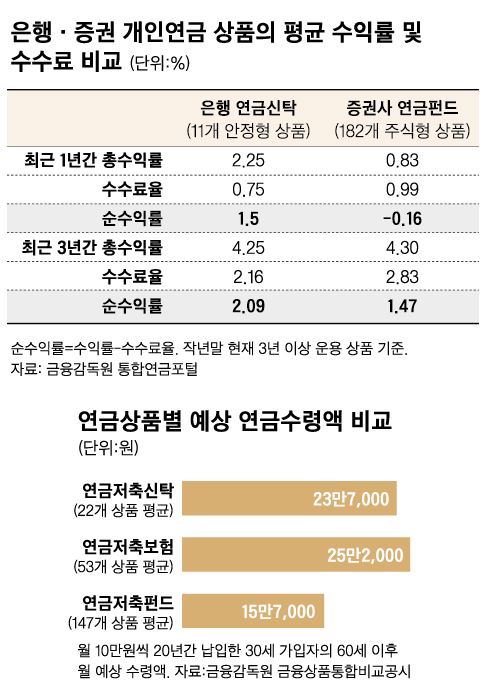
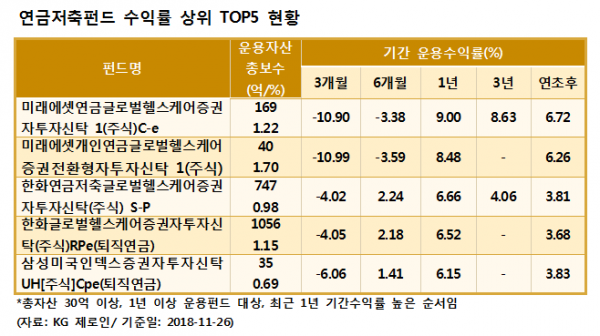
In the past, the majority of people prioritized stability and enrolled in bank pension savings insurance. However, considering the rate of inflation, the low returns of pension savings insurance make it difficult to prepare for the future. Recent statistics show that the return gap between pension savings funds and pension savings insurance has widened to dozens of times. Pension savings funds, which allow direct investment in stocks or exchange-traded funds (ETFs), have an overwhelming advantage in terms of asset growth. In fact, you can observe that people who actively invest in index products or high-quality stocks are growing their assets at a much faster pace.
Tying up your money in products with almost no returns just for the sake of safety is a significant loss in terms of opportunity cost. In your younger years, you should actively utilize performance-linked accounts, tolerating volatility to grow your assets.
Pension savings funds record significantly higher returns compared to principal-protected products, making them advantageous for asset growth.
3. What Should You Invest In? Popular Portfolio Compositions
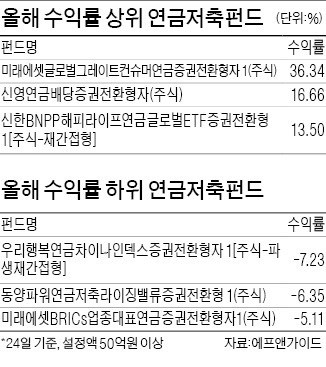
Within a pension savings fund account, you can freely trade various domestic and international equity ETFs and bond products. Many investors are diversifying their investments in products that track major U.S. stock indices or global high-quality companies. For example, a popular method is to split monthly contributions between U.S. large-cap indices and safe assets like gold-related products. Diversifying your portfolio in this way allows you to calmly handle sudden market volatility. You can easily manage trades as if trading stocks through a securities firm’s mobile trading screen, making it accessible even for beginners.
Rather than being swayed by rumors and buying risky stocks, it is safer to invest in indices that trend upward over the long term through systematic accumulation. The longer the time until retirement, the more you should increase your stock allocation to maximize the effect of compound interest.
You should diversify investments through pension savings funds into U.S. indices or safe assets like gold to increase long-term returns.
4. The Scary Tax Bomb You Face When Terminating Early
There are cases where people arbitrarily terminate their pension savings accounts because they urgently need cash after diligently building assets. In such cases, you must not only return all the tax deduction benefits received so far but also pay miscellaneous income tax on the investment returns. It is easy to see people who regretfully receive unexpected large tax bills after carelessly closing their accounts. While the principal portion that did not receive tax deductions can be withdrawn without tax, the complex withdrawal order regulations make it difficult for ordinary people to calculate directly.
Unless there is a truly unavoidable circumstance, the iron rule is to maintain the account until retirement. If you urgently need money, it is much more advantageous to look into the pension savings collateral loan system instead of terminating the account.
Terminating a pension savings fund early results in heavy taxes on the tax deductions received and the returns, so caution is required.
5. Tax Standards to Know When Receiving Pensions After Age 55
Even when receiving monthly pensions after retirement, you must carefully consider tax issues to manage your funds wisely. If your private pension income exceeds 15 million won annually, you must choose between separate taxation and comprehensive taxation to pay your taxes. If it is 15 million won or less, you only need to pay pension income tax at a very low rate, so the tax burden is not significant. Appropriately distributing the amount received each year to lower the tax rate is a core technique in retirement planning. There is a significant difference in post-retirement income between those who prepare with tax knowledge and those who do not.
You must adjust your annual receipt limit in advance, considering both the National Pension and private pension income, to avoid a tax bomb. It is a good idea to start drawing up pension receipt scenarios now to create a stable cash flow after retirement.
If pension receipts exceed 15 million won annually, the tax standards change, so a strategy to distribute receipt timing is necessary.
6. Outlook and Commitments for Utilizing Pension Savings Funds for a Successful Retirement
As the aging population accelerates, the pension guaranteed by the state alone is far from sufficient for a comfortable retirement. Ultimately, you must increase the proportion of private pensions prepared by yourself to defend against inflation and maintain a stable life. With the convenience of mobile trading by securities firms improving daily, anyone can easily open and manage a pension account. Start the small practice of setting up automatic transfers of a portion of your monthly income to a pension savings fund account right now. As time passes, you will experience remarkable asset growth as the magic of compound interest combines with tax deduction benefits.
Retirement may feel like a story of the distant future, but the abundance of your retirement life changes completely depending on when you start preparing. Please reduce unnecessary expenses and gradually increase the amount you invest in your pension account starting today.
Thorough management of pension savings funds becomes the most reliable and solid means of preparing for retirement in the aging era.
Frequently Asked Questions
=