
If you feel burdened by the rising premiums of your existing insurance policy, you should carefully compare medical expense insurance options across different generations before simply canceling it. While older policies offer the advantage of broader coverage, the premiums can skyrocket upon renewal, significantly impacting your household budget. On the other hand, newer products may require you to bear a slightly higher out-of-pocket cost but significantly lower monthly payments, making them a smart choice depending on your situation. In fact, I often see acquaintances who, unable to bear the renewal burden, impulsively cancel their old policies and later shed tears when they cannot afford hospital bills. Therefore, you must carefully decide whether to keep your existing contract or switch to a new product after accurately assessing your usual hospital usage habits and health status. In this article, I will clearly explain the differences between generations and tips for easily filing claims without paperwork, so please read to the end.
=
A Complete Guide to Comparing Medical Expense Insurance by Generation and Reducing Premiums

1. Evolution and Key Features of Medical Expense Insurance by Generation
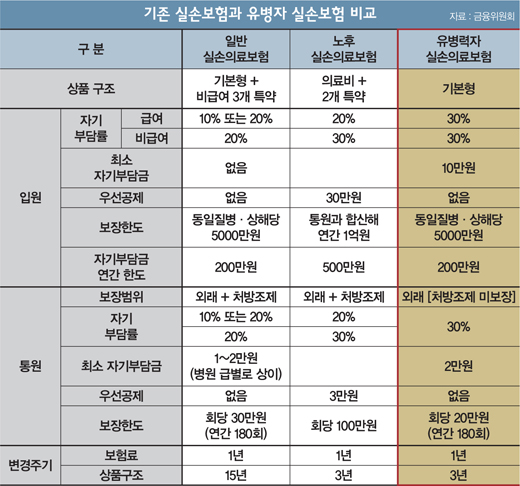
To choose the product that suits you, you must accurately understand the history and structural changes of medical expense insurance from the 1st generation to the latest products. Early products offered exceptional coverage, reimbursing amounts close to the full cost of medical treatment. However, as insurance companies’ loss ratios surged, structural reforms became inevitable. With each new generation, the system has been adjusted to prevent excessive medical treatment and ensure that a large number of policyholders can benefit fairly, gradually increasing the co-payment ratio. For example, in the past, you could receive reimbursement for almost all outpatient treatment costs after paying just a few thousand won, but now there is a minimum deductible, meaning you must pay for minor medical expenses out of pocket. Since the pros and cons are clearly distinct by generation, you should not blindly believe that older products are better or misunderstand that the latest models are always cheaper.
If you do not remember exactly when you enrolled, the first step is to check the amount deducted from your account monthly and the co-payment ratio stated in your policy certificate. Many young professionals who inherited old insurance policies from their parents without much scrutiny are often shocked to receive renewal notices with premiums soaring into the hundreds of thousands of won. Older products may be advantageous for those who frequently use non-covered medical services, but for healthy people who rarely visit the hospital, it can feel like money leaking out every month. Conversely, the latest products can be maintained at a very reasonable cost if you do not frequently visit the hospital, which greatly helps in saving on fixed expenses. Therefore, you should carefully compare the co-payments and the separation of non-covered riders for each generation to find the option that best fits your current financial situation and health patterns.
Since co-payments and coverage ranges vary significantly by generation, you should compare options based on your hospital usage patterns.
2. Pros and Cons of Keeping Existing Contracts vs. Switching to New Products

When canceling a long-held contract and switching to a new medical expense insurance policy, you must never simply compare the monthly payment amount. If you hastily switch just because the monthly cost decreases slightly, you might later regret it deeply if you fall ill and find that your coverage is insufficient. It is crucial to remember that if you cancel an old product as you age or your health indicators worsen, you may never be able to return to the same favorable conditions. On the other hand, if you rarely receive non-covered, non-critical treatments but are still hit with “renewal bombs” where premiums rise by tens of percent annually, it is wise to seriously consider switching. In fact, many office workers around me are dissatisfied because their premiums keep rising even though their only hospital visit in a year was for a cold. In such cases, it is essential to objectively evaluate your annual medical expenses and expected future health status, and then seek expert advice to make a careful decision.
Rather than switching unconditionally, you should weigh the pros and cons by comprehensively considering your current health status and future medical expense projections.
3. Practical Tips for Filing Insurance Claims Easily Without Paperwork
It is common for people to miss claim deadlines because they put off filing due to the hassle of collecting medical receipts and detailed statements. In the past, you had to issue paper documents from the hospital and send them via fax or mail, but recently, the process has become much easier thanks to advanced computer systems. As the scope of electronic linkage expands to include not only large hospitals but also local clinics and pharmacies, you can now file claims immediately without paperwork with just a few clicks on a smartphone app. For example, you can briefly open your smartphone during your lunch break, enter a few pieces of information, and receive the processing result on the same day without submitting any paper documents. Despite these convenient features, many elderly people still just collect receipts in a drawer because they are unfamiliar with the method. Therefore, if there is someone in your family who is familiar with digital devices, it is best to teach them how to file claims in advance and help them use this feature easily in their daily lives.
By utilizing electronic linkage systems and smartphone apps, you can easily file insurance claims without the hassle of submitting paper documents.
4. Tailored Insurance Management Strategies by Age and Lifestyle
When traveling abroad for a long holiday or starting new leisure activities, you should carefully check additional coverage beyond your existing medical expense insurance. It is reassuring to also secure riders that cover accidents that may occur while traveling with children during holidays or compensation for damages caused to others in daily life. Additionally, as you age, you need a strategy to appropriately link the government-supported Special Calculation System for severe diseases (such as cancer and cerebrovascular diseases) with private insurance to prepare for such conditions. Even if your financial resources are limited, maintaining medical expense insurance from a young age serves as a solid social safety net when you face a “medical expense bomb” in old age. Conversely, in the post-retirement period when fixed income decreases, wisdom is required to organize unnecessary riders and leave only essential medical expense coverage to minimize payment burdens. As such, consistently managing your contract in line with changes in your age and living environment is the most certain way to prevent unnecessary expenses.
You should organize unnecessary riders and focus on managing essential coverage according to changes in age and lifestyle.
5. Comparison Know-How to Lower Premium Burden and Maximize Benefits
Although there are numerous comparison sites and platforms in the market, blindly following the cheapest ranking and enrolling can be a risky choice in the long run. Since each company has slight differences in loss ratio calculation methods and renewal cycles, you must first carefully compare the conditions of multiple products side by side. In particular, if you do not properly verify the detailed waiting periods or coverage limits of riders, you may be shocked to receive an unexpected rejection notice when you actually file a claim for medical expenses. In fact, looking at various reviews in online communities, there are many stories of people who enrolled solely because the premium was cheap and later regretted it due to narrow coverage, leading them to switch providers. Therefore, you should not be swayed by promotional recommendations from others but make a cold, objective judgment about what items you truly need based on the objective terms and conditions. Utilizing a reliable site that transparently compares quotes from multiple companies can greatly help in reducing hidden costs and making a rational choice.
Do not rely solely on simple rankings or price comparisons; you must thoroughly compare detailed terms and coverage limits to make your selection.
6. Future Outlook and Advice for Wise Medical Expense Insurance Maintenance
As medical technology advances rapidly and new treatments and expensive injectable drugs continue to emerge, the role of medical expense insurance is expected to become even more important. Controversies over the scope of insurance coverage are ongoing as new drugs prescribed not only for treating diabetes but also for weight management gain popularity. With the emergence of cases involving overseas medical tourism and illegal prescriptions exploiting price differences between domestic and international markets, pressure on insurance companies to manage loss ratios is expected to intensify further. In the midst of these changes, the only way for consumers to survive is to develop the habit of protecting and wisely managing their own contracts based on accurate information. Please calmly check today whether the amount you pay monthly and the coverage you receive are in a reasonable balance by opening your policy certificate. Small efforts in interest and comparison will serve as the most reliable shield to protect our valuable assets from future massive medical expense bombs.
In a rapidly changing medical environment, thorough information verification and continuous contract management are the keys to protecting household finances.
Frequently Asked Questions
=