
If you are currently looking into a 200 million KRW loan for purchasing a home or securing business capital, accurately identifying a product that matches your income and asset situation is paramount. With recent financial regulations and public support policies intertwining, the funding environment is changing rapidly, making meticulous comparison essential. In practice, many people seeking funds for jeonse deposits or home ownership are experiencing significant differences in loan limits and interest rate conditions. In this article, we will closely examine the characteristics of various 200 million KRW loan products available in the market and the useful criteria for utilizing them. By checking conditions that are easily overlooked during the loan preparation process, you can reduce unnecessary interest burdens. It is a time when wisdom is needed to find the most advantageous option in a complex financial landscape.
=
Comparing Conditions and Limits for 200 Million KRW Loans: A Smart Approach to Financing

1. Home Purchase and Mortgage Loan Limits

When aiming to buy your own home, a 200 million KRW loan is one of the most common target amounts. Unlike in the past, regulations based on housing prices and the Total Debt Service Ratio (TDSR) based on income levels are strictly applied, meaning you cannot simply receive a loan just because you want one. For example, when purchasing high-priced apartments in the Seoul area, loan limits may be strictly restricted, making prior research essential. Comparing products from the Housing and Urban Guarantee Corporation (HUG) and major commercial banks reveals that the amount one can receive varies greatly depending on household income and housing price. Therefore, it is advisable to calculate the actual available limit in advance based on your annual salary and current cash assets.
Visiting bank branches or utilizing online financial platforms can help you estimate your expected limit. Excessive fundraising can place a significant burden on household finances, so you must first calculate the monthly principal and interest repayment amount you can afford. Experts advise that it is safe to manage the repayment ratio relative to income so that it does not exceed a certain level. In actual cases, people who excessively leveraged their finances often suffer greatly during periods of interest rate hikes. While achieving the dream of owning a home is important, maintaining a stable repayment capacity must be the top priority.
Mortgage loan limits vary based on income and regulations, so thorough verification of repayment capacity is essential.
2. Jeonse Loans and Deposit Securing Strategies
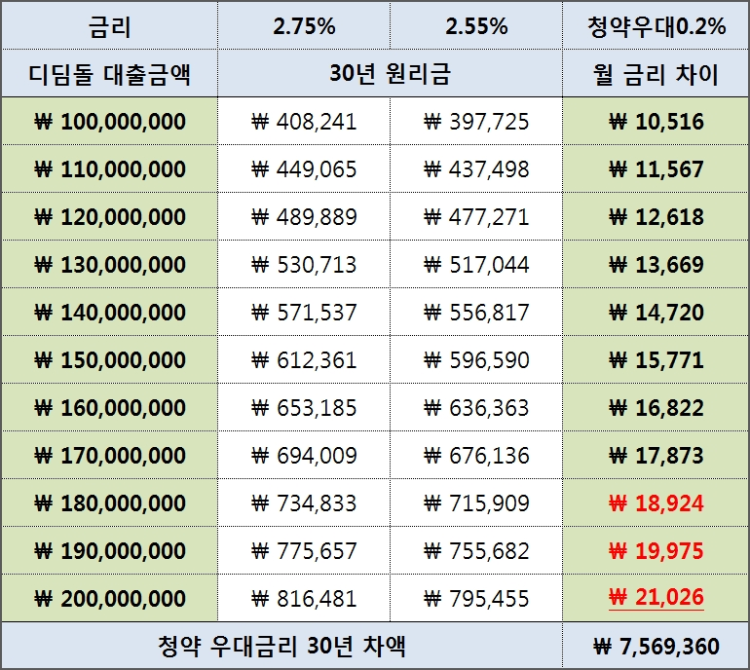
As jeonse prices soar, the demand for 200 million KRW loans to secure jeonse deposits is steadily increasing. When seeking jeonse for multi-unit housing or apartments in Seoul and the metropolitan area, effectively utilizing the maximum limits and interest rate conditions of jeonse loans can significantly reduce cost burdens. Recently, various trust systems and public support products have emerged to prevent jeonse fraud and promote housing stability. Since jeonse fund loans are only executed within a certain percentage of the rental deposit, coordinating with your own cash assets is crucial.
Mr. A, an office worker with a monthly after-tax income of 2.8 million KRW, compared products from several banks to secure a jeonse deposit. He formulated a plan by narrowing down the range of housing he could afford by combining his cash assets with the available loan amount. When taking out a jeonse loan, you must carefully check whether the interest rate is fixed or variable and whether early repayment fees apply. If you qualify for local government support programs or policy products with interest subsidies, it is advantageous to utilize them actively. A strategy that minimizes monthly expenditure while maintaining housing stability is the core of smart financial management.
Jeonse loans require careful comparison of deposit ratios and interest rate conditions to reduce housing costs.
3. Support Funds for SMEs and Small Business Owners

For small business owners and SME representatives facing management difficulties, special guarantees and interest subsidies for loans of around 200 million KRW are a great help. As local governments and regional credit guarantee foundations collaborate to expand products that significantly lower interest burdens, the financial pressure on the ground is easing. In a situation where the delinquency rate for small businesses is at a high level, the extension of interest support periods or the increase in guarantee scale is welcome news. If your business is experiencing financial difficulties, it is advisable to frequently check the special guarantee announcements from the relevant authorities for SMEs.
In practice, local governments like Gwangju City are making efforts to significantly increase interest subsidy budgets to reduce the actual financial costs for companies. Receiving interest support benefits allows businesses to secure funds under conditions much lower than market rates, which greatly aids business operations. When taking out a business loan, you should consider not only the limit amount but also whether the grace period and repayment method align with the business cycle. Signing a contract without checking detailed conditions just because funds are urgent can lead to significant financial crises later. Therefore, it is safer to first look into support programs from reliable public institutions and consult with experts.
SMEs and small business owners can significantly reduce interest burdens through local government special guarantees and interest subsidies.
4. Controversy and Implications of Public Institution In-house Loans
Recently, an in-house loan system with exceptional conditions for employees of certain public institutions has attracted significant social attention. The fact that funds of up to 200 million KRW can be borrowed at interest rates much lower than general commercial household loan rates has been highlighted. From the perspective of the general public, this may cause a sense of deprivation, but it is important to understand the essence of the system and the process of changes in government guidelines. The government is continuously issuing guidelines to ensure that such in-house loan systems reflect market interest rate levels and do not fall into the blind spots of Total Debt Service Ratio (TDSR) regulations.
Compared to general products available to ordinary financial consumers, public institution welfare loans are certainly a special benefit. However, since ordinary citizens must use financial products exclusively for the underprivileged or home purchase funds from commercial banks, they must clearly recognize the difference in conditions. Amidst this controversy, the government continues to refine standards to create a fair and equitable financial system. As transparency in the loan market increases, general consumers will have more opportunities to utilize funds under more reasonable conditions. Rather than being swayed by others’ conditions, a posture of calmly analyzing the realistic financial options available to oneself is necessary.
Understand the difference between public institution in-house loans and general loans for the underprivileged to find a cost-effective product that suits you.
5. Loans to Related Parties and Utilization of Redevelopment Investment
Cases where 200 million KRW loans are considered for loans between related parties of a company or for investment in redevelopment zones are also frequently seen. Companies pursuing new drug development or business expansion sometimes utilize stock-pledged loans or loans between related parties because they cannot bear the financial burden. In this process, if internal controls and transparent accounting treatment are not guaranteed, it can lead to serious management risks, such as being pointed out by auditors. On the other hand, from a real estate investment perspective, many investors are approaching promising zones like Seongnam redevelopment by combining loans for actual residence and first-time home purchase.
Checking loan eligibility in advance to catch urgent sales in redevelopment zones, which require relatively low initial investment, is the basic step for successful investment. If you can secure funds of an appropriate scale while meeting actual residence requirements, you can expect future value appreciation. However, given the high volatility of the real estate market, you must remember that excessive leverage can lead to significant losses. Whether for investment or actual profit purposes, securing a cash flow that can stably repay the loan principal and interest is the top priority. Wisdom is required to make careful decisions based on thorough on-site research and expert advice.
Thorough risk management and repayment planning are essential even for loans to related parties or redevelopment investments.
6. Recommendations for Smart Loan Utilization
Considering future interest rate volatility and economic conditions, consumers and business owners utilizing loans must formulate more conservative financial plans. When handling a substantial amount like a 200 million KRW loan, you should not just consider immediate needs but simulate your repayment capacity for the next several years. As government regulatory policies and financial market trends change rapidly, it is important to develop the habit of continuously monitoring related news. You should not spare the effort to compare interest rates and conditions through various financial platforms, not just your main bank.
In conclusion, selecting the most advantageous product for yourself stems from thorough preparation and information gathering. Excessive loans can become a boomerang threatening household finances, but planned utilization becomes a solid stepping stone helping with major life leaps. Based on the various conditions and support systems examined today, we hope you can complete a funding strategy that best fits your situation. We sincerely encourage you to become a smart consumer and investor in the changing financial environment. Manage your debt efficiently through thorough planning and execution, and move toward a stable future.
You must select the most advantageous loan product based on thorough preparation and repayment planning.
Frequently Asked Questions
=