If you choose to receive your retirement pension as a lump sum, you may have to pay taxes ranging from several million to tens of millions of won all at once, making it essential to consider receiving it as an annuity. Manager Kim, who retired at the mandatory retirement age, wanted to receive his accumulated retirement benefits as a large sum of cash immediately. However, he was greatly shocked when he received a tax notice for a much larger amount than he had expected. He later realized that if he had transferred this money to an Individual Retirement Pension (IRP) account and received it in monthly installments after the age of 55, he could have significantly reduced his tax burden. Many retirees want to have their retirement funds in hand immediately, but understanding the tax structure even a little can help protect your valuable post-retirement assets much more safely. In this article, we will look at specific tips for those aged 55 and older to receive their retirement benefits under the most favorable conditions to minimize their tax burden. Let’s explore in detail the first step in designing a lifelong income that will firmly support your life after retirement.
=
Why Receiving Your Retirement Pension as an Annuity Saves More Tax Than a Lump Sum
1. The Decisive Difference Between Lump Sum and Annuity Receipt
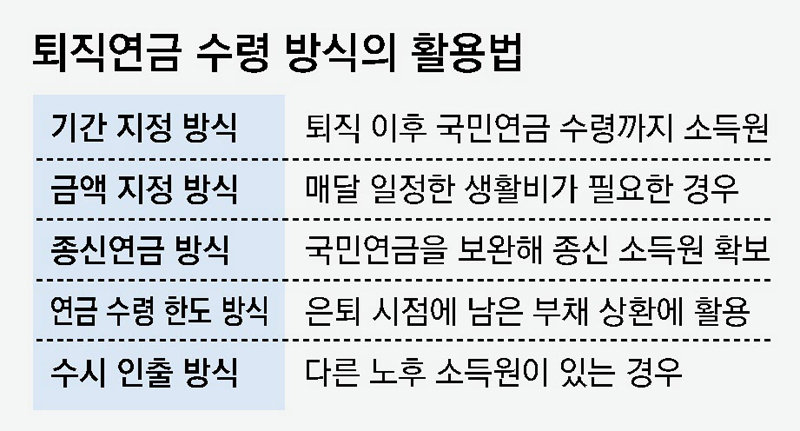
The first thing to compare when deciding how to receive your retirement pension is whether to receive it as a lump sum or in installments. Receiving your retirement benefits as a lump sum has the advantage of providing a large amount of cash immediately, which is very convenient for paying off household debts or using as capital for a new business. However, because it is treated as a large income occurring at once, the tax base increases, resulting in a fatal drawback of having to pay a massive amount of retirement income tax. On the other hand, if you receive it as an annuity through an Individual Retirement Pension (IRP) account after the age of 55, only 70% of the statutory retirement income tax rate is applied, significantly lowering the tax. Furthermore, if you set the receipt period to 10 years or more, the annuity income tax rate drops to as low as 3.3%, allowing you to fully enjoy the strong tax-saving benefits provided by the state. Simply reducing taxes can yield a substantial effect in increasing your real assets, so if you do not need the money immediately, receiving it as an annuity is unconditionally advantageous. While receiving your retirement benefits as a lump sum can result in a tax bomb, spreading it out over 10 years or more can reduce the tax rate to 3.3%.
Choosing annuity receipt over a lump sum can reduce your retirement income tax by up to 70%.
2. Eligibility Requirements for Subscribers Aged 55 and Over
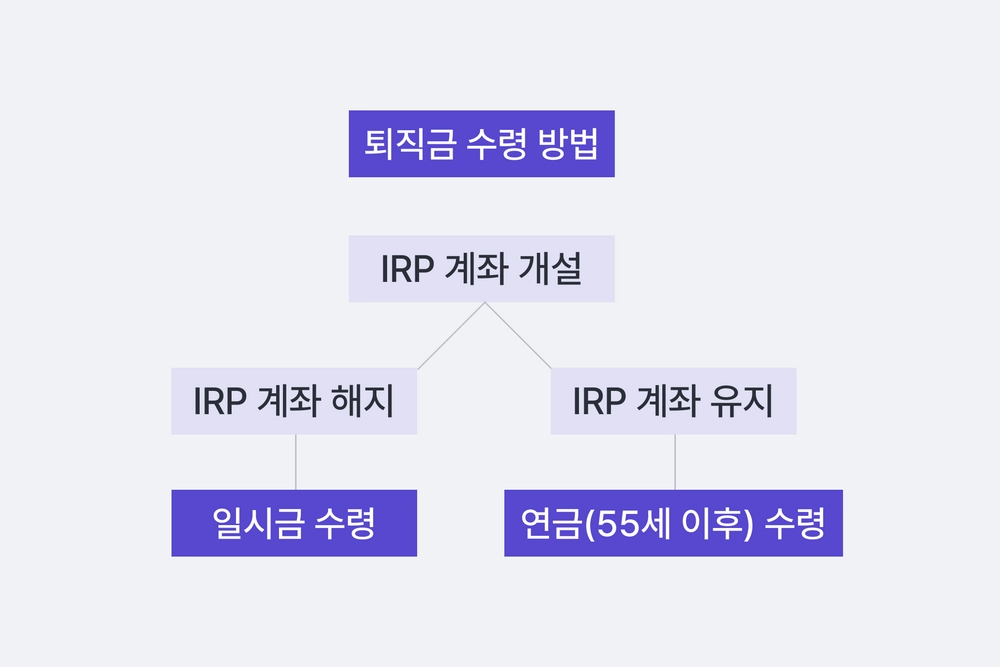
To formally execute the method of receiving your retirement pension, there are two core conditions that must be met. The first condition is that you must be at least 55 years old (full age), and the second is that at least five years must have passed since you joined the specific retirement pension product. If you attempt to terminate the contract or withdraw funds without meeting these conditions, you may be subject to miscellaneous income tax at a high rate, similar to general financial products. It is very common for those scheduled to retire between 1967 and 1971 to miss out on valuable tax benefits because they are not fully aware of this system. You must go through the process of transferring your retirement benefits to an Individual Retirement Pension (IRP) account rather than receiving them directly in cash from your company to qualify for annuity receipt. Therefore, as your retirement date approaches, it is wise to check whether your company offers a Defined Benefit (DB) or Defined Contribution (DC) plan and open an IRP account in advance. Even if you are over 55, you cannot start receiving annuity payments immediately if you have not completed the five-year subscription period, so you must verify this in advance.
You must be at least 55 years old and have a subscription period of five years or more to receive annuity payments with tax benefits.
3. How to Utilize an Individual Retirement Pension (IRP) Account

The tool that plays the most critical role in the method of receiving your retirement pension is the Individual Retirement Pension (IRP) account, and it must be utilized actively. Retirement benefits paid by your company must be transferred to this account to receive tax deferral, allowing you to postpone paying taxes. Additionally, if you, as an employee, make additional contributions up to the annual limit, you can also receive significant tax deduction benefits during your year-end tax settlement. These valuable post-retirement assets can be steadily grown by investing not only in safe deposit products but also in various performance-linked products or government bonds. Instead of leaving your assets untouched after your income stops post-retirement, you should build an investment portfolio that suits you to generate a monthly cash flow. You need a comprehensive strategy that involves regularly checking lifelong income design programs offered by banks or securities firms and linking them with the National Pension and housing pensions. Depositing money in an IRP account not only defers taxes but also allows you to receive tax deductions during your year-end tax settlement every year.
Transferring your retirement benefits to an IRP account and utilizing additional contributions allows you to achieve both tax savings and asset growth simultaneously.
4. The Importance of Calculating Annuity Receipt Years
When designing how to receive your retirement pension, you need to accurately understand the concept of annuity receipt years and have the wisdom to divide the period carefully. The tax rate applied for tax calculation is set from the first to the tenth year of annuity receipt, and the rate becomes even lower after 10 years. If your retirement funds exceed 15 million won, you can choose the more advantageous method between comprehensive income tax and separate taxation, significantly reducing your tax burden. For example, if the annual annuity amount is excessively high, you may face a tax bomb due to the progressive tax rate structure, so it is essential to maintain an appropriate level. The key to saving on taxes is to adjust the annual annuity amount within a reasonable limit and spread it out over a period of 10 years or more. It is essential to first simulate your expected annuity amount and tax structure through consultations with financial institution advisors. Trying to receive the entire annuity over a very short period increases the tax burden, so it is advantageous to spread it out over 10 years or more.
To minimize your tax burden, you should set the annuity receipt period to 10 years or more and adjust the annual receipt amount.
5. Practical Tax-Saving Tips to Avoid a Tax Bomb
You must be careful not to make the mistake of unnecessarily paying millions of won in taxes by choosing the wrong method to receive your retirement pension. Many people, feeling the excitement of having a large sum of money after retirement, choose a lump sum receipt and end up suffering significant financial damage by becoming subject to comprehensive income tax filing. Unlike general employment income tax, retirement income tax has a structure where the tax amount decreases as the length of service increases, so you must accurately check your period of employment. If you want to transfer your retirement pension assets to another financial company, you should use the account transfer system rather than simply making a mid-term withdrawal to prevent tax losses. It is ideal to diversify investments in various products such as government bonds and deposits to secure stable interest and dividend income while applying the 3.3% annuity income tax rate. Missing even a minor procedure can cause a significant portion of your post-retirement assets to disappear into taxes, so actively seek expert advice. Mid-term withdrawals incur unnecessary taxes, so you must move your assets through the account transfer system.
By utilizing the account transfer system and applying the annuity income tax rate, you can safely protect your valuable retirement funds.
6. Final Advice for a Successful Retirement Life
If you make a meticulous plan based on correct knowledge of how to receive your retirement pension, anyone can enjoy a comfortable and stable retirement. Life after retirement is not just about accumulating money, but its success depends on how wisely and efficiently you use the assets you have built. It is most important to bundle the National Pension, retirement pension, and personal pension into one large flow to complete a lifelong income portfolio. You must continuously check for changes in tax laws and financial trends each year and flexibly adjust your annuity receipt strategy to fit your asset situation. Based on what you have learned today, check your retirement pension account right now and visit a nearby financial institution for a specific design consultation. A thoroughly prepared retirement design will be the most powerful and certain weapon to make your remaining life the freest and most abundant. Your quality of life changes completely depending on how you manage your post-retirement cash flow.
You can achieve economic stability and abundance after retirement through a thorough annuity receipt plan and comprehensive income design.
Frequently Asked Questions
=