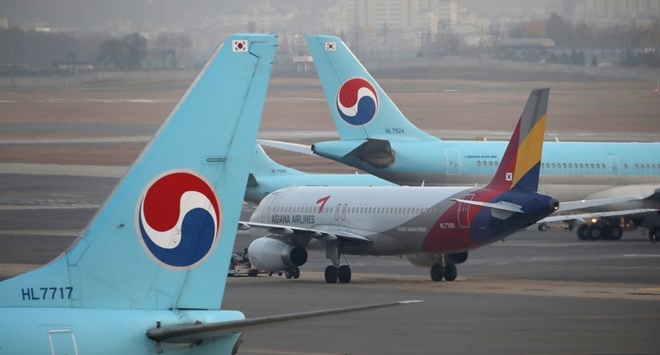
Korean Air has received final approval from the Fair Trade Commission (FTC) for the most challenging aspect of its integration with Asiana Airlines: the mileage consolidation plan. This marks the successful overcoming of the biggest hurdle in the merger process. It took a full 15 months from the initial submission of the draft last year, during which the plan underwent multiple revisions to address consumer concerns. Now, with the final merger date set for December 17, two urgent issues remain: integrating the promotion seniority of pilots from both airlines and restructuring shares in subsidiaries. As organizations that have operated in different environments for decades merge into one, disputes are inevitable. Many are watching closely to see how these remaining challenges will be navigated wisely. Readers are encouraged to consider how this major airline merger will impact their future air travel experiences.
=
Korean Air and Asiana Merger Clears Mileage Hurdle, But Pilot Seniority and Subsidiary Issues Remain
1. Key Points of the Mileage Integration Plan Approved by the FTC
The core of the final mileage integration plan submitted by Korean Air is to significantly increase mileage usage, allowing consumers to use their miles much more smoothly. The FTC imposed a condition that the merged entity must manage its annual mileage usage up to 21 percent higher than the combined usage level of 2025 over the coming years. Consequently, it has been decided to release seats on long-haul routes to the Americas, Europe, and Oceania at levels exceeding the highest bonus seat availability recorded in the past decade. This is expected to greatly expand opportunities for booking or upgrading seats using miles on popular routes that are typically difficult to access. The plan appears designed to specifically boost the most preferred benefits to quell long-standing consumer dissatisfaction.
This policy, which prioritizes consumer convenience, is welcome news for airline passengers. In particular, it presents a prime opportunity for frequent family travelers to make the most of their dormant points.
Mileage usage will increase by up to 21 percent, and bonus seats on long-haul routes will be significantly expanded.
2. Mileage Conversion Rates and Preservation of Existing Member Benefits
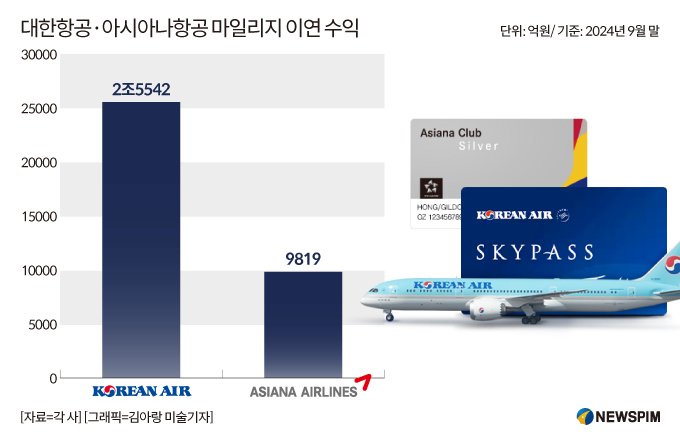
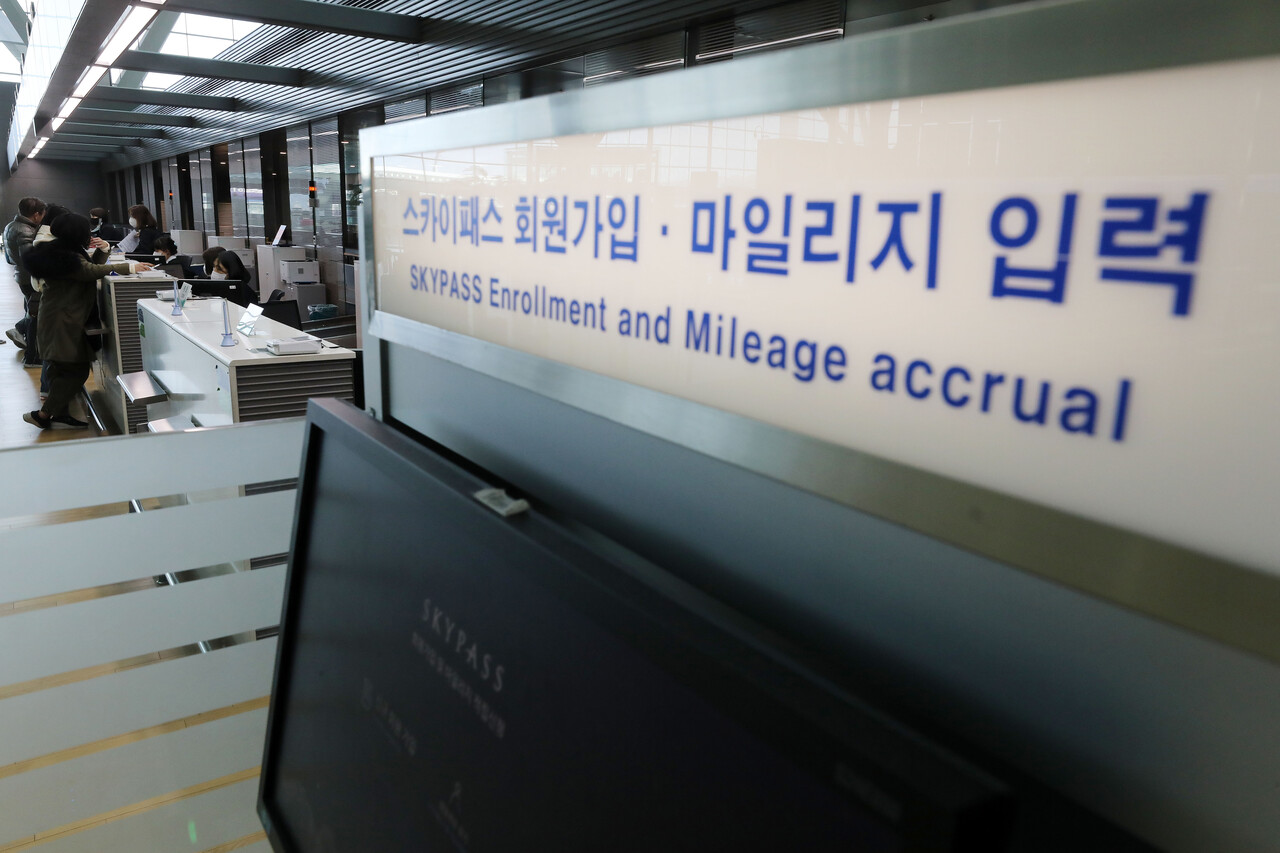
The final plan also clearly addresses how Asiana Airlines miles will be handled, a question that has long been on users’ minds. After the merger, Asiana Airlines miles will be maintained separately for a period, allowing customers to freely convert them to Korean Air SkyPass miles at their discretion. Regarding the elite status program, Asiana Airlines tiers will be automatically matched to corresponding Korean Air tiers, ensuring that existing benefits continue seamlessly. Mileage conversion rates vary based on how the miles were earned. Miles accumulated through flights will be converted at a 1:1 ratio. In contrast, miles earned through co-branded credit cards and other partnerships will be adjusted at a 1:0.85 ratio, carefully calculated based on the costs incurred by consumers.
This meticulous approach to conversion rates is seen as a realistic solution to minimize fairness disputes between users of the two companies. Consumers who had worried about their points being unfairly deducted can now breathe a sigh of relief.
Miles earned from flights will be converted at a 1:1 ratio, while partnership-earned miles will be converted at a 1:0.85 ratio.
3. Pilot Seniority Conflicts Await After Clearing the Mileage Hurdle
Although the massive hurdle of mileage integration has been cleared, a mountain of unresolved issues remains before the merger date. The hottest topic is undoubtedly the tense dispute over integrating the seniority lists of pilots from Korean Air and Asiana Airlines. The company and the labor union have failed to narrow their differences on how promotion orders will be determined for pilots from both airlines post-merger. The union is insisting that promotion seniority must be decided through labor-management consultation, as stipulated in the collective bargaining agreement. Underlying this stance is the anxiety that if a large number of Asiana Airlines pilots are integrated, the promotions of existing Korean Air first officers could be delayed.
As a result, wage and collective bargaining negotiations have been declared broken down, and the union has already filed for dispute mediation with the Labor Relations Commission, signaling a hardline stance. Tensions are rising over the possibility that if this mediation fails to reach an agreement, it could lead to an actual strike, a first in ten years.
The gap between the company and the union regarding the integration of pilot promotion seniority remains wide.
4. Company’s Explanation and Industry Views on the Strike Threat
In response to the union’s fierce backlash and the possibility of a strike, the company has directly rebutted the concerns, stating that setting promotion criteria is an inherent personnel right and that the fears are unfounded. The company explains that when considering the total fleet size and the number of captains required post-merger, no one will experience a delay in promotion. On the contrary, it emphasizes that the majority of first officers will see their promotion to captain significantly accelerated due to the synergies of the merger. However, the union side refuses to back down, demanding concrete institutional safeguards rather than relying solely on the company’s unilateral claims. While a full-scale strike is difficult given that air transport is an essential public service, tensions are at their peak.
Voices from the field suggest that the lack of trust between the two sides is deeper than expected, making a quick resolution difficult. Since this conflict involves pilots responsible for passenger safety, many hope that a compromise can be reached through smooth dialogue.
The company denies concerns about promotion delays, but the union is pushing back firmly.
5. Deadline for Restructuring Asiana Airlines’ Subsidiary Shares
Alongside the pilot seniority issue, another urgent matter is the restructuring of shares in Asiana Airlines’ subsidiaries, which has a strict deadline of early December. In accordance with the FTC’s conditions for approving the business combination, the restructuring of subsidiaries that must be resolved before becoming a major airline needs to proceed rapidly. The detailed schedule for how to sell and reorganize shares in various subsidiaries, including low-cost carriers, is moving on a tight timeline. The fates of numerous subsidiaries involved in areas beyond just flight operations, such as maintenance and ground handling, are at stake, causing the entire industry to watch with bated breath.
With limited time and a complex web of interests among the many subsidiaries, it is inevitable that practical teams face deep concerns. Only if this share restructuring is completed smoothly can the launch of a truly massive integrated airline be considered complete.
The task of completing the share restructuring of Asiana Airlines’ subsidiaries by early December remains.
6. Final Tasks for a Successful Merger and Future Outlook
The massive union of Korean Air and Asiana Airlines will undoubtedly be recorded as one of the major events in the history of South Korea’s aviation industry. Although the significant hurdle of mileage plan approval has been overcome, the homework of resolving pilot seniority and subsidiary share restructuring must be completed within the remaining three months. It is crucial to devise reasonable measures that both sides can accept, rather than forcing unilateral sacrifices. This is the final gateway for the two representative airlines of South Korea to leap into a giant enterprise with world-class competitiveness. I sincerely hope that during the remaining period, labor and management will pool their wisdom to wash away all conflicts and ensure a smooth sailing ahead.
Readers are also encouraged to keep an eye on how the upcoming airline merger will bring specific changes to overseas travel and mileage usage as the year ends.
Smoothly concluding labor-management agreements and subsidiary restructuring during the remaining period is the key to a successful merger.
Frequently Asked Questions
=