The most advantageous choice regarding how to receive your retirement pension is to transfer it to an annuity account and receive it in installments to maximize tax benefits. If you are an employee approaching retirement, you are likely deeply concerned about how to manage the lump sum that will eventually land in your account. While receiving your severance pay all at once upon leaving a company may provide immediate financial security, it can result in a hefty tax bill. In fact, many retirees regret receiving their pension as a lump sum because they failed to calculate the tax implications properly. In this article, we will carefully examine the wisest ways to receive your retirement pension, tips for saving on taxes, and the actual application procedures.
=
Complete Guide to Receiving Your Retirement Pension: Lump Sum vs. Annuity, Tax Differences, and Application Procedures
1. Understanding the Basics of Defined Benefit and Defined Contribution Plans
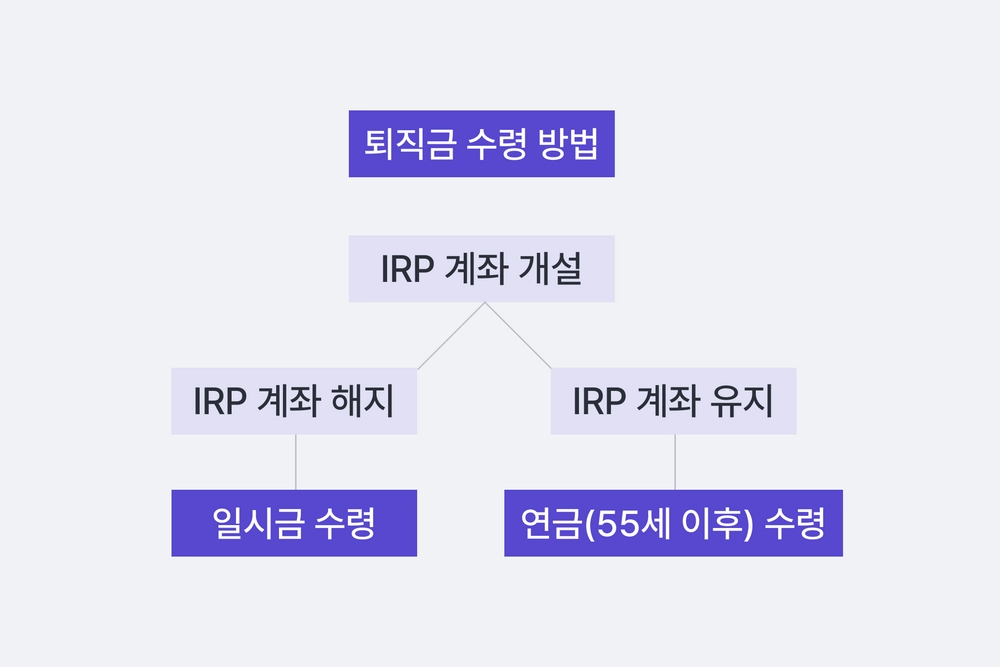
A Defined Benefit (DB) plan is a system where the retirement benefits an employee receives upon leaving are predetermined, and the company manages the funds. Since the severance pay increases in proportion to salary raises during your tenure, this structure is advantageous for employees in jobs with high wage growth rates. On the other hand, a Defined Contribution (DC) plan is a method where the company contributes at least 1/12 of the annual total wages to a retirement pension account in the employee’s name, and the employee directly manages the assets. Since these two systems handle funds entirely differently upon resignation, it is crucial to accurately understand your enrollment type. Rather than blindly following colleagues who received a lump sum, it is important to develop a strategy that fits the scale of your retirement assets. DB plan participants do not need to issue separate management instructions because the company deposits the funds directly into their account upon retirement. However, DC plan participants must first transfer their assets to an Individual Retirement Pension (IRP) account in their own name before they can proceed with the withdrawal procedures.
Defined Benefit and Defined Contribution plans differ in their management entities and basic withdrawal methods, so you must first confirm your enrollment type.
2. The Decisive Difference Between Lump Sum and Annuity Receipt
The lump sum method of receiving retirement pension is useful when you urgently need a large amount of money, but it can result in significant tax disadvantages. While retirement income tax deductions increase with longer contribution periods, withdrawing a large sum at once raises the taxable standard, causing the tax burden to spike sharply. In contrast, choosing an annuity allows you to avoid immediate retirement income tax, as the funds are transferred to an annuity account, benefiting from tax deferral. If you receive these deferred funds as a monthly annuity after age 55, you can receive a tax reduction of 30% to 40% on the original retirement income tax. If your annual annuity receipt stays within a certain limit, a lower annuity income tax rate applies, significantly increasing the disposable income of employees. For example, if Manager Kim, whose severance pay is 30 million won, receives it all as a lump sum, he must pay several million won in taxes immediately. However, if he transfers this money to an Individual Retirement Pension account and receives it in installments over 10 years, he can drastically reduce taxes and secure stable living expenses for his retirement.
Receiving an annuity defers taxes and lowers tax rates, making it far more advantageous for long-term asset management.
3. How to Utilize an Individual Retirement Pension Account
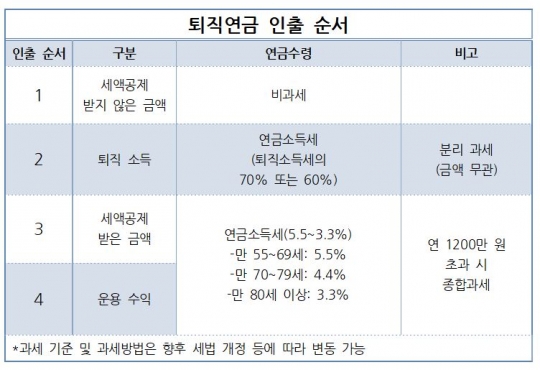
An Individual Retirement Pension (IRP) account is an essential financial account for safely safeguarding and growing retirement funds and for starting annuity receipts. When you retire from your job, the accumulated funds from your Defined Contribution or Defined Benefit plan must be transferred to this IRP account. Within this account, you can invest in various products such as stocks, bonds, deposits, and Exchange-Traded Funds (ETFs) to grow your assets. Recently, more retirees are choosing safe bond products or principal-and-interest guaranteed products to balance stability and profitability. Additionally, making additional contributions to this account allows you to receive tax deduction benefits during year-end tax settlement, offering a two-fold advantage. If you wish to transfer your assets to another financial institution, you must go through the process of redeeming your held products, so you should carefully consider fees and penalties for early termination. It is wise to consult with an expert to build a portfolio that matches your investment style and to simulate your future cash flow in advance.
The Individual Retirement Pension account is a core tool for transferring severance pay, receiving tax benefits, and growing retirement assets.
4. Application Procedures and Required Documents for Annuity Receipt
To actually receive your retirement pension, you must complete the retirement processing with your company and directly apply to the financial institution. First, after you leave the company, the company issues a retirement income withholding receipt and transfers the Defined Contribution or Defined Benefit funds to the employee’s Individual Retirement Pension account. After confirming that the funds have been successfully deposited into the account, you can proceed with the annuity commencement application by visiting the financial institution’s branch or using their mobile app. Preparing necessary documents such as your ID, retirement pension application form, and bankbook copy in advance can reduce the number of visits required. When filling out the application form, you must carefully set the receipt period, frequency, and annuity amount to match your lifestyle. Once the application is completed, the annuity will be deposited regularly on the specified date each month, and you may be able to change the amount or frequency later depending on the conditions.
After retirement, confirm that your assets have been deposited into your Individual Retirement Pension account, then apply to the financial institution to commence your annuity.
5. Comprehensive Check for Lifetime Income Planning
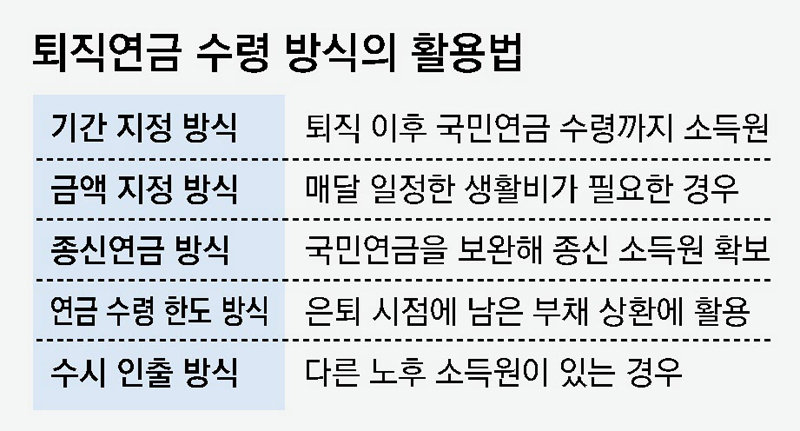
For a successful retirement, comprehensive income planning that encompasses not only the retirement pension but also the National Pension and personal pensions is necessary. You must assess how much fixed cash flow you will receive monthly after retirement to alleviate anxiety about insufficient living expenses. Using pension diagnosis programs offered by banks or securities firms allows you to compare the receipt timing and expected amounts of various pensions at a glance. Since living expenses may be higher in the early stages of retirement due to increased activity, a strategy to flexibly adjust annuity receipts is needed. Rather than blindly locking away funds based on hearsay from acquaintances, you should wisely design your receipt period considering your health status and expected lifespan. Since retirement assets are difficult to replenish once spent, it is essential to develop the habit of regularly checking your asset status annually.
You should check both the National Pension and personal pensions to plan your expected post-retirement cash flow in advance.
6. Future Outlook and Action for Wise Annuity Receipt
In the future retirement market, how you divide and manage your pension receipts will determine your quality of life in old age, rather than simply how much money you save. The government and financial institutions are introducing various annuity receipt methods to help citizens reduce tax burdens and enjoy a stable retirement. Only those who study and prepare for the complex pension system in advance can enjoy financial freedom and leisure after retirement. Starting today, please check your retirement pension enrollment status and, with the help of an expert, carefully develop a receipt plan. Small acts of interest and action will be the most certain way to create a secure and happy retirement. Start by opening your smartphone app or visiting your main bank to check your retirement pension balance and expected annuity amount.
Thorough preparation and a wise annuity receipt plan complete a prosperous and stable retirement life.
Frequently Asked Questions
=