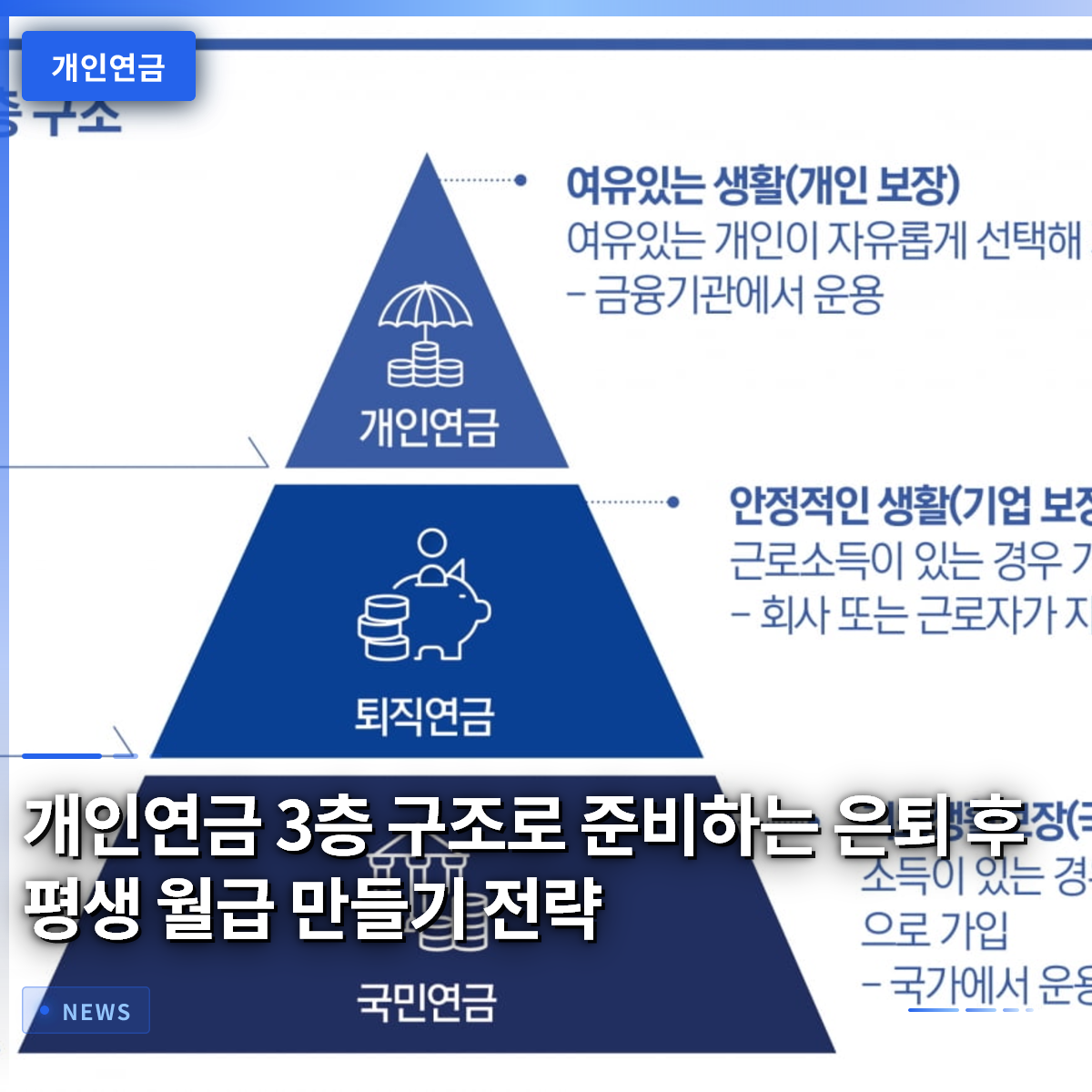
To live a worry-free life after retirement, it is essential to prepare a personal pension in addition to the National Pension and the Corporate Pension. Among office workers today, the number of people who split their remaining salary to invest in personal pensions and equity-based assets is rapidly increasing. Rather than vaguely feeling anxious about old age, it is far more important to set a concrete financial plan right now. In fact, looking around, many households meticulously manage their fixed monthly expenses and steadily accumulate the remaining funds in their pension accounts. In this article, we will take a detailed look at practical ways to utilize personal pensions in daily life and methods to grow retirement assets stably. If you master the tips for growing your assets while fully taking advantage of tax benefits, you can hold a secure, lifelong paycheck in your hands.
=
Strategy for Building a Lifelong Monthly Income After Retirement Using the Three-Tier Personal Pension Structure
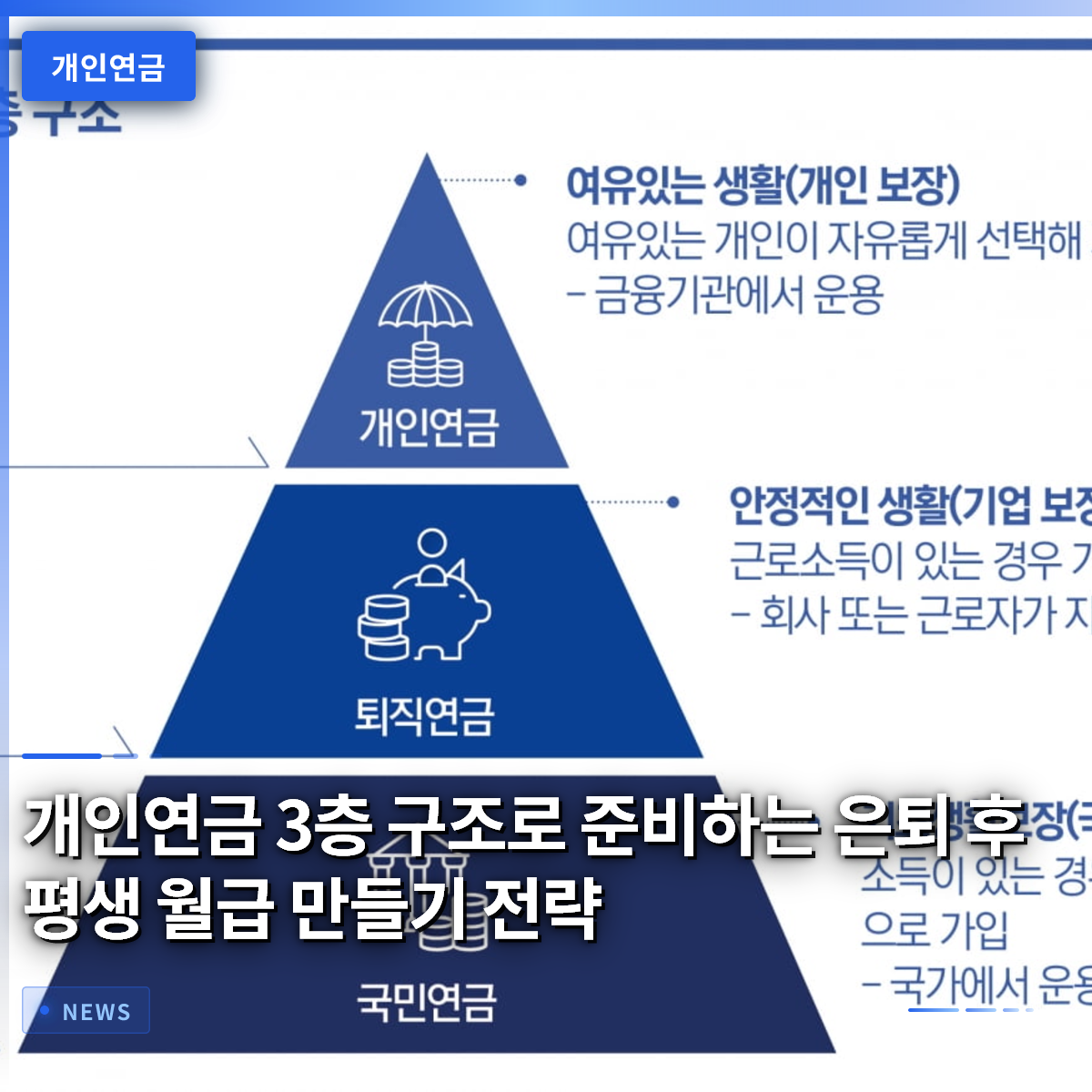
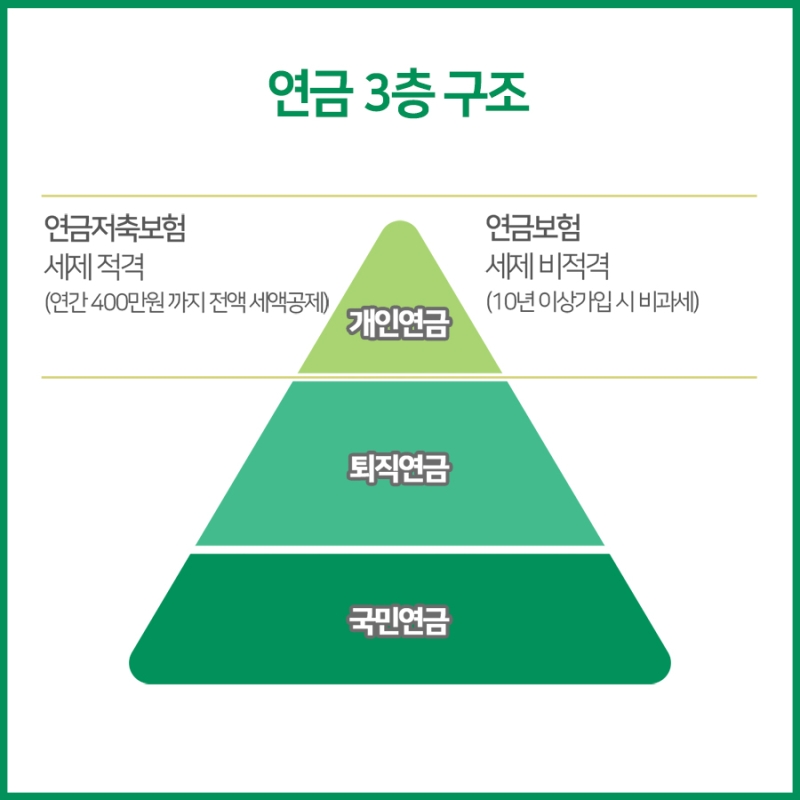
1. Understanding the Three-Tier Personal Pension Structure
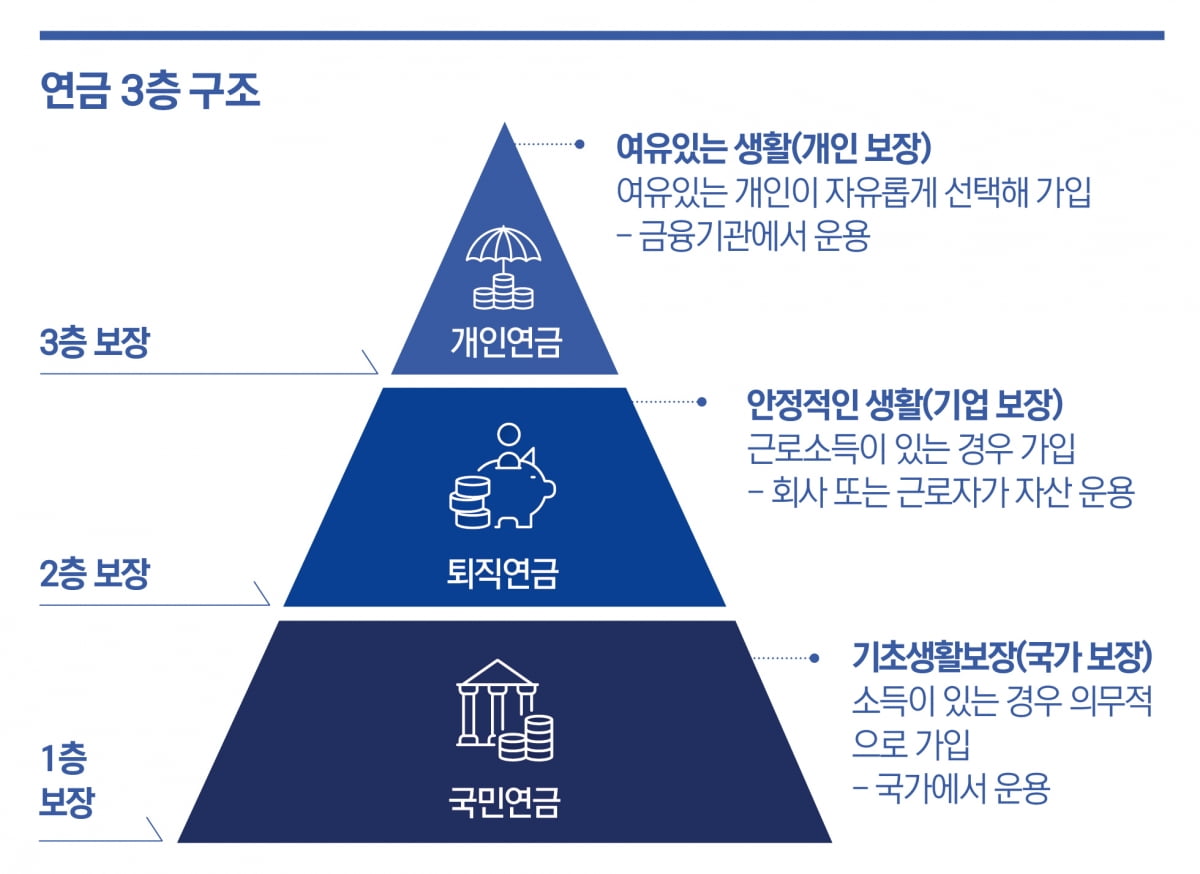
Since the National Pension alone is difficult to sustain a life after retirement, a three-tier structure combining the Corporate Pension and the Personal Pension is essential. As many experts agree, the first tier provided by the state (National Pension), the second tier accumulated through employment (Corporate Pension), and the third tier filled by the individual (Personal Pension) must work in harmony to complete a stable retirement. Only when these three pensions interlock does a consistent monthly cash flow emerge, allowing you to live without worrying about living expenses after retirement. Listening to the stories of senior colleagues who have retired, it is easy to see that those with a robust pension structure enjoy a more leisurely daily life.
Young people just entering the workforce and office workers in their thirties who are building families must also keep this three-tier structure in mind. While immediate savings or buying a home are important, the magic of compound interest, where pension assets grow over time, cannot be ignored. Only when the efforts of the state, the employer, and the individual come together can you completely escape the risk of retirement bankruptcy. If you start the habit of automatically transferring a fixed amount to your personal pension account every month from now, you will be surprised by the significantly grown balance in a few years.
The three-tier structure where the National Pension, Corporate Pension, and Personal Pension work in harmony is the most reliable pillar for a stable retirement life.
2. Tax Benefits and Pension Savings Accounts
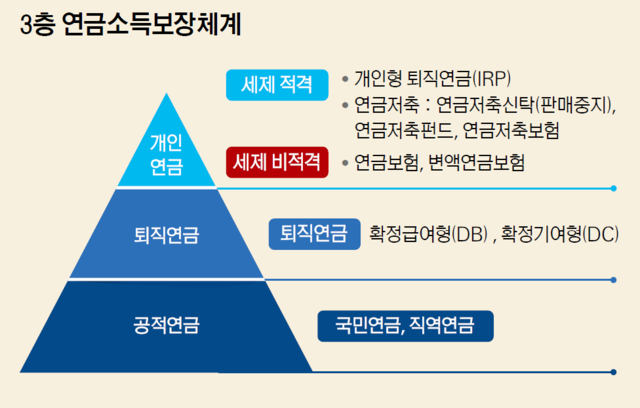
The first thing to pay close attention to when joining a personal pension is the tax credit benefit that can be received during the year-end tax settlement. For busy office workers, pension savings and individual retirement pensions are among the financial products they focus on most to increase their refunds during the year-end tax settlement season. Since a tax credit benefit is applied to a certain percentage of the amount contributed annually, it is wise for employed individuals with income to fill up to the limit. In fact, looking at colleagues around us, many consistently contribute a fixed amount each month up to the tax credit limit, receiving a significant tax refund every year.
The tax saved this way can be used as seed money for reinvestment or transferred to an emergency fund account, thereby easing household finances. However, since pension accounts are long-term products for retirement, caution is needed as early termination may result in tax disadvantages. Therefore, it is essential to accurately calculate the surplus funds that are not immediately needed and the contribution amount that can be fixedly managed each month. The core of wealth management is to enjoy the double benefit of continuing contributions consistently while also securing annual tax deduction benefits.
Pension savings accounts are considered an essential wealth management tool for office workers because they offer tax credit benefits during the annual year-end tax settlement.
3. Utilizing Various Investment Products and High-Dividend Stocks
Within a personal pension account, you can invest in stocks, bonds, and various exchange-traded funds (ETFs), rather than simply letting cash sit idle. Recently, high-dividend ETFs that provide stable dividends and products that distribute income on a weekly basis are gaining significant popularity among pension investors. For example, if you hold a product that pays dividends monthly in your personal pension account, you can see your assets growing on their own even before retirement. It is perfect for office workers because it allows them to enjoy the benefits of diversified investment in high-quality listed companies without the hassle of picking individual stocks.
As retirement approaches, the standard practice is to reduce the proportion of volatile stocks and turn to safe bond assets or principal-and-interest guaranteed products. However, in younger years, it is advantageous to adopt a strategy of taking appropriate risks and investing in high-growth assets to rapidly expand the scale of your assets. It is also a good method to evenly include recently popular individual investment bonds and stable high-dividend products through corporate or personal pension accounts. If you enjoy the compound interest effect of reinvesting the dividends deposited into your account every month, the speed of securing retirement funds will be much faster.
Investing in high-dividend ETFs or various high-quality assets within a personal pension account can accelerate asset growth.
4. Managing Fixed Expenses and Setting Monthly Contributions
The hidden secret to successful personal pension investing lies not in flashy investment techniques but in meticulously managing the fixed expenses that drain out every month. In a household of three, major fixed expenses such as management fees, food costs, and loan interest occur monthly, making it difficult to calculate the surplus. Surprisingly, many people delay joining a pension because, despite having a decent salary, they find no surplus when they check their bank balance. In such cases, you should first record your income and expenses for the month in detail and decisively cut unnecessary subscription services and dining-out costs.
If you try to save what is left after a month of spending, you often fall into a vicious cycle where nothing remains and consumption only increases. Therefore, it is far more effective to set up automatic transfers to your personal pension account on payday to create an environment that forces savings. It may feel burdensome to contribute 500,000 or 1,000,000 won per month at first, so it is fine to start with a small amount like 100,000 won. As time passes, salaries rise, and spending habits settle, it is important to maintain consistency by gradually increasing the contribution amount.
Thorough management of fixed expenses and setting up automatic transfers to ensure consistent monthly pension contributions is the starting point of wealth management.
5. The Compound Interest Effect of Long-Term Investing and Mindset
Personal pensions are not speculative products that double your principal in the short term; they are like a marathon run over decades. Above all, the perseverance to endure without terminating the pension account, even if the stock market crashes or an economic crisis hits, is essential. It is important to have a mindset that views falling stock prices as a prime opportunity to buy more exchange-traded funds at a lower price. In fact, people who have consistently contributed to pensions for over ten years have experience in growing their assets without being shaken by market noise.
If you are swayed by stories of neighbors making big money in the short term with certain stocks, the pension strategy you have painstakingly built may collapse. In retirement preparation, direction is far more important than speed, and those who consistently accumulate assets through regular investments will ultimately be the ones to smile at the end. You must enjoy enduring the current tedious process while imagining the pension amount that will be deposited into your account every month upon reaching retirement. The most reliable shield for a peaceful old age for you and your family stems from the small pension contributions that begin today.
A long-term investment mindset of consistently accumulating assets over decades, without being swayed by market fluctuations, is the key to success.
6. Action for a Lifelong Monthly Income in the Future
As we have seen, the three-tier structure encompassing the National Pension, Corporate Pension, and Personal Pension is the core that determines the quality of life after retirement. You need to take small actions starting today, such as reviewing your monthly expenses and setting the automatic transfer amount for your pension account. The ability to comfortably buy a warm meal every month in the future, without having to work, depends on your choices today. If you actively utilize the benefits of tax incentives and dividend reinvestment while reducing unnecessary consumption, life after retirement will not be something to fear.
You must cultivate the attitude of closely monitoring changes in the financial market, choosing investment products suitable for you, and regularly checking your accounts. If you build your own solid pension portfolio without being influenced by others, the phrase “retirement bankruptcy” will feel like someone else’s story. How about opening the personal pension account you have been putting off and starting your first contribution, taking this article as a starting point? The size of the lifelong paycheck deposited into your account can be completely different depending on the decision and action you make today.
Small pension contributions and thorough asset management starting today complete a future of abundant and stable lifelong monthly income.
Frequently Asked Questions
=