
A remarkable medical breakthrough has been announced: mice with missing cerebral cortex tissue showed significant improvements in motor and memory functions after being transplanted with organoids that mimic the human cerebral cortex. A research team led by Professor Sergiu Pâșca of the Department of Psychiatry and Behavioral Sciences at Stanford University School of Medicine successfully completed a study involving the transplantation of human cerebral cortex organoids into mice born with severe cortical deficits. This study has garnered intense global attention from the scientific community after being published in Nature, one of the most prestigious international academic journals in the life sciences. Organoids are mini-organs created by culturing stem cells to replicate the intricate structures and complex functions of actual organs. When these organoids, derived from human stem cells, are transplanted into a living organism, they serve as a powerful tool for tracking tissue function in real time. In this article, we will explore in detail how this fascinating medical experiment was conducted and what changes it may bring to our lives in the future.
=
Mice Transplanted with Human Mini-Brains Show Restored Walking and Memory Abilities

1. The Meeting of Cortical Deficit Mice and Organoids

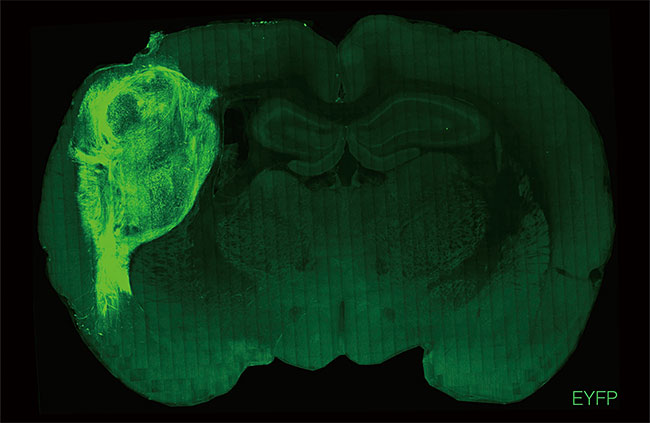
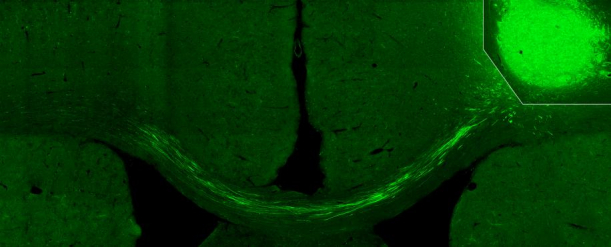
Directly transplanting organoids into the heads of normal mice faces significant practical hurdles. The primary reason is the physical limitation of the very limited space inside a mouse’s skull. Furthermore, the mouse’s native neurons and the neurons within the transplanted human brain organoids compete intensely for space during growth, leading to poor integration. To overcome these limitations, the research team designed a special mouse model using precise genetic modifications to prevent the proper formation of the neocortex and hippocampus from early development. They meticulously transplanted human brain organoids into these newly born cortical deficit mice, creating an environment where the two tissues could grow harmoniously together. As a result, a miracle occurred: human brain tissue perfectly filled 90% of the empty space in the mouse’s cerebral cortex. The transplanted human brain organoids did not merely occupy space but began to form deep connections with the mouse’s bodily organs. The extensive neural networks formed within the human brain organoids demonstrated remarkable adaptability by naturally connecting to the mouse’s spinal cord. This was a historic moment proving that neural cells from different species can fuse into a single massive network, transcending biological limitations. The research team repeatedly emphasized that this process was safely conducted within the strict framework of established ethical guidelines.
The research team utilized deficit mice to overcome skull space limitations and successfully filled 90% of the empty space with human brain tissue.
2. The Remarkable Recovery of Walking and Memory Abilities
Mice transplanted with human mini-brains showed dramatic recovery not only in appearance but also in behavioral patterns. Cortical deficit mice that received organoid transplants displayed a much more balanced and natural gait compared to those that did not. When the brain’s central command system collapses, basic motor functions are typically the first to fail; in this case, these functions were significantly normalized. The research team did not stop there; they designed additional experiments placing both types of mice in complex maze environments to test cognitive abilities. This was a challenging working memory assessment where mice had to accurately remember the path they had just visited and correctly select the new path that appeared next to proceed. The results showed that mice with organoid transplants navigated the mazes much more accurately than the cortical deficit mice, demonstrating superior memory. Mice that previously relied solely on simple reflexes have recovered aspects of higher-order cognitive functions due to the transplantation of human brain tissue. These experimental results suggest that tissues made from human stem cells can serve as practical therapeutic tools capable of restoring collapsed cognitive functions in living organisms, going beyond mere biological mimics. It is reported that even the researchers observing from the sidelines were amazed to see the mice navigate the mazes naturally.
Mice that received organoid transplants exhibited a much more natural gait and showed clear improvements in working memory abilities in maze-finding tasks compared to non-transplanted individuals.
3. The Scientific Significance of Organoid Research
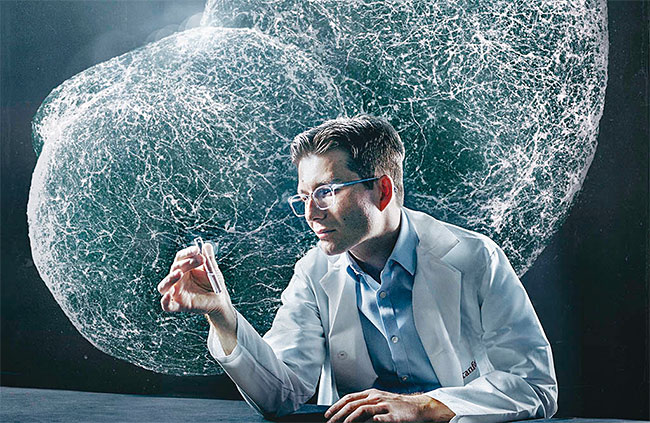
The achievement by the Stanford University research team is evaluated as opening a new horizon for modern medicine, going beyond the simple fact that one mouse recovered. The human brain is so complex and mysterious that accurately identifying the causes of actual diseases or testing drugs has been extremely limited. Since doctors and scientists cannot directly remove a patient’s brain for experimentation, they have always been limited to relying on indirect methods or computer simulations. However, using the in vivo transplantation technology developed this time, it becomes possible to observe in real time how human brain cells interact with other neural cells within a living organism. In particular, this research brings hope to patients suffering from developmental disorders or intractable brain diseases. By creating organoids from patient-specific stem cells and transplanting them into animal models to pre-verify therapeutic effects, side effects can be minimized. A path has been opened to seek treatments by directly observing the flow of fine electrical signals and the state of synaptic connections in the brain. This study strongly proves that the era of personalized medicine, where many brain disease patients can be relieved of their suffering, is rapidly approaching.
This research has opened a path to observe the causes of brain diseases in real time within living organisms and find treatments through patient-specific organoids.
4. Rigorous Ethical Verification and Future Challenges
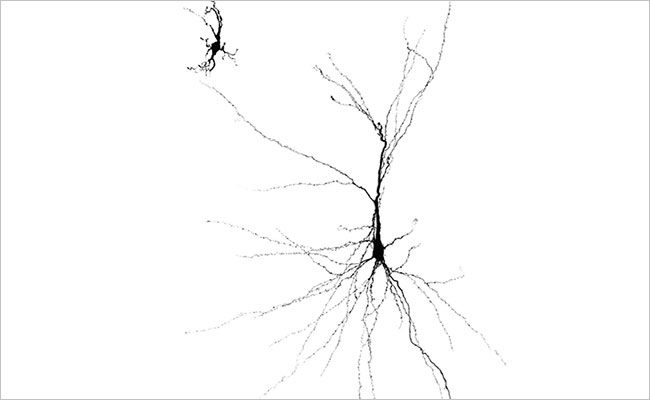
The success of so-called xenotransplantation research, which involves transplanting human brain tissue into animals, has sparked voices of deep ethical reflection alongside expectations within the scientific community. This is due to concerns that human brain cells growing inside an animal’s body might develop consciousness or emotions similar to those of humans. Aware of these social concerns, the Stanford University research team repeatedly emphasized that the entire process of this experiment was conducted in strict adherence to rigorous bioethical guidelines without any deviation. Since the committee approving and supervising the research had established numerous safety devices and control measures, scientific curiosity was strictly managed to ensure it did not cross ethical lines. Nevertheless, for organoid research to become more active in the future, transparent and strict ethical standards that all members of society can agree on are essential, in addition to technical advancements. Continuous social discussion is required regarding where to draw the line between animal welfare and bioethics—what is permissible and what should be restricted. The research team is well aware of this and plans to continue future follow-up research under the supervision of the ethics committee, prioritizing safety above all else. It is time for the global scientific community to pool its wisdom to ensure that the dam protecting human dignity and bioethics does not collapse, no matter how fast technology advances.
Research on human brain tissue transplantation holds immense potential but must be accompanied by strict adherence to bioethical guidelines and social consensus.
5. A Leap Toward Conquering Intractable Brain Diseases
There are numerous intractable brain diseases on Earth that lack proper treatments, plunging countless patients and their families into despair. Diseases such as dementia, Parkinson’s disease, and congenital cerebral cortical deficits remain formidable mountains that modern medicine has yet to conquer. The organoid transplantation technology that succeeded in mice this time holds the potential to evolve into a powerful weapon capable of standing up to these incurable illnesses. The scenario of transplanting healthy mini-brain tissue, cultivated from cells harvested from a patient, into damaged areas to repair broken neural circuits is becoming a reality. Of course, success in mice does not mean that transplantation surgery can be immediately performed on human patients; numerous clinical trials and safety verifications remain. However, the mere fact that cortical deficits were filled and bodily functions were restored at the basic scientific research stage has sent massive ripples through the medical community. It is expected that research institutes and pharmaceutical companies worldwide will focus their efforts on developing new treatments based on this technology. In the near future, various brain diseases once considered incurable may be conquered, and a miracle may occur where patients regain their ordinary lives.
The success of the mouse experiment will serve as a massive stepping stone toward the development of innovative treatments for intractable brain diseases like dementia and Parkinson’s disease in the future.
6. A Blueprint for the Future Brought by Biotechnology
Stanford University’s research, which restored walking and memory abilities in mice by transplanting human mini-brains, will be recorded as a major milestone in the history of life sciences. Things that seemed possible only in imagination have stepped into the realm of reality by meeting advanced stem cell technology and precise genetic manipulation. Although technical challenges and ethical hurdles remain to be overcome, the direction in which science is moving to alleviate human suffering is clear. I sincerely hope that these advanced biotechnologies will develop more safely and transparently in the future, contributing to saving more lives. I also hope that readers will take a warm interest in the dazzling progress of life sciences and the changes in future medicine, inspired by this research.
This research is a great achievement that has expanded the boundaries of life sciences and will play a central role in enhancing human health and welfare in the future.
Frequently Asked Questions
=