Actively utilizing an IRP (Individual Retirement Pension) account allows you to achieve both year-end tax deductions and the growth of your retirement assets. In the past, switching products within a retirement pension account required waiting for several days, but the recent introduction of same-day trading has made asset management significantly more convenient. If you want to receive tax refunds like a “13th-month salary” while earning stable returns, this is something you must pay attention to. Mr. Kim, an office worker, opened an IRP account last year to maximize his tax deductions and has recently started directly purchasing U.S. dividend stock index funds to grow his assets. In this article, we will organize everything from opening an IRP account to tax benefits and the latest changes in the trading environment, making it easy even for beginners to understand. We will also carefully examine the detailed benefits and precautions that busy professionals often overlook.
=
The Ultimate Guide to Maximizing Tax Savings and Investment Returns with IRP Retirement Pensions
1. Concept of IRP Retirement Pensions and Eligibility
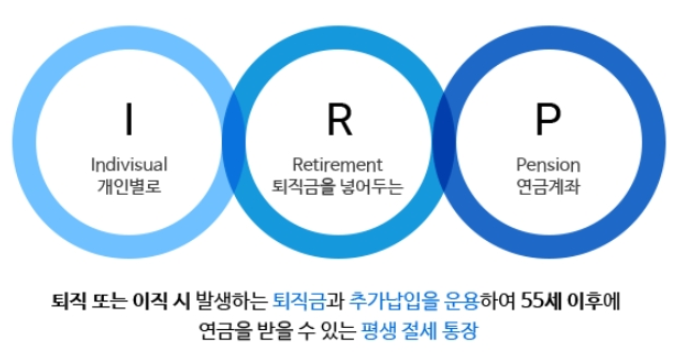
An IRP retirement pension is a personal retirement pension product that can be opened by workers enrolled in a retirement pension account, as well as self-employed individuals and anyone else with income. It allows you to consolidate and manage severance pay received when changing jobs in a single account, while also enabling you to make additional contributions to prepare for retirement. In the past, access was limited to certain participants in Defined Benefit (DB) or Defined Contribution (DC) plans, but now the door is open to almost all employed individuals with income. The biggest advantage is that you can enjoy tax benefits while making regular monthly contributions, similar to saving. If you have only ever been envious of colleagues bragging about their year-end tax refunds, opening an IRP account is the first step. By consistently accumulating funds during your income-earning years, you will secure a solid pension foundation after the age of 55. All economically active individuals with income can open an IRP account to create their own retirement fund. If you transfer your severance pay to this account instead of leaving it in a regular bank account upon resignation or job change, you benefit from tax deferral. Even those in professions like self-employment or freelancing, who previously had difficulty accessing DB benefits, are now eligible, making it ideal for bridging income gaps. It is an excellent long-term savings tool for preparing for retirement through consistent annual contributions. In fact, Mr. Park, a freelancer, prepares for the future by automatically transferring a portion of his monthly income to this account. Since the eligibility requirements are not strict, you can easily open an account non-face-to-face via a mobile app as long as you can prove your income.
The IRP retirement pension is a representative retirement preparation account where anyone with income can invest both severance pay and additional contributions.
2. Tax Deduction Benefits and Tax Savings

The primary reason for joining an IRP retirement pension is undoubtedly the overwhelming tax deduction benefits and tax savings. You can receive a tax refund at a certain percentage within the annual contribution limit, making it an essential financial tool for office workers. The deduction rate varies based on total income, and by contributing up to the maximum annual limit of 9 million KRW, you can expect a significant refund. This is why office workers, who used to worry about the “tax bomb” every December, now receive refunds through this account and are pleasantly surprised. In addition to tax deductions, the tax deferral benefit, which postpones taxes on investment returns until you receive the pension, is also very powerful. Since you do not immediately pay a 15.4% interest income tax on investment returns, you can reinvest the funds and maximize the compound interest effect. If you receive the funds as a pension after the age of 55, the standard pension income tax rate applies, significantly reducing the tax burden. If you withdraw within the annual receipt limit, you can receive a reduction of up to 40% on the severance income tax (from the standard 30%), doubling the tax-saving effect. However, be aware that if you terminate the account midway, you must return all previously received tax deduction benefits and will be subject to miscellaneous income tax. Therefore, rather than terminating the account solely for immediate liquidity, a strategy of maintaining it with a long-term view until retirement is essential.
You can receive tax deductions up to a maximum of 9 million KRW annually, and the tax-saving effect is excellent due to tax deferral and lower tax rates upon pension receipt.
3. ETF Investment and Same-Day Trading System
Recent service reforms in the financial sector have made it much easier to manage investment products, such as Exchange-Traded Funds (ETFs), within IRP retirement pension accounts. In the past, after selling a held ETF, you had to wait several days for the sale proceeds to settle before you could buy a new product. However, with the recently introduced same-day trading service, customers can immediately purchase other products on the same day without waiting for the sale proceeds to settle. After the sale is executed, you can naturally proceed to the purchase of the next product without searching for complex menus, significantly speeding up portfolio switching. This allows for quick responses to rapidly changing market conditions, maximizing investment efficiency. Even beginner investors can easily add U.S. dividend stocks or index-tracking ETFs to their basket through securities or bank platforms. In fact, many investors include products with consistent dividends in this account and regularly make additional purchases. Given that these products are traded in real-time on the exchange, like stocks, rapid order execution and immediate asset reallocation are essential. Due to this regulatory improvement, investors can now react nimbly to market changes and flexibly adjust their investment strategies. There is a growing trend of investors increasing the proportion of investment assets seeking returns, rather than sticking solely to principal-guaranteed products.
The introduction of the same-day trading service allows for immediate ETF switching and portfolio restructuring within IRP accounts, greatly enhancing investment convenience.
4. Asset Allocation Strategies for Enhancing Returns
To increase the return on your IRP retirement pension account, the key is appropriate asset allocation between principal-guaranteed products and investment products. Deposits and bond-type products protect your assets safely, but considering inflation, they have limitations in long-term asset growth. On the other hand, equity ETFs and mixed-type products have high volatility but can offer higher returns through long-term investment. In fact, according to retirement pension return disclosures from some financial institutions, portfolios actively managed with non-principal-guaranteed products have achieved returns exceeding double digits. You must carefully determine the ratio of stocks to bonds by coldly assessing your investment style and the time remaining until retirement. When you are a young professional, you have a long time until retirement, so it is advantageous to aggressively invest up to the maximum limit in risky assets. Conversely, as you approach retirement, you should gradually increase the proportion of principal-guaranteed products to reduce asset volatility. The secret to managing long-term returns is to regularly review your asset portfolio and adjust the proportions through rebalancing. It is important to develop a customized strategy suited to your retirement timeline rather than blindly following stocks recommended by others. Utilizing new technology services like robo-advisor discretionary management can help you easily navigate the complex asset allocation process, almost like having expert assistance.
You should periodically adjust the proportion of principal-guaranteed products and investment assets, such as ETFs, according to your retirement timing and investment style.
5. Precautions and Countermeasures for Mid-Termination
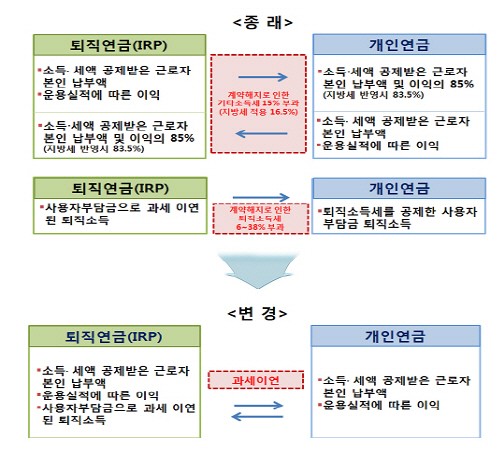
Since IRP retirement pensions are long-term products, you must remember that significant disadvantages can occur if you consider mid-termination due to unavoidable circumstances. If you terminate the account midway, you must return all taxes previously refunded through year-end tax deductions, and miscellaneous income tax will be imposed. Additionally, a higher tax rate will be applied to your investment returns instead of the lower pension income tax rate, significantly reducing the actual amount received. If you easily break your valuable retirement fund account just because you need a lump sum immediately, you will suffer a major economic blow after retirement. Therefore, when you need urgent funds, it is wise to first look into exceptional withdrawal systems permitted by law, rather than the extreme choice of mid-termination. Mid-term withdrawals are possible if you meet legal grounds such as purchasing a home or securing a deposit as a non-homeowner, or receiving medical treatment for three months or more for yourself or a dependent. In these cases, the process takes the form of a withdrawal rather than termination, allowing you to minimize tax disadvantages while addressing the urgent need. If you change jobs, it is better to transfer your severance pay to an IRP account rather than receiving it directly from your previous company, allowing you to continue growing your assets. This transfer process allows you to enjoy tax deferral on severance income tax, preventing your assets from shrinking. Do not forget that consistently maintaining the account until retirement is itself the best method for tax savings and asset growth.
Mid-termination results in the recovery of tax deductions and higher taxes, so you should prioritize utilizing legal withdrawal grounds or maintaining the account.
6. Wise Pension Receipt Methods and Future Outlook
To fully enjoy all the benefits of an IRP retirement pension, you should choose to receive the funds in pension form in installments after the age of 55, rather than as a lump sum. Withdrawing the money all at once results in a high tax burden on the lump sum, but receiving it in installments over decades according to the annual receipt limit can save a significant amount of tax. This is because creating a stable cash flow after retirement is the most important factor in determining retirement happiness. In the future, the financial market will evolve to provide more convenient personalized asset management services by combining with artificial intelligence technology. It is expected that systems optimizing the returns of your account will become widespread, eliminating the need to search for complex economic news one by one. To remain steady in a changing financial environment, you need the attitude to consistently manage your account with your own conviction. Please develop the habit of making automatic transfers of a fixed amount on a set date each month and accumulating good ETFs. Life after retirement is ultimately completed by the small savings and investment habits you start preparing now. It is rare to find a place where you can simultaneously grasp the definite carrot of tax benefits and the opportunity for growth through investment returns. Starting today, please open your mobile app, check the status of your retirement pension account, and design a secure future.
You should maximize tax reduction benefits by receiving the pension after age 55 and complete a stable retirement through consistent automatic contributions and asset management.
Frequently Asked Questions
=