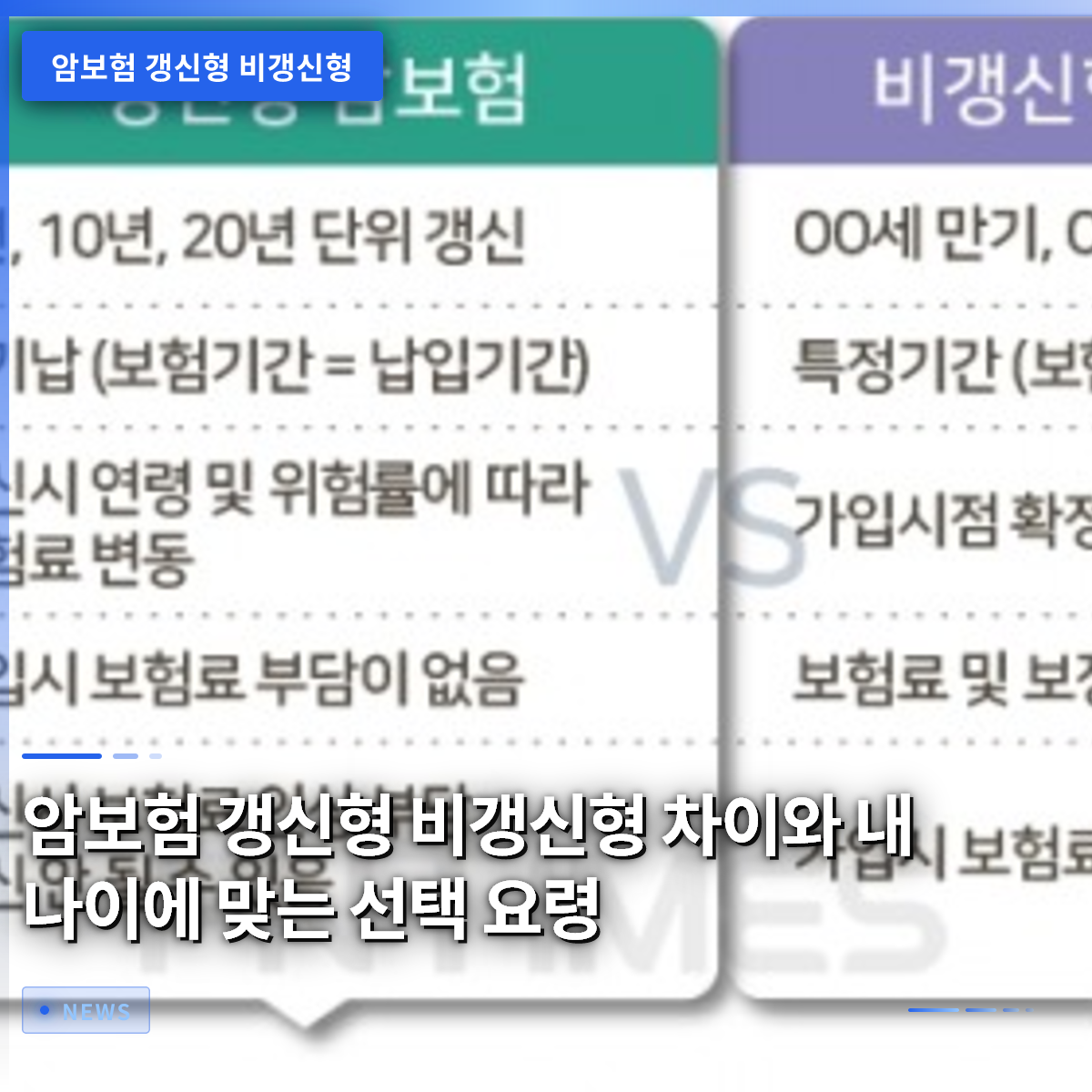
When purchasing cancer insurance, it is advantageous for younger generations to prioritize non-renewable plans and use renewable plans later as a supplementary backup. Many people struggle with the trade-off between monthly premiums and coverage duration, and making a decision based solely on the initial cost can lead to significant financial burdens later on. For instance, Mr. Kim, a 30-something office worker, chose a renewable plan simply because the initial cost was low, only to nearly give up on maintaining it due to the steep premium increases at each renewal cycle. Rather than blindly following recommendations from others, it is essential to first accurately assess your own criteria and financial situation. This article examines the clear differences between these two structures and the optimal selection strategies for different age groups. As of 2026, we will guide you through the most cost-effective insurance design tailored to your needs.
=
Differences Between Renewable and Non-Renewable Cancer Insurance and How to Choose Based on Your Age
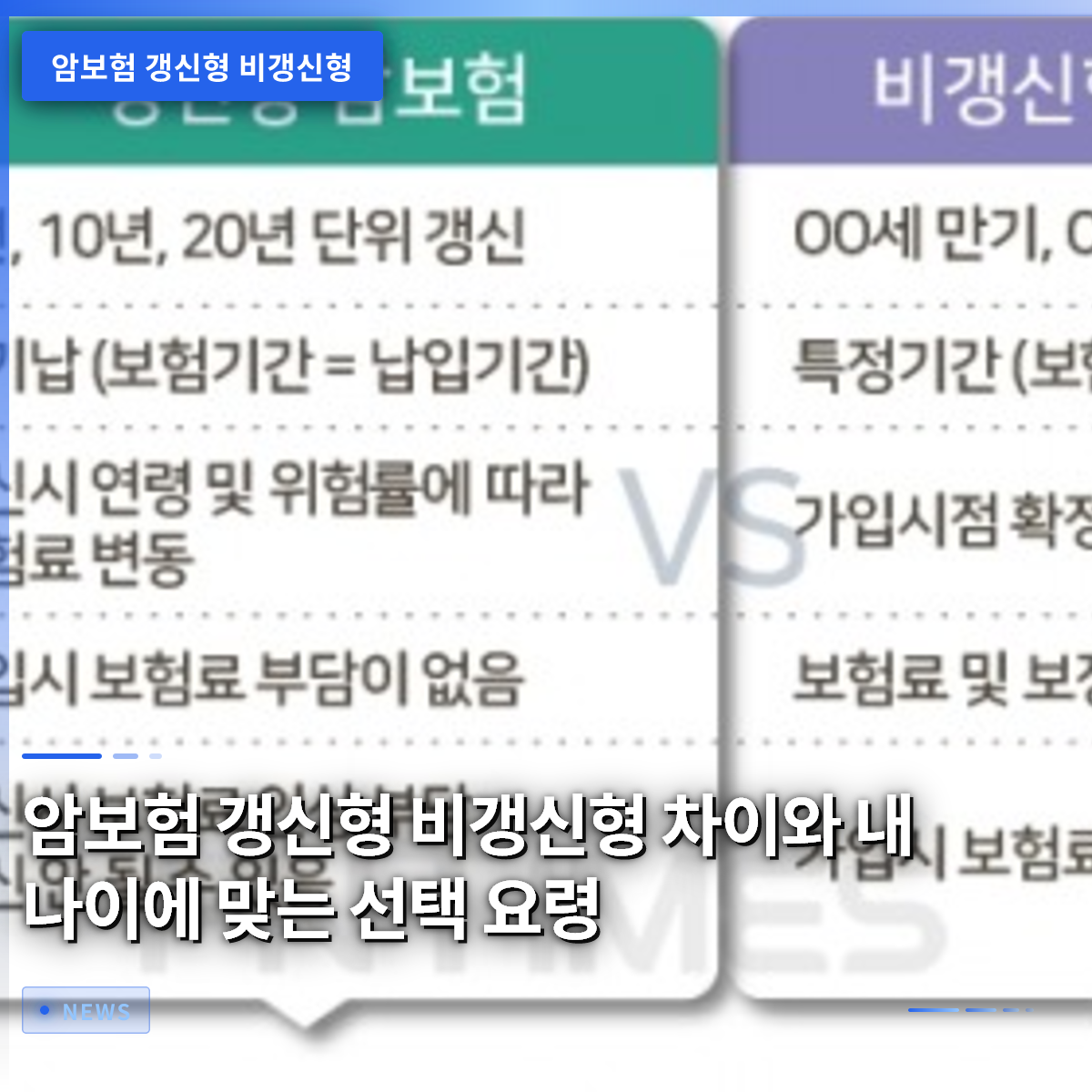
1. Basic Concepts and Premium Structure Differences Between Renewable and Non-Renewable Plans
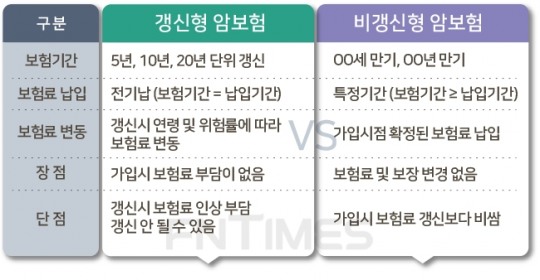
Renewable plans are structured so that premiums are recalculated at each renewal cycle to reflect changes in risk rates and age. Initially, premiums are very low because the policyholder is young, resulting in a light financial burden. However, as time passes and the risk of illness increases with age, premiums tend to rise sharply at each renewal. In contrast, non-renewable plans maintain the premium amount set at the time of enrollment until maturity, requiring payments only for a fixed period. Since you pay only for a set duration but continue to receive coverage afterward, this structure is highly advantageous for predicting long-term expenses. Many people judge the difference between these two types solely by the immediate monthly premium, but when total long-term costs are considered, the results are vastly different. It is common for people to sign contracts based only on the initial low cost, only to find themselves unable to afford the skyrocketing premiums a decade or more later. Therefore, you must carefully consider which structure is safe to maintain for a lifetime, taking into account your working years and retirement timing.
Renewable plans have low initial costs but increase later, while non-renewable plans have fixed premiums for a set period.
2. Why Non-Renewable Plans Are Overwhelmingly Advantageous for Young Adults in Their 20s and 30s
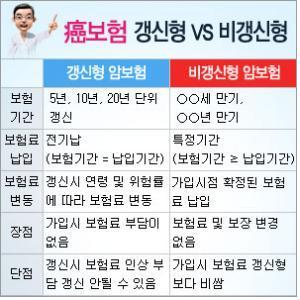
For young people in their 20s and 30s, who are generally in good health and have a low risk of developing cancer, the initial cost of a non-renewable plan is not excessively high. By securing a non-renewable plan during this period, you only need to pay during your most economically active years, after which you can enjoy stable coverage. For example, an office worker born in 1992 who designs a non-renewable plan in their mid-30s can secure robust protection within a surprisingly reasonable budget. Conversely, choosing a renewable plan at this stage may seem appealing due to saving a few thousand won initially, but it leads to significant stress from sharply rising premiums as one enters their 50s. A non-renewable plan secured in youth serves as the strongest shield, protecting you even when income decreases in old age. Insurance is a long-term contract meant to be held for decades, not something to be maintained briefly and canceled; thus, choices made in youth determine your future. You must never make the mistake of trying to save a small amount now only to lose coverage in old age when medical expenses are most needed.
Since incidence rates are low when young, non-renewable plans are affordable, so you should prepare in advance for old age when income decreases.
3. What Is the Wise Choice for Middle-Aged and Senior Adults in Their 50s and 60s?
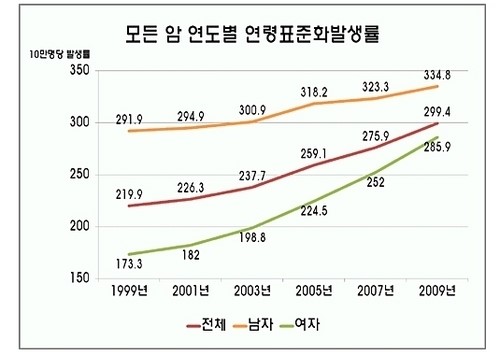
Those who are already in their 50s or 60s and look into new non-renewable plans are often shocked to find monthly premiums much higher than expected. This is because, given their advanced age, the remaining payment period must be compressed, resulting in high monthly outflows that become a significant burden on household finances. At this stage, it may be more rational to utilize renewable plans to lower initial costs and fill necessary coverage gaps. However, it is crucial to choose the longest possible renewal cycle rather than a short one to mitigate the shock of sudden premium increases. For middle-aged and senior adults whose children have become independent and who are nearing retirement, controlling fixed monthly expenses is paramount. Experts advise that for older individuals, maintaining a realistic renewable plan is better than forcing a non-renewable plan that leads to mid-term cancellation. You should coldly assess your current asset situation and cash flow at retirement to find the most sustainable option.
For those in their 50s and 60s, using renewable plans to lower initial burdens is more realistic than facing high non-renewable premiums.
4. Exclusion and Reduction Periods: Essential Content to Understand
Few people know that even if you are diagnosed with cancer the day after enrolling in a new cancer insurance policy, you cannot immediately receive the full insurance payout. This is because all cancer insurance products have strict safety mechanisms known as exclusion periods and reduction periods, during which coverage is limited after enrollment. Typically, the first 90 days from the enrollment date are designated as the exclusion period; if diagnosed with cancer during this time, the contract may be voided or no coverage provided. Even after the exclusion period, a reduction period applies for several years, during which only a portion of the diagnostic benefit is paid, making it highly advantageous to enroll as early as possible. This system is a necessary procedure to prevent malicious enrollment by those hiding existing illnesses, so policyholders must be aware of it in advance. If you have a health checkup scheduled or feel even slight suspicious symptoms, it is wise to complete enrollment before the examination. If abnormal findings are detected after the exam, insurance companies may refuse enrollment or treat specific areas as excluded from coverage, so you must not miss the timing.
There is a 90-day exclusion period after enrollment, followed by a reduction period, so you should prepare while you are healthy.
5. How to Lower Premium Burden Using No-Cash-Value Plans
Recently, many insurance companies have introduced no-cash-value plans, which are gaining popularity by significantly lowering monthly premiums compared to standard plans. In this structure, if the contract is canceled mid-term, there is little to no refund, but in exchange, the monthly payment is set lower than that of standard plans. Since the ultimate goal of cancer insurance is to maintain the policy until the end to receive the diagnostic benefit, there is no need to worry about mid-term cancellation refunds. In fact, applying this structure can reduce the monthly premium burden by more than 10%, even for non-renewable plans, greatly aiding long-term maintenance. However, since you will not receive any refund if you cancel mid-term, you must enroll with the firm intention of keeping it until the end. Since this is a coverage product for risk protection rather than a savings product for accumulating lump sums, you should focus on the appropriateness of the monthly payment rather than the presence of a refund. When comparing products from various insurance companies, checking for this structure can help you easily find hidden gems with lower costs.
Choosing a structure with no mid-term cancellation refund significantly reduces monthly costs, making it easier to maintain the policy until the end.
6. Final Checkpoints for Designing Your Optimal Cancer Insurance
Cancer insurance is too complex to simply copy what others say is good, with hundreds of types of riders and intricate coverage details. You should first reflect on which cancers you are vulnerable to based on family history or lifestyle habits, and construct riders focused on necessary diagnostic benefits without unnecessary additions. If you are swayed by recommendations and load up on unnecessary riders, you may later find the burden too heavy and cancel, causing all premiums paid to date to be lost. As of 2026, utilizing the comparison quote features provided by various financial platforms allows you to check the most reasonable price range for your age and gender at a glance. Since it is difficult to judge everything perfectly on your own, a careful review through certified comparison channels is essential. Starting today, please open your insurance policy again and accurately determine whether it is a renewable or non-renewable plan. A solid coverage plan will serve as the strongest breakwater, protecting you and your family’s peaceful daily life from future massive economic storms.
It is wisest to remove unnecessary riders, choose a structure suitable for your age, and maintain the policy until the end.
Frequently Asked Questions
=